TOPIC

States of Matter, Solids, liquids, and their properties

MY PROGRESS

Pug Score

0%

Best Streak

0 in a row

Study Points

+0

Overview

Practice

Watch

Read

Quiz

Next Steps


Get Started

Get unlimited access to all videos, practice problems, and study tools.

Unlimited practice
Full videos

Back to Menu

Topic Progress

Pug Score

0%

Videos Watched

0/0

Best Practice

No score

Read

Not viewed

Best Quiz

No attempts


Best Streak

0 in a row

Study Points

+0

Read

Discover Solids and Liquids: States of Matter and Their Properties

You will learn about solids and liquids, two states of matter, and discover the special properties that make each one unique.

What Are States of Matter?

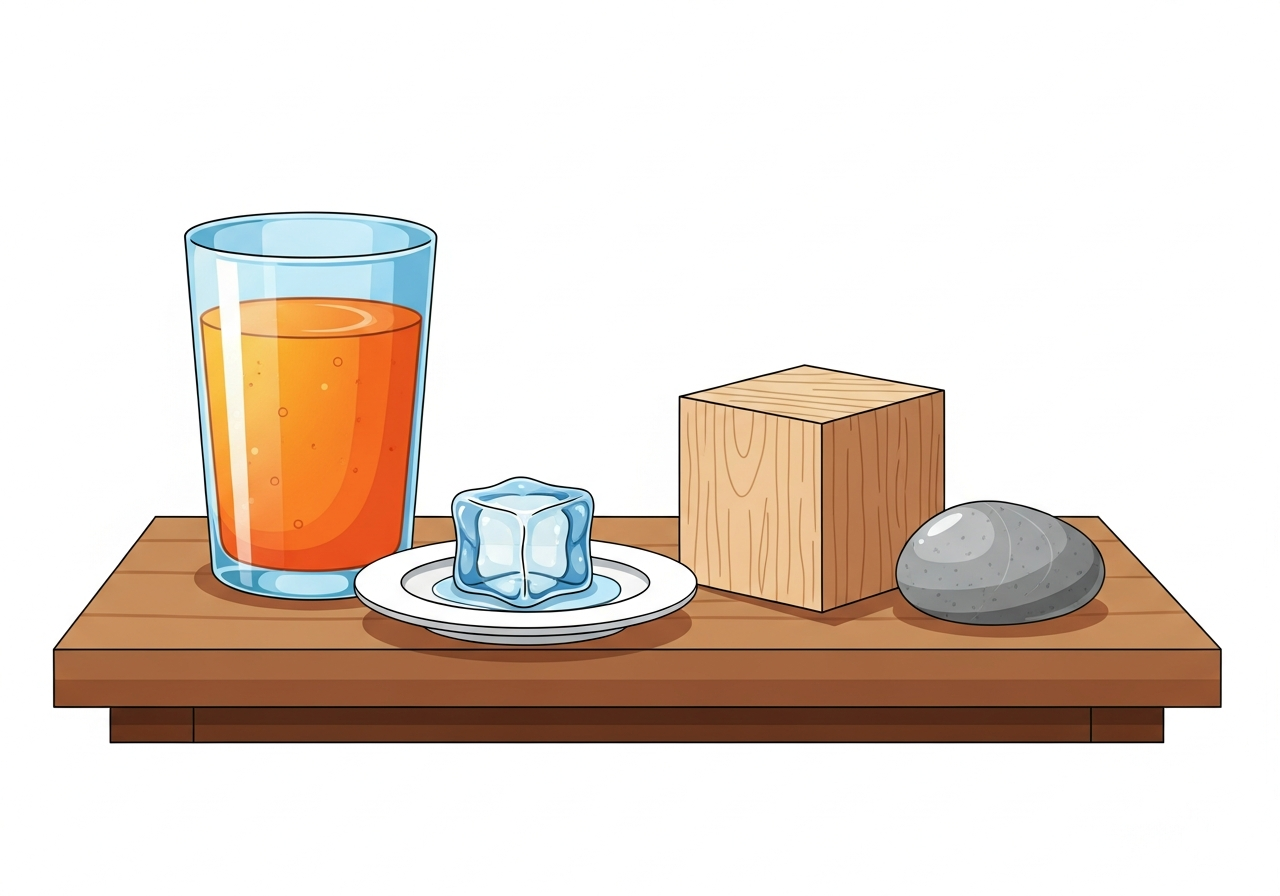
Everything around you is made of matter. Matter is anything you can touch or see. Matter can be a solid or a liquid.

You can find solids and liquids everywhere in your day! Your toys, your juice, and even ice cubes are all matter.
What Is a Solid?

A solid is matter that keeps its own shape. When you pick up a rock or a wooden block, it stays the same shape no matter where you put it.

Solids feel hard or firm when you touch them. You cannot pour a solid the way you pour water.

Here are some examples of solids you know:

  • Wooden building blocks
  • Rocks
  • Ice cubes
  • Bread
  • Modeling clay

When you play with blocks, you can stack them because they keep their shape. That is a key property of solids!

What Is a Liquid?

A liquid is matter that flows and changes shape. When you pour juice into a cup, the juice takes the shape of the cup. When you pour it into a bowl, it takes the shape of the bowl!

Liquids do not keep their own shape. They always take the shape of whatever holds them. This is called their container.

Here are some examples of liquids you know:

  • Water
  • Juice
  • Milk
  • Honey
  • Maple syrup

When you see a puddle on the playground, it spreads out flat. That is because water is a liquid and it flows!

How Are Solids and Liquids Different?

The biggest difference is shape. Solids keep their own shape. Liquids change shape to match their container.

You can also tell them apart by touching them. Solids feel firm and do not flow. Liquids flow and can be poured.

Matter Can Change!

Did you know that matter can change from one state to another? When an ice cube gets warm, it melts and turns into water. This is called melting.

When juice gets very cold in the freezer, it turns into a solid popsicle. This is called freezing.

You can see this happen with your own snacks! A popsicle on a warm day will drip because it is melting from a solid into a liquid.

Key Terms and Definitions

Matter: Matter is everything around you that you can touch or see. Your toys, food, and drinks are all matter.

Solid: A solid is a type of matter that keeps its own shape. A rock and a wooden block are solids because they do not change shape on their own.

Liquid: A liquid is a type of matter that flows and takes the shape of its container. Juice, water, and milk are liquids.

Property: A property is something that describes what matter is like. Shape, hardness, and the ability to flow are all properties of matter.

Definite shape: A definite shape means the shape stays the same no matter where you put the object. Solids have a definite shape.

Flow: To flow means to move and spread out like water does. Liquids flow, but solids do not.

Container: A container is something that holds a liquid, like a cup, bowl, or bottle. Liquids take the shape of their container.

Melting: Melting is when a solid gets warm and turns into a liquid. Ice melts into water when it gets warm.

Freezing: Freezing is when a liquid gets very cold and turns into a solid. Water freezes into ice in the freezer.

State of matter: A state of matter is the form that matter takes. Solid and liquid are two states of matter.

Fun Ways to Explore Solids and Liquids

You can explore states of matter right at home! Try pouring juice into different cups and watch how it changes shape each time.

You can also watch an ice cube melt on a plate. First it is a solid with its own shape. Then it melts into a liquid that spreads out. That is melting happening right in front of you!

Try playing with modeling clay. You can change its shape, but it stays solid. That shows you a key property of solids.

Getting Ready to Learn

You do not need to know anything special before starting this topic. Just look around you! You already see solids and liquids every single day.

Your toys are solids. Your drinks are liquids. You are already an expert at noticing matter around you. Now you will learn the science words to describe what you see!

Related Topics and Connections

Learning about solids and liquids is a great start to understanding the world of science. As you keep learning, you will discover even more amazing things about matter and how it behaves around you.

The ideas you learn here about properties of solids and liquids will help you as you explore more science topics in the future. You will use what you know about shape, flow, melting, and freezing to understand bigger science ideas later on.

Keep exploring and asking questions about the things you see every day. Science is all around you!