TOPIC
MY PROGRESS
Pug Score
0%
Getting Started
"Let's build your foundation!"
Best Streak
0 in a row
Study Points
+0
Overview
Practice
Watch
Read
Quiz
Next Steps
Get Started
Get unlimited access to all videos, practice problems, and study tools.
BACK TO MENU
Topic Progress
Pug Score
0%
Getting Started
"Let's build your foundation!"
Videos Watched
0/0
Best Practice
No score
Read
Not viewed
Best Quiz
No attempts
Best Streak
0 in a row
Study Points
+0
Overview
Practice
Watch
Read
Quiz
Next Steps
Read
Discover Animal Body Coverings, Limbs, and Sensory Organs!
You will learn about the outside features of animals, including their body coverings, limbs, and sensory organs, and how these parts help animals survive.
Animals have special outside body parts that help them live and stay safe. You can see these parts just by looking at an animal! These outside parts are called external features.
External features include body coverings, limbs, and sensory organs. Each part has an important job to do.
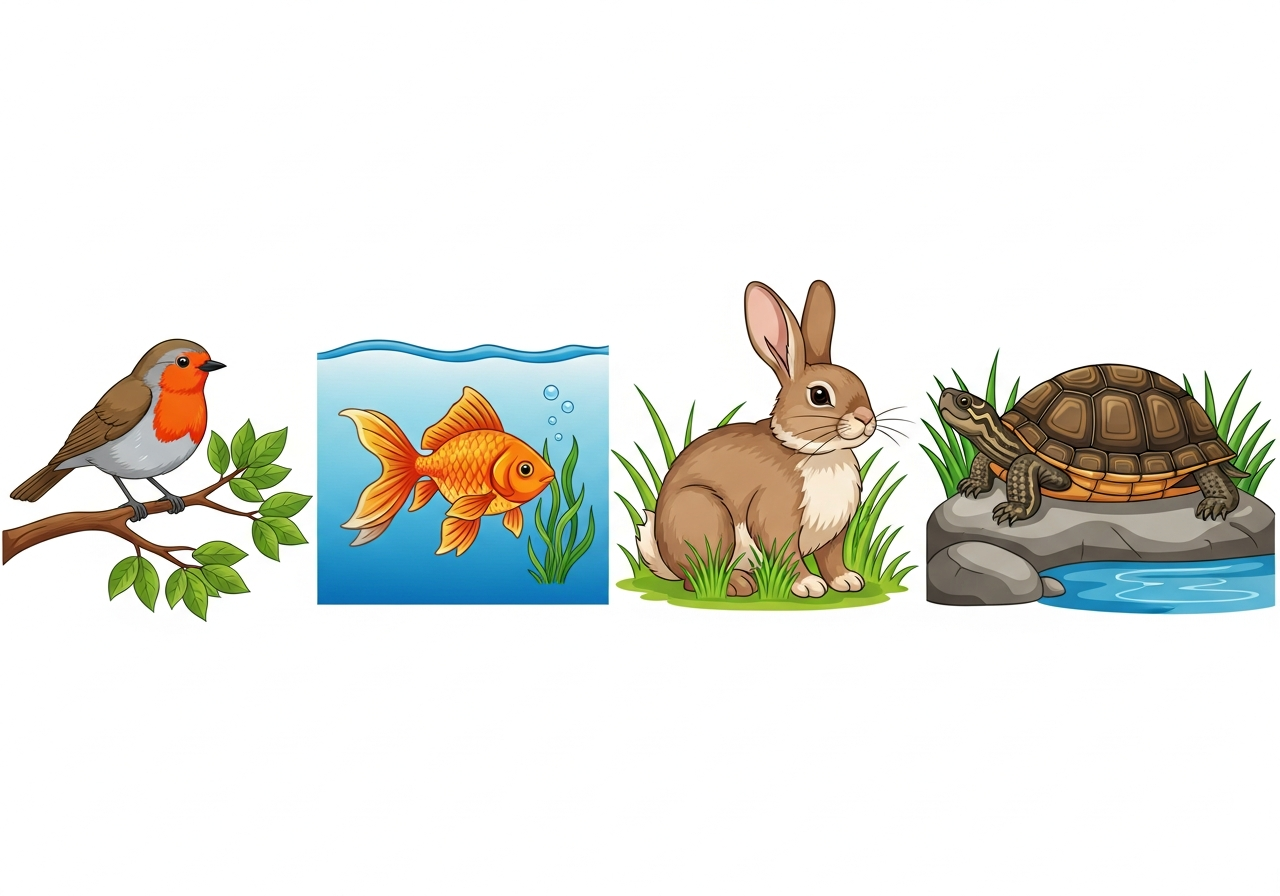
Animal Body Coverings
A body covering is what covers the outside of an animal's body. Different animals have different coverings that help them survive.
Here are the main types of body coverings you will learn about:
- Fur Soft hair that keeps animals like rabbits and polar bears warm.
- Feathers Light coverings on birds that help them fly and stay warm. Penguins have waterproof feathers that keep them dry in icy water.
- Scales Smooth, overlapping pieces that cover fish, snakes, and crocodiles. Scales help animals move easily and stay protected.
- Shell A hard covering that protects animals like turtles from danger. A turtle's shell is like its own house!
- Spines Sharp, pointy structures on hedgehogs that keep predators away.
Animal Limbs How Animals Move
A limb is a body part that helps an animal move or do things. Different animals have different limbs for different jobs.
- Wings Birds and butterflies use wings to fly through the air.
- Fins Fish like goldfish use fins to push through water and swim in different directions.
- Legs and hooves Horses use strong legs and hooves to run on land.
- Trunk An elephant's trunk is a special nose-like limb used to grab food, drink water, and spray water.
- Tail Seahorses use their curly tails to hold onto seaweed so they do not float away. Beavers use their flat tails to help them swim.
- Teeth Beavers have sharp teeth that help them chew through wood to build their homes.
- Fuzzy legs Honeybees have fuzzy legs that collect and carry pollen from flowers.
Sensory Organs How Animals Sense the World
A sensory organ is a body part that helps an animal feel, see, hear, smell, or taste things around it. These organs help animals find food and stay safe.
- Eyes Owls have large eyes that collect more light so they can see at night. Deer have large eyes that give them a wide view to spot danger.
- Ears Rabbits have large ears that turn to catch sounds from far away. Bats use their special ears to hear sounds bounce off objects in the dark.
- Nose Animals use their nose to smell food, sense danger, and recognize other animals nearby.
- Tongue Hummingbirds use their long tongues to reach deep into flowers and taste sweet nectar. Butterflies can even taste with their feet!
Key Terms and Definitions
External Features: The outside parts of an animal's body that you can see, like its covering, limbs, and sensory organs.
Body Covering: What covers the outside of an animal's body. Examples include fur, feathers, scales, shells, and spines.
Fur: Soft, thick hair that covers animals like rabbits and polar bears and keeps them warm.
Feathers: Light coverings on birds that help them fly and stay warm. Penguins have waterproof feathers that keep water out.
Scales: Smooth, overlapping pieces that cover fish, snakes, and crocodiles. Scales help animals move and stay protected.
Shell: A hard body covering that protects animals like turtles from predators and danger.
Spines: Sharp, pointy structures on a hedgehog's back that protect it from predators.
Limb: A body part that helps an animal move or do things, like wings, fins, or legs.
Wings: Body parts that help birds and butterflies fly through the air.
Fins: Body parts on fish that act like paddles to help them swim through water.
Trunk: The long, nose-like body part of an elephant used to grab things, drink water, and make sounds.
Sensory Organ: A body part that helps an animal sense the world around it, like eyes, ears, nose, and tongue.
Predator: An animal that hunts and eats other animals.
Waterproof: Something that does not let water pass through it. Penguin feathers are waterproof.
Practice What You Know
You can look at animals around you and ask: What covers their body? How do they move? How do they sense things?
Try matching each animal to its body covering can you remember which animals have fur, feathers, scales, shells, or spines? You can also think about how each animal uses its limbs and sensory organs to survive in its home.
Getting Ready to Learn
You do not need to know anything special before starting this topic. Just think about animals you have seen at home, at a park, or at the zoo. You already know what many animals look like now you will learn the names for their special body parts and why those parts are so important!
Related Topics and Connections
This topic is part of your Animals chapter. As you learn about animal external features, you are building a strong base for understanding how all living things are built and how they survive. Keep exploring animals and their amazing bodies there is so much more to discover!