Grade 12 Math Help — Video Lessons & Practice
Get clear explanations for any Grade 12 Math problem and build exam-ready confidence.
Step-by-Step Videos
Watch it solved then try the next one.
Practice Until Perfect
Keep practicing until it truly clicks.
Test Prep Included
Practice real exam questions for free.
Try It Now
Test your knowledge
Our approach aligns with the evidence
Exam Scores
Better Recall
Less Anxiety
Grade 12 Math Topics
1. Functions
2. Transformations
3. Polynomial Functions
4. Radical Functions
5. Rational Functions
6. Direct and Inverse Variation
7. Piecewise Functions
8. Exponential Functions
9. Logarithmic Functions
10. Applications of Exponential and Logarithmic Functions
11. Trigonometric Ratios and Angle Measure
12. Graphing Trigonometric Functions
13. Applications of Trigonometric Functions
14. Trigonometric Identities
15. Solving Trigonometric Equations
16. Inverse Trigonometric Functions
17. Permutations and Combinations
19. Imaginary and Complex Numbers
20. Vectors
21. Introduction to Matrices
22. Properties of Matrices
23. Determinants and Inverses of Matrices
24. Transformations with Matrices
24 Chapters · 173 Topics · 1067 Videos

Ready to practice Grade 12 Math?
Try practice questions on every Grade 12 Math topic — with instant feedback and step-by-step video solutions when you get stuck.
Discover Our Learning Areas
Explore key subjects and start learning with interactive content.




What Is Grade 12 Math?
Grade 12 Math is the final year of high-school mathematics in Canada and the direct gateway to university-level STEM programs. It encompasses two main streams: Advanced Functions (MHF4U in Ontario; Math 30-1 in Alberta) and Calculus & Vectors (MCV4U in Ontario; Math 31 in Alberta). Together, they build the algebraic fluency and analytical thinking that first-year university calculus demands. If you are preparing for a program in engineering, sciences, economics, or computer science, Grade 12 Math is not optional — it is foundational.
What Topics Are Covered in Grade 12 Math?
The curriculum moves through several major concept areas across the two courses:
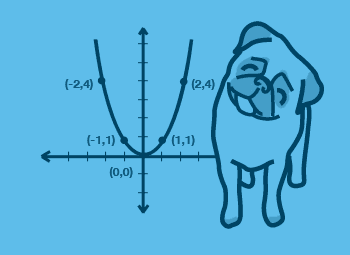
- Polynomial and Rational Functions — graphing, end behaviour, asymptotes, factor and remainder theorems.
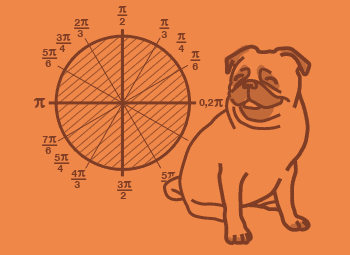
- Trigonometric Functions — radians, the unit circle, graphs of sine/cosine/tangent, compound-angle and double-angle identities, solving trig equations.
- Exponential and Logarithmic Functions — laws of logarithms, solving exponential equations, modelling growth and decay.
- Limits and Rates of Change — the concept of a limit, instantaneous rate of change, and the formal definition of the derivative.
- Derivatives and Their Applications — differentiation rules (power, product, quotient, chain), curve sketching, optimisation problems.
- Vectors in Two and Three Dimensions — dot product, cross product, equations of lines and planes in 3D space.
The Ontario MHF4U curriculum focuses on the functions strand; MCV4U covers calculus and vectors. Alberta Math 30-1 mirrors the functions content, while Math 30-2 follows a foundations-and-pre-calculus pathway. Understanding which course you are in matters — it shapes which topics your provincial exam will test.
Is Grade 12 Math Hard? Where Do Students Struggle?
Grade 12 Math has a reputation for difficulty, and it earns that reputation for specific reasons. The course assumes solid fluency with Grade 11 content: if quadratics, factoring, and basic trigonometry from MCR3U or Math 20-1 feel shaky, the new material compounds that uncertainty quickly.
The three areas where students lose the most marks are:
- Trigonometric identities. Proving an identity feels unlike anything earlier in the curriculum because there is no single procedural path. Students have to recognise patterns and choose a strategy — a skill built through practice, not memorisation alone.
- Limits and the definition of the derivative. The conceptual leap from "slope of a line" to "instantaneous rate of change" requires understanding an argument about what happens as values get infinitely close together. This is where students who skipped the "why" in earlier courses feel it most.
- Rational function analysis. Combining asymptotic behaviour, holes, intercepts, and sign charts into a single accurate sketch demands simultaneous attention to several algebraic conditions. Missing one condition cascades into a wrong graph.
The good news: every one of these areas responds well to targeted, step-by-step practice. A short diagnostic that identifies your specific weak points lets you focus effort where it matters most — not on topics you already understand.
Why Use StudyPug for Grade 12 Math?
StudyPug is built around one core principle: understand the method, not just the answer. Here is what that looks like in practice for Grade 12 Math students:
Start with a diagnostic. Rather than reviewing the entire course from the beginning, StudyPug's diagnostic assessment finds exactly which Grade 12 Math concepts are causing you trouble. Students who use the diagnostic report spending less time on content they already know and more time closing real gaps.
Learn from certified-teacher concept videos. Every lesson is filmed and delivered by a certified teacher — not generated by software. The videos walk through the reasoning behind each step, so when you encounter a similar problem on your provincial exam, you know how to approach it rather than trying to pattern-match a memorised solution.
Practice with adaptive questions. After watching a lesson, adaptive practice problems adjust to your current level. Answer correctly several times in a row and the difficulty increases; struggle, and the system backs off to reinforce the foundation. This means every practice session is productive, regardless of where you start.
Prep for your provincial exam. StudyPug's Grade 12 Math content is aligned to the provincial curriculum — Ontario's MHF4U and MCV4U, and Alberta's Math 30-1 and Math 30-2 — so the topics, terminology, and question styles match what your diploma or final exam actually tests. Practice questions are written in the style of real provincial assessments, helping you build exam-specific confidence.
Access everything 24/7. Late-night homework sessions, weekend study blocks, the night before a test — StudyPug is available whenever you need it. There is no waiting for a tutor's available slot and no commute.
What You Learn — Grade 12 Math Curriculum Coverage
StudyPug covers the full Grade 12 Math curriculum for Canadian provinces. The lesson library maps directly to the topics your teacher is covering in class, which means you can look up a specific concept the same day it appears on a homework problem or quiz.
For Ontario students, the content tracks the MHF4U curriculum — Advanced Functions — covering all the function families, transformations, and identities tested in the course. For Alberta students, the lesson bank follows the Alberta Math 30-1 curriculum, including the polynomial, trigonometric, exponential, and logarithmic function units that appear on the diploma exam.
Alberta students preparing specifically for the diploma examination can also use the dedicated Math 30-1 Test Prep and Math 30-2 Test Prep courses, which focus on exam-style questions and timed practice in the format of the provincial assessment.
Whether you are working through MHF4U assignments, practising for Math 30-1, or getting ready for MCV4U calculus, the curriculum coverage ensures that every video lesson and practice problem you do is relevant to your actual course — no irrelevant detours.
How to Use StudyPug for Grade 12 Math
Getting started is straightforward. Here is a workflow that Grade 12 students find effective:
- Run the diagnostic. Spend ten to fifteen minutes on the diagnostic assessment. It will identify your weakest areas in Grade 12 Math so you can build a focused study plan rather than reviewing the entire course.
- Watch the concept video for a topic before attempting problems. Each video teaches the method — the reasoning behind the steps — not just the mechanics. Watching first means your practice session is about applying understanding, not guessing at a procedure.
- Work through adaptive practice problems. After the video, do the practice set for that topic. Let the adaptive difficulty guide you: if it feels easy, push through to harder questions; if you hit a wall, the system will bring in supporting questions to fill the gap.
- Use Photo Search when you are stuck on a specific problem. If a homework question has you stumped, Photo Search lets you find the matching lesson quickly so you can watch the relevant explanation and get unstuck without losing momentum.
- Switch to exam-prep mode in the final two to three weeks before your exam. Work through full practice tests under timed conditions, review any video lessons for topics where you dropped marks, and use the provincial-aligned practice bank to simulate your diploma or final exam format.
StudyPug is available across all devices — laptop, tablet, and phone — so your study sessions can happen wherever it is convenient. The 30-day money-back guarantee means you can start without risk: if it is not helping within the first month, you get a full refund.
Grade 12 Math FAQ
Unsure how StudyPug works? Need help with setting up? Check our frequently asked questions or contact us for help.
What do you learn in Grade 12 Math, and what topics does it cover?
Grade 12 Math in Canada typically spans two main courses: Advanced Functions (MHF4U in Ontario, Math 30-1 in Alberta) and Calculus & Vectors (MCV4U). Core topics include polynomial, rational, trigonometric, exponential, and logarithmic functions, as well as limits, derivatives, and an introduction to vectors and geometry. The exact course names and topic order vary by province, but the mathematical content — function behaviour, transformations, rates of change — is consistent across curricula. These topics form the foundation for university-level STEM programs.
What is the difference between Advanced Functions and Calculus & Vectors in Grade 12?
Advanced Functions (MHF4U / Math 30-1) focuses on deepening your understanding of function families — polynomial, rational, trigonometric, exponential, and logarithmic — and how they behave. Calculus & Vectors (MCV4U / Math 31) builds on that foundation by introducing rates of change, derivatives, and basic integrals, plus three-dimensional vectors and their applications. Advanced Functions is typically a prerequisite for Calculus & Vectors in Ontario. If you plan to study engineering, physics, or mathematics at university, you will likely need both courses.
Is Grade 12 Math hard, and where do students struggle most?
Grade 12 Math is considered one of the more demanding high-school courses because it combines abstract reasoning with algebraic precision. The most common sticking points are trigonometric identities, which require memorising and manipulating multiple formulas; limits and the definition of the derivative in calculus; and rational function sketching, which demands understanding of asymptotes and end behaviour. Students often struggle not because the ideas are impossible, but because gaps from earlier grades compound quickly. Addressing those gaps early — ideally with a diagnostic to find them — makes the hardest topics much more approachable.
What should I take before Grade 12 Math, and what comes after it?
The standard prerequisite is Grade 11 Functions (MCR3U in Ontario, Math 20-1 in Alberta), which covers quadratics, trigonometry, and an introduction to sequences and series. Solid algebra skills from Grade 10 Academic Math are also essential. After Grade 12 Math, students typically move into first-year university calculus (e.g., MATH 1000 / MAT 135 in Ontario), linear algebra, or discrete mathematics depending on their program. Students pursuing science, engineering, economics, or computer science will use Grade 12 Math content directly in their first semester.
Is Grade 12 Math on the provincial exam, and how is it tested?
In Ontario, Grade 12 university-prep math courses include a final examination that counts toward the course mark, set and administered by the individual school board rather than a single provincial body — though the Ontario curriculum sets the standards. In Alberta, Math 30-1 and Math 30-2 are diploma examination courses; the provincial diploma exam counts for 30% of the final mark and covers the full curriculum. British Columbia uses provincial graduation assessments at Grade 10 but does not have a separate Grade 12 math diploma exam. Always check your province's current assessment schedule, as policies update.
What is one of the hardest concepts in Grade 12 Math, and how do you tackle it?
Trigonometric identities — particularly proving identities like the double-angle and compound-angle formulas — trip up many Grade 12 students. The challenge is that there is no single algorithm; you have to choose which side to manipulate and which identity to apply, which feels open-ended. The most effective approach is to build a small reference card of the core identities, then practice recognising patterns: look for squared trig terms (use Pythagorean identities), sums of angles (use compound-angle formulas), and double angles. Watching worked examples that explain the reasoning behind each step — not just the algebra — is the fastest way to develop this pattern recognition.




Written by the StudyPug Team
Last updated June 5, 2026
3 M+
students
★★★★★
4.8 average
K–12
all grades