Grade 11 Math Help — Video Lessons & Practice
Get clear explanations for any Grade 11 Math problem and build exam-ready confidence.

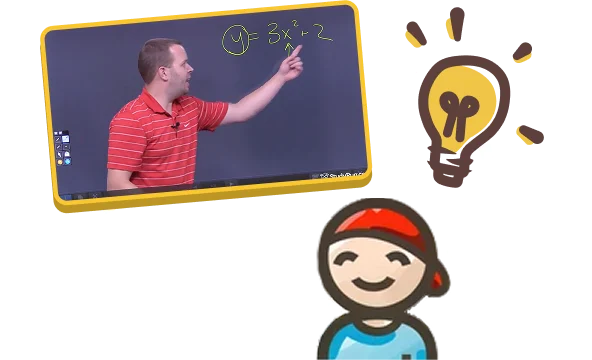
Certified-Teacher Video Lessons
Watch step-by-step Grade 11 Math lessons made by certified teachers — not AI. Learn the method behind every problem so you can ace similar questions on your provincial exam.

Diagnostic Assessment & Adaptive Practice
A quick diagnostic pinpoints exactly where to focus so you study smarter, not harder. Then adaptive practice adjusts difficulty to your level, building real Grade 11 Math skill.

Provincial Exam Prep Built In
Practice with exam-style questions aligned to your provincial curriculum — whether you're sitting a Ontario, BC, or Alberta assessment — all included in your subscription.
Try It Now
Test your knowledge
Our approach aligns with the evidence
Exam Scores
Better Recall
Less Anxiety
Grade 11 Math Topics
1. Factoring
2. Quadratic Functions
3. Quadratic Equations and Inequalities
4. Radicals
5. Rational Expressions
6. Absolute Value Functions
7. Reciprocal Functions
8. Systems of Equations
9. Inequalities in Two Variables
10. Trigonometry
11. Bearings
Discover Our Learning Areas
Explore key subjects and start learning with interactive content.



What Is Grade 11 Math?
Grade 11 Math is the course where high-school mathematics shifts from procedures to concepts — and it is widely considered the first genuinely challenging year of math in Canadian secondary school. Rather than simply extending the arithmetic and linear algebra of earlier grades, Grade 11 asks you to think in terms of functions, to reason about how quantities relate, and to apply trigonometry in non-right-triangle contexts. The specific course name varies by province: in Ontario you will see MCR3U (Functions) or MCF3M (Functions and Applications); in British Columbia it is Pre-calculus 11 or Foundations of Mathematics 11; in Alberta it is Math 20-1 or Math 20-2. Whatever the label, the core ideas — functions, trigonometry, exponentials, and sequences — are consistent across Canadian curricula.
Completing Grade 11 Math successfully is a prerequisite for the university-stream Grade 12 courses (MHF4U, MCV4U, Pre-calculus 12, Math 30-1) that university engineering, science, business, and health-science programs require. In short: what happens in Grade 11 directly determines your Grade 12 options and your university admission eligibility.
Common Grade 11 Math Questions Answered
What topics are covered in Grade 11 Math across Canadian provinces?
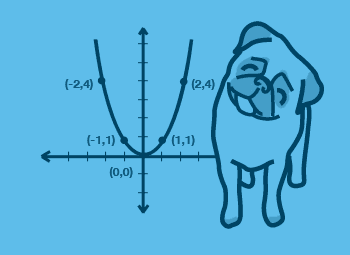
Despite different course names, Canadian Grade 11 Math programs share a recognizable set of topics. Functions and function notation sit at the centre — you learn to work with polynomial, rational, radical, exponential, logarithmic, and trigonometric functions, understanding transformations (shifts, stretches, reflections) and how they affect graphs and equations. Quadratics are extended well beyond Grade 10: you factor more complex expressions, complete the square, and use the discriminant to reason about roots.
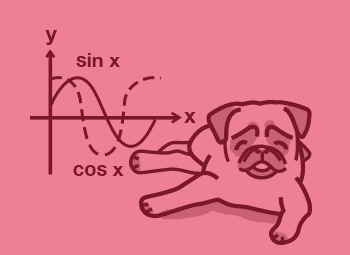
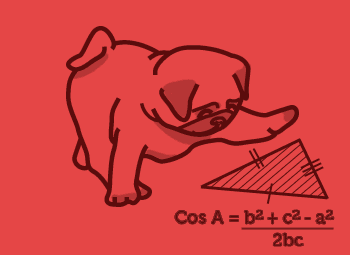
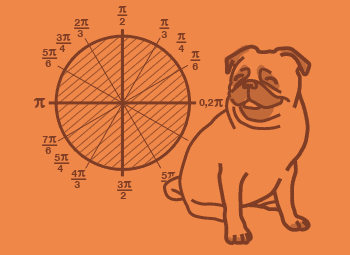
Trigonometry moves beyond SOH-CAH-TOA into the unit circle, the sine and cosine laws for non-right triangles, and in many streams, trigonometric identities. Sequences and series — arithmetic and geometric — introduce the idea of summation and lay groundwork for calculus. Financial mathematics (compound interest, present and future value) appears in applied streams. If you are in BC, the Pre-calculus 11 pathway emphasises polynomial and rational functions heavily; Alberta Math 20-1 stresses sequences and trigonometry; Ontario MCR3U weaves all these threads together with strong emphasis on function families.
Where do Grade 11 Math students struggle most — and why?
The difficulty spike in Grade 11 Math almost always traces back to two sources. First, gaps from Grade 10: if your factoring is shaky or your understanding of linear and quadratic graphs is surface-level, Grade 11 functions feel impossible because every new topic builds directly on those foundations. Second, the conceptual shift: Grade 11 requires you to think about relationships between variables, not just compute an answer. Students who learned to follow steps without understanding why often hit a wall here.
The specific topics that cause the most grief: function transformations (especially combining multiple transformations in the right order), rational and radical expressions (students make sign errors and forget domain restrictions), trigonometric equations (finding all solutions in a given interval rather than one), and trigonometric identities (knowing which identity to apply with no obvious starting point). Each of these has a learnable method — the frustration comes from not having that method laid out clearly and step by step.
How does Grade 11 Math connect to Grade 12 and beyond?
Grade 11 Math is the direct gateway to the Grade 12 courses that universities evaluate. In Ontario, MCR3U leads to MHF4U (Advanced Functions) and MCV4U (Calculus and Vectors) — both required or strongly recommended for engineering, science, and commerce programs at every major Canadian university. In BC, Pre-calculus 11 leads to Pre-calculus 12, which is a prerequisite for most post-secondary STEM programs. In Alberta, Math 20-1 leads to Math 30-1, which carries a provincial diploma exam that counts toward your post-secondary application.
Beyond the prerequisites, the habits you build in Grade 11 — working carefully through multi-step problems, checking domain restrictions, verifying solutions — are exactly the habits that make Grade 12 Math and first-year university calculus manageable. Students who invest in understanding Grade 11 deeply consistently report that Grade 12 feels like a natural extension rather than a new shock.
What are provincial exam expectations for Grade 11 Math in Canada?
Provincial assessment structures differ. Ontario has no mandatory provincial exam at Grade 11; your school-based final exam and term marks determine your grade entirely. BC includes some Grade 11 courses in provincial assessments depending on the course and stream. Alberta's Math 20-1 and Math 20-2 do not carry mandatory diploma exams — those arrive at Grade 12 with Math 30-1 and Math 30-2 — but Grade 11 content is tested directly in those diploma exams, so your Grade 11 understanding has long-term consequences.
Regardless of province, your in-school tests, midterms, and final exam are structured around the same types of problems: multi-step function questions, prove-the-identity trigonometry, application problems involving exponential growth or financial mathematics. StudyPug's practice questions are built to match this style and difficulty level, based on real Canadian exam formats.
Why StudyPug for Grade 11 Math
Most students who struggle with Grade 11 Math are not struggling because the content is beyond them — they are struggling because they have never had it explained the right way. StudyPug's certified-teacher video lessons do not just show you an answer; they teach you the method. You watch a real teacher walk through the problem from first principles, explaining why each step is taken, so that when a similar question appears on your test, you know what to do — not just what the answer was last time.
The StudyPug diagnostic assessment identifies exactly where your Grade 11 Math gaps are before you spend a single minute studying the wrong thing. Students who take the diagnostic and follow its recommendations study more efficiently — focusing effort where it actually moves their grade. This is what it means to study smarter, not harder.
Adaptive practice then adjusts to your performance in real time. If you nail a set of function-transformation questions, the system moves you to harder material. If you slip on trigonometric equations, it brings you back with a different angle until the concept is solid. You are never practising below your level or above it — always in the zone where learning happens fastest.
For students aiming at provincial exams or university admission requirements, StudyPug includes exam-style practice questions based on Canadian provincial curricula and assessment formats. The content is matched to Ontario, BC, and Alberta expectations — so you are always practising what is actually on your assessment, not generic content that may not apply. And for Grade 11 students in Alberta specifically, StudyPug also provides dedicated preparation resources for Math 30-1 test prep and Math 30-2 test prep — so you can look ahead and prepare for the diploma exams your Grade 11 work is building toward.
Every StudyPug subscription comes with a 30-day money-back guarantee. There is no free trial, but there is zero financial risk in the first month — if StudyPug is not the right fit, you get a full refund.
What You Learn: Grade 11 Math Curriculum Coverage
StudyPug covers the full range of Grade 11 Math topics taught across Canadian provinces. Here is what is included:
- Functions and function notation — domain, range, mapping notation, function vs. relation
- Polynomial and quadratic functions — factoring, completing the square, quadratic formula, discriminant, vertex form
- Rational and radical expressions and equations — simplifying, domain restrictions, solving with extraneous roots
- Exponential and logarithmic functions — growth and decay, converting between forms, solving exponential equations
- Trigonometry — unit circle, radian measure, sine and cosine laws, trigonometric equations, identities
- Sequences and series — arithmetic and geometric sequences, summation formulas, sigma notation
- Financial mathematics — simple and compound interest, annuities, present and future value
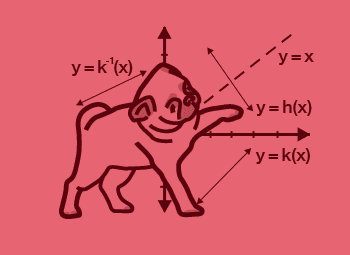
- Transformations of functions — translations, reflections, stretches, combined transformations, inverse functions
If you are following the Alberta curriculum, you can explore the full Grade 11 Math topic list for your province at our grade 11 math Alberta curriculum page. Students in British Columbia can review the provincial scope and sequence on our grade 11 math BC curriculum page. Ontario students will find that StudyPug's MCR3U and MCF3M coverage maps directly to the topics in your course.
Using StudyPug for Grade 11 Math: How It Works
Getting started with StudyPug takes minutes. When you create your account, you select your grade, province, and course — and StudyPug immediately aligns your content to your provincial curriculum. From there, the recommended first step is the diagnostic assessment: a short, focused test that reveals exactly which Grade 11 Math topics need the most attention. The diagnostic output is a personalised study plan, not a generic list — it tells you precisely where to start.
From your study plan, you move into certified-teacher video lessons. Every lesson follows a consistent format: the teacher states what the problem is, explains the concept behind it, walks through the solution step by step with commentary on why each move is made, then reinforces with a second example. You can pause, rewind, and replay as many times as you need — something a classroom cannot offer. Students frequently report understanding a concept from one 10-minute StudyPug video that weeks of class had not clarified.
After each video, adaptive practice problems give you the chance to apply what you just learned. The system tracks your accuracy and adjusts difficulty accordingly. You also have access to free practice problems without a subscription, so you can test-drive the content on any topic before committing.
For students who prefer starting from a textbook problem or a worksheet question, Photo Search lets you photograph any Grade 11 Math problem and instantly find the matching StudyPug lesson. It works across all subjects and all grades — simply point your camera at the question and the platform surfaces the relevant step-by-step lesson.
StudyPug is fully mobile-optimised, so you can watch a video lesson on the bus, work through practice problems in a spare period, or review trigonometric identities the night before a test. Access is available 24/7 — the help is there exactly when you need it, not only when a tutor is available. Whether you are targeting a provincial diploma exam in Alberta, a university prerequisite in Ontario, or a BC foundations assessment, StudyPug gives you the tools to arrive prepared.
Grade 11 Math FAQ
Unsure how StudyPug works? Need help with setting up? Check our frequently asked questions or contact us for help.
What do you learn in Grade 11 Math, and what topics does it cover?
Grade 11 Math builds on algebra and introduces more abstract reasoning. Core topics include quadratic and polynomial functions, exponential and logarithmic functions, trigonometric ratios and identities, sequences and series, and introductory financial mathematics. In Ontario the course is MCR3U or MCF3M; in BC it is Pre-calculus 11 or Foundations of Math 11; in Alberta it is Math 20-1 or Math 20-2. The exact topics depend on your provincial stream, but functions and trigonometry appear across all of them and form the backbone of the grade.
What is the difference between Grade 11 Math and Grade 12 Math?
Grade 11 Math introduces functions and trigonometry as new concepts and develops algebraic fluency with polynomials, quadratics, and exponentials. Grade 12 Math extends these ideas significantly — adding calculus concepts (in MCV4U/Calculus 12), advanced functions (MHF4U), or data management (MDM4U). Grade 12 is the course universities evaluate for STEM admissions, so it carries higher stakes. Think of Grade 11 as the foundation: if you close your gaps now, Grade 12 becomes far more manageable.
Is Grade 11 Math hard, and where do students struggle most?
Grade 11 Math is widely considered the first year where students hit a genuine difficulty spike. The jump from linear algebra to functions, and the abstract nature of trigonometric identities, catch many students off guard. The most common struggle points are: understanding function notation and transformations, solving trigonometric equations (especially identifying all solutions in a given interval), and working with rational and radical expressions. The good news is these topics have clear, learnable methods — they feel hard until the steps are shown explicitly.
What should I take before Grade 11 Math, and what comes after it?
You should be solid in Grade 10 Math — specifically linear and quadratic equations, factoring, and basic trigonometry (SOH-CAH-TOA). Gaps in Grade 10 factoring are the most common reason students struggle with Grade 11 functions. After Grade 11, you progress to Grade 12 Math. In the academic stream (Ontario MCR3U → MHF4U/MCV4U; BC Pre-calculus 11 → Pre-calculus 12; Alberta Math 20-1 → Math 30-1), Grade 11 Math is a direct prerequisite for university-bound Grade 12 courses and eventually university calculus.
Is Grade 11 Math on provincial exams, and how is it tested?
In Canada, provincial assessments vary. Ontario does not have a mandatory Grade 11 provincial exam, but your final school mark matters for Grade 12 course eligibility. British Columbia includes Grade 11 courses in provincial assessments for some streams. Alberta's Math 20-1 and 20-2 do not carry a mandatory diploma exam, but Math 30-1 and 30-2 (Grade 12) do — and Grade 11 content is directly tested there. Regardless of province, your in-school tests and final exam count heavily, and StudyPug's practice questions are built to reflect the style and difficulty of Canadian provincial assessments.
What is one of the hardest concepts in Grade 11 Math, and how do you tackle it?
Trigonometric identities are consistently rated the hardest Grade 11 Math topic. Students must simplify or prove expressions using reciprocal, quotient, and Pythagorean identities — without being told which identity to apply. The key strategy is to work on one side only, convert everything to sine and cosine first, then look for common factors or Pythagorean substitutions. Practicing a structured approach — rather than trying to 'see' the answer — is what separates students who get full marks from those who leave proof questions blank.