Macroeconomics Help: Video Lessons & Practice
Step-by-step lessons from certified teachers. Work through every topic with clear solutions.
Value vs. Private Tutor
Get expert macroeconomics help affordably.

Multi-Subject
Switch subjects anytime not just Macroeconomics.
Build Mastery
Master each concept before advancing.
Macroeconomics Topics
1. Measuring GDP
2. Jobs and Inflation
3. Understanding Economic Growth
4. Finance and Loans
5. Money and Banks
6. The Exchange Rate
7. Aggregate Supply and Demand
8. The Keynesian Model
9. Inflation and Unemployment
9 Chapters · 36 Topics · 118 Videos
Discover Our Learning Areas
Explore key subjects and start learning with interactive content.









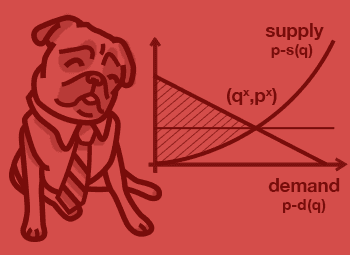
What Is Macroeconomics?
Macroeconomics is the branch of economics that studies the behaviour of the economy as a whole — examining total output, employment, inflation, and the policy tools governments and central banks use to influence them. Rather than asking why one firm raises its price, macroeconomics asks why a country's price level rises across the board and what, if anything, should be done about it. It is a core requirement in virtually every economics, business, and public-policy programme at Canadian universities.
The field sits at the intersection of theory and real-world events. When the Bank of Canada adjusts its policy interest rate, when the federal government announces a stimulus package, or when Canada's GDP growth slows — macroeconomics gives you the analytical tools to understand why those decisions are made and what their likely consequences are.
What Topics Are Covered in University Macroeconomics?
A standard first-year macroeconomics course at a Canadian university typically covers national income accounting (how GDP is measured), the components of aggregate demand, the determinants of long-run economic growth, unemployment theory, inflation and the price level, fiscal policy (government spending and taxation), and monetary policy (interest rates and the money supply). Upper-year courses extend into the IS-LM framework, open-economy macroeconomics including exchange rates and the balance of payments, and modern growth models.
Understanding these topics requires building each concept on the last — GDP before growth, growth before fiscal policy, fiscal policy before monetary policy. StudyPug structures its macroeconomics content in the same logical sequence, so each lesson reinforces what came before.
How Is Macroeconomics Different from Microeconomics?
The distinction matters because many students enter university having taken a single economics course in high school and are surprised when macroeconomics feels entirely different. Microeconomics analyses individual consumers and firms: how they make decisions, how markets clear, and how prices are set. Macroeconomics aggregates all of that behaviour into economy-wide variables — total consumption, total investment, the general price level — and asks how those aggregates interact.
The tools overlap (both fields use graphs, equilibrium analysis, and marginal reasoning) but the questions are different. In micro you might ask what happens to the price of coffee if a frost hits Brazilian farms. In macro you ask what happens to Canada's inflation rate if the Bank of Canada raises the overnight rate by 25 basis points. If you are taking both courses simultaneously, keeping the levels of analysis clearly separated in your notes will save a lot of confusion on exams.
Is Macroeconomics Hard? Where Do Students Struggle Most?
Macroeconomics has a reputation for being more abstract than microeconomics, and that reputation is earned. The subject asks you to reason about variables — like the aggregate price level or the equilibrium interest rate — that you cannot observe directly the way you can observe an individual firm's costs. Most students find the IS-LM model the single hardest hurdle: it requires you to hold two markets in your head simultaneously, track how a shock in one feeds into the other, and then explain the combined result.
Other common trouble spots include distinguishing real from nominal variables (a critical skill for understanding inflation), working through the mechanics of the money multiplier, and applying open-economy models to exchange rate movements. The consistent thread across all of these topics is that passive reading does not work — you need to practise drawing the models, labelling every curve, and narrating the adjustment process in your own words. That is exactly how StudyPug's practice problem bank is structured: model first, mechanism second, numbers third.
How Is Macroeconomics Assessed at Canadian Universities?
Assessment structures vary by institution, but the most common format at Canadian universities includes two midterm exams (typically worth 20–30% each), a final exam worth 40–50%, and a problem-set or assignment component. Some courses add an in-class quiz stream or a short research paper. The final exam is almost always cumulative and mixes multiple-choice questions that test conceptual recall with longer short-answer and essay questions that test your ability to apply models to unfamiliar scenarios.
Because macroeconomics is often a prerequisite for higher-level economics, finance, and public-policy courses, your grade here has downstream consequences for your programme options. Provincial scholarship and bursary programmes at many Canadian universities also have GPA thresholds, making strong performance in gateway courses like this one especially important. StudyPug's mock midterms and finals are built around this cumulative, scenario-based format so that exam day feels familiar rather than surprising.
What Is the IS-LM Model and Why Does It Matter?
The IS-LM model is the backbone of intermediate macroeconomic analysis and the topic that most reliably separates students who understand the material from those who have only memorised it. The IS curve represents all combinations of interest rates and income where the goods market clears — where planned investment equals planned saving. The LM curve represents all combinations where the money market clears — where money demand equals money supply.
What makes the model powerful, and difficult, is its interdependence. An expansionary fiscal policy shifts the IS curve right, raising income and the interest rate. But the higher interest rate reduces private investment — the "crowding-out" effect — so the net increase in income is smaller than the fiscal multiplier alone would predict. Working through these chains of causality is exactly the skill exam questions test, and it is a skill built only through repeated practice with worked examples. StudyPug's certified-teacher videos walk through each shift explicitly, and the adaptive practice bank generates scenario questions that mirror the structure of Canadian university exams.
Why Use StudyPug for Macroeconomics Help?
StudyPug is built for university-level economics students who need more than a textbook summary. Three features set it apart for macroeconomics specifically.
A diagnostic that tells you exactly where to start. Rather than working through every topic from the beginning, StudyPug's diagnostic assessment identifies your specific knowledge gaps — whether that is national income accounting, the monetary transmission mechanism, or exchange rate theory — and directs you to the lessons that will have the most impact on your grade.
Certified-teacher videos that teach the method. Every macroeconomics video on StudyPug is produced by an experienced instructor, not generated by AI. The lessons are designed to teach you the analytical method — how to set up the model, how to trace a policy shock through it, how to articulate your reasoning under exam conditions — so that you are prepared for variations you have never seen before, not just the specific examples from lecture.
Adaptive practice that adjusts to your level. The practice question bank scales difficulty based on your performance. If you are solid on GDP accounting but weak on monetary policy transmission, the system keeps pushing you on monetary policy until your accuracy improves. This targeted repetition is far more efficient than re-reading chapter summaries the night before an exam.
One subscription covers Macroeconomics, Microeconomics, Econometrics, and every other course in your economics programme. You never need to pay separately for individual course access.
What You Learn: Macroeconomics Course Coverage
StudyPug's macroeconomics content is organised to follow the sequence used by Canadian university courses. Key topic areas include:
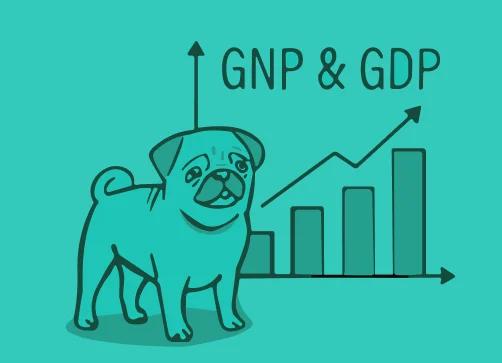
- National Income Accounting: GDP measurement (expenditure, income, and output approaches), GNP vs GDP, real vs nominal GDP, and price indices including the CPI and GDP deflator.
- Economic Growth: Long-run growth theory, the Solow growth model, the role of capital accumulation, technological progress, and total factor productivity.
- Unemployment and Inflation: Types of unemployment (frictional, structural, cyclical), the natural rate, the Phillips curve, and the causes and costs of inflation including demand-pull and cost-push mechanisms.
- Aggregate Demand and Supply: The AD-AS model, shifts in aggregate demand and supply, short-run vs long-run equilibrium, and the adjustment process.
- Fiscal Policy: Government spending multipliers, tax multipliers, the balanced-budget multiplier, automatic stabilisers, and the debate around fiscal austerity vs stimulus.
- Monetary Policy: The money supply and money demand, the Bank of Canada's policy tools, the overnight rate, the monetary transmission mechanism, and quantitative easing.
- The IS-LM Model: Goods market equilibrium (IS curve), money market equilibrium (LM curve), simultaneous equilibrium, policy analysis, and crowding out.
- Open-Economy Macroeconomics: The balance of payments, exchange rate determination, purchasing power parity, the Mundell-Fleming model, and the effects of monetary and fiscal policy under fixed and flexible exchange rates.
Because no validated topic-level URLs are currently available for this course in the StudyPug page feed, the full topic list above reflects the content available within the course. Use the Browse Topics button above to navigate directly to specific lessons.
How to Use StudyPug for Macroeconomics
Start with the diagnostic. Before your first lecture or at the start of exam prep, run the macroeconomics diagnostic. It takes about fifteen minutes and produces a personalised study map showing which topics are solid and which need work. This is especially useful if you are entering the course having already studied some economics — you should not spend time on topics you already understand well.
Watch the concept video before attempting practice. Each topic on StudyPug begins with a certified-teacher video that explains the concept and walks through at least one worked example. Watch the video fully before starting the practice questions. The goal is to understand the method — the chain of reasoning — not just to get the right number. University macroeconomics exams consistently reward students who can explain their reasoning, not just produce an answer.
Use adaptive practice to close gaps. After each video, move into the adaptive practice bank. The system will present questions at an appropriate difficulty level and adjust upward as your accuracy improves. If you are preparing for a midterm, work through the relevant topic clusters in the week beforehand. If you are preparing for the final, use the full mock exam to simulate exam conditions — including time pressure.
Watch solutions more than once. One of the most effective study habits for macroeconomics is re-watching the solution video for questions you got wrong. StudyPug lets you watch any lesson or solution video as many times as you need. Seeing the correct method applied step by step is often more instructive than simply reading the written solution.
Use one subscription for all your economics courses. If you are also taking Microeconomics, Econometrics, or an economics elective this semester, they are all included. There is no need to manage multiple subscriptions or platforms. Every plan is backed by a 30-day money-back guarantee — if StudyPug is not working for you within the first month, you get a full refund.
Macroeconomics FAQ
Unsure how StudyPug works? Need help with setting up? Check our frequently asked questions or contact us for help.
What do you learn in Macroeconomics, and what topics does it cover?
Macroeconomics studies the economy as a whole rather than individual markets. Core topics include national income accounting, GDP measurement, economic growth, unemployment, inflation, aggregate demand and supply, fiscal policy, monetary policy, interest rates, and exchange rates. At the university level, you will also cover open-economy models, the IS-LM framework, and long-run growth theory. By the end of the course, you should be able to analyse how government and central-bank decisions shape economic outcomes and understand the trade-offs policy-makers face.
What is the difference between Macroeconomics and Microeconomics?
Microeconomics examines individual decision-makers — consumers, firms, and specific markets — focusing on supply and demand, pricing, and resource allocation at a small scale. Macroeconomics zooms out to study the entire economy: total output, national employment, inflation, and policy. The two fields share foundational tools such as marginal analysis and equilibrium models, but macroeconomics introduces concepts like GDP, the central bank's role, and fiscal multipliers that do not appear in introductory micro. Most economics programmes require both, often in sequence.
What are the prerequisites for Macroeconomics, and what course comes after it?
Most Canadian universities require at least one introductory economics course — Principles of Economics or Introductory Microeconomics — before enrolling in university-level Macroeconomics. A solid grasp of basic graphs, supply-and-demand analysis, and algebra is assumed. After completing Macroeconomics, students typically progress to Intermediate Macroeconomics, Monetary Economics, International Economics, or Econometrics, depending on their programme. Some programmes integrate macro theory directly into policy or public-finance streams.
Is Macroeconomics hard, and where do students struggle most?
Many students find macroeconomics moderately challenging, especially when abstract models replace intuitive real-world reasoning. The most common sticking points are the IS-LM model and how shifts in each curve interact, understanding the difference between nominal and real variables, and tracing the ripple effects of monetary and fiscal policy. Exchange rate dynamics and open-economy models also trip students up. The key is not just memorising the model but practising through worked examples so you can adapt to scenario-based exam questions.
How is Macroeconomics assessed — midterms, finals, and assignments?
In Canada, university macroeconomics courses typically assess students through two midterm exams, a final exam worth 40–50% of the grade, and a mix of problem sets or short written assignments. Some courses include an in-class quiz component or a research paper. The final exam is cumulative and often includes a mix of multiple-choice, short-answer, and essay questions. Provincial scholarship and bursary eligibility at many Canadian universities is tied to your GPA, so strong exam performance in core economics courses matters.
What is one of the hardest topics in Macroeconomics, and how do you approach it?
The IS-LM model is widely considered the toughest topic in introductory macroeconomics. It combines the goods market (IS curve) with the money market (LM curve) to determine simultaneous equilibrium in both. Students struggle because a single policy change — say, an increase in government spending — shifts the IS curve, changes income, then affects money demand and interest rates, which feeds back into investment. The best approach is to draw the model from scratch for every practice problem, label every shift, and articulate the mechanism in plain language before solving algebraically.





Written by the StudyPug Team
Last updated June 5, 2026
3 M+
students
★★★★★
4.8 average
K–12
all grades