Grade 12 AP Calculus AB Help — Video Lessons & Practice
Get clear, step-by-step explanations for every AP Calculus AB topic and build exam-ready confidence.
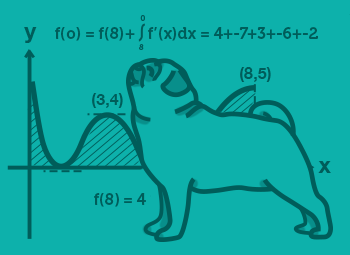
Step-by-Step Video Lessons
Real teaching helps you solve problems alone.
Unlimited Practice
Practice until it actually clicks.

Real Exam Practice
Practice real AP exam questions in your plan.
Try It Now
Test your knowledge
Our approach aligns with the evidence
Exam Scores
Better Recall
Less Anxiety
AP Calculus AB Topics
1. Limits & Continuity
2. Derivatives
3. Derivative Applications
4. Integrals
5. Integration techniques
6. Integral Applications
7 Chapters · 44 Topics · 313 Videos
Discover Our Learning Areas
Explore key subjects and start learning with interactive content.



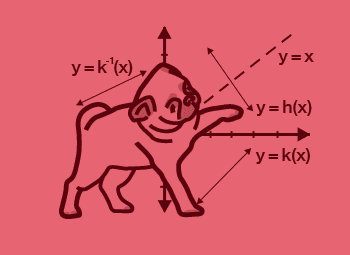



What is AP Calculus AB?
AP Calculus AB is a College Board Advanced Placement course that introduces students to single-variable calculus — the mathematics of change, accumulation, and continuous functions. Completing the course and achieving a qualifying score on the AP exam can earn university credit at most Canadian and North American institutions, giving Grade 12 students a meaningful head start on their post-secondary studies.
The course is organized around three big ideas: limits and continuity, differentiation and its applications, and integration and the Fundamental Theorem of Calculus. Mastering these ideas requires both conceptual understanding and procedural fluency — you need to know why a technique works, not just how to execute it, because the AP exam's free-response section awards marks for correct mathematical reasoning and written justification.
What topics are covered in AP Calculus AB?
The AP Calculus AB curriculum is divided into eight units by the College Board:
Unit 1 – Limits and Continuity. You learn to evaluate limits algebraically and graphically, handle one-sided limits, identify discontinuities, and apply the Squeeze Theorem. The definition of continuity at a point and on an interval underpins everything that follows.
Unit 2 & 3 – Differentiation. The derivative is defined as a limit of a difference quotient. You develop fluency with the power rule, product rule, quotient rule, and chain rule, then extend to implicit differentiation and derivatives of trigonometric, exponential, and logarithmic functions.
Unit 4 – Contextual Applications of Differentiation. Related rates and straight-line motion problems appear here. Students find this unit demanding because it requires setting up calculus equations from written descriptions — a skill the AP exam tests heavily in the FRQ section.
Unit 5 – Analytical Applications of Differentiation. Mean Value Theorem, increasing/decreasing intervals, the first and second derivative tests, concavity, and optimization all live in this unit. Curve sketching and applied optimization are common AP exam topics.
Units 6 & 7 – Integration and Accumulation. You move from Riemann sums to the definite integral, prove and apply the Fundamental Theorem of Calculus, and build integration techniques including u-substitution and integration by parts (introduced lightly in AB; expanded in BC).
Unit 8 – Differential Equations. Slope fields, separation of variables, and exponential growth/decay models close out the AB curriculum. Differential equations questions appear on almost every AP exam.
Is AP Calculus AB hard?
AP Calculus AB has a reputation as one of the more rigorous AP courses, and that reputation is deserved. The workload is demanding, the concepts build on each other (a shaky understanding of limits makes derivatives harder; weak derivatives make integration harder), and the AP exam tests both speed and depth.
That said, the course is very learnable with the right support. Students who struggle most tend to have gaps in their precalculus foundation — particularly with function notation, trigonometric values, and algebraic manipulation. If you can identify and patch those gaps early, the calculus itself becomes much more manageable.
Common sticking points include:
- Related rates — translating a word problem into a differentiable equation.
- Implicit differentiation — remembering the chain rule applies to y when differentiating with respect to x.
- The Fundamental Theorem of Calculus (Part 2) — understanding accumulation functions and how to differentiate an integral with a variable upper limit.
- FRQ justification — writing complete mathematical reasoning rather than just circling a number.
Consistent daily practice — even 20–30 minutes — is more effective than cramming. Working through problems, checking your method against a step-by-step explanation, and re-attempting similar problems builds the fluency the AP exam demands.
How is AP Calculus AB graded and what does the AP exam look like?
The College Board AP Calculus AB exam is written each May. It has two sections:
Section I — Multiple Choice (105 minutes, 45 questions, 50% of score). Part A (no calculator, 30 questions) and Part B (graphing calculator allowed, 15 questions).
Section II — Free Response (90 minutes, 6 questions, 50% of score). Part A (graphing calculator allowed, 2 questions) and Part B (no calculator, 4 questions). Free-response questions require complete justification — partial credit is awarded for correct setup and reasoning even when the final answer is wrong.
Scores are reported on a 1–5 scale. A score of 3 is considered passing; many Canadian universities award first-year calculus credit for a score of 4 or 5, though policies vary by institution. Check directly with the universities you are applying to for their AP credit policies.
Why use StudyPug for AP Calculus AB?
StudyPug is built around the features Grade 12 AP students actually need when preparing for a high-stakes exam.
Diagnostic assessment. Before you watch a single video, StudyPug's diagnostic identifies exactly which AP Calculus AB topics you are strong in and which ones need attention. That means you spend your study time on the concepts that will actually move your AP exam score — not reviewing material you already know.
Certified-teacher video lessons. Every lesson is taught by a certified teacher who explains the method in full, not just the final answer. When you understand why the chain rule applies, or why the Fundamental Theorem connects differentiation and integration, you can handle variations in problem wording — exactly what the AP FRQ section requires. These are not AI-generated explanations; they are structured lessons from real educators.
Exam-style practice. StudyPug's AP Calculus AB practice is based on real AP exam-style questions, covering multiple-choice and free-response formats. Practicing in the format of the actual exam reduces surprises on test day and builds the timed problem-solving fluency you need.
30-day money-back guarantee. Every StudyPug subscription is backed by a 30-day money-back guarantee. If you are not satisfied for any reason, you receive a full refund — no questions asked.
What you learn — AP Calculus AB curriculum coverage
StudyPug's AP Calculus AB content is aligned to the College Board curriculum framework. Every topic area in the course is covered:
- Limits and continuity — algebraic evaluation, one-sided limits, the Squeeze Theorem, and continuity on an interval.
- Differentiation — power, product, quotient, and chain rules; implicit differentiation; derivatives of trigonometric, exponential, and logarithmic functions.
- Applications of derivatives — related rates, optimization, Mean Value Theorem, curve sketching with the first and second derivative tests.
- Integration — Riemann sums, definite and indefinite integrals, the Fundamental Theorem of Calculus (both parts), u-substitution.
- Differential equations — slope fields, separation of variables, exponential growth and decay models.
Lessons are organized to follow the College Board unit sequence, so you can work through the course in order or jump directly to the topic your next test covers. The AP Calculus AB exam prep section includes practice tests and exam-style questions that reflect the format and difficulty of the real May exam.
Note: no external curriculum leaf pages are linked here because no validated internal links are available for this page in the current site map. Topic navigation is available through the in-page topic browser above.
How to use StudyPug to prepare for AP Calculus AB
Step 1 — Take the diagnostic. Spend 10–15 minutes on the AP Calculus AB diagnostic assessment. It will tell you which units are solid and which have gaps. Start your study plan from the weakest area, not Unit 1.
Step 2 — Watch the concept video. For each topic you need to work on, watch the certified-teacher lesson. Focus on the method — how the teacher sets up the problem, which rule or theorem applies, and how they write the justification. The AP exam rewards clear reasoning, so model your written work on what you see in the videos.
Step 3 — Practice with adaptive problems. After the video, attempt the practice problems. StudyPug's adaptive practice adjusts difficulty based on your responses, so you are always working at the right level — challenging enough to build skill, manageable enough to stay motivated.
Step 4 — Simulate the AP exam. In the weeks before the May exam, use StudyPug's AP Calculus AB exam-style practice tests under timed conditions. Practice both multiple-choice speed and free-response justification writing. Review every question you get wrong using the step-by-step video solution.
Step 5 — Use Photo Search for quick lookups. If you are stuck on a specific problem format during homework or self-study, use Photo Search to find the matching StudyPug lesson. Photo Search works across all AP Calculus AB topics and helps you get unstuck quickly so you can keep your study momentum going.
AP Calculus AB rewards students who understand the material deeply, not just those who have memorized a list of formulas. StudyPug's combination of diagnostic assessment, certified-teacher concept videos, and adaptive exam-style practice gives you the tools to build that depth — and to demonstrate it on the AP exam in May.
AP Calculus AB FAQ
Unsure how StudyPug works? Need help with setting up? Check our frequently asked questions or contact us for help.
What do you learn in AP Calculus AB, and what topics does it cover?
AP Calculus AB covers the foundational concepts of single-variable calculus. Core topics include limits and continuity, differentiation (rules, implicit, related rates), applications of derivatives (optimization, curve sketching), definite and indefinite integration, the Fundamental Theorem of Calculus, and differential equations. The course is roughly equivalent to one semester of university calculus and prepares students for the College Board AP exam in May.
What is the difference between AP Calculus AB and AP Calculus BC?
AP Calculus AB covers limits, derivatives, and basic integrals — roughly one semester of university calculus. AP Calculus BC builds on all of that and adds parametric and polar equations, sequences and series (including Taylor series), and more advanced integration techniques — covering roughly two semesters. BC is the more demanding course. Students who do well in AB and want to continue in mathematics or engineering often take BC next, or challenge the BC exam directly.
Is AP Calculus AB hard, and where do students struggle most?
AP Calculus AB is one of the most challenging courses in the AP program. Students most commonly struggle with related rates (setting up the equation from a word problem), implicit differentiation, optimization, and applying the Fundamental Theorem of Calculus correctly. The FRQ (free-response) section of the AP exam is where many students lose marks because it requires written justification, not just a numerical answer. Consistent practice and understanding the method — not just memorizing steps — makes the difference.
What should I take before AP Calculus AB, and what comes after it?
You should have a solid foundation in precalculus — especially functions, trigonometry, and algebraic manipulation — before starting AP Calculus AB. Many students also complete Pre-Calculus 12 or an equivalent. After AB, the natural next step is AP Calculus BC for more advanced calculus topics. At university, AP Calculus AB (with a score of 3 or higher) may earn you credit for first-year calculus, depending on the institution.
Is AP Calculus AB on the AP exam, and how is it tested?
Yes. The College Board AP Calculus AB exam is written each May and is the primary high-stakes assessment for the course in Canada. It consists of two sections: multiple choice (45 questions, 105 minutes) and free response (6 questions, 90 minutes). Approximately half of each section allows a graphing calculator. Scores range from 1–5; most Canadian universities award first-year calculus credit for a score of 4 or 5. StudyPug includes practice based on real AP Calculus AB exam-style questions to help you prepare.
What is one of the hardest concepts in AP Calculus AB, and how do you tackle it?
Related rates is consistently the hardest concept for AP Calculus AB students. You are given a word problem describing two quantities changing over time and must find how fast one changes given information about the other. The challenge is translating the English description into a calculus equation. The method: draw a diagram, identify all variables and which are changing, write an equation relating them using geometry or given relationships, differentiate implicitly with respect to time, then substitute the known values. Practising a variety of related-rates problem types builds the pattern recognition you need on the AP exam.





Written by the StudyPug Team
Last updated June 5, 2026
3 M+
students
★★★★★
4.8 average
K–12
all grades