Grade 10 Geometry Help — Video Lessons & Practice
Get clear explanations for any geometry problem and build exam-ready confidence.

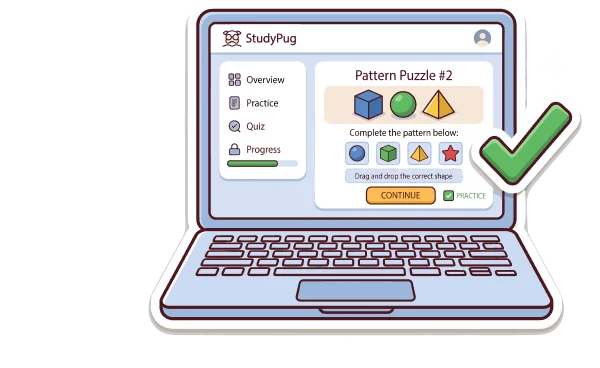
Value vs. Private Tutor
Learn geometry without tutor prices.

Multi-Subject
Struggling with Geometry? Switch anytime.
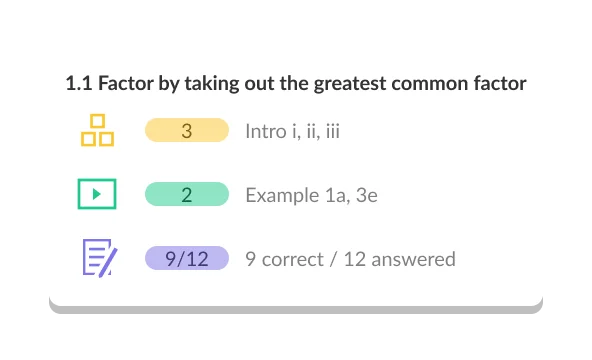
Practice Until Perfect
You practice until it finally clicks.
Try It Now
Test your knowledge
Our approach aligns with the evidence
Exam Scores
Better Recall
Less Anxiety
Geometry Topics
1. Measuring Systems
2. Surface Area and Volume
3. Points, Lines, Segments, Midpoints and Chords
4. Circles, plane and coordinate
5. Triangles and special triangles
6. Angles and trigonometry
7. Sine Rule and Cosine Rule
8. Bearings
9. Transformations
10. Similarity
11. 2D figures and 3D figures
12. Probability
13. Logic
15. Set Theory
16. Vectors
17 Chapters · 88 Topics · 766 Videos
Discover Our Learning Areas
Explore key subjects and start learning with interactive content.
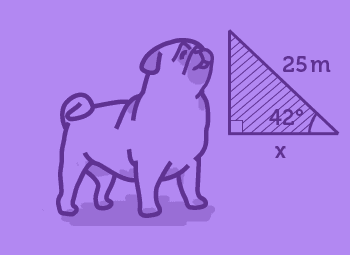
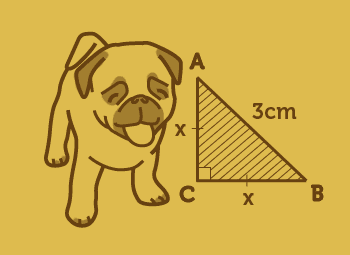






What Is Geometry?
Geometry is the branch of mathematics that studies shapes, sizes, angles, and the properties of space. In Grade 10, it forms one of the core pillars of high school math, asking students not only to calculate but to reason logically and construct formal proofs. At its heart, geometry is about understanding why things are true — a skill that carries into every advanced math course and shows up prominently on standardized tests like the SAT.
The course typically covers congruence and similarity, triangle theorems, the Pythagorean theorem, parallel lines and transversals, circles, coordinate geometry, area and volume, and transformations. Many students encounter formal two-column proof writing for the first time in Geometry, which requires a different kind of thinking than the equation-solving they practiced in Algebra 1.
What Topics Are Covered in Grade 10 Geometry?
Grade 10 Geometry in the US follows state standards that vary slightly by state but share a consistent core. Expect to work through:
Triangles and congruence: Congruence shortcuts (SSS, SAS, ASA, AAS, HL), similarity ratios, and the relationships between sides and angles are foundational. These topics also appear directly on the SAT.
Parallel lines and angle pairs: Corresponding angles, alternate interior angles, co-interior angles, and the properties of transversals. Students who can spot these relationships quickly move through proofs much faster.
Circles: Arc length, sector area, central and inscribed angles, chord and tangent relationships, and the equation of a circle in coordinate form. Circle theorems are among the most tested — and most commonly missed — topics on geometry exams.
Coordinate geometry: Distance and midpoint formulas, slope relationships for parallel and perpendicular lines, partitioning a segment, and writing the equations of lines and circles on the coordinate plane.
Area, surface area, and volume: From two-dimensional figures through to prisms, pyramids, cylinders, cones, and spheres. SAT problems frequently present real-world scenarios that require selecting and applying these formulas under time pressure.
Transformations: Translations, reflections, rotations, and dilations — including compositions of transformations and the connection between transformations and congruence or similarity.
Is Geometry Hard? Where Do Students Struggle?
Geometry challenges students in a way that Algebra typically does not. Rather than applying a formula step by step, you often face an open-ended diagram and need to decide which theorems apply. The most common struggles are:
Proof writing. Two-column proofs require selecting theorems in the correct order and stating each step precisely. Students who try to memorize proof templates rather than understanding the underlying logic tend to fall apart when the diagram changes slightly.
Circle theorems. There are many of them, they look similar, and the consequences of mixing them up in a proof or calculation are significant. Spaced practice — not cramming — is the most reliable way to keep them straight.
Coordinate geometry at the harder end. Problems that blend algebraic manipulation with geometric reasoning (finding the equation of a circle from three points, for instance) require fluency in both areas simultaneously.
The good news: once students see a problem type worked out step by step — understanding why each step is taken, not just what the answer is — the reasoning pattern becomes reusable. That is the approach certified-teacher video lessons on StudyPug are built around.
How Does Geometry Connect to Future Math Courses?
Geometry is not a detour — it is a direct foundation for everything that follows. Trigonometry, introduced at the end of most Geometry courses through sine, cosine, and tangent ratios, expands into a full unit in Algebra 2 and Pre-Calculus. Coordinate geometry connects directly to the function graphing students do throughout high school. Volume and surface area formulas return in Calculus when students use integration to derive them from first principles.
Beyond math, the logical reasoning developed in proof writing supports physics, computer science, and any field that requires structured argumentation. Students who invest in truly understanding Geometry — not just passing it — arrive at Algebra 2 and Pre-Calculus with a significant advantage.
Why StudyPug for Grade 10 Geometry?
StudyPug is built for exactly the kind of challenge Geometry presents: you need to see the method, not just the answer, and then practice enough variations that the method becomes second nature.
Certified-teacher video lessons. Every lesson is made by a certified teacher, not generated by AI. That matters for Geometry because the teacher can narrate the reasoning — pointing out which theorem applies and why — rather than just showing algebra steps. When you understand how to approach a proof or a circle problem, you can handle versions of it you have never seen before.
Diagnostic assessment. Rather than starting at the beginning and working through everything, the StudyPug diagnostic identifies the specific Geometry topics where you have gaps. You spend your time on what will actually move your grade — study smarter, not harder.
Adaptive practice. As you work through problems, the difficulty adjusts to your performance. If you are solid on triangle congruence but shaky on circle theorems, the practice session shifts focus. Progress is real and measurable.
SAT and state-standards alignment. Geometry content on StudyPug is aligned to US state standards and includes SAT-style practice questions. Students preparing for the SAT can practise geometry in context — the way it actually appears on the test — rather than drilling abstract problems that look nothing like exam questions.
Free practice content. You can access free geometry practice problems without a subscription to see whether the platform works for you. No commitment required to get started.
30-day money-back guarantee. Every subscription is backed by a 30-day money-back guarantee. That is the only guarantee StudyPug makes — and it is a genuine one.
What You Will Learn: Geometry Curriculum Coverage
StudyPug's Geometry content covers the full scope of Grade 10 high school geometry as taught across US state curricula. Core areas include:
- Points, lines, planes, and angle relationships
- Triangle congruence (SSS, SAS, ASA, AAS, HL) and similarity
- Parallel lines, transversals, and angle pair theorems
- The Pythagorean theorem and its converse
- Right triangle trigonometry (sine, cosine, tangent)
- Quadrilaterals, polygons, and their properties
- Circle theorems — central angles, inscribed angles, chords, tangents, secants
- Arc length and sector area
- Coordinate geometry — distance, midpoint, slope, equations of lines and circles
- Transformations — translations, reflections, rotations, dilations
- Area of 2D figures and surface area and volume of 3D solids
- Formal proof writing (two-column and paragraph proofs)
Each topic has its own dedicated video lessons and practice problem sets so you can move at your own pace and revisit any concept as many times as you need.
How to Use StudyPug for Geometry
The most effective way to use StudyPug for Geometry is to let the diagnostic assessment guide your starting point. After a short set of questions, you will see a clear picture of which topics need the most work. From there, the typical workflow is straightforward:
Watch the lesson. Choose a topic — say, inscribed angle theorems — and watch the certified-teacher video. Pause, rewind, and rewatch the steps that do not immediately make sense. The goal is to understand the method well enough to apply it yourself.
Try the practice problems. After the video, work through the practice set for that topic. The adaptive system adjusts difficulty based on how you do. Get a problem wrong and the next one may revisit a prerequisite; get several right and the difficulty increases.
Use Photo Search when stuck. If you hit a geometry problem in your homework or on a worksheet and do not know where to start, Photo Search lets you find the matching lesson quickly — across all grades and subjects.
Run practice tests before exams. When a test or SAT prep session is coming up, use the practice tests to simulate exam conditions. Review the video solutions for any problem you missed so you understand what went wrong before the real thing.
Students who follow this pattern — diagnostic, targeted lessons, adaptive practice, exam simulation — consistently find that their geometry grades improve and that the subject becomes far less stressful over time.
Geometry FAQ
Unsure how StudyPug works? Need help with setting up? Check our frequently asked questions or contact us for help.
What do you learn in Geometry, and what topics does it cover?
Geometry covers the properties and relationships of shapes, angles, and space. In Grade 10, key topics include congruence and similarity, triangle theorems, the Pythagorean theorem, coordinate geometry, circles and arc length, area and volume of 2D and 3D figures, and formal proof writing. You also explore transformations — translations, reflections, rotations, and dilations. The course builds logical reasoning skills you will use in every subsequent math class.
What is the difference between Geometry and Algebra?
Algebra focuses on equations, expressions, and functions — working with unknown quantities using symbolic rules. Geometry focuses on the visual and spatial: shapes, measurements, angles, and how figures relate to one another in a plane or in space. That said, they overlap heavily in high school. Coordinate geometry uses algebra to describe geometric shapes, and proofs in Geometry require algebraic manipulation. Students who strengthen both subjects together tend to do significantly better on standardized tests like the SAT.
Is Geometry hard, and where do students struggle most?
Many students find Geometry a different kind of challenge from Algebra — less about symbol-crunching and more about spatial reasoning and logical proof. The biggest struggles are usually two-column proofs (knowing which theorems to cite and in what order), circle theorems, and understanding similarity versus congruence. Students who practice writing proofs step-by-step early on, rather than memorizing answers, tend to find the course much more manageable over time.
What should I take before Geometry, and what comes after it?
Most students take Algebra 1 before Geometry, since you need comfort with equations, solving for variables, and graphing lines. After Geometry, the typical path is Algebra 2, which deepens the algebraic foundation, followed by Pre-Calculus and then Calculus. Geometry also connects directly to Trigonometry, which is introduced at the end of many Geometry courses through right-triangle ratios (sine, cosine, tangent) and carries into every higher-level math course.
Is Geometry on the SAT, and how is it tested?
Yes — Geometry is a significant part of the SAT Math section. The SAT tests area and perimeter, triangle and circle properties, volume of 3D solids, coordinate geometry, and the Pythagorean theorem. Geometry problems appear in both the no-calculator and calculator portions. The questions are application-focused: they give a diagram or scenario and ask you to solve a real problem, rather than simply recall a definition. Practicing SAT-style geometry problems regularly is one of the most effective ways to raise your overall SAT Math score.
What is one of the hardest concepts in Geometry, and how do you tackle it?
Formal proof writing — especially two-column proofs — is widely considered the hardest part of high school Geometry. Students struggle because there is no single formula to apply; you must select the right theorem from memory, state it precisely, and chain logical steps in order. The best approach is to learn a small set of core theorems (congruence shortcuts: SSS, SAS, ASA, AAS; parallel-line angle pairs; circle theorems) deeply rather than skimming all of them. Practice by reading existing proofs before writing your own — understanding the structure first builds the reasoning habit you need.




Written by the StudyPug Team
Last updated June 5, 2026
3 M+
students
★★★★★
4.8 average
K–12
all grades