Year 5 Maths Help — Step-by-Step Video Lessons & Practice
Help your child understand every Year 5 maths topic and build real confidence, one lesson at a time.
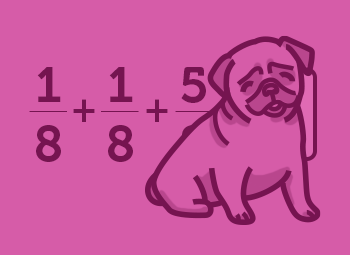
Step-by-Step Videos
Learn a topic then solve it yourself.
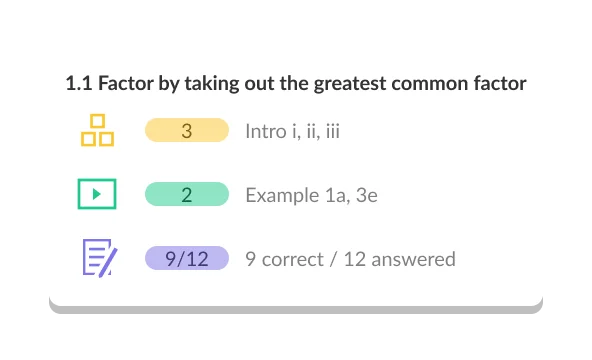
Practice Until Perfect
You keep going until you get it right.
Real Exam Practice
Practice real national exam questions included.
Try It Now
Test your knowledge
Our approach aligns with the evidence
Exam Scores
Better Recall
Less Anxiety
Year 5 Maths Topics
2. Representing Numbers
3. Patterns
4. Adding and Subtracting Integers
5. Multiplying and Dividing Integers
6. Arithmetic Properties
7. Factors and Multiples
8. Introduction to Fractions
9. Adding and Subtracting Fractions
10. Multiplying Fractions
11. Decimals
12. Estimation
14. Time
15. Angles and Lines
16. Polygons
17. Introduction to 3D Shapes
18. Data Management
19. Statistics
19 Chapters · 76 Topics · 1247 Videos

Ready to practice Year 5 Maths?
Try practice questions on every Year 5 Maths topic — with instant feedback and step-by-step video solutions when you get stuck.
Discover Our Learning Areas
Explore key subjects and start learning with interactive content.





What is Year 5 Maths?
Year 5 maths is the fourth year of Key Stage 2 in the England National Curriculum, typically taught to children aged 9–10. It is a pivotal year where pupils move from the foundations of primary maths into more complex, multi-step reasoning. Children work with numbers up to one million, develop formal written methods for all four operations, and build a deep understanding of fractions, decimals, percentages, geometry, and measurement. The skills your child learns in Year 5 are the direct building blocks for Year 6 and the Key Stage 2 SATs.
What topics are covered in Year 5 maths?
The Year 5 National Curriculum is broad and demanding. Here is what your child will work through during the year:
Number and Place Value: Reading, writing, and ordering numbers up to 1,000,000. Understanding the value of each digit, rounding to the nearest 10, 100, 1,000, 10,000, and 100,000, and counting forwards and backwards with negative numbers.
Multiplication and Division: Multiplying numbers up to 4 digits by 1- or 2-digit numbers using the formal written method (short and long multiplication). Dividing 4-digit numbers by 1-digit numbers, and recognising and using square and cube numbers.
Fractions, Decimals, and Percentages: Comparing and ordering fractions with different denominators, adding and subtracting fractions (including mixed numbers), multiplying fractions by whole numbers, and understanding decimal equivalents. Converting between fractions, decimals, and percentages is introduced here.
Geometry: Identifying 3D shapes and their properties, reflecting and translating shapes on a coordinate grid, and measuring and drawing angles using a protractor.
Measurement: Converting between units of measure (km/m, kg/g, litres/ml), calculating area and perimeter of rectilinear shapes, and estimating volume.
Statistics: Reading and interpreting line graphs and timetables, completing tables, and using information from graphs to answer questions involving all four operations.
Is Year 5 maths hard? Where do children commonly get stuck?
Year 5 is widely regarded as the year where the gap between children who are confident in maths and those who are struggling becomes most visible. If your child finds it hard, they are not alone — and the difficulties are very predictable.
Fractions with unlike denominators is the single biggest stumbling block. Children often try to add or subtract the numerators and denominators separately, arriving at an answer that looks plausible but is completely wrong. Without a clear understanding of why you need a common denominator, the method feels arbitrary and is quickly forgotten.
Long multiplication and division cause problems when place value understanding is shaky. One misaligned digit in a written method leads to a completely wrong answer, which is deeply discouraging.
Decimals and their link to fractions are conceptually tricky. Children who can recite that 0.5 = ½ often cannot explain why, which means they struggle when decimals appear in unfamiliar contexts.
Angles and geometry require careful reading of a protractor and an understanding of the properties of angles on a straight line, in a triangle, and at a point — all new and easily muddled.
The good news is that every one of these topics has a clear, learnable method. StudyPug's certified teachers explain each concept from the ground up, so your child builds genuine understanding rather than fragile memorisation.
Why StudyPug for Year 5 maths help?
StudyPug is built around what actually helps children improve — not just extra worksheets, but a structured system that finds the problem, teaches the method, and builds lasting confidence.
A diagnostic that finds the gaps: Before your child starts practising, a quick diagnostic assessment identifies exactly which Year 5 maths topics they need to work on. There is no guesswork and no wasted time on topics they already understand. You will know precisely where to focus.
Certified-teacher video lessons that teach the method: Every lesson is delivered by a real, certified teacher — not AI-generated content. Teachers explain not just what the answer is, but why the method works, so your child can apply it independently to new problems. This is real teaching, designed to transfer to the classroom.
Adaptive practice that grows with your child: Practice questions adjust automatically to your child's current level. If they are finding questions too easy, the difficulty increases. If they are struggling, the system steps back and rebuilds understanding. Every session is the right level of challenge.
The parent dashboard: You can see exactly which topics your child has covered, how they are performing, and where they still need support — per child, per topic. The Family Plan covers up to 5 children under one subscription, making it genuine value for families.
National Curriculum alignment: Every StudyPug Year 5 maths lesson maps directly to the England National Curriculum Key Stage 2 Programme of Study. What your child learns on StudyPug is what their teacher is teaching at school.
Free practice content and a 30-day money-back guarantee: Your child can access free daily practice content right now with no subscription required. When you subscribe, every plan is backed by a 30-day money-back guarantee — no risk.
What your child will learn — Year 5 maths curriculum coverage
StudyPug's Year 5 maths course covers the full scope of the England National Curriculum for this year group. Topics are organised into clear units so your child — and you — can always see exactly where they are and what comes next.
Core units include: place value and rounding to 1,000,000; addition and subtraction of large numbers; short and long multiplication; short division; factors, multiples, prime numbers, and square numbers; equivalent fractions and simplifying; adding and subtracting fractions with unlike denominators; multiplying fractions by whole numbers; decimals to three decimal places; percentages; properties of 2D and 3D shapes; angles (measuring, drawing, calculating); coordinates and translation; area and perimeter; converting units of measurement; volume; and line graphs and tables.
Each unit contains multiple video lessons, worked examples, and adaptive practice questions. Your child can work through topics in curriculum order or jump directly to the area where they need help most — the diagnostic will guide this.
Note: as no validated internal topic URLs are available for this page in the current sitemap feed, topic links are not included here. Your child can browse all Year 5 maths topics directly from the StudyPug Year 5 course page.
How to use StudyPug for Year 5 maths practice
Getting started takes less than five minutes. Here is a simple routine that works well for Year 5 children:
Step 1 — Run the diagnostic. Let your child complete the short Year 5 maths diagnostic. It takes around 10 minutes and immediately shows which topics are strong and which need attention. This becomes your child's personalised learning plan.
Step 2 — Watch the video lesson. For each topic that needs work, start with the certified-teacher video. Encourage your child to watch actively — pausing to try examples, not just viewing passively. The teacher explains the method in full, so your child understands the why, not just the how.
Step 3 — Complete adaptive practice. After watching the lesson, move straight into the practice questions. The adaptive system will start at the right level and adjust as your child works through them. Instant feedback means mistakes are corrected immediately, not reinforced.
Step 4 — Check the parent dashboard. After each session, log in to the parent dashboard to see progress. Look for topics showing consistent improvement and topics that might need another video revisit. Celebrate the wins — seeing progress visually is motivating for children.
Step 5 — Keep sessions short and regular. Twenty to thirty minutes, four or five times a week, is far more effective than a single long session at the weekend. Consistent, low-pressure practice is how Year 5 maths concepts become automatic.
StudyPug is available on any device — laptop, tablet, or smartphone — so your child can practise at home, on the way to school, or anywhere else that works for your family.
Year 5 Maths FAQ
Unsure how StudyPug works? Need help with setting up? Check our frequently asked questions or contact us for help.
What does my child learn in Year 5 maths, and what topics does it cover?
Year 5 maths covers number and place value up to 1,000,000, all four operations with larger numbers, fractions (including adding and comparing with different denominators), decimals and percentages, geometry (angles, shapes, reflections), measurement (area, volume, converting units), and statistics (reading and interpreting tables and graphs). These topics build the foundation for Year 6 and the Key Stage 2 SATs. StudyPug covers all of these with video lessons and practice aligned to the England National Curriculum.
Is Year 5 maths hard, and where do children commonly struggle?
Year 5 maths is a significant step up for many children. The most common struggle points are fractions with different denominators, long multiplication and division, understanding decimals and their relationship to fractions, and interpreting negative numbers. Written methods become more formal and errors in place value can snowball. Many children also find geometry — especially measuring and drawing angles — tricky. Early identification of weak spots matters; StudyPug's diagnostic pinpoints exactly where your child needs to focus so they can catch up without wasting time.
What should my child know before Year 5 maths, and what comes next?
A solid Year 4 foundation is important: times tables up to 12×12, understanding place value to 10,000, basic fraction concepts, and reading simple graphs. In Year 5, pupils extend all of these significantly. After Year 5, children move into Year 6 maths where they cover ratio, algebra, more complex fractions and decimals, and consolidate everything for the Key Stage 2 SATs. StudyPug is available for Year 4 and Year 6 as well, so your child can revisit earlier gaps or preview what's coming next.
How does StudyPug Year 5 maths map to what my child learns at school?
StudyPug's Year 5 maths lessons are built around the England National Curriculum (Key Stage 2 Programme of Study). Every topic — from multiplying multi-digit numbers to identifying properties of 2D and 3D shapes — matches the objectives your child's teacher is delivering in class. Whether your child's school follows a Mastery, Singapore, or White Rose Maths approach, the core curriculum content is the same. This means your child is reinforcing exactly the right material, not working through unrelated content.
What is one of the trickiest Year 5 maths concepts, and how is it taught?
Adding and subtracting fractions with different denominators is one of the biggest stumbling blocks in Year 5. Many children try to add the numerators and denominators separately, getting the wrong answer every time. StudyPug's certified teachers break the method down step by step: first finding a common denominator, then converting each fraction, and finally adding or subtracting. The video shows the concept visually with fraction bars before moving to written methods — so your child genuinely understands the process rather than just memorising a procedure.
How much maths practice should my child do at Year 5?
Most teachers and the National Curriculum guidance suggest around 20–30 minutes of focused maths practice per day outside school for Year 5 children. Little and often works better than long, infrequent sessions. A good routine is: watch a short StudyPug video lesson on the current classroom topic, then complete 10–15 adaptive practice questions with instant feedback. StudyPug's adaptive practice adjusts to your child's level, so each session is the right challenge — building confidence without frustration. Weekend sessions can focus on topics flagged by the diagnostic as weaker areas.





Written by the StudyPug Team
Last updated June 5, 2026
3 M+
students
★★★★★
4.8 average
K–12
all grades