TOPIC

Human Impact, Environmental change

MY PROGRESS

Pug Score

0%

Getting Started

"Let's build your foundation!"

Best Streak

0 in a row

Study Points

+0

Overview

Practice

Read

Quiz

Next Steps


Get Started

Get unlimited access to all videos, practice problems, and study tools.

Unlimited practice
Full videos

BACK TO MENU

Topic Progress

Pug Score

0%

Getting Started

"Let's build your foundation!"

Best Practice

No score

Read

Not viewed

Best Quiz

No attempts


Best Streak

0 in a row

Study Points

+0

Overview

Practice

Read

Quiz

Next Steps

Read

Human Impact & Environmental Change: How We Shape Our Planet

This topic examines how human activities drive environmental change, disrupting natural systems and cycles, and explores the consequences and potential solutions to these impacts.

Understanding Human Impact and Environmental Change

Human activities have become one of the most powerful forces shaping Earth's environment. From burning fossil fuels to clearing forests, the decisions made by human societies alter natural systems at an unprecedented rate. This topic builds on foundational knowledge from System Dynamics and Complex Interactions and Population Studies: Growth and Regulation to examine how growing human populations intensify environmental pressures.

Environmental change refers to any significant alteration in the physical, chemical, or biological components of the environment. When driven by human activity, these changes often exceed the natural capacity of ecosystems to recover or adapt.
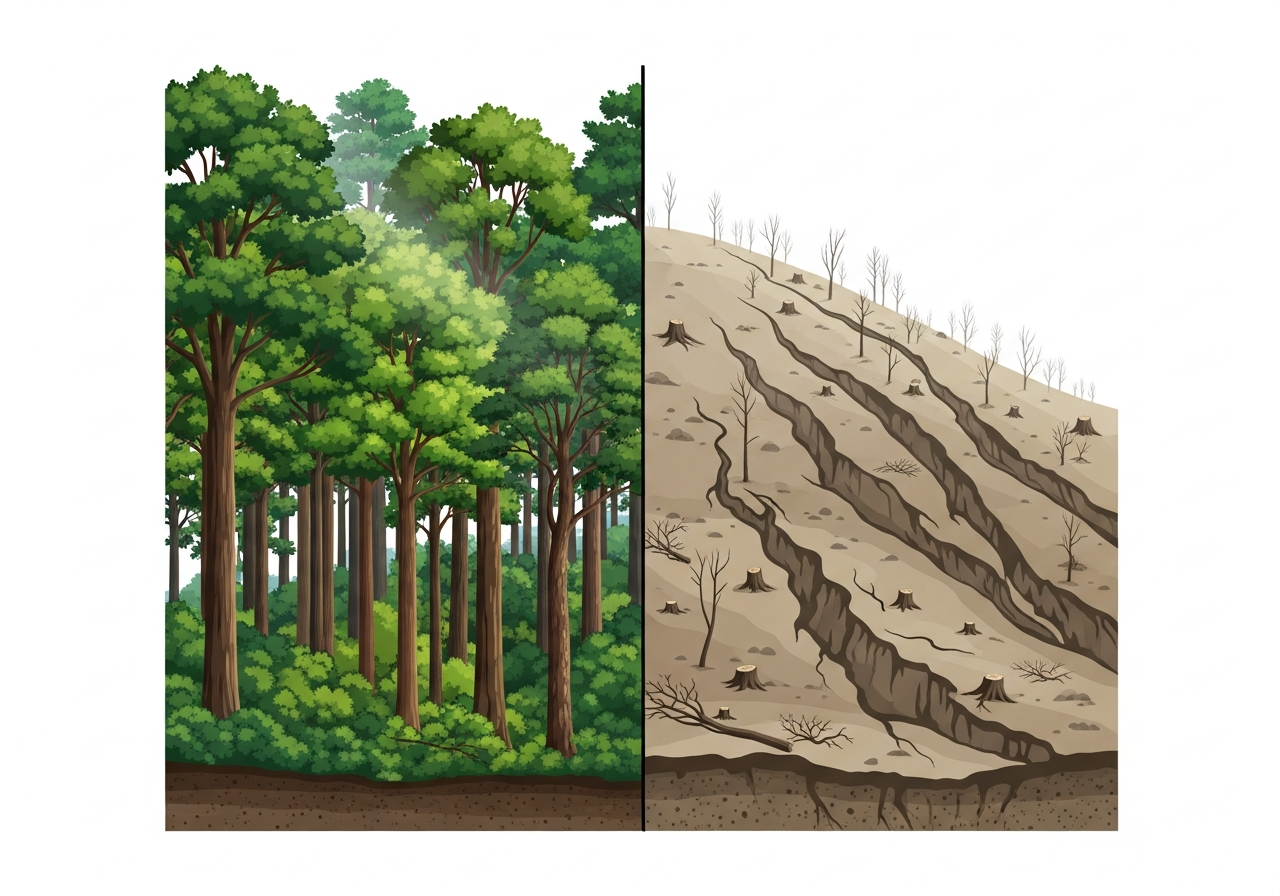
Major Forms of Human-Driven Environmental Change

Land Use and Deforestation

Deforestation the large-scale clearing of forests for agriculture, urban development, or logging is one of the most visible forms of human impact. It destroys habitat, reduces biodiversity, and releases stored carbon into the atmosphere, accelerating climate change.

Pollution

Pollution introduces harmful substances into air, water, and soil. Industrial emissions, agricultural runoff, and plastic waste degrade ecosystem quality and threaten both wildlife and human health. Understanding pollution connects directly to Cycle Disruption and Environmental Effects, as contaminants interfere with natural biogeochemical processes.

Fossil Fuel Combustion and Greenhouse Gases

Burning fossil fuels releases carbon dioxide and other greenhouse gases, intensifying the greenhouse effect. This links closely to the Carbon Cycle and Carbon Movement, where excess atmospheric carbon disrupts the natural balance maintained by photosynthesis and respiration.

Connections to Natural Cycles

Human activities disrupt the planet's essential biogeochemical cycles. Excess nitrogen from fertilizers enters waterways, disrupting the Nitrogen Cycle and Nutrient Cycling and causing harmful algal blooms. Altered land surfaces and increased water withdrawal affect the Water Cycle and Global Water Distribution. Changes in energy absorption and reflection alter Energy Distribution and Global Patterns and influence Climate Effects and Solar Influence.

These disruptions are interconnected a change in one cycle triggers cascading effects across others, as explored in Matter Connections and System Interactions and Energy Flow and System Dynamics.

Key Terms & Definitions

Environmental Change: Any significant alteration to the physical, chemical, or biological characteristics of the environment, whether caused by natural processes or human activities.

Deforestation: The large-scale removal of forests, typically for agriculture, logging, or urban expansion, resulting in habitat loss, soil erosion, and increased atmospheric carbon dioxide.

Pollution: The introduction of harmful or toxic substances into the environment including air, water, and soil that disrupt natural systems and harm living organisms.

Greenhouse Gases: Gases such as carbon dioxide, methane, and nitrous oxide that trap heat in Earth's atmosphere, contributing to the greenhouse effect and global warming.

Biodiversity Loss: The reduction in the variety of species within an ecosystem, often caused by habitat destruction, pollution, invasive species, and climate change.

Habitat Destruction: The process by which a natural habitat is rendered unable to support its native species, typically through human land use changes such as agriculture or urbanization.

Sustainability: The ability to meet present needs without compromising the ability of future generations to meet their own needs, often achieved through responsible resource management.

Conservation: The careful management and protection of natural resources and ecosystems to prevent overuse, degradation, or extinction of species.

Land Use Change: The conversion of land from one purpose to another such as forest to farmland which alters local and global environmental conditions.

Ecosystem Disruption: A significant disturbance to the structure or function of an ecosystem, often caused by human activities, that impairs its ability to support biodiversity and natural processes.

Applying the Concepts

Learners can strengthen their understanding by analyzing case studies of deforestation in tropical regions, examining data on rising atmospheric CO levels, or mapping local examples of pollution and land use change. Connecting these examples to Global Change and Environmental Effects helps students see how local actions contribute to global patterns.

Students can also evaluate the role of Energy Resources: Renewable and Non-Renewable in driving or reducing human environmental impact, and explore how Green Technology and Environmental Solutions offer pathways to a more sustainable future.

Building on Prior Knowledge

This topic draws on several foundational areas. Environmental Science, Sustainability, and Conservation Strategies provides the framework for evaluating human impact. Knowledge of System Dynamics and Complex Interactions helps students understand how changes in one part of the environment ripple through entire systems.

Related Topics & Connections

This topic sits at the center of a rich network of environmental science concepts. The Cycle Disruption and Environmental Effects topic examines how human impact specifically breaks down natural cycles. Solutions and Sustainable Practices builds directly on this topic by exploring how societies can reduce their environmental footprint.

Students who master this content are well prepared for subsequent topics including Climate Change: Evidence and Impacts, Environmental Impact and Human Influences, Conservation and Protection Methods, Resource Use and Management Strategies, Earth System, Resource Management, and Sustainable Practices, Biodiversity and Species Relationships, System Dynamics and Complex Interactions, and Climate Factors, Global Patterns, and Earth System.

Understanding how human impact connects to the Carbon Cycle, Nitrogen Cycle, and Water Cycle gives students a systems-level perspective essential for advanced environmental science.