TOPIC

Matter Connections, System interactions

MY PROGRESS

Pug Score

0%

Getting Started

"Let's build your foundation!"

Best Streak

0 in a row

Study Points

+0

Overview

Practice

Read

Quiz

Next Steps


Get Started

Get unlimited access to all videos, practice problems, and study tools.

Unlimited practice
Full videos

BACK TO MENU

Topic Progress

Pug Score

0%

Getting Started

"Let's build your foundation!"

Best Practice

No score

Read

Not viewed

Best Quiz

No attempts


Best Streak

0 in a row

Study Points

+0

Overview

Practice

Read

Quiz

Next Steps

Read

Matter Connections & System Interactions: How Earth's Cycles Work Together

This topic examines how matter moves and interacts across Earth's major systems, including the water, carbon, and nitrogen cycles, and how these connections sustain ecological balance.

Understanding Matter Connections and System Interactions

Matter does not stay in one place it moves continuously through Earth's major systems in predictable, interconnected pathways. This topic examines how matter connections and system interactions sustain life, regulate climate, and maintain ecological balance across the planet.

Learners will explore how the atmosphere, hydrosphere, biosphere, and geosphere exchange materials through biogeochemical cycles, and how disruptions to these cycles can have far-reaching environmental consequences. Understanding these connections builds on foundational knowledge from Introduction, System Dynamics, Complex Interactions.

How Matter Moves Through Earth's Systems

Matter cycles through Earth's systems via biogeochemical processes chemical and biological pathways that move elements such as carbon, nitrogen, and water between living organisms and the physical environment. These cycles are the foundation of system interactions.

The Water Cycle distributes freshwater globally through evaporation, condensation, precipitation, and collection. The Carbon Cycle regulates atmospheric carbon dioxide through photosynthesis, respiration, decomposition, and combustion. The Nitrogen Cycle moves nitrogen through the atmosphere, soil, and living organisms via fixation, nitrification, and denitrification.

These cycles do not operate in isolation they are deeply interconnected. Changes in one cycle ripple through others, affecting the stability of the entire Earth system.

Energy Flow and System Dynamics

Matter movement is closely linked to Energy Flow and System Dynamics. Solar energy drives evaporation in the water cycle, powers photosynthesis in the carbon cycle, and influences global weather patterns that distribute nutrients across ecosystems.

Understanding Energy Distribution and Global Patterns helps explain why matter concentrates in certain regions and how Climate Effects and Solar Influence shape the movement of materials across Earth's surface.

Cycle Disruption and Human Impact

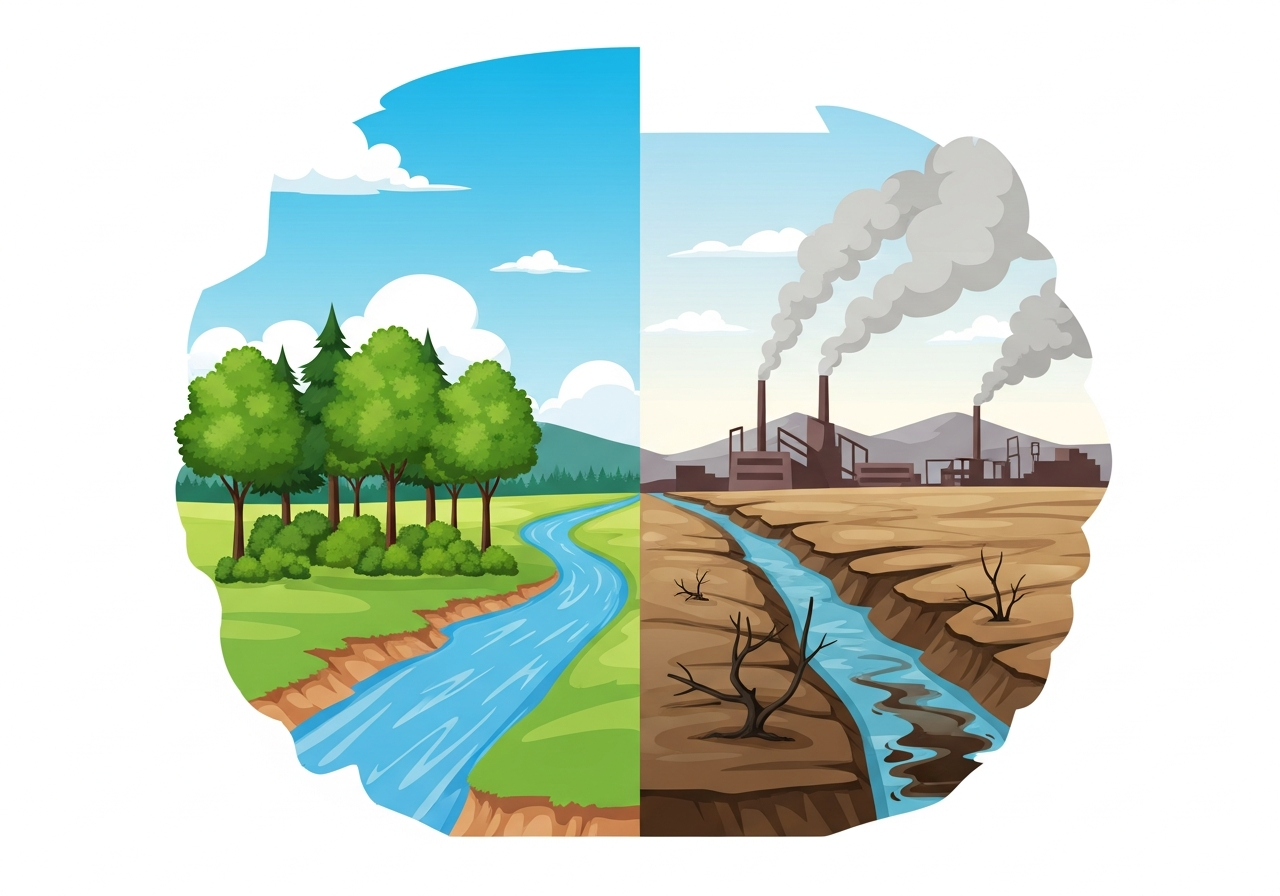
Human activities increasingly interfere with natural matter connections. Burning fossil fuels, deforestation, and industrial agriculture alter the carbon, nitrogen, and water cycles in ways that destabilize Earth's systems. Learners can explore these effects in depth through Cycle Disruption and Environmental Effects and Human Impact and Environmental Change.

These disruptions connect directly to broader environmental challenges studied in Global Change and Environmental Effects and Environmental Science, Sustainability, and Conservation Strategies.
Key Terms & Definitions

Matter: Anything that has mass and takes up space; the physical substance that makes up all living and non-living things on Earth.

System Interactions: The ways in which different components of a system exchange energy and matter, influencing one another's behavior and function.

Biogeochemical Cycle: A pathway through which a chemical element or molecule moves through both biotic (living) and abiotic (non-living) components of an ecosystem.

Atmosphere: The layer of gases surrounding Earth, including nitrogen, oxygen, and carbon dioxide, which plays a key role in matter and energy exchange.

Hydrosphere: All of Earth's water including oceans, rivers, lakes, glaciers, and groundwater through which the water cycle operates.

Biosphere: The zone of Earth where life exists, encompassing all ecosystems and living organisms that participate in matter cycling.

Geosphere: The solid and semi-solid portions of Earth, including rocks, soil, and minerals, which store and release matter over geological timescales.

Nutrient Cycling: The movement of essential nutrients such as nitrogen and phosphorus through ecosystems, supporting the growth and survival of organisms.

Energy Flow: The transfer of energy through an ecosystem, typically from the sun through producers, consumers, and decomposers.

Cycle Disruption: Any interference natural or human-caused that alters the normal flow of matter through a biogeochemical cycle, often with environmental consequences.

Sustainability: The ability to meet present needs without compromising the ability of future generations to meet their own needs, often achieved by maintaining healthy system interactions.

Applying Matter Connections to Real-World Scenarios

Students can deepen their understanding by analyzing how matter connections explain real environmental issues. For example, examining how excess nitrogen from fertilizers enters waterways illustrates the link between the nitrogen cycle and water quality a concept explored in Nitrogen Cycle and Nutrient Cycling.

Learners can also investigate Solutions and Sustainable Practices and Green Technology and Environmental Solutions to understand how science informs strategies for restoring disrupted cycles and protecting Earth's systems.

Building on Prior Knowledge

This topic draws on several foundational areas of study. Knowledge of Organ Systems and System Integration introduces the concept of interconnected systems at the biological level. Systems Thinking and Integrated Solutions provides the analytical framework for understanding complex interactions.

Students who have studied Population Studies, Growth and Regulation and Energy Resources, Renewable and Non-Renewable will recognize how matter and energy availability shape population dynamics and resource use.