Topic
Climate Factors, Global patterns, Earth SystemMy Progress
Pug Score
0%
Getting Started
Let's build your foundation!
Best Streak
0 in a row
Study Points
+0
Overview
Practice
Read
Quiz
Next Steps
Back to Menu
Topic Progress
Pug Score
0%
Getting Started
"Let's build your foundation!"
Best Practice
No score
Read
Not viewed
Best Quiz
No attempts
Best Streak
0 in a row
Study Points
+0
Overview
Practice
Read
Quiz
Next Steps
Read
Climate Factors, Global Patterns & the Earth System Explained
This topic examines the major factors that determine regional and global climate patterns, including solar energy distribution, atmospheric circulation, ocean currents, and Earth system interactions such as the carbon cycle and greenhouse effect.
Understanding Climate Factors and Global Patterns
Climate refers to the long-term average of weather conditions in a particular area, typically measured over at least 30 years. Unlike weather which describes short-term daily atmospheric conditions climate represents the expected patterns of temperature, precipitation, and wind for a region. A common saying captures this distinction: "Climate is what you expect; weather is what you get."
The primary driver of Earth's climate system is solar energy. Because Earth is spherical, solar radiation strikes the equator at a nearly 90-degree angle, concentrating energy over a small area, while polar regions receive sunlight at a low angle spread over a much larger surface. This unequal heating, explored in Energy Distribution, Global Patterns, drives winds, ocean currents, and precipitation patterns worldwide.
Key Climate Factors
Latitude and Elevation
Latitude is the primary factor determining a region's climate zone. Regions near the equator receive intense, direct solar energy and experience tropical climates, while polar regions are cold. Elevation also plays a major role: temperature decreases at approximately 6.5°C per 1,000 meters of altitude because air pressure drops and air molecules are fewer, causing air to expand and cool.
Proximity to Water and Ocean Currents
Water has a high specific heat capacity, meaning it absorbs and releases heat much more slowly than land. Coastal regions therefore experience milder, more moderate climates known as maritime climates compared to continental interiors, which have extreme seasonal temperature swings. Ocean currents, such as the Gulf Stream, redistribute heat from tropical to polar regions, moderating coastal climates significantly. Water Cycle, Global Water Distribution provides foundational understanding of how water moves through the Earth system.
Atmospheric Circulation and Wind Patterns
Warm air rises at the equator and cold air sinks at the poles, creating a three-cell circulation model: the Hadley cell (tropical), the Ferrel cell (mid-latitude), and the Polar cell. The Hadley cell drives equatorial rainforests through rising moist air and creates subtropical deserts at approximately 30° latitude through descending dry air. The Coriolis effect caused by Earth's rotation deflects moving air to the right in the Northern Hemisphere and to the left in the Southern Hemisphere, shaping trade winds, westerlies, and polar easterlies.
The Intertropical Convergence Zone (ITCZ) forms where northeast and southeast trade winds meet near the equator, producing a band of heavy rainfall and calm surface winds historically called the "doldrums." The ITCZ shifts seasonally, influencing monsoon patterns across Africa, Asia, and the Americas. Jet streams narrow bands of fast-moving air in the upper troposphere steer storm systems across mid-latitude regions and are responsible for much of the climate variability in those zones.
The Greenhouse Effect and Earth's Energy Balance
The greenhouse effect is the fundamental mechanism by which greenhouse gases including water vapor, carbon dioxide, and methane absorb infrared radiation emitted by Earth's surface and re-radiate it back toward the planet, warming the lower atmosphere. Without this natural process, Earth would be approximately 33°C colder. Water vapor is the most abundant greenhouse gas, accounting for roughly 50% of the natural greenhouse effect, with clouds contributing an additional 25%.
Radiative forcing quantifies how strongly a factor, such as increased CO, perturbs Earth's energy balance. Positive radiative forcing values indicate a warming effect. Understanding how Climate Effects, Solar Influence and Solar Radiation, Energy from Space interact with greenhouse gases is essential for analyzing Earth's energy balance.
Albedo and Surface Reflectivity
Albedo measures the fraction of incoming solar radiation reflected by a surface back into space. High-albedo surfaces like ice and snow reflect most sunlight and remain cool, while dark surfaces like oceans and forests absorb more energy. When ice melts and exposes darker ocean water, more solar energy is absorbed, raising temperatures further an example of a positive feedback loop.
Feedback Loops and Climate Dynamics
A feedback loop describes any self-reinforcing or self-dampening cycle in the climate system. A positive feedback loop amplifies an initial climate change, making the original effect stronger. The ice-albedo feedback is a classic example: melting Arctic ice exposes dark ocean water, which absorbs more heat, causing further melting. A negative feedback loop, by contrast, dampens the original change and moves the system back toward equilibrium.
Volcanic eruptions illustrate short-term climate forcing: large eruptions inject sulfur dioxide into the stratosphere, forming sulfate aerosols that reflect incoming solar radiation and temporarily cool global temperatures. The 1991 eruption of Mount Pinatubo cooled global temperatures by approximately 0.5°C for several years. These dynamics connect directly to Energy Flow, System Dynamics and Cycle Disruption, Environmental Effects.
The Carbon Cycle and Climate Regulation
The carbon cycle moves carbon through the atmosphere, oceans, land, and living organisms, directly regulating atmospheric CO concentrations and global surface temperatures. A carbon sink is any reservoir such as forests or oceans that removes CO from the atmosphere, playing a crucial role in moderating the greenhouse effect. When carbon sinks are disrupted through deforestation, CO levels rise and global temperatures increase.
Deforestation reduces evapotranspiration locally, disrupting regional rainfall cycles, and releases stored carbon globally, amplifying the greenhouse effect. These concepts build on Carbon Cycle, Carbon Movement and connect to Human Impact, Environmental Change.
Global Climate Zones and Special Phenomena
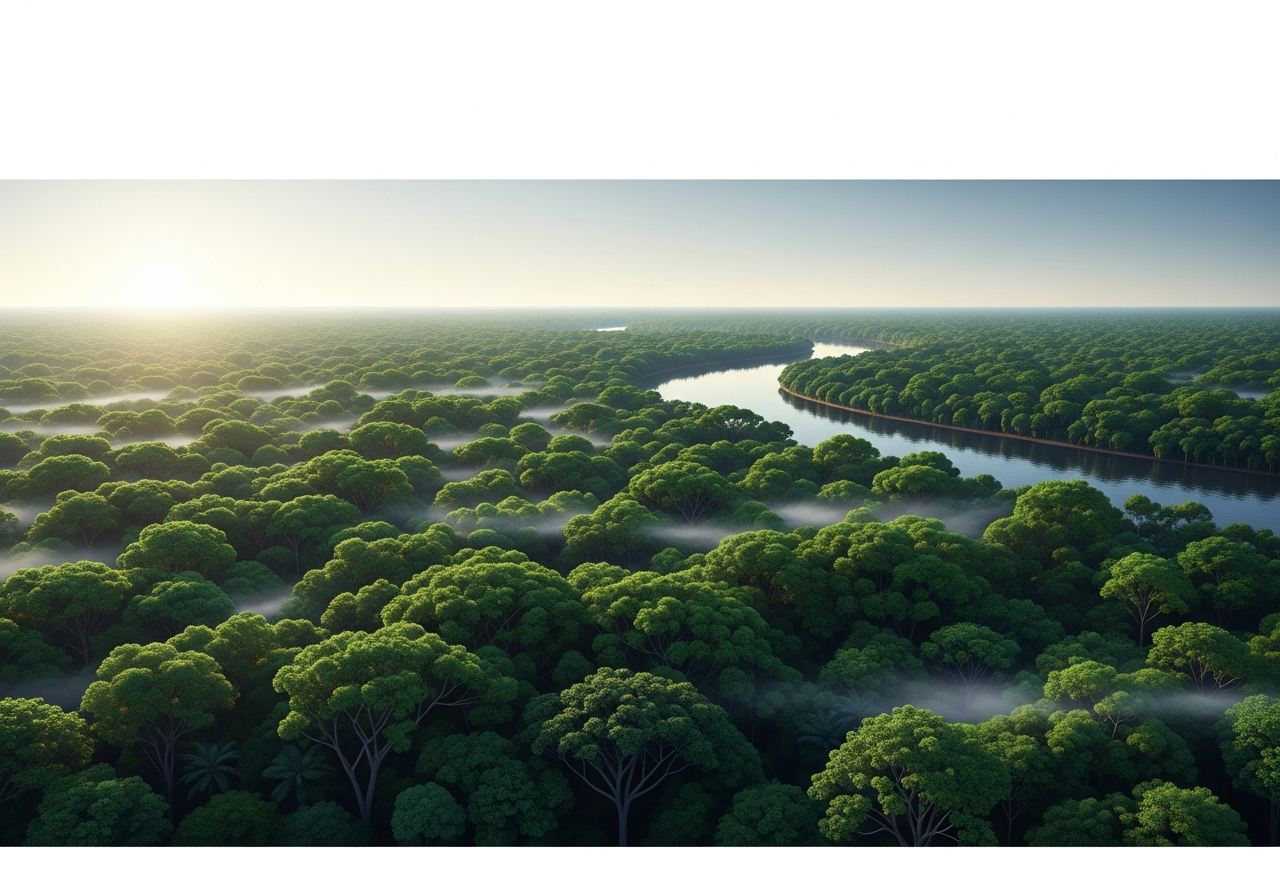
Earth's climate zones are determined by the interaction of latitude, atmospheric circulation, and geographic features. Tropical rainforest zones near the equatorial belt receive intense solar energy year-round, producing consistent heat and heavy precipitation. Arid and desert climate zones, found near 30° latitude, experience minimal rainfall and extreme daily temperature swings due to descending dry air and lack of cloud cover.
The rain shadow effect explains why deserts often form on the leeward side of mountain ranges. As moist air rises over a mountain on the windward side, it cools and releases precipitation. The now-dry air descends on the leeward side, warms through compression, and creates arid conditions explaining deserts like the Atacama in South America and the Great Basin in North America.
Thermohaline circulation sometimes called the global ocean conveyor belt is driven by differences in water temperature and salinity, moving deep cold water and warm surface water around the globe to distribute heat. If disrupted by freshwater influx from melting ice, it could cause dramatic regional climate shifts. Milankovitch cycles describe periodic changes in Earth's orbital eccentricity, axial obliquity, and precession that alter solar energy distribution over tens of thousands to hundreds of thousands of years, triggering ice ages and interglacial periods.
Key Terms & Definitions
Climate: The long-term average of weather conditions including temperature, precipitation, and wind in a particular area, typically measured over at least 30 years. Distinct from weather, which describes short-term daily conditions.
Radiative Forcing: A measure of how strongly a factor (such as increased CO) perturbs Earth's energy balance. Positive values indicate a warming effect on the climate system.
Greenhouse Effect: The fundamental mechanism by which greenhouse gases (water vapor, CO, methane) absorb outgoing infrared radiation from Earth's surface and re-radiate it back, warming the lower atmosphere and keeping Earth habitable.
Feedback Loop: Any self-reinforcing or self-dampening cycle within the climate system. Feedback loops either amplify (positive) or reduce (negative) an initial climate change.
Positive Feedback: A process where an initial climate change triggers responses that amplify the original change. Example: melting ice reduces albedo, causing more warming, which causes more melting.
Carbon Sink: Any reservoir such as forests, soils, or oceans that absorbs and stores more carbon from the atmosphere than it releases, playing a crucial role in regulating global temperatures.
Hadley Cell: The atmospheric circulation cell in the tropics where warm moist air rises at the equator, moves poleward, descends as dry air around 30° latitude, and returns to the equator as trade winds. It creates equatorial rainforests and subtropical deserts.
ITCZ (Intertropical Convergence Zone): A low-pressure belt near the equator where northeast and southeast trade winds converge, causing warm moist air to rise and produce abundant rainfall. It shifts seasonally, influencing monsoon patterns.
Rain Shadow Effect: The phenomenon where moist air loses precipitation on the windward slope of a mountain range, leaving dry air on the leeward side and creating arid conditions.
Thermohaline Circulation: The deep ocean current system driven by differences in water temperature and salinity (density), which moves heat around the planet. Also called the global ocean conveyor belt.
Jet Stream: A narrow band of fast-moving air in the upper troposphere, flowing west to east at mid-latitudes, that steers storm systems and is responsible for much of mid-latitude climate variability.
Albedo: The reflectivity of a surface the fraction of incoming solar radiation reflected back into space. High-albedo surfaces (ice, snow) reflect most sunlight; low-albedo surfaces (oceans, forests) absorb more energy.
Coriolis Effect: The deflection of freely moving air and water caused by Earth's rotation to the right in the Northern Hemisphere and to the left in the Southern Hemisphere. It shapes global wind belts and ocean gyres.
Milankovitch Cycles: Periodic changes in Earth's orbital eccentricity, axial obliquity, and precession that alter the distribution of solar energy across Earth's surface over tens of thousands to hundreds of thousands of years, triggering ice ages and interglacial periods.
Thermohaline Circulation: A deep ocean circulation system driven by density differences caused by temperature and salinity variations, redistributing heat globally and moderating regional climates.
Trade Winds: Persistent surface winds blowing from subtropical high-pressure zones toward the equatorial low-pressure zone, deflected by the Coriolis effect. They transport warm, moist air toward the equator and influence tropical precipitation patterns.
Lapse Rate: The rate at which temperature decreases with increasing altitude approximately 6.5°C per 1,000 meters explaining why high-elevation locations are cold even in tropical regions.
Applying Climate Concepts
Students can deepen understanding by analyzing why Western Europe has a milder climate than other regions at the same latitude attributing this to the Gulf Stream's thermohaline circulation. Learners can also map global climate zones and connect each zone to the atmospheric circulation cell responsible for its characteristics.
Examining case studies such as the Atacama Desert (rain shadow effect) or Arctic ice-albedo feedback helps students apply abstract concepts to real geographic examples. Connecting these patterns to Solutions, Sustainable Practices and Green Technology, Environmental Solutions encourages learners to think critically about human responses to climate dynamics.
Foundational Knowledge
Before exploring climate factors in depth, students should be familiar with how solar energy enters and moves through Earth's systems. Solar Radiation, Energy from Space and Energy Distribution, Global Patterns establish how unequal heating drives atmospheric and oceanic circulation. Understanding the Carbon Cycle, Carbon Movement and Water Cycle, Global Water Distribution is essential for grasping how matter and energy flow through the climate system.
Knowledge of Matter Connections, System Interactions, Nitrogen Cycle, Nutrient Cycling, and Cycle Disruption, Environmental Effects provides the broader Earth system context. Awareness of Human Impact, Environmental Change and Energy Flow, System Dynamics prepares learners to evaluate how human activities alter natural climate patterns.
Related Topics & Connections
This topic serves as a gateway to several advanced areas of Earth science. Climate Change, Evidence and Impacts builds directly on climate factors by examining how human-driven changes to greenhouse gas concentrations are altering global patterns. Earth System, Resource Management, Sustainable Practices extends the Earth system perspective to consider how climate knowledge informs responsible resource use.
Environmental Impact, Human Influences explores how deforestation, fossil fuel combustion, and land-use change interact with the climate factors studied here. System Dynamics, Complex Interactions deepens understanding of feedback loops and the non-linear behavior of Earth's climate system. Biodiversity, Species Relationships connects climate zones to the distribution of life on Earth, while Conservation, Protection Methods and Resource Use, Management Strategies apply climate understanding to real-world environmental stewardship decisions.