Topic
My Progress
Pug Score
0%
Best Streak
0 in a row
Study Points
+0
Overview
Practice
Read
Quiz
Next Steps
Overview
Practice
Read
Quiz
Next Steps
Read
Ocean Influence on Climate: How the Sea Shapes Our World
This topic examines how the ocean regulates Earth's climate through heat storage, ocean currents, evaporation, and large-scale circulation patterns that affect weather and temperature worldwide.
The ocean covers approximately 71% of Earth's surface, making it the planet's largest climate regulator. Through processes such as heat storage, evaporation, and ocean currents, the ocean continuously influences atmospheric conditions and climate zones across the globe.
Understanding marine effects on climate builds directly on foundational knowledge of energy transfer through conduction, convection, and radiation, as these same processes drive how the ocean absorbs and redistributes heat energy.
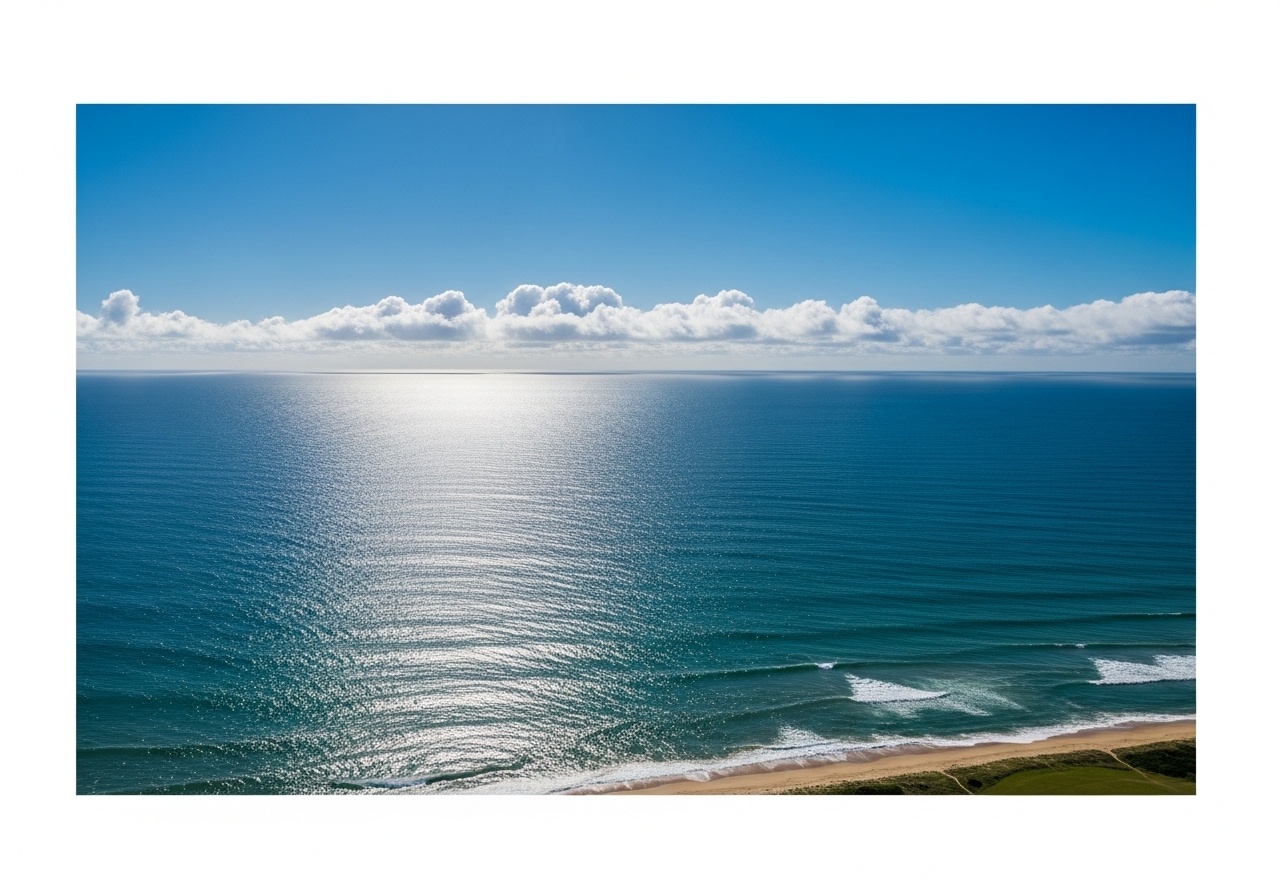
The Ocean as Earth's Heat Reservoir
Water has a high specific heat capacity, meaning it requires a large amount of energy to change its temperature. This property allows the ocean to absorb enormous amounts of solar heat without warming quickly, and to release that heat slowly over time.
This is why coastal cities tend to have milder temperatures than inland cities at the same latitude. The ocean keeps coastal areas cooler in summer and warmer in winter, a phenomenon known as the maritime effect. As distance from the ocean increases, temperature ranges become more extreme a condition called continentality.
Oceans are considered Earth's largest heat reservoir because they cover most of Earth's surface and store heat effectively, preventing rapid temperature swings globally.

Ocean Currents and Global Climate
Ocean currents are large-scale, continuous movements of seawater shaped by wind, Earth's rotation, temperature differences, and salinity. They act like a global conveyor belt, distributing warm water from the equator toward the poles and cool water back toward the equator.
The Gulf Stream is a well-known warm ocean current that flows from the Gulf of Mexico across the Atlantic Ocean toward Western Europe. It carries warm water northward, giving Western Europe milder winters than other regions at the same latitude.
Cold ocean currents have the opposite effect they cool the air above them, reduce evaporation, and can create dry conditions on nearby coastlines. The cold California Current, for example, keeps San Francisco cool and foggy during summer months. The cold Humboldt Current contributes to the extreme dryness of the Atacama Desert.
Thermohaline Circulation
Thermohaline circulation is a global system of deep ocean currents driven by differences in water temperature (thermo) and salinity (haline). Cold, dense, salty water sinks to the ocean floor and moves slowly around the planet, distributing heat across ocean basins and influencing regional climates worldwide.
This circulation is critical for regulating Earth's long-term climate. If melting polar ice adds large amounts of fresh water to the ocean, it could slow thermohaline circulation by reducing the density differences that drive it, potentially altering global climate patterns significantly.
Evaporation, Sea Breezes, and the Water Cycle
Evaporation is the process by which ocean water transforms into water vapor and enters the atmosphere. The ocean supplies roughly 86% of global evaporation, making it the primary driver of the water cycle. This water vapor forms clouds and precipitation, directly influencing climate patterns.
Warm ocean currents increase the rate of evaporation, leading to greater cloud formation and more rainfall in nearby coastal regions. Cold currents reduce evaporation and tend to produce drier conditions.
A sea breeze forms during the day when land heats faster than the ocean, causing warm air over land to rise and cooler ocean air to move inland. At night, the process reverses: land cools faster than the ocean, and a land breeze blows from the cooler land toward the relatively warmer sea.
Islands and coastal areas experience smaller temperature ranges between day and night compared to deserts because surrounding ocean water moderates temperature changes throughout the day.
El Niño and La Niña
El Niño is a climate phenomenon in which surface waters in the central and eastern tropical Pacific Ocean become unusually warm. This warming disrupts normal atmospheric circulation, shifting jet streams and altering precipitation and temperature patterns globally causing droughts in some regions and floods in others.
During normal or La Niña conditions, trade winds are strong and push warm water westward. During El Niño, trade winds weaken, allowing warm water to spread eastward across the Pacific. Upwelling the rising of cold deep-ocean water to the surface is suppressed during El Niño events.
La Niña is the counterpart to El Niño and involves cooler-than-normal sea surface temperatures in the central and eastern tropical Pacific. It generally produces opposite climate effects, such as increased rainfall in some regions and drought in others.
Oceans, Carbon Dioxide, and Albedo
Oceans act as a major carbon sink, absorbing approximately 2530% of the carbon dioxide released into the atmosphere through direct dissolution at the ocean surface. This process helps regulate atmospheric CO levels and influences global climate.
Albedo refers to how much solar energy a surface reflects. Ocean surfaces have relatively low albedo, meaning they absorb more incoming solar radiation rather than reflecting it. This absorbed energy warms the water and is gradually released into the atmosphere.
Marine phytoplankton also produce a large portion of Earth's atmospheric oxygen through photosynthesis, making the ocean essential not only for climate regulation but also for supporting life on Earth.
Oceans and Extreme Weather
Hurricanes form over warm tropical ocean waters because warm water provides the heat and moisture that fuel storm development. Ocean water of at least 26°C is required for hurricane formation. When a hurricane moves over cold water or land, it loses its energy source and gradually weakens.
Monsoon weather patterns in South Asia are also driven by the ocean. Seasonal heating differences between the ocean and land create pressure differences that drive monsoon winds, bringing heavy rainfall in summer when moist ocean air flows inland.
These concepts connect directly to the study of weather patterns and global circulation, as ocean temperature differences are a primary driver of atmospheric pressure and wind systems worldwide.
Key Terms & Definitions
Ocean Currents: Large-scale movements of seawater shaped by wind, Earth's rotation, temperature, and salinity differences; they transfer thermal energy across vast distances and influence regional and global climates.
Specific Heat Capacity: The amount of energy required to raise the temperature of a substance; water has a high specific heat capacity, allowing oceans to absorb and release heat slowly and moderate nearby climates.
Maritime Climate: A climate type directly influenced by nearby ocean waters, characterized by mild winters, cool summers, and relatively small temperature ranges throughout the year.
Thermohaline Circulation: A global system of deep ocean currents driven by differences in water temperature and salinity; it distributes heat around the planet and plays a critical role in regulating Earth's long-term climate.
El Niño: A periodic climate phenomenon involving the unusual warming of surface waters in the central and eastern tropical Pacific Ocean, which disrupts normal atmospheric circulation and alters weather patterns globally.
La Niña: The counterpart to El Niño, characterized by cooler-than-normal sea surface temperatures in the central and eastern tropical Pacific Ocean; it generally produces opposite climate effects compared to El Niño.
Upwelling: The process by which cold, nutrient-rich water from the deep ocean rises to the surface; it is more common during neutral or La Niña conditions and can cool coastal climates.
Heat Capacity: The ability of a substance to store thermal energy; the ocean's high heat capacity allows it to act as Earth's largest heat reservoir, moderating global temperatures.
Evaporation: The process by which liquid water at the ocean surface converts to water vapor and enters the atmosphere; it is the primary mechanism linking the ocean to the water cycle and transfers latent heat into the atmosphere, fuelling weather systems.
Sea Breeze: A daytime wind that blows from the sea toward the land, formed because land heats faster than water, causing warm air over land to rise and cooler ocean air to move inland to replace it.
Land Breeze: A nighttime wind that blows from the cooler land toward the relatively warmer sea, formed because land cools faster than the ocean after sunset.
Albedo: A measure of how much solar energy a surface reflects; ocean surfaces have low albedo, meaning they absorb more solar radiation, which warms the water and influences climate.
Gulf Stream: A warm ocean current that flows from the Gulf of Mexico across the Atlantic Ocean toward Western Europe, carrying warm water that gives Western Europe milder winters than other regions at the same latitude.
Carbon Sink: A natural system that absorbs more carbon dioxide than it releases; the ocean is a major carbon sink, absorbing roughly 2530% of atmospheric CO through surface dissolution.
Applying Ocean and Climate Concepts
Students can deepen their understanding by examining real-world examples such as the effect of the Gulf Stream on European climates, the role of the cold California Current in San Francisco's foggy summers, and the global disruptions caused by El Niño events. These examples illustrate how ocean temperature directly influences atmospheric conditions and weather worldwide.
Connecting these concepts to climate change and human impact helps learners understand how rising ocean temperatures due to climate change could lead to stronger storms, more extreme weather events, and disruptions to thermohaline circulation. This prepares students for exploring future climate scenarios and predictions.
Building on Prior Knowledge
This topic builds on students' understanding of energy transfer through conduction, convection, and radiation, which explains how heat moves through the ocean and atmosphere. Knowledge of weather patterns and global circulation and climate zones and global patterns provides the atmospheric framework needed to understand how ocean processes drive large-scale climate systems. Familiarity with climate change and human impact connects ocean influence to ongoing environmental changes.
Related Topics & Connections
This topic is closely connected to Climate Factors and Global Patterns, which examines the broader range of factors including ocean influence that determine climate across different regions of Earth. Understanding how the ocean moderates climate is essential context for studying Climate Records and Historical Knowledge, which uses past ocean and atmospheric data to understand long-term climate trends.
The ocean's role in carbon absorption links directly to Matter Cycles and Biogeochemical Cycles, where the carbon cycle depends heavily on ocean processes. Marine ecosystems are explored further in Food Webs and Energy Transfer, where ocean productivity driven by upwelling and nutrient cycling supports entire food chains.
Changes in ocean temperature and circulation connect to Environmental Change and Ecosystem Alterations and to Human Impact and Anthropogenic Effects, as human activities increasingly alter ocean chemistry and temperature. These changes are examined in the context of Future Scenarios and Climate Predictions.
On a geological scale, ocean basins are shaped by Plate Tectonics and Global Patterns, which influences the pathways of ocean currents over millions of years, a perspective explored in Geological Time and Earth's History. Sustainable responses to ocean and climate challenges are addressed in Traditional Practices and Sustainable Methods.
This topic prepares students for subsequent study of Global Change and Environmental Effects, Energy Resources Renewable and Non-Renewable, and System Dynamics and Complex Interactions, where the ocean's role in Earth's interconnected systems becomes even more central.