8th Grade Math Help — Step-by-Step Video Lessons & Practice
Clear video solutions and practice that make 8th grade math click
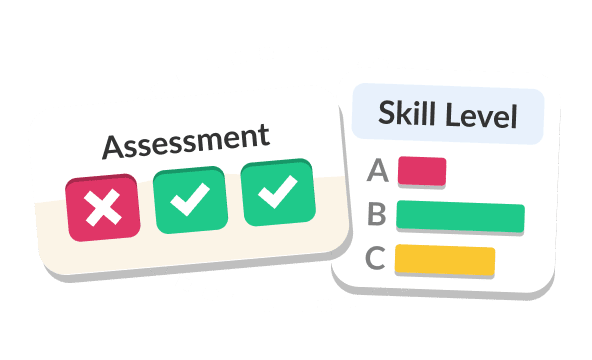
Diagnostic Finds Gaps
See exactly where your child needs help.
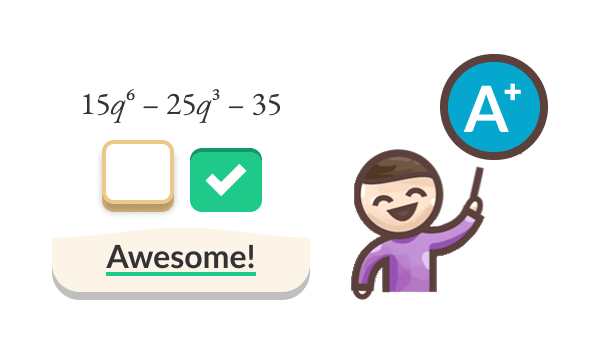
Step-by-Step Videos
Your child learns the method not the answer.

School-Aligned
Matches your child's state standards exactly.
Try It Now
Test your knowledge
Our approach aligns with the evidence
Exam Scores
Better Recall
Less Anxiety
8th Grade Math Topics
1. Number Theory
2. Operations with Integers
3. Rational Numbers
4. Operations with Rational Numbers
5. Exponents and Roots
6. Scientific Notation
7. Ratios and Proportions
8. Proportional Relationships
10. Consumer Math
11. Measurement
12. Pythagorean Theorem
13. Coordinate Graphs
14. Geometry
15. Transformations
16. Number Sequences
17. Single-Variable Equations
18. Linear Functions
19. Nonlinear Functions
20. Inequalities
21. Systems of Linear Equations
22. Monomials and Polynomials
23. Probability
Discover Our Learning Areas
Explore key subjects and start learning with interactive content.







What Is 8th Grade Math?
8th grade math is the bridge between middle school arithmetic and high school algebra. In the US, it is governed by Common Core Math standards and aligned state standards, making it one of the most consequential years in a student's math education. By the end of 8th grade, students are expected to reason with abstract quantities, work fluently with linear relationships, and apply geometric principles — skills that feed directly into Algebra I, Geometry, and beyond. If your child is finding the jump difficult, they are not alone: 8th grade is where many students first feel genuinely stuck, and targeted help at this stage makes a measurable difference.
What Topics Are Covered in 8th Grade Math?
8th grade math under US standards covers a wide range of interconnected topics. The core strands include:
- The Real Number System: Distinguishing rational from irrational numbers, approximating square roots and cube roots, and understanding scientific notation for very large and very small values.
- Expressions and Equations: Solving multi-step linear equations with one variable, working with linear equations in two variables, and analyzing slope and intercepts on a coordinate plane.
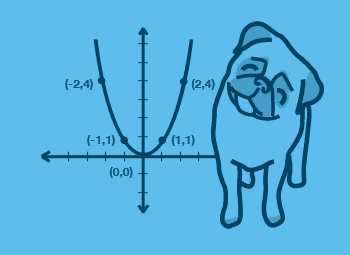
- Functions: Understanding what a function is, comparing linear and non-linear functions, and interpreting graphs and tables to describe functional relationships.
- Systems of Equations: Solving systems of two linear equations graphically and algebraically using substitution and elimination.
- Geometry: Applying the Pythagorean theorem in two and three dimensions, understanding congruence and similarity through transformations (translations, reflections, rotations, dilations), and working with volume of cylinders, cones, and spheres.
- Statistics and Probability: Interpreting scatter plots, fitting trend lines, and understanding association in bivariate data.
These topics are closely related — a student who understands functions deeply will find systems of equations far more approachable. StudyPug covers every one of these strands with lessons that build from fundamentals to exam-ready problem solving.
Why Is 8th Grade Math Hard — and Where Do Students Get Stuck?
The difficulty of 8th grade math is real, and it is not a sign of low ability — it is a sign that the curriculum has shifted in a meaningful way. Before 8th grade, math is mostly about procedures applied to concrete numbers. In 8th grade, the subject becomes genuinely abstract: variables represent unknown quantities, functions describe relationships, and proofs require logical reasoning rather than calculation.
The most common struggle points our students encounter are:
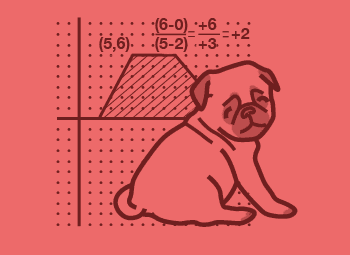
- Slope and linear equations: Many students can follow a formula but don't understand what slope actually means, which causes confusion when problems change form.
- Systems of equations: The idea that two equations can be combined — and why that's valid — is conceptually new and often poorly explained.
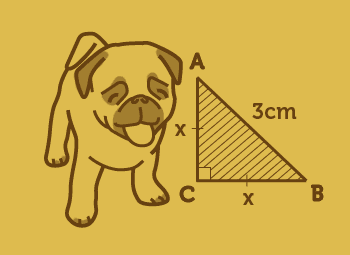
- The Pythagorean theorem in context: Applying it to real-world problems (finding distances, diagonal lengths) requires spatial reasoning that pure computation doesn't build.
- Negative exponents and scientific notation: These feel arbitrary until the underlying rules of exponents are understood clearly.
StudyPug's diagnostic assessment identifies which of these gaps are affecting your child specifically, so practice time goes to the right places.
Why StudyPug for 8th Grade Math Help?
StudyPug is built for exactly the kind of help 8th grade math students need: clear concept explanations, not just answer keys.
Certified-teacher video lessons are at the core of the experience. Every lesson is taught by a real certified teacher who walks through the method step by step — why you set up the equation this way, what the graph is actually telling you, how to know which solving strategy to use. This is real teaching, and it means your child can handle a problem they've never seen before, not just repeat a memorized procedure.
Diagnostic Assessment is the starting point for every new student. Rather than working through topics they already know, students take a short diagnostic that maps their current understanding and identifies exactly where to focus. Parents tell us this is one of the most valuable features — it removes the guesswork from getting started.
Adaptive Practice adjusts to your child's level in real time. As they get questions right, difficulty increases; when they struggle, the system backs up and reinforces the concept. This keeps practice productive and confidence-building rather than frustrating.
For families with more than one child, the Family Plan covers up to 5 children at all grade levels under one subscription. The Parent Dashboard shows each child's progress separately — topic by topic — so you can see exactly where improvement is happening and where more attention is needed.
All content aligns to US state standards and Common Core, so what your child practices on StudyPug matches what they're responsible for at school. And with free practice content available from day one, your child can start improving before you've committed to anything.
What Your Child Will Learn: 8th Grade Math Curriculum Coverage
StudyPug's 8th grade math content is organized to follow the progression students experience in US middle schools. Topics are grouped into clear units that build on one another:
- Real numbers, square roots, and cube roots
- Scientific notation and operations with exponents
- Linear equations in one and two variables
- Slope, rate of change, and graphing lines
- Functions: definitions, representations, and comparing types
- Systems of two linear equations (graphing, substitution, elimination)
- Transformations: translations, reflections, rotations, dilations
- Congruence and similarity
- The Pythagorean theorem and its applications
- Volume of cylinders, cones, and spheres
- Scatter plots, trend lines, and bivariate data
For a detailed breakdown of how these topics align to your state's standards, see the Texas Grade 8 math curriculum coverage on geometry and measurement and the Florida Grade 8 math curriculum guide. Both pages map StudyPug topics directly to state-level expectations, making it easy to confirm your child is covering the right material.
How to Use StudyPug for 8th Grade Math
Getting started takes about five minutes. Here is how most families use the platform effectively:
- Take the diagnostic. This short assessment identifies where your child's understanding is solid and where the gaps are. It sets the starting point for a focused, efficient plan.
- Watch the concept video. For any topic your child is working on, start with the certified-teacher video. Watch it together the first time if your child is new to the platform — it reinforces that the teacher is explaining a method, not just a shortcut.
- Work through adaptive practice. After the video, move to practice problems. The adaptive system adjusts difficulty based on how your child is doing. Aim for 20–30 minutes of focused practice on school nights.
- Use practice tests before exams. The practice tests are based on real exam formats. Running through one under timed conditions a day or two before a test is one of the most effective preparation strategies at this level.
- Check the parent dashboard. Review your child's progress weekly. The dashboard shows topic-by-topic improvement, so you can have an informed conversation with your child (or their teacher) about where things stand.
StudyPug is available on desktop, tablet, and mobile — so your child can access help at home, on the bus, or anywhere they have a few minutes. With free practice content available without a subscription, there is no barrier to getting started today.
8th Grade Math FAQ
Unsure how StudyPug works? Need help with setting up? Check our frequently asked questions or contact us for help.
What does my child learn in 8th grade math, and what topics does it cover?
8th grade math builds toward algebra and abstract reasoning. Core topics include linear equations and inequalities, systems of equations, functions, integer exponents and scientific notation, the Pythagorean theorem, transformations and congruence in geometry, and an introduction to statistics and probability. Under Common Core and most US state standards, students also explore irrational numbers and the real number system. By year end, students have a strong foundation for high school Algebra I or its equivalent.
Is 8th grade math hard, and where do students commonly struggle?
8th grade math is a significant step up. The shift from arithmetic to algebraic thinking trips up many students. The most common sticking points are solving multi-step linear equations, graphing lines and understanding slope, working with systems of equations, and applying the Pythagorean theorem in non-obvious contexts. Students who struggled with fractions or negative numbers in earlier grades often hit a wall here. Catching those gaps early — before they compound — makes a big difference in whether a student feels confident or overwhelmed.
What should my child know before 8th grade math, and what comes next?
Strong 7th grade foundations matter a lot: operations with rational numbers, proportional relationships, basic geometry (area, surface area, volume), and early expressions and equations. If those are shaky, 8th grade concepts will feel much harder. After 8th grade, most students move into Algebra I or Algebra II, Geometry, or integrated math pathways depending on their state or district. Students on advanced tracks may already be in Algebra I or Geometry during 8th grade itself.
How does StudyPug 8th grade math map to what my child learns at school?
StudyPug lessons are built around US state standards and Common Core Math for Grade 8. Topics follow the same sequence students see in the classroom, from linear equations and functions through geometry and data. Whether your child's school uses a standard textbook series or a state-specific curriculum, the concepts are covered. For a detailed look at how topics align to your state's standards, see the Texas Grade 8 math curriculum coverage on geometry and measurement and the Florida Grade 8 math curriculum guide.
What is one of the trickiest 8th grade math concepts, and how is it taught?
Systems of equations is one of the most conceptually demanding topics in 8th grade. Students must understand that a solution is the point where two linear relationships are simultaneously true — and then apply substitution or elimination to find it. Many students memorize steps without understanding why they work. On StudyPug, certified teachers walk through the concept method-first: why we substitute, what elimination is actually doing, and how to check an answer. That conceptual grounding helps students handle unfamiliar variations on tests and homework.
How much math practice should my child do at 8th grade?
Most education guidelines suggest 20–30 minutes of focused practice per school day at this level. At 8th grade, consistency matters more than long sessions — regular short practice beats cramming. After watching a video lesson, working through 10–15 practice problems reinforces the method before it fades. Before tests, a timed practice test under exam conditions helps students identify any remaining gaps. StudyPug's adaptive practice adjusts difficulty as your child improves, so sessions stay productive without feeling overwhelming.