Topic
My Progress
Pug Score
0%
Study Points
+0
Overview
Watch
Read
Next Steps
Adaptive practice
Video lessons
Overview
Watch
Read
Next Steps
Watch
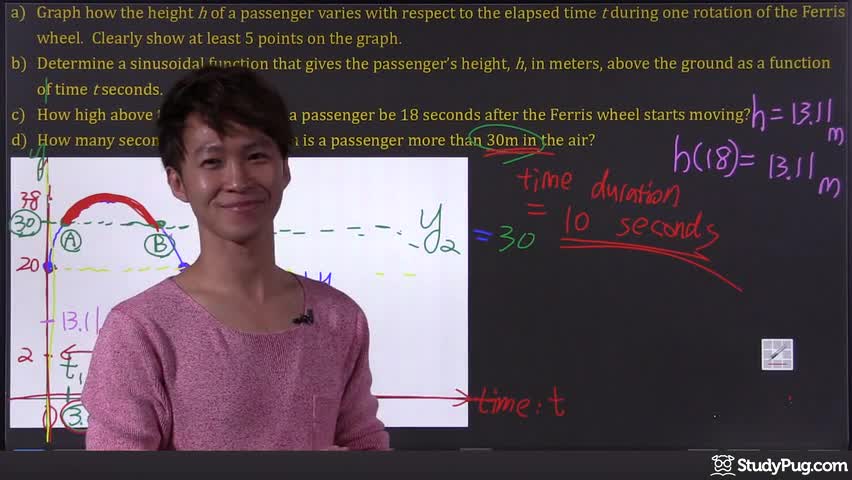
Modeling Ferris wheel height with a sine function and graphing calculator
📝 My Notes
Auto-saves the current timestamp
Modeling Ferris wheel height with a sine function and graphing calculator
38:37
About this lesson
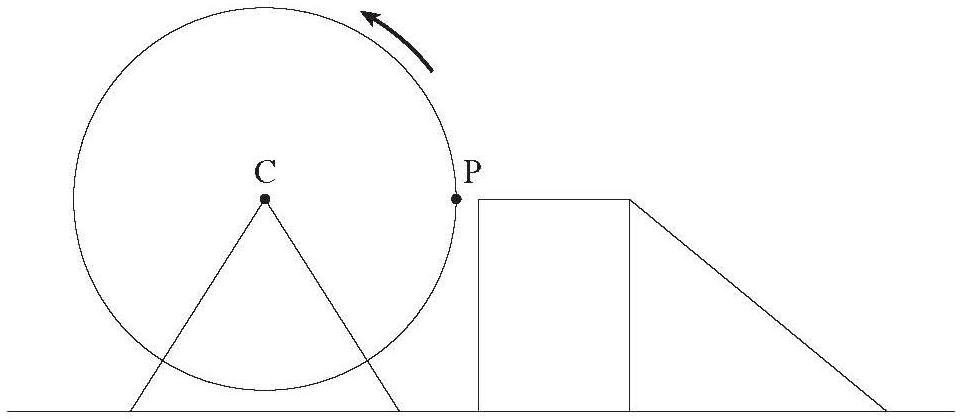
A Ferris wheel has a radius of 18 meters and a center C which is 20m above the ground. It rotates once every 32 seconds in the direction shown in the diagram. A platform allows a passenger to get on the Ferris wheel at a point P which is 20m above the ground. If the ride begins at point P, when the time t = 0 seconds:
Key Moments
No key moments available.
Video 1 of 1
Modeling Ferris wheel height with a sine function and graphing calculator
39 min
• Selected