TOPIC

Daily Patterns, Basic observations of sun and moon movement

MY PROGRESS

Pug Score

0%

Best Streak

0 in a row

Study Points

+0

Overview

Practice

Watch

Read

Quiz

Next Steps


Get Started

Get unlimited access to all videos, practice problems, and study tools.

Unlimited practice
Full videos

Back to Menu

Topic Progress

Pug Score

0%

Videos Watched

0/0

Best Practice

No score

Read

Not viewed

Best Quiz

No attempts


Best Streak

0 in a row

Study Points

+0

Read

Watch the Sky: Sun, Moon, and Stars Every Day!

You will learn how the sun and moon move across the sky and how the sky looks different during the day and at night.

What Do You See in the Sky?

Look up at the sky! You can see different things at different times of day. The sky changes from morning to night.
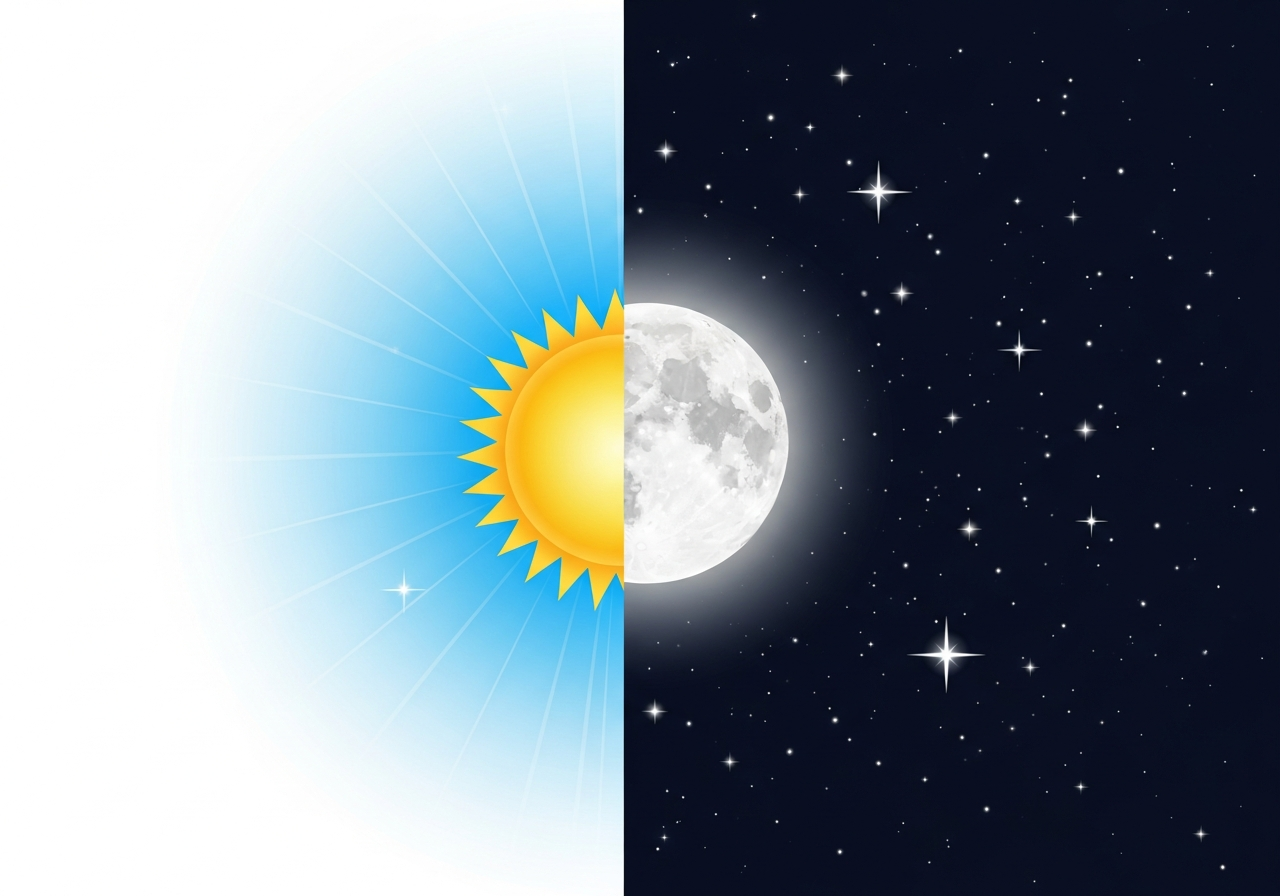
During the day, you see a blue sky and the bright sun. At night, the sky looks dark. You can see the moon and stars when the sky is dark.

The Daytime Sky

When you wake up in the morning, the sky is bright and blue. The sun shines and lights up everything around you.

You cannot see stars during the day. The sky is too bright! Stars are always up there, but you can only see them when the sky is dark at night.

The Nighttime Sky

When it gets dark at night, you can see the moon glow in the sky. You can also see tiny twinkling dots called stars!

The moon and stars move across the night sky. They start on one side and move to the other side. This happens because Earth rotates, or spins around.

The Moon

The moon is a big, bright object you see at night. It does not make its own light like a lamp. The moon reflects light, which means it bounces light to make it look bright.

You can watch the moon change shape! Sometimes it looks round and full. Sometimes it looks like a small slice called a crescent. The moon changes shape over many nights.

Stars in the Night Sky

Stars are tiny points of light you see at night. They look like they are twinkling when you look up at them. Stars appear in the same patterns every night!

Just like the moon, stars seem to move across the sky at night. This happens because Earth spins. When Earth turns, you see different parts of the sky.

Key Terms and Definitions

Sun: The sun is the big, bright star you see in the daytime sky. It gives you light and warmth every day.

Moon: The moon is a bright object you see in the night sky. It changes shape over time and reflects light to glow.

Stars: Stars are tiny points of light you see twinkling in the night sky. They are always there, but you can only see them when the sky is dark.

Daytime Sky: The daytime sky is bright and blue. You see the sun during the day, but you cannot see stars.

Night Sky: The night sky is dark. You can see the moon and stars when the sky is dark at night.

Earth Rotates: Earth rotates means Earth spins around like a top. When Earth spins, the moon and stars look like they are moving across the sky.

Reflects Light: Reflects light means light bounces off something. The moon reflects light from the sun, so it looks bright and glowing at night.

Crescent: A crescent is a shape the moon makes. It looks like a small curved slice, like a banana shape in the sky.

Full Moon: A full moon is when the moon looks big and round in the sky. You can see the whole moon glowing at night.

Sky Patterns: Sky patterns are things you see in the sky that happen again and again. The sun comes up every day and the moon comes out every night those are sky patterns!

Celestial Objects: Celestial objects are things you see in the sky, like the sun, moon, and stars. They are all up above you in space.

Fun Sky Watching Activities

You can be a sky watcher! Go outside in the morning and look up. What do you see? Is the sky blue? Can you find the sun?

At night, look out your window. Can you find the moon? Can you count the twinkling stars? Watch the moon for many nights and see if its shape changes!

You can draw what you see in the sky each day. Draw the sun in the morning and the moon at night. See how the sky changes!

What You Already Know

You already know about day and night! You know the sun comes up in the morning and goes down at night. This helps you understand sky patterns.

You know what it looks like outside during the day and at night. Now you can learn even more about the amazing sky objects you see every day and every night!

Related Topics and Connections

Learning about daily sky patterns is a great start to understanding the world above you! As you keep learning about science, you will discover even more amazing things about the sky and space.

The things you learn here like how the sun and moon move, how stars twinkle at night, and how Earth spins will help you understand bigger science ideas as you grow. You are building a strong foundation for learning about space and the world around you!