TOPIC
Water Sources, Natural water bodiesMY PROGRESS
Pug Score
0%
Getting Started
"Let's build your foundation!"
Best Streak
0 in a row
Study Points
+0
Overview
Practice
Watch
Read
Quiz
Next Steps
Get Started
Get unlimited access to all videos, practice problems, and study tools.
Back to Menu
Topic Progress
Pug Score
0%
Getting Started
"Let's build your foundation!"
Videos Watched
0/0
Best Practice
No score
Read
Not viewed
Best Quiz
No attempts
Best Streak
0 in a row
Study Points
+0
Overview
Practice
Watch
Read
Quiz
Next Steps
Read
Discover Natural Water Bodies: Rivers, Lakes, Oceans, and More!
You will explore natural water bodies like rivers, lakes, oceans, and ponds, and learn where water comes from and why it matters for all living things.
What Are Natural Water Bodies?
You can find water in many places on Earth. A natural water body is any large area of water that was formed by nature, not made by people. Rivers, lakes, oceans, and ponds are all natural water bodies.
People-made containers like swimming pools, fish tanks, and fountains are not natural water bodies. Nature created the water bodies you will learn about here!
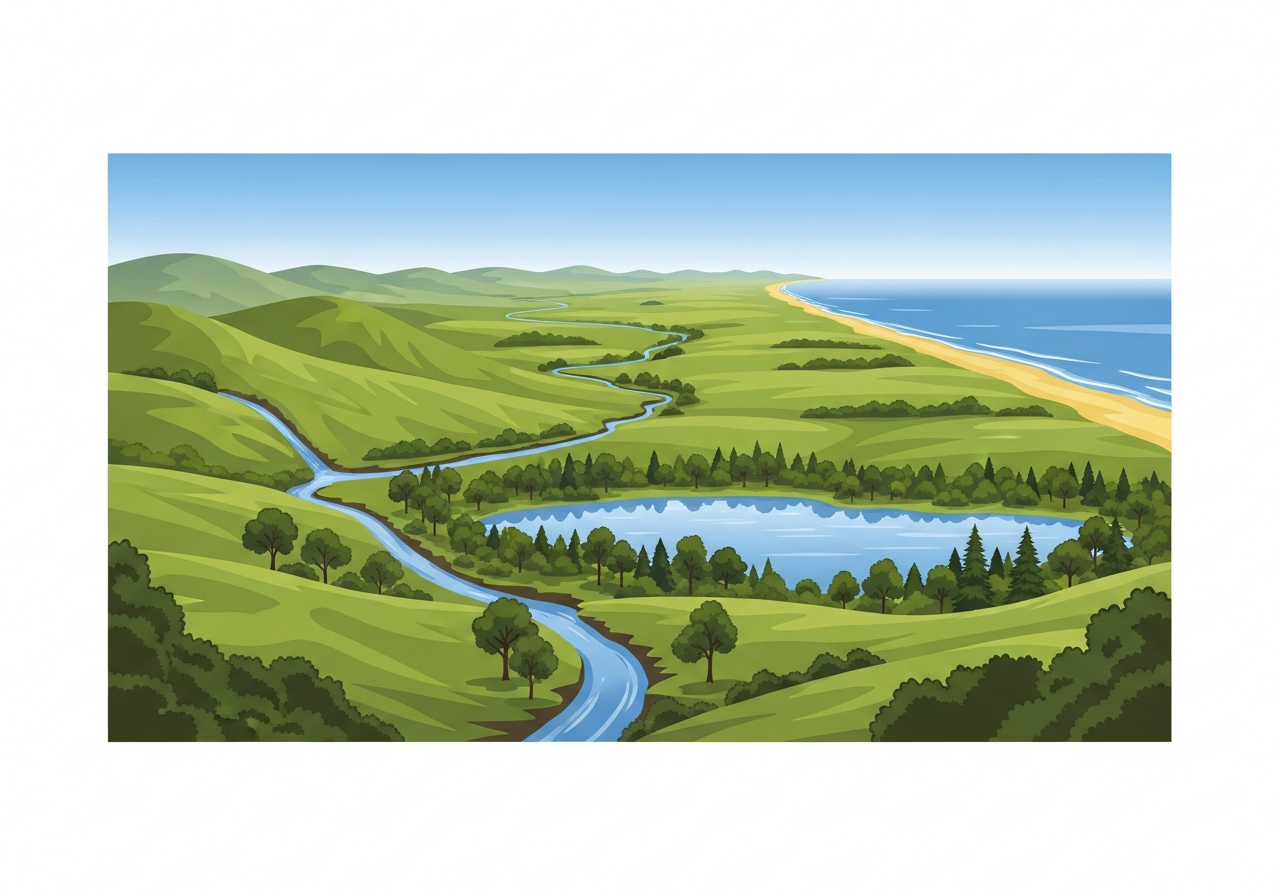
Types of Natural Water Bodies
Oceans
The ocean is the largest natural water body on Earth. It covers about 71% of our planet's surface. Ocean water is very salty, so people cannot drink it directly.
Rivers
A river is a large stream of water that flows across the land. Rivers carry fresh water and flow from higher ground down to lower areas, eventually reaching a lake or ocean. The place where a river begins is called its source, and the place where it ends is called its mouth. Rivers are fed by rainwater, melting snow, and underground springs.
Lakes
A lake is a large body of water that is completely surrounded by land on all sides. Most lakes contain fresh water. Lakes are still bodies of water they do not flow like rivers.
Ponds
A pond is a small, calm body of fresh water. Ponds are much smaller and shallower than lakes. Because ponds are shallow, sunlight reaches the bottom, which helps many plants and animals like fish and frogs live there.
Streams
A stream is a small, narrow body of moving fresh water that flows over land. Streams are smaller than rivers but carry moving water just like rivers do.
Glaciers
A glacier is a very large, slow-moving mass of ice found on high mountains or near the poles. Glaciers are made of frozen water, not liquid water. They move very slowly over land.
Wetlands
A wetland is an area of land that is always wet or covered with shallow water, like swamps and marshes. Wetlands are important homes for many plants and animals.
Springs
A spring is a place where underground water flows up and out of the ground naturally. Springs bring groundwater to the surface.
Fresh Water vs. Salt Water
Not all water is the same! Salt water is found in oceans and seas. It has a lot of salt in it, so people and most animals cannot drink it. Fresh water has very little salt and is the kind of water you drink and use every day.
Rivers, lakes, ponds, streams, glaciers, and groundwater are all sources of fresh water. Fresh water is very important because all living things people, animals, and plants need it to survive.
Where Does River Water Come From?
You might wonder where all the water in rivers comes from. Rivers are filled by rainfall and melted snow that flow down from higher land like mountains and hills. Underground springs also add water to rivers.
Precipitation is any water that falls from clouds, including rain, snow, sleet, and hail. When precipitation falls on land, it flows into streams and rivers, helping to keep them full.
The Water Cycle
Water is always moving in a big loop called the water cycle. The sun heats water in oceans and lakes, causing it to evaporate this means it turns into water vapor and rises into the air. The water vapor forms clouds, and then falls back to Earth as precipitation. This water flows into rivers, lakes, and soaks into the ground, and the cycle starts again!
Groundwater and Underground Water Sources
Groundwater is fresh water that soaks into the soil and is stored in spaces between rocks deep beneath the Earth's surface. You cannot see groundwater, but it is very important. People can dig wells to reach groundwater for drinking and farming.
A water source is any place where water can be found, such as a lake, river, well, or spring. You and your community depend on water sources every day.
Why Water Bodies Are Important
You need fresh water to drink, cook, and stay healthy. Animals and plants also need water to survive. Rivers provide fresh water for drinking, farming, and transportation. Many towns and cities were built near rivers and lakes because people need fresh water close by.
It is very important to keep rivers, lakes, and other water bodies clean. Dirty or polluted water harms fish, frogs, and other wildlife. It can also make people very sick. You can help by never throwing trash into water bodies!
Key Terms and Definitions
Natural water body: A natural water body is any large area of water that was formed by nature, not built by people. Examples you will find in nature include oceans, rivers, lakes, and ponds.
Ocean: An ocean is a huge body of salty water that covers most of the Earth. It is the largest type of natural water body on our planet.
River: A river is a large stream of water that flows across the land. It carries fresh water from higher ground down toward a lake or ocean.
Lake: A lake is a large body of water that is surrounded by land on all sides. Most lakes hold fresh water and are still, not flowing.
Pond: A pond is a small, still body of fresh water. It is much smaller and shallower than a lake, and many plants and animals live in it.
Stream: A stream is a small, narrow body of moving water that flows over land. It is smaller than a river but carries moving fresh water.
Glacier: A glacier is a very large, slow-moving mass of ice and snow found on high mountains or near the poles. It is a frozen water body.
Wetland: A wetland is an area of land that is always wet or covered with shallow water. Swamps and marshes are examples of wetlands that are home to many animals and plants.
Fresh water: Fresh water is water that has very little salt in it. It is the kind of water you drink and use every day, found in rivers, lakes, and ponds.
Salt water: Salt water is water that has a lot of salt in it. You find salt water in oceans and seas. People cannot drink salt water.
Water source: A water source is any place where water can be found, such as a lake, river, well, or spring. You and all living things depend on water sources.
Groundwater: Groundwater is fresh water stored deep beneath the Earth's surface in spaces between rocks and soil. People can reach groundwater by digging wells.
Spring: A spring is a place where underground water flows up and out of the ground naturally. It brings groundwater to the surface.
Precipitation: Precipitation is any water that falls from clouds to the Earth, including rain, snow, sleet, and hail. It helps refill rivers, lakes, and underground water sources.
Rainfall: Rainfall is when water falls from the sky as rain. It is one way that water returns to Earth and helps fill rivers and lakes.
Evaporation: Evaporation happens when the sun heats water and turns it into water vapor that rises into the air. This is how water gets from the ocean up into the clouds.
Water cycle: The water cycle is the way water moves between land, sky, and sea in a never-ending loop. Water evaporates, forms clouds, falls as rain, and flows back into rivers and oceans.
Source of a river: The source of a river is the starting point where a river begins its journey, often high up in mountains where snow melts or springs bubble up.
Mouth of a river: The mouth of a river is the place where the river ends and flows into a larger body of water, like an ocean or lake.
Waterfall: A waterfall is water that drops steeply over a rocky cliff. It forms when a river flows over the edge of a steep rock formation and falls downward.
Island: An island is a piece of land that is completely surrounded by water on all sides but rises above the water's surface so living things can live on it.
River channel: A river channel is the natural path that a river follows as it flows from its source to its mouth. It guides the river's flow across the land.
Practice What You Know
You can look for natural water bodies near where you live. Can you spot a river, pond, or lake? Think about whether the water is moving or still. Is it fresh water or salt water?
You can also draw your own water cycle diagram. Show how water evaporates from a lake, forms clouds, falls as rain, and flows back into rivers. This will help you remember how water keeps moving on Earth!
What You Already Know
You already know that water is something you drink every day and that rain falls from the sky. These everyday experiences are the perfect starting point for exploring natural water bodies and water systems. As you learn more about water sources, you will understand how all the water on Earth is connected in one big system.
Related Topics and Connections
This topic is part of your learning about Water Systems. As you explore water sources and natural water bodies, you are building a strong foundation for understanding how water works on our planet. Everything you learn here from rivers and lakes to the water cycle connects to the bigger picture of how Earth's water systems keep all living things alive and healthy.
You will use what you know about fresh water and salt water, precipitation, and groundwater as you continue to explore science topics about Earth and the environment. Keep asking questions about the water you see around you every day!