TOPIC

Moon Phases, Basic moon observations

MY PROGRESS

Pug Score

0%

Best Streak

0 in a row

Study Points

+0

Overview

Practice

Watch

Read

Quiz

Next Steps


Get Started

Get unlimited access to all videos, practice problems, and study tools.

Unlimited practice
Full videos

Back to Menu

Topic Progress

Pug Score

0%

Videos Watched

0/0

Best Practice

No score

Read

Not viewed

Best Quiz

No attempts


Best Streak

0 in a row

Study Points

+0

Read

Watch the Moon Change Shape Every Night!

You will learn how the moon looks different each night and how its shape follows a pattern you can observe in the sky.

What Are Moon Phases?

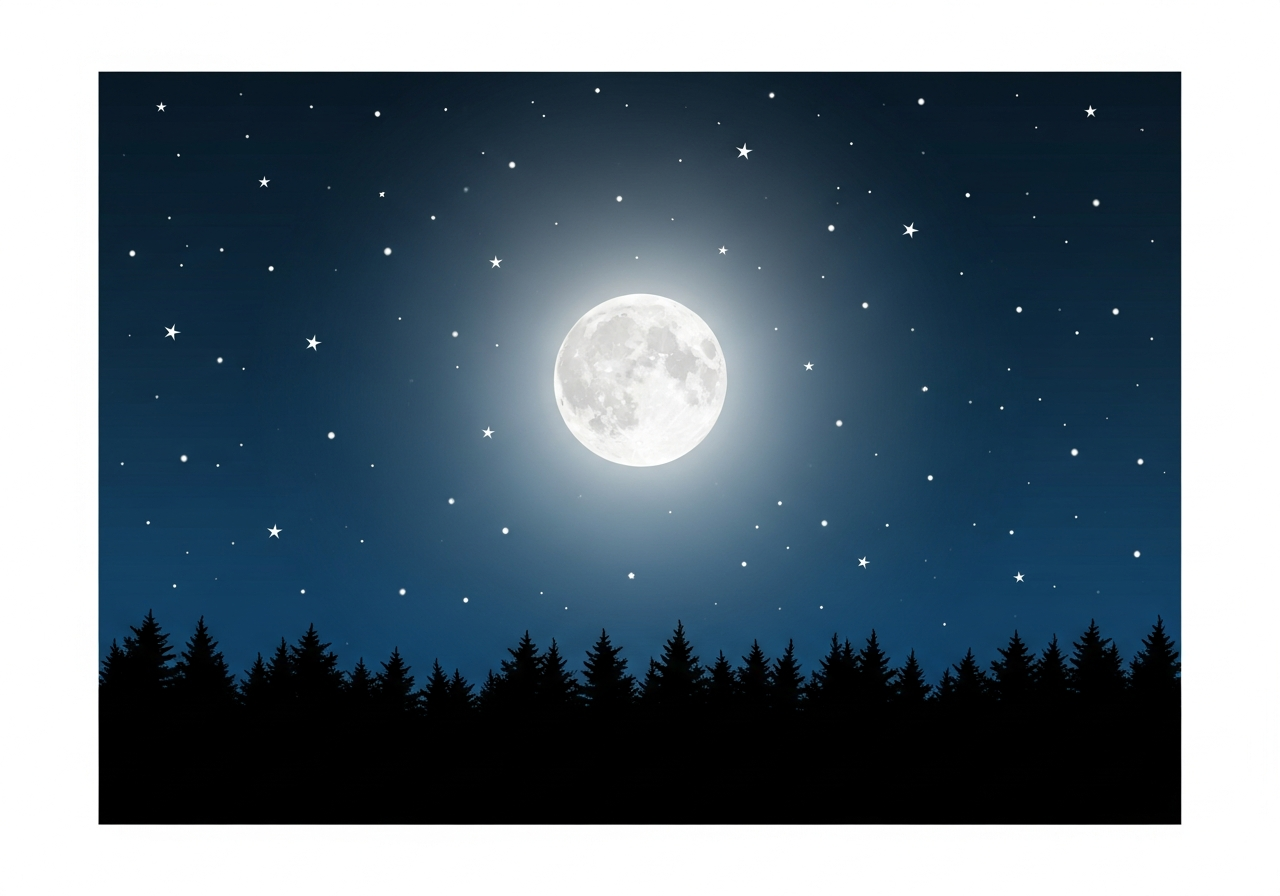
When you look up at the night sky, you can see the moon. The moon does not always look the same. Sometimes it looks like a big round circle, and sometimes it looks like a thin curved shape!

These different shapes are called moon phases. You can watch the moon change its shape over many nights. The moon follows a pattern that repeats every month.
How Does the Moon Change Shape?

The moon does not actually change its shape. It is always round, like a ball. What changes is how much of the lit-up side you can see from Earth.

The moon travels around Earth. As it moves, you see different amounts of the bright side. This is why the moon looks different each night!

Moon Shapes You Can See

You can see many different moon shapes in the sky. Here are the main shapes you will notice:

  • Full Moon: The whole bright side faces you. It looks like a big round circle.
  • Half Moon: You can see half of the bright side. It looks like a half circle.
  • Crescent Moon: You can only see a small curved sliver. It looks like a banana shape.
  • New Moon: You cannot see the moon at all because the dark side faces you.

If you watch the moon every night for a month, you will see it go through all these shapes and then start over again!

When Can You See the Moon?

You might think the moon only comes out at night. But you can also see the moon during the daytime sometimes! The moon is always in space, even when you cannot see it.

The moon appears to move across the sky during the night. This happens because Earth is spinning. If you look at the moon early in the evening and then again later, it will be in a different spot in the sky.

How to Observe the Moon

You can be a moon watcher! Here is how you can observe the moon each night. Look at the moon and draw its shape in a notebook. Do this every night for a few weeks.

You will start to see a pattern. The moon will slowly grow from a crescent to a full circle, and then slowly shrink back to a crescent again. This is the moon's cycle!

Key Terms and Definitions

Moon Phases: Moon phases are the different shapes the moon seems to have as it travels around Earth. You see different amounts of the lit side of the moon, which makes it look like different shapes.

Full Moon: A full moon is when you can see the whole bright side of the moon. It looks like a big, round circle in the sky.

Crescent Moon: A crescent moon is when you can only see a small, thin curved part of the moon. It looks like a curved sliver or a banana shape.

Half Moon: A half moon is when you can see exactly half of the bright side of the moon. It looks like a half circle.

New Moon: A new moon is when the dark side of the moon faces Earth. You cannot see the moon in the sky during a new moon.

Orbit: To orbit means to travel around something in a path. The moon orbits around Earth, and that is why we see different moon phases.

Lunar Calendar: A lunar calendar is a way of tracking the days by watching the moon's phases. You can make your own by drawing the moon's shape each night!

Observe: To observe means to look carefully at something. When you observe the moon, you watch it and notice how it looks and where it is in the sky.

Pattern: A pattern is something that repeats in the same order. The moon's phases follow a pattern that repeats every month.

Reflect: To reflect means to bounce light off a surface. The moon reflects light from the sun, which is why you can see it shine in the sky.

Moon Watching Activities

You can start watching the moon tonight! Go outside with a grown-up and look at the sky. Try to find the moon and notice its shape.

Draw the moon's shape in a notebook every night for one month. At the end of the month, look at all your drawings. You will see the moon's pattern from crescent to full moon and back again. This is just like making your own lunar calendar!

You can also look for the moon during the daytime. Next time you are outside, look up at the sky. You might be surprised to spot the moon even when the sun is out!

What You Already Know

You already know that the sky looks different during the day and at night. During the day, you see the sun. At night, you see stars and the moon.

You also know that things in the sky follow daily patterns. The sun rises in the morning and sets in the evening. The moon follows its own pattern too, changing its shape over the course of a month. Watching these patterns in the sky is part of learning about Daily Patterns in science.

Related Topics and Connections

Learning about moon phases is part of a bigger topic called Daily Patterns. When you study daily patterns, you learn how things in the sky and on Earth change in a regular, repeating way.

The moon's phases are one of the most exciting patterns you can observe in the sky. Just like the sun rises and sets every day, the moon goes through its phases every month. Both of these are examples of patterns you can watch and predict.

As you keep learning about science, you will discover even more patterns in nature. Watching the moon is a great way to start thinking like a scientist. You observe, you record, and you look for patterns and that is exactly what scientists do!