Linear Algebra Help: Video Lessons & Practice
Work through every topic with clear solutions. Start your free practice test now!
Value vs. Private Tutor
Get expert instruction at no extra cost.

Multi-Subject
Struggling with vectors? Switch anytime.

Unlimited Practice
Keep practicing until it truly clicks.
Try It Now
Test your knowledge
Our approach aligns with the evidence
Exam Scores
Better Recall
Less Anxiety
Linear Algebra Topics
1. Linear Equations with Matrices
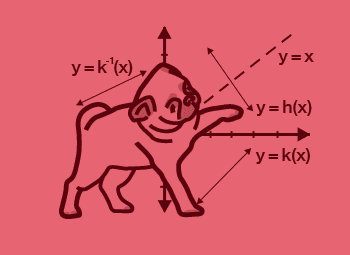
2. Linear Transformation
3. Matrix Operations
4. Determinant of a Matrix
5. Inverse of Matrices
7. Eigenvalue and Eigenvectors
8 Chapters · 45 Topics · 426 Videos
Discover Our Learning Areas
Explore key subjects and start learning with interactive content.






What Is Linear Algebra?
Linear Algebra is the branch of mathematics that studies vectors, matrices, and the linear transformations between them. At its core, the course teaches you to represent and solve systems of linear equations efficiently, then extends that thinking into abstract structures — vector spaces, subspaces, bases, and dimensions — that describe geometry and data in any number of dimensions. It is one of the most widely applied areas of mathematics, underpinning machine learning, computer graphics, engineering systems, quantum mechanics, and statistical modelling.
For Canadian university students, Linear Algebra is usually a required course in mathematics, engineering, computer science, physics, and statistics programs. Most students encounter it in their first or second year, often running alongside or just after Calculus I.
What Topics Are Covered in Linear Algebra?
A standard Canadian university Linear Algebra course moves through several interconnected topic blocks. Understanding the full map helps you see how each idea builds on the last.
Systems of linear equations and row reduction. The course opens with Gaussian and Gauss-Jordan elimination — systematic methods for solving any system of equations by reducing an augmented matrix to row echelon form. This is the computational backbone of everything that follows.
Matrix algebra. You learn to add, multiply, and invert matrices, compute determinants, and understand what it means for a matrix to be singular. Matrix operations are the language in which the rest of the course is written.
Vector spaces and subspaces. Here the course becomes more abstract. A vector space is any set of objects that can be added together and scaled, provided they satisfy a list of axioms. Subspaces, span, linear independence, basis, and dimension are the tools for describing the structure inside a vector space.
Linear transformations. A linear transformation is a function between vector spaces that respects addition and scaling. Understanding transformations geometrically — as rotations, reflections, projections — makes the algebra meaningful rather than mechanical.
Eigenvalues and eigenvectors. Given a matrix A, an eigenvector is a non-zero vector x such that Ax = λx for some scalar λ — the eigenvalue. Finding eigenvalues means solving the characteristic equation det(A − λI) = 0. Eigenvectors and eigenvalues appear everywhere: in differential equations, principal component analysis, and the study of dynamic systems.
Orthogonality and least squares. Orthogonal sets, the Gram-Schmidt process, orthogonal projections, and the least-squares method for solving inconsistent systems form a cluster of topics with direct applications in data fitting and signal processing.
Diagonalisation. A matrix is diagonalisable if it can be written as PDP⁻¹ where D is diagonal. Diagonalisation simplifies repeated matrix powers and is the key technique in solving systems of differential equations.
Is Linear Algebra Hard? Where Do Students Struggle?
Linear Algebra is consistently ranked among the more difficult first- and second-year university courses — not because the computations are unusually heavy, but because the conceptual shift is steep. Early topics like row reduction feel algorithmic and approachable. The difficulty climbs when abstract definitions arrive.
The transition to vector spaces catches many students off guard. You are no longer working with specific numbers in a familiar coordinate system — you are reasoning about sets of objects that satisfy abstract axioms. Proving that something is or is not a subspace, or determining whether a set of vectors is linearly independent, requires a kind of mathematical thinking that is new to most students at this level.
Eigenvalues and eigenvectors represent a second major difficulty peak. The multi-step process — characteristic polynomial, root-finding, null-space computation — has many places to make errors, and each step depends on the accuracy of the last. Students who struggle here typically benefit from working many examples by hand rather than just following a single template.
The good news: Linear Algebra rewards consistent practice more than raw mathematical talent. Working through problems daily, checking answers against step-by-step solutions, and revisiting each concept's geometric meaning closes gaps reliably.
How Is Linear Algebra Assessed at Canadian Universities?
Assessment structures vary across institutions, but a typical Canadian university Linear Algebra course allocates roughly 20–30% to assignments, 30–40% to one or two midterm exams, and 30–50% to a comprehensive final exam. Some courses include a proof-writing component graded separately.
Unlike secondary school, there is no standardised provincial exit examination for university mathematics in Canada — grades are set entirely at the institutional level. That means midterm and final exam formats vary from professor to professor. Reviewing past exams posted by your department, working through timed mock tests, and ensuring you can reproduce key proofs and calculations without notes are the most effective ways to prepare.
What Comes After Linear Algebra?
Linear Algebra is a gateway course that opens several directions. Students most commonly continue into Calculus III (multivariable calculus), which uses matrices to represent partial derivatives and gradient vectors. Differential Equations draws heavily on eigenvalue methods from Linear Algebra to solve systems of ODEs. Abstract Algebra builds on the vector-space axioms to study more general algebraic structures. In applied streams, Numerical Methods, Data Science, and Statistics courses use matrix decompositions directly. If you are in computer science or engineering, the material you learn here appears again in graphics, optimisation, and machine learning courses.
Why StudyPug for Linear Algebra?
StudyPug is built for university mathematics students who need more than a textbook re-read. Three features make it particularly effective for Linear Algebra.
Diagnostic assessment. Rather than working through the entire course from page one, a quick diagnostic identifies exactly which topics need the most attention. For Linear Algebra — where a shaky understanding of basis can undermine everything built on it — being directed to the right starting point saves significant time.
Certified-teacher video lessons that teach the method. Every video is made by an experienced instructor, not generated by AI. The lessons focus on the reasoning process behind each technique — why row reduction works, what a determinant geometrically means, why the characteristic polynomial gives you eigenvalues — so you build understanding deep enough to handle unfamiliar exam questions, not just familiar templates.
Adaptive practice. The practice system adjusts difficulty based on your performance. If you are solid on matrix multiplication but weak on orthogonal projections, the system keeps pushing you on projections until your accuracy improves. You are always working at the level that produces the most progress.
One subscription also includes every other university course on the platform — Calculus I, II, and III, Differential Equations, Statistics, and more — so as you move through your degree you never need a separate resource.
What You Learn: Linear Algebra Course Coverage
StudyPug's Linear Algebra content covers the full scope of a standard Canadian university course. The topic areas include:
- Systems of linear equations and Gaussian elimination
- Matrix operations, inverses, and determinants
- Vector spaces, subspaces, span, and linear independence
- Basis, dimension, and the rank-nullity theorem
- Linear transformations and their matrix representations
- Eigenvalues, eigenvectors, and the characteristic equation
- Orthogonality, the Gram-Schmidt process, and least squares
- Diagonalisation and applications
- Inner product spaces (where covered in the course syllabus)
Each topic is covered through video lessons, worked examples, and practice problems at multiple difficulty levels. Because the validated topic-URL list for this page contains no entries in the current sitemap index, individual topic links are not included here — visit the Linear Algebra course page on StudyPug to browse the full topic list and start practising.
Using StudyPug for Linear Algebra
A practical workflow: start with the diagnostic assessment to see which topics are your weakest. Then open the video lesson for that topic, watch it fully, and pay close attention to the method — the steps the instructor works through and why each one is taken. After the video, attempt the practice problems for that topic. The adaptive system will increase difficulty as your accuracy improves, and flag topics for review when you make errors.
Before midterms and finals, use the mock exams under timed conditions. Review every question you got wrong by watching the corresponding video solution — not just checking the answer, but understanding where your reasoning diverged. Repeat this cycle across all examinable topics in the week before your exam.
You can access StudyPug on any device, so lesson review between lectures or during a commute is straightforward. And if you get stuck on a problem at any hour, the video solutions for that exact topic are always available — watch as many times as needed until the method clicks. All of this is backed by a 30-day money-back guarantee, so getting started carries no financial risk.
Linear Algebra FAQ
Unsure how StudyPug works? Need help with setting up? Check our frequently asked questions or contact us for help.
What do you learn in Linear Algebra, and what topics does it cover?
Linear Algebra covers the mathematics of vectors, matrices, and linear transformations. Core topics include systems of linear equations, row reduction and Gaussian elimination, matrix operations and inverses, determinants, vector spaces and subspaces, basis and dimension, eigenvalues and eigenvectors, orthogonality, and diagonalisation. Many programs also introduce inner product spaces and the singular value decomposition. The course builds a foundation used directly in calculus III, differential equations, computer science, statistics, and engineering.
What is the difference between Linear Algebra and Calculus?
Calculus studies continuous change — limits, derivatives, and integrals. Linear Algebra studies structure: how vectors and matrices behave under linear transformations. Where calculus focuses on functions of real numbers, linear algebra works with objects in multi-dimensional spaces. The two courses complement each other closely — multivariable calculus relies on matrix representations, and differential equations use eigenvalue methods from linear algebra. Students typically take introductory calculus before or alongside linear algebra.
What are the prerequisites for Linear Algebra, and what course comes after it?
Most Canadian universities require completion of at least one semester of calculus (Calculus I or equivalent) before enrolling in Linear Algebra, though some programs accept concurrent enrolment. A solid grasp of algebraic manipulation and function notation helps considerably. After Linear Algebra, students commonly proceed to Calculus III (multivariable), Differential Equations, Abstract Algebra, Numerical Methods, or upper-year courses in data science and applied mathematics. Linear Algebra is a gateway course for most STEM streams.
Is Linear Algebra hard, and where do students struggle most?
Linear Algebra is considered one of the more conceptually challenging first- and second-year university courses. The early computational work — row reduction, matrix multiplication — feels manageable, but difficulty rises sharply when abstract concepts arrive: vector spaces, linear independence, span, and basis require thinking about infinite sets rather than specific numbers. Eigenvalues and diagonalisation trip up many students because the method involves several linked steps. Regular practice, working examples by hand, and revisiting each concept's geometric meaning are the strategies that make the biggest difference.
How is Linear Algebra assessed — midterms, finals, and assignments?
Across Canadian universities, Linear Algebra is typically assessed through weekly or biweekly assignments (worth 20–30%), one or two midterm exams (30–40%), and a final exam (30–50%). Some courses include proof-writing components or computational lab components. The final exam is comprehensive. Canadian students do not sit a standardised provincial exit exam for university mathematics — grading is set entirely by the institution. Practising with timed mock tests and reviewing full worked solutions for every topic is the most reliable way to prepare.
What is one of the hardest topics in Linear Algebra, and how do you approach it?
Eigenvalues and eigenvectors are consistently the most challenging topic. To find eigenvalues you solve the characteristic equation det(A − λI) = 0, which produces a polynomial; its roots are the eigenvalues. For each eigenvalue you then solve (A − λI)x = 0 to find the eigenvectors. The difficulty is that each step depends on the last, and errors compound. The best approach: practise the characteristic polynomial by hand on 2×2 then 3×3 matrices, check your eigenvectors by multiplying back, and work through multiple examples until the sequence becomes automatic.





Written by the StudyPug Team
Last updated June 5, 2026
3 M+
students
★★★★★
4.8 average
K–12
all grades