Grade 12 IB Chemistry Help — Video Lessons & Practice
Get clear explanations for every IB Chemistry topic and build exam-ready confidence.
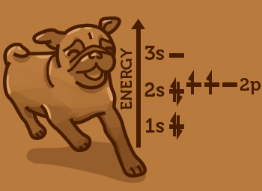
Step-by-Step Video Lessons
Watch the solution then try it yourself.
Practice Until Perfect
Keep practicing until it truly clicks.
Test Prep Included
Practice real IB exam questions for free.
IB Chemistry Topics
1. Stoichiometry
2. Atomic Structure
3. Periodicity and Elements
4. Chemical Bonding
5. Enthalpy and Thermodynamics
6. Kinetics
8. Acid-Base Theory
9. Redox and Electrochemistry
10 Chapters · 55 Topics · 494 Videos
Discover Our Learning Areas
Explore key subjects and start learning with interactive content.



What Is IB Chemistry?
IB Chemistry is a two-year science course offered as part of the International Baccalaureate Diploma Programme, available at Standard Level (SL) and Higher Level (HL). It develops students' understanding of matter, energy, and chemical change through both theory and practical investigation — preparing them for university study in science, medicine, engineering, and related fields.
The course is structured around a core syllabus shared by SL and HL students, with HL extending into additional depth on every major topic. Assessment combines written external examinations and an independent internal assessment investigation, graded on the IB's 1–7 scale.
What Topics Are Covered in IB Chemistry?
IB Chemistry is organized into several interconnected topic areas. The core covers stoichiometry and measurement, atomic structure, periodicity, chemical bonding and structure, energetics and thermochemistry, chemical kinetics, equilibrium, acids and bases, redox processes, and organic chemistry. HL students extend each topic — for example, working with Hess's law cycles and Born–Haber calculations in energetics, more complex equilibrium constants, and multi-step organic synthesis pathways.
Beyond the written content, IB Chemistry places significant emphasis on experimental skills. Students plan and carry out investigations, process data with appropriate uncertainty analysis, and communicate their findings. This practical dimension shapes the internal assessment and is tested in Paper 3's data-based questions. Building both the theory and the lab skills together is essential for a strong final grade.
Is IB Chemistry Harder Than Regular Grade 12 Chemistry?
In most cases, yes. IB Chemistry demands a higher level of conceptual depth and application than the standard Ontario, British Columbia, or Alberta Grade 12 chemistry curriculum. Where a provincial course might ask students to balance equations or describe periodic trends, IB Chemistry asks students to explain those trends using electron configuration, apply equilibrium principles quantitatively, and evaluate experimental data critically.
The pace is also more demanding — the two-year programme covers material that in many provincial systems would extend into a first-year university course. Students who commit to regular practice, work through past paper questions, and use step-by-step explanations to learn the reasoning behind each calculation tend to perform significantly better than those who rely on memorization alone.
How Do You Prepare for IB Chemistry Papers 1, 2, and 3?
Effective IB Chemistry exam preparation requires a different approach for each paper. Paper 1 is multiple choice — the key here is recognizing common traps, particularly in questions involving equilibrium shifts, organic functional groups, and bonding. Speed and familiarity with the data booklet matter.
Paper 2 is where most marks are won or lost. Extended-response questions test your ability to apply concepts, write balanced equations, perform multi-step calculations, and construct well-reasoned arguments. Practicing full worked solutions — not just checking your final answer — is essential. Paper 3 includes a data-based section where you analyze an experiment you have never seen; practicing interpreting graphs, calculating uncertainties, and evaluating experimental designs prepares you for this.
Using practice questions based on real IB exam formats, reviewed with step-by-step solutions, is the most efficient way to prepare across all three papers.
What Are the Prerequisites for IB Chemistry?
Students entering IB Chemistry are expected to have completed an academic Grade 10 science course that introduced chemical reactions, basic atomic theory, and the periodic table. A solid grasp of algebra is also important because stoichiometry, thermodynamics, and equilibrium all involve mathematical problem-solving.
Within the IB Diploma Programme, IB Chemistry pairs naturally with IB Mathematics: Analysis and Approaches (AA) or Applications and Interpretation (AI) at SL or HL. Students planning to study chemistry, medicine, or engineering at a Canadian university typically choose HL Chemistry alongside HL Mathematics for the strongest preparation.
How Is IB Chemistry Graded in Canada?
IB Chemistry is graded on the International Baccalaureate's 1–7 scale. The final grade combines external examination scores from Papers 1, 2, and 3 (worth 80% of the grade) with the internal assessment scientific investigation (worth 20%). A grade of 4 is considered a passing score; most Canadian universities require a 5 or higher at HL for course credit or advanced placement. Some programs — particularly competitive science and health science programs at universities like UBC, U of T, and McGill — prefer a 6 or 7 at HL. It is worth checking the admission requirements for your target program directly, as requirements vary by institution and faculty.
Why StudyPug for IB Chemistry?
IB Chemistry moves fast, covers a large volume of content, and assesses students in ways that require genuine understanding — not just memorized facts. StudyPug is built to help students at every stage of that journey.
The process starts with a diagnostic assessment that identifies precisely which topics are secure and which need work. Rather than working through an entire syllabus from the start, you can focus your study time where it will have the biggest impact. This is especially valuable for IB students managing six subjects simultaneously.
Every lesson on StudyPug is delivered by a certified teacher in a step-by-step video format. The teacher explains the method behind each concept — why a particular approach works, what the common mistakes are, and how to set up problems systematically. This is different from watching a summary of formulas; it is the kind of explanation that helps you handle questions you have never seen before, which is exactly what IB exams require.
Once you have watched a lesson, adaptive practice adjusts to your performance. If you answer correctly, the next question steps up in difficulty. If you make a mistake, the system stays at that level until the concept is solid. This keeps practice targeted and efficient.
For exam preparation, StudyPug's IB Chemistry content includes practice questions based on real IB assessment formats across Paper 1, 2, and 3 question types. The coverage aligns to the IB Diploma Chemistry syllabus, so you are always working on material that is directly relevant to your exams.
What You Learn: IB Chemistry Curriculum Coverage
StudyPug covers the full IB Chemistry syllabus at both SL and HL. Key topic areas include:
- Stoichiometry and Measurement — molar calculations, empirical and molecular formulas, percentage composition, limiting reagents, and yield
- Atomic Structure and Periodicity — electron configuration, periodic trends in ionization energy, atomic radius, and electronegativity
- Chemical Bonding and Structure — ionic, covalent, and metallic bonding; VSEPR theory; molecular geometry; intermolecular forces
- Energetics and Thermochemistry — enthalpy changes, Hess's law, bond enthalpies, entropy, and Gibbs free energy (HL)
- Chemical Kinetics — rate of reaction, rate laws, Arrhenius equation, reaction mechanisms (HL)
- Equilibrium — Le Chatelier's principle, equilibrium constant expressions, Kc, Kp, and ICE tables
- Acids and Bases — Brønsted–Lowry theory, pH, buffer solutions, titration curves
- Redox Chemistry — oxidation states, half-equations, electrochemical cells, electrolysis
- Organic Chemistry — functional groups, reaction mechanisms, stereoisomerism, spectroscopy (HL)
Because no validated topic-level URLs for this course are currently available in the internal link map, the best starting point is the IB Chemistry course home page on StudyPug, where all topic areas are listed and linked directly.
How to Use StudyPug for IB Chemistry
The most effective way to use StudyPug for IB Chemistry is to integrate it into your regular study routine rather than saving it for the night before an exam. Here is a straightforward approach that works well for IB students:
Start with the diagnostic. Before your next unit test or when you begin exam revision, take the diagnostic assessment for the relevant topic area. It takes a few minutes and tells you exactly where your understanding is solid and where it is not. This gives you a clear, prioritized list of what to work on.
Watch the concept video for each weak area. The certified-teacher video lessons are not long. Most are focused on a single concept or problem type and run long enough to explain it clearly without padding. Watch with your notebook open and work through the example alongside the teacher.
Complete the adaptive practice. After watching, move straight to practice. The adaptive system will start at an appropriate difficulty level and adjust based on how you perform. Aim to reach the point where harder questions feel manageable before moving to the next topic.
Use Photo Search when you hit a specific problem you are stuck on. If you encounter a question in a past paper or practice set that you cannot work out, Photo Search lets you find the matching lesson on StudyPug quickly. It is a useful shortcut during timed revision sessions.
Build exam confidence with practice-paper–style questions. In the weeks before your IB exams, use the exam-style practice questions on StudyPug alongside official past papers. Pay particular attention to Paper 2 extended-response questions and Paper 3 data analysis, since these are where method and reasoning matter most.
IB Chemistry is demanding, but it is entirely manageable with consistent, focused practice. StudyPug is available 24/7, so whether you have 20 minutes before school or a longer study block on the weekend, you can always make progress. The 30-day money-back guarantee means you can try the full platform without any financial risk.
IB Chemistry FAQ
Unsure how StudyPug works? Need help with setting up? Check our frequently asked questions or contact us for help.
What do you learn in IB Chemistry, and what topics does it cover?
IB Chemistry covers a broad range of topics across two years of the IB Diploma Programme. Core areas include atomic structure, bonding, periodicity, energetics and thermodynamics, chemical kinetics, equilibrium, acids and bases, redox, organic chemistry, and measurement and data processing. HL students go deeper into topics like crystal structures, entropy, and spectroscopic analysis. The course blends theory with practical lab work and prepares students for Papers 1, 2, and 3 as well as the internal assessment component.
What is the difference between IB Chemistry SL and IB Chemistry HL?
IB Chemistry SL and HL share a common core syllabus — both cover atomic structure, bonding, energetics, kinetics, equilibrium, acids and bases, redox, and organic chemistry. The key difference is that HL adds additional higher-level material in each topic area, including more advanced thermodynamics, crystal field theory, and extended organic chemistry. HL is typically chosen by students intending to study chemistry, medicine, or engineering at university, while SL suits students who need a solid science background without the extra depth.
Is IB Chemistry hard, and where do students struggle most?
IB Chemistry is widely considered one of the more demanding IB courses. Students most often struggle with stoichiometric calculations, understanding reaction mechanisms in organic chemistry, equilibrium and Le Chatelier's principle, and interpreting electrochemical cells. The sheer volume of content combined with the requirement to apply concepts in unfamiliar contexts — particularly in Paper 2 — is where many students lose marks. Building a habit of working through practice problems step by step, rather than just reading notes, makes the biggest difference.
What should I take before IB Chemistry, and what comes after it?
Most students enter IB Chemistry having completed a Grade 10 academic science course covering basic atomic theory, chemical reactions, and introductory bonding. A strong foundation in Grade 10 science and mathematics is important, since IB Chemistry involves significant calculation work. After completing IB Chemistry, students are well positioned for university-level chemistry, biochemistry, pharmacy, environmental science, or any health science program. Universities in Canada typically accept IB Chemistry HL as advanced standing for first-year chemistry.
Is IB Chemistry on the IB Diploma exams, and how is it assessed?
Yes. IB Chemistry is assessed through official IB Diploma examinations taken in May or November at the end of the two-year programme. External assessment includes Paper 1 (multiple choice), Paper 2 (structured and extended-response questions), and Paper 3 (data analysis and optional topics). Internal assessment consists of a scientific investigation worth 20% of the final grade. The overall grade is reported on a 1–7 scale, and Canadian universities typically require a minimum of 4 or 5 at HL for science admissions.
What is one of the hardest concepts in IB Chemistry, and how do you tackle it?
Equilibrium and the equilibrium constant (Kc and Kp) is consistently one of the most difficult topics. Students struggle because it requires both conceptual understanding — grasping that reactions are dynamic and reversible — and precise calculation skills for ICE table problems. The best approach is to first understand what equilibrium actually means before attempting calculations. Work through examples where you identify the direction of shift using Le Chatelier's principle, then practice setting up ICE tables methodically until the process feels automatic. Visual step-by-step worked examples help enormously here.




Written by the StudyPug Team
Last updated June 5, 2026
3 M+
students
★★★★★
4.8 average
K–12
all grades