Grade 12 College Algebra Help — Video Lessons & Practice
Get clear explanations for any College Algebra problem and build exam-ready confidence.
Value vs. Private Tutor
Expert instruction without the price tag.

Multi-Subject
One subscription unlocks all subjects.
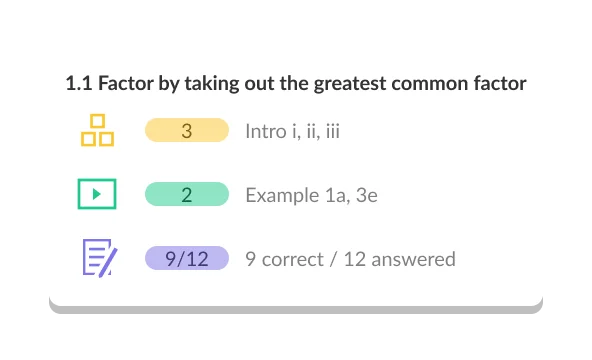
Practice Until Perfect
Practice until you truly get it before testing.
Try It Now
Test your knowledge
Our approach aligns with the evidence
Exam Scores
Better Recall
Less Anxiety
College Algebra Topics
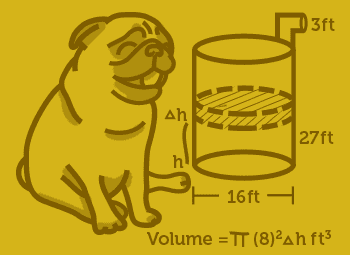
1. Surface Area and Volume
2. Rational Numbers
3. Powers and Exponents
4. Number System and Radicals
5. Radicals
6. Exponents
7. Operations of Polynomials
8. Factorising Polynomial Expressions
9. Introduction to Relations and Functions
10. Linear Functions
11. Absolute Value Functions
12. Linear Equations
13. Solving Linear Systems
14. Linear Inequalities
15. Inequalities in Two Variables
16. Factorising Quadratic Equations
17. Quadratic Functions
18. Quadratic Equations and Inequalities
19. Graphing Rational Functions
20. Functions
21. Direct and Inverse Variation
22. Piecewise Functions
23. Transformations of Functions
24. Exponential Functions
25. Logarithmic Functions
26. Applications of Exponential and Logarithmic Functions
27. Sequences and Series
28 Chapters · 215 Topics · 1321 Videos
Discover Our Learning Areas
Explore key subjects and start learning with interactive content.






What Is College Algebra?
College Algebra is the Grade 12 mathematics course that builds the advanced algebraic skills students need for university and college programs. It covers functions and their graphs, polynomial and rational expressions, exponential and logarithmic functions, systems of equations, sequences, series, and an introduction to matrices. In Canada, it forms the core of senior-level math pathways — from Ontario's Grade 12 Advanced Functions and Calculus streams to Alberta's Math 30-1 and Math 30-2 diploma courses and British Columbia's Pre-Calculus 12. If you plan to study STEM, Business, Economics, or any quantitative field, College Algebra is the foundation everything else is built on.
What Topics Are Covered in Grade 12 College Algebra?
A typical Canadian Grade 12 College Algebra course moves through several major topic areas:
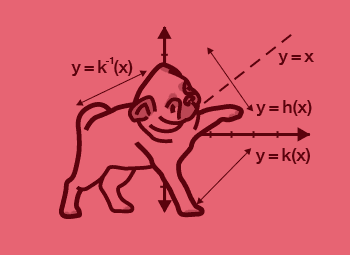
Functions and Relations: domain, range, function notation, inverse functions, and transformations of parent functions including quadratic, absolute value, and square root.
Polynomial and Rational Functions: factoring higher-degree polynomials, the remainder and factor theorems, graphing rational functions, and identifying vertical and horizontal asymptotes.
Exponential and Logarithmic Functions: properties of exponents, converting between exponential and logarithmic form, logarithm rules (product, quotient, power, change of base), and solving exponential and logarithmic equations in real-world contexts.
Systems of Equations and Inequalities: solving two- and three-variable systems using substitution, elimination, and matrices; graphing linear inequalities and systems.
Sequences and Series: arithmetic and geometric sequences, sigma notation, and applications to finance and population models.
Across all these topics, the emphasis is on reasoning through problems methodically — exactly the skill that pays off on provincial exams and in first-year university courses.
Is College Algebra Hard? What Do Students Find Most Difficult?
College Algebra is demanding, but it is very learnable with the right approach. The topics students find hardest are typically logarithms and exponential equations (because they require a conceptual shift from arithmetic thinking), rational functions (asymptote behaviour can be counterintuitive), and solving systems with three variables (where keeping track of steps becomes critical).
The underlying cause of most struggles is gaps from earlier grades — shaky factoring skills, weak function notation, or unclear understanding of what a graph is really showing. A diagnostic assessment that surfaces those gaps early is one of the most effective things a student can do. Once you know exactly where the weak points are, targeted practice closes them far more efficiently than reviewing an entire unit from scratch.
How Does College Algebra Connect to the Canadian Provincial Curriculum?
College Algebra content is embedded directly in the Grade 12 math expectations across Canadian provinces. In Ontario, the Ministry of Education curriculum for Grade 12 Advanced Functions (MHF4U) and Mathematics of Data Management (MDM4U) draws heavily on the function, polynomial, and logarithm strands. In Alberta, the Math 30-1 diploma exam — which carries significant weight in university admissions — tests polynomial functions, exponential and logarithmic functions, and rational functions directly. In British Columbia, Pre-Calculus 12 covers the same algebraic core. Across provinces, the expectation is that students can move fluidly between algebraic, graphical, and contextual representations of the same mathematical relationship.
StudyPug lessons are built around these provincial expectations, so every video and practice problem you work through maps to what you will actually be assessed on.
What Should You Know Before Taking College Algebra — and What Comes After?
Before starting College Algebra, you should be solid on Grade 10 and 11 algebra: factoring, quadratic equations and the quadratic formula, basic function notation, linear systems, and exponent rules. These concepts appear constantly in College Algebra and are assumed knowledge — not re-taught in detail.
After College Algebra, the most common next steps are:
Calculus (MCV4U / Pre-Calculus 12 / Calculus 12): College Algebra is the direct prerequisite. Limits, derivatives, and integrals all rely on strong function and algebraic manipulation skills.
Statistics and Data Management (MDM4U): sequences, combinatorics, and probability build on algebraic reasoning developed in College Algebra.
University first-year mathematics: Whether it is MATH 1000-level calculus or a linear algebra course, the students who arrive with a genuine College Algebra foundation — not just a passing mark — are the ones who hit the ground running.
Why StudyPug for Grade 12 College Algebra?
There is no shortage of math resources online, but most fall into one of two traps: they either show you the answer without explaining the thinking, or they bury the explanation in so much jargon that it creates more confusion than it resolves.
StudyPug is built differently. Every College Algebra lesson is taught by a certified teacher who walks you through the method — the reasoning steps that let you solve a problem you have never seen before, not just the one in the worked example. That distinction matters enormously when you sit down for a provincial exam.
The diagnostic assessment means you do not waste time re-watching lessons on topics you already understand. The adaptive practice means the difficulty adjusts as you improve, so you are always working at the edge of your ability rather than coasting or drowning. And because the content is aligned to the Canadian provincial curriculum, you know that what you are practising is exactly what will be tested.
One subscription also covers every other grade and subject on the platform — so whether you need help with a Grade 11 concept you want to revisit, or you are starting to look ahead to first-year calculus, everything is in one place.
What You Learn: College Algebra Curriculum Coverage
StudyPug's College Algebra content covers the full scope of the Grade 12 Canadian curriculum across provinces:
- Functions: notation, domain and range, inverse functions, transformations
- Polynomial functions: factoring, remainder theorem, graphing, end behaviour
- Rational functions: simplifying, asymptotes, graphing, applications
- Exponential functions: properties, graphing, growth and decay models
- Logarithmic functions: definition, rules (product, quotient, power, change of base), solving equations
- Systems of equations: substitution, elimination, matrix methods, three-variable systems
- Sequences and series: arithmetic, geometric, sigma notation, financial applications
- Conic sections (where provincially required): circles, parabolas, ellipses
- Provincial exam-style practice: based on real exam formats for Alberta, Ontario, and British Columbia assessments
No validated topic-level URLs are currently available in the internal link map for this course — links will be added when the sitemap is updated.
How to Use StudyPug for College Algebra
Step 1 — Take the diagnostic. Spend a few minutes on the diagnostic assessment. It will identify which College Algebra topics are solid and which ones need work, so your study time goes exactly where it is needed.
Step 2 — Watch the concept video. For any topic you are working on, start with the certified-teacher video. Watch the teacher reason through an example from start to finish — not just the mechanical steps, but the why behind each decision.
Step 3 — Practice with adaptive problems. After the video, move into practice. The adaptive engine adjusts difficulty based on your answers, so you are always building on what you know rather than spinning your wheels.
Step 4 — Use Photo Search when you are stuck on a specific question. If you have a homework problem or a textbook question you cannot figure out, use Photo Search to find the matching lesson. It works across all grades and subjects.
Step 5 — Run a practice test before your exam. Use the provincial exam-style practice tests in the weeks before your exam. Review any video for questions you got wrong — then re-test until your score reflects what you actually know.
With a 30-day money-back guarantee and free practice content to get started, there is no reason to put off getting the College Algebra help you need.
College Algebra FAQ
Unsure how StudyPug works? Need help with setting up? Check our frequently asked questions or contact us for help.
What do you learn in College Algebra, and what topics does it cover?
College Algebra covers the core mathematical concepts you need for post-secondary study. Topics include functions and their graphs, polynomial and rational expressions, exponential and logarithmic functions, systems of equations and inequalities, sequences and series, and an introduction to matrices and conic sections. The course builds strong algebraic reasoning and problem-solving skills that are foundational for calculus, statistics, and applied sciences. In Canadian high schools it is typically taken in Grade 12 and prepares students for university-level mathematics.
What is the difference between College Algebra and Pre-Calculus?
College Algebra focuses on mastering algebraic structures — functions, polynomials, logarithms, and systems of equations — without a heavy emphasis on trigonometry. Pre-Calculus extends those skills by adding trigonometric functions, polar coordinates, and limits as a direct bridge into Calculus. Think of College Algebra as the solid algebraic foundation, and Pre-Calculus as the on-ramp to Calculus. Many students take College Algebra first, then move into Pre-Calculus or Calculus depending on their program and provincial pathway.
Is College Algebra hard, and where do students struggle most?
College Algebra is manageable with consistent practice, but several topics trip students up. Rational functions and their asymptotes, operations with complex numbers, logarithm rules, and solving systems with three or more variables are the most common sticking points. Students who struggled with factoring or function notation in earlier grades often find those gaps resurface here. The key is identifying weak spots early and working through them step by step — which is exactly where a diagnostic tool and targeted practice make a real difference to your confidence and your mark.
What should I take before College Algebra, and what comes after it?
Before College Algebra you should be comfortable with Grade 10 or 11 math — specifically linear equations, factoring, quadratics, and basic function concepts. After completing College Algebra, most students move into Pre-Calculus or directly into Calculus (MCV4U in Ontario, for example), or branch into Statistics and Data Management. If you are aiming for a STEM, Business, or Economics program at a Canadian university, a strong College Algebra foundation is essential for first-year courses like calculus and linear algebra.
Is College Algebra on the Canadian provincial exam, and how is it tested?
Yes. In most Canadian provinces, Grade 12 academic math courses that include College Algebra content are assessed through provincial standardized tests. In Ontario, the EQAO-style assessments and the culminating Grade 12 exam test algebraic reasoning, functions, and modelling. In Alberta, the Math 30-1 and Math 30-2 diploma exams cover College Algebra topics directly. British Columbia's provincial assessments similarly include functions and algebraic problem solving. Expect a mix of multiple-choice, short-answer, and multi-step problem questions that require you to show and explain your work.
What is one of the hardest concepts in College Algebra, and how do you tackle it?
Logarithms and exponential functions are consistently the hardest topic for Grade 12 students. The challenge is twofold: understanding what a logarithm actually means conceptually, and then applying the change-of-base, product, quotient, and power rules fluently under exam pressure. The best approach is to start with the definition — a logarithm is an exponent — and practice converting between logarithmic and exponential forms until it becomes automatic. Then work through progressively harder simplification and equation-solving problems, checking your reasoning at each step. Worked video examples that show the thinking process (not just the answer) are especially effective here.




Written by the StudyPug Team
Last updated June 5, 2026
3 M+
students
★★★★★
4.8 average
K–12
all grades