Organic Chemistry Help: Video Lessons & Practice
Work through every reaction and mechanism with clear, step-by-step solutions. Start your free practice test now!
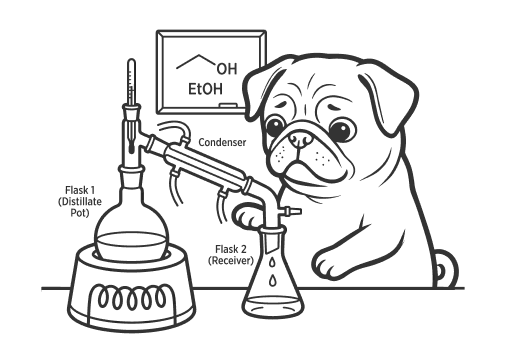
Value vs. Private Tutor
Expert help without the price tag.
Multi-Subject
One subscription unlocks all subjects.
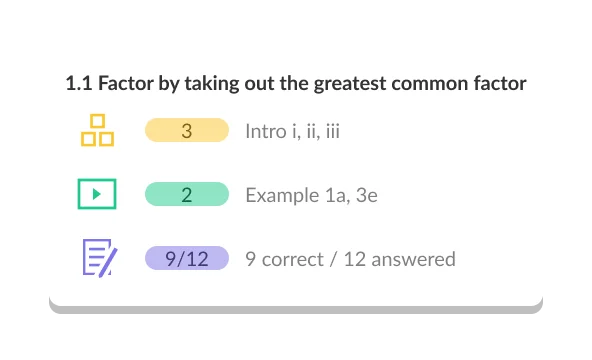
Build Mastery
Master each topic before moving on.
Organic Chemistry Topics
1. Introduction to Organic Chemistry
2. Intro to Atomic and Molecular Structure
3. Chemical analysis and structure determination
4. Introduction to organic reactions, reactivity and mechanisms
4 Chapters · 24 Topics · 191 Videos
Discover Our Learning Areas
Explore key subjects and start learning with interactive content.




What is Organic Chemistry?
Organic Chemistry is the branch of chemistry devoted to the study of carbon-based compounds — their structures, properties, and the reactions that transform them. It sits at the intersection of biology, medicine, and materials science, making it a cornerstone course for students in chemistry, biochemistry, pre-medicine, pharmacy, and chemical engineering programs at Canadian universities. The discipline teaches you not just what happens in a reaction, but why — developing a mechanistic, logical way of thinking that carries through every subsequent science course you take.
What Does Organic Chemistry Cover?
A standard university Organic Chemistry sequence spans two semesters. The first semester establishes the foundations: bonding theory and hybridization, IUPAC nomenclature, stereochemistry and chirality, and the major reaction classes — nucleophilic substitution (SN1 and SN2), elimination (E1 and E2), and electrophilic addition. Students learn to draw and interpret curly-arrow mechanisms that show exactly how electrons move during a reaction.
The second semester deepens the toolkit: carbonyl chemistry (aldehydes, ketones, carboxylic acids and their derivatives), enol and enolate reactions, conjugation and aromaticity, amine chemistry, and multi-step synthesis. Spectroscopy — interpreting infrared (IR), nuclear magnetic resonance (NMR), and mass spectrometry (MS) data — runs through both semesters, giving you the tools to identify unknown compounds from real experimental data.
Why Do Students Find Organic Chemistry So Difficult?
Organic Chemistry's difficulty comes from its depth, not just its breadth. It is not a memorization course in the way general chemistry sometimes feels — it rewards students who understand the underlying logic deeply enough to predict new reactions they have never seen before. Common trouble spots include:
- Reaction mechanisms: Understanding electron flow rather than just memorizing products takes sustained practice.
- Stereochemistry: Visualizing three-dimensional molecules on a two-dimensional page, assigning R/S configurations, and distinguishing enantiomers from diastereomers is genuinely hard spatial reasoning.
- Carbonyl reactions: Nucleophilic acyl substitution and the many transformations of the carbonyl group require tracking multiple overlapping concepts simultaneously.
- Retrosynthetic analysis: Planning multi-step syntheses backwards from a target molecule demands fluency across the entire course. This is typically the highest-stakes skill on Canadian university final exams.
Students who succeed treat Organic Chemistry as a daily practice discipline — working through problems consistently rather than cramming. The good news is that the underlying logic is learnable; it just takes the right explanations and enough repetition.
How is Organic Chemistry Graded at Canadian Universities?
Assessment varies by institution, but a typical Canadian university Organic Chemistry course weighs grades roughly as follows: one or two midterm exams (20–35% each), a final exam (30–40%), laboratory work including reports and pre-lab assignments (10–20%), and occasional problem sets or online homework. Midterms and finals are almost always closed-book and timed, requiring you to draw mechanisms, predict products, assign stereochemistry, and plan syntheses without notes. Lab grades reflect both your technique in the lab and the quality of your written analysis. Always check your specific course syllabus, as weighting differs between universities and professors.
Why StudyPug for Organic Chemistry?
StudyPug is built around three things that make a real difference in Organic Chemistry specifically: understanding the method, practising consistently, and knowing what to focus on.
Certified-teacher concept videos walk through every reaction mechanism step by step — not just showing the answer, but explaining the electron-pushing logic so you build the deep understanding that carries into your next course. Videos are made by experienced instructors, not AI-generated, and you can watch them as many times as you need until the concept genuinely clicks.
Diagnostic assessment identifies exactly which topics are causing you problems, so you do not waste time reviewing material you already have down. When you are losing marks on, say, carbonyl additions but solid on substitution reactions, the diagnostic routes you straight to where the work needs to happen.
Adaptive practice then adjusts problem difficulty to match your current level — challenging you appropriately whether you are just starting mechanisms or preparing for a comprehensive final. Mock midterms and finals let you rehearse under realistic exam conditions so there are no surprises on the day.
One subscription gives you access to Organic Chemistry alongside every other university course on the platform — Calculus I–III, Linear Algebra, Differential Equations, Statistics, Biochemistry, and more. If you are in a science or engineering program, that full coverage matters.
What You Learn: Organic Chemistry Course Coverage
StudyPug's Organic Chemistry content covers the full university sequence, including:
- Bonding, hybridization, and molecular geometry
- IUPAC nomenclature for all major functional group families
- Stereochemistry: chirality, R/S assignment, enantiomers, diastereomers, meso compounds
- Substitution and elimination reactions: SN1, SN2, E1, E2 — mechanisms, selectivity, and competition
- Electrophilic addition to alkenes and alkynes
- Aromatic chemistry: electrophilic aromatic substitution and directing effects
- Carbonyl chemistry: nucleophilic addition, acyl substitution, aldol and Claisen condensations
- Enols, enolates, and alpha-substitution reactions
- Amine chemistry and nitrogen-containing compounds
- Spectroscopic identification: IR, 1H NMR, 13C NMR, mass spectrometry
- Multistep synthesis and retrosynthetic analysis
Because no validated internal topic-page links are currently available for the Canadian Organic Chemistry course in our sitemap, we recommend using the course overview page to navigate to specific topic sections directly within the platform.
Using StudyPug for Organic Chemistry Practice
Getting the most out of StudyPug for Organic Chemistry comes down to a simple workflow. Start with the diagnostic to get a clear picture of your weak areas. Then use the concept videos for those specific topics — watch the mechanism explained fully before attempting problems. Move into the adaptive practice sets, where the difficulty adjusts as you improve. In the week before a midterm or final, run through the mock exam under timed conditions to identify any remaining gaps and build exam-day confidence.
The platform works on any device, so you can squeeze in a practice set between lectures or review a mechanism video the night before a lab. Because every university course is included in one subscription, you can also keep your other subjects — Biochemistry, Calculus, Statistics — moving forward at the same time without juggling multiple platforms or additional costs.
Every subscription comes with a 30-day money-back guarantee. Start your free practice test now and see how quickly the logic of organic chemistry starts to make sense.
Organic Chemistry FAQ
Unsure how StudyPug works? Need help with setting up? Check our frequently asked questions or contact us for help.
What do you learn in Organic Chemistry, and what topics does it cover?
Organic Chemistry covers the structure, properties, and reactions of carbon-based compounds. Core topics include nomenclature, bonding and hybridization, stereochemistry, reaction mechanisms (substitution, elimination, addition, oxidation-reduction), functional group transformations, carbonyl chemistry, aromatic compounds, and spectroscopic identification (IR, NMR, mass spectrometry). Lab skills such as synthesis planning and retrosynthetic analysis are also emphasized. The course builds a framework for understanding biological molecules and prepares students for biochemistry, pharmacology, and advanced chemistry courses.
What is the difference between Organic Chemistry and Inorganic Chemistry?
Organic Chemistry focuses on carbon-containing compounds — their structures, reactions, and synthesis — and is central to biology, medicine, and materials science. Inorganic Chemistry covers non-carbon compounds, including metals, coordination complexes, and ionic solids, with emphasis on periodic trends and bonding theories. Organic Chemistry tends to involve more memorization of reaction mechanisms and functional group behaviour, while Inorganic Chemistry relies more heavily on quantum mechanics and group theory. Many students find organic chemistry's logic-heavy mechanism approach distinct from the equation-balancing style of general or inorganic chemistry.
What are the prerequisites for Organic Chemistry, and what course comes after it?
The standard prerequisite is a full-year university General Chemistry sequence covering bonding, molecular structure, thermodynamics, and equilibrium. Strong algebra skills help with stoichiometry and yield calculations. Organic Chemistry I is typically followed by Organic Chemistry II, which covers carbonyl reactions, amines, conjugation, and pericyclic reactions in greater depth. After completing the two-semester sequence, students commonly progress to Biochemistry, Medicinal Chemistry, Polymer Chemistry, or advanced synthesis courses, depending on their program.
Is Organic Chemistry hard, and where do students struggle most?
Organic Chemistry has a reputation as one of the hardest undergraduate science courses, and the struggle is real. Students most commonly battle reaction mechanisms — particularly understanding why electrons move the way they do rather than just memorizing arrow pushing. Stereochemistry (chirality, R/S designation, diastereomers) trips up many students early on. Carbonyl chemistry and multistep synthesis planning are common later stumbling points. Success requires consistent daily practice, not just pre-exam cramming. Working through problems repeatedly and understanding the underlying logic — not just the product — is what separates students who pass from those who don't.
How is Organic Chemistry assessed — midterms, finals, and assignments?
At most Canadian universities, Organic Chemistry is assessed through a combination of midterm exams (typically one or two per semester, worth 20–35% each), a final exam (30–40%), laboratory reports or pre-lab quizzes (10–20%), and occasional problem sets or online homework. Midterms and finals are closed-book and require drawing mechanisms, predicting products, and planning syntheses under timed conditions. Some institutions also include a short quiz component. Lab grades reflect both practical technique and written analysis. Weighting varies by institution, so check your course syllabus carefully.
What is one of the hardest topics in Organic Chemistry, and how do you approach it?
Multistep retrosynthetic analysis is widely considered the most demanding skill in the course. Given a target molecule, you must work backwards through possible reactions to identify starting materials — drawing on your entire knowledge of functional group transformations. The key approach is to identify the most complex bond in the target, think about which reaction class could form it, then repeat for the resulting intermediate. Build fluency by practising individual reaction types first, then combining them. Timed synthesis problems on practice tests are the most effective preparation for how this appears on finals.




Written by the StudyPug Team
Last updated June 5, 2026
3 M+
students
★★★★★
4.8 average
K–12
all grades