Differential Calculus Help: Video Lessons & Practice
Step-by-step lessons from certified teachers — so you're ready for the next course, not just this exam.
Value vs. Private Tutor
Expert teaching without the tutor price.

Multi-Subject
One subscription unlocks all subjects.
Build Mastery
Master differentials before the test.
Try It Now
Test your knowledge
Our approach aligns with the evidence
Exam Scores
Better Recall
Less Anxiety
Differential Calculus Topics
1. Limits
2. Differentiation
3 Chapters · 31 Topics · 217 Videos
Discover Our Learning Areas
Explore key subjects and start learning with interactive content.






What Is Differential Calculus?
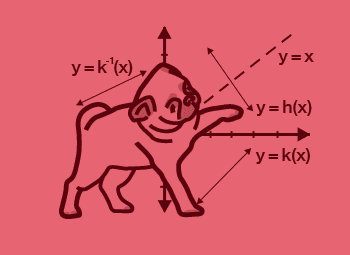
Differential Calculus is the branch of mathematics that studies how quantities change — specifically, instantaneous rates of change and the slopes of curves. At its core is the concept of the derivative: a precise mathematical tool that tells you exactly how fast a function is changing at any given point. If you have ever asked "how fast is this growing right now?" or "what is the steepest part of this curve?", you were asking a Differential Calculus question. It is the first major university-level mathematics course for most STEM students in Canada, and it forms the backbone of physics, engineering, economics, biology, and computer science.
What Topics Are Covered in Differential Calculus?
A standard Canadian university Differential Calculus course moves through a carefully ordered sequence of ideas. The course typically opens with limits and continuity — the formal foundation that makes the derivative possible. You learn what it means for a function to approach a value, how to evaluate limits algebraically and graphically, and what it means for a function to be continuous.
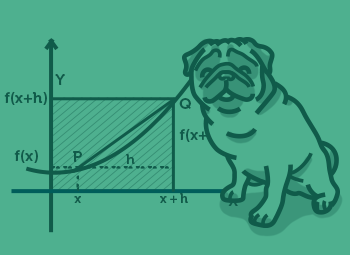
From limits, the course introduces the definition of the derivative using the limit of a difference quotient. You then build a toolkit of differentiation rules: the power rule, the product rule, the quotient rule, and the chain rule. These rules let you differentiate virtually any function you encounter.
Later topics include implicit differentiation (differentiating equations where y is not isolated), higher-order derivatives, and derivatives of exponential, logarithmic, and trigonometric functions. The second half of the course typically covers applications: related rates, curve sketching using first and second derivatives, the Mean Value Theorem, and optimization — finding the maximum or minimum of a quantity subject to constraints. These application topics are where Differential Calculus connects to real engineering and science problems.
How Does Differential Calculus Compare to Other Calculus Courses?
Differential Calculus (often called Calculus I) is the first in a sequence. It focuses entirely on the derivative and its applications. Integral Calculus (Calculus II) comes next and focuses on the antiderivative and the accumulation of quantities — computing areas, volumes, and totals. The two courses are linked by the Fundamental Theorem of Calculus, which shows that differentiation and integration are inverse operations.
After Integral Calculus, most programs continue to Multivariable Calculus (Calculus III), which extends derivatives and integrals to functions of several variables. Differential Equations — another course where Differential Calculus skills are essential — then studies equations involving derivatives themselves. Understanding where Differential Calculus sits in this sequence helps you approach it with the right mindset: the habits and reasoning you build here follow you through every subsequent mathematics and engineering course.
Is Differential Calculus Hard? Where Do Students Struggle?
Differential Calculus has a reputation for being a significant step up from high school mathematics, and that reputation is earned — but for specific, understandable reasons. The conceptual leap is real: moving from "solve for x" to "find how this function behaves at an instant" requires a new way of thinking about mathematics.
The topics that cause the most difficulty are consistent across Canadian universities. Limits confuse students who try to treat them as simple substitution without understanding the underlying concept of approach. Epsilon-delta proofs are a recurring challenge in more rigorous courses. The chain rule — differentiating composite functions — trips students up when functions are nested multiple layers deep. Implicit differentiation requires careful bookkeeping of which variable you are differentiating with respect to. And related rates problems demand that you translate a written description into a mathematical relationship before you can even begin differentiating.
The good news: none of these topics are beyond reach with the right approach. What separates students who get comfortable with Differential Calculus from those who struggle is consistent, deliberate practice — working through varied examples until the patterns become automatic.
Why StudyPug for Differential Calculus Help?
StudyPug is built around one insight: seeing a worked solution is not the same as understanding the method. The certified-teacher concept videos on StudyPug walk through the reasoning behind every differentiation technique — not just the steps, but why those steps work. That distinction matters when you reach your next course and need to apply these ideas in unfamiliar contexts.
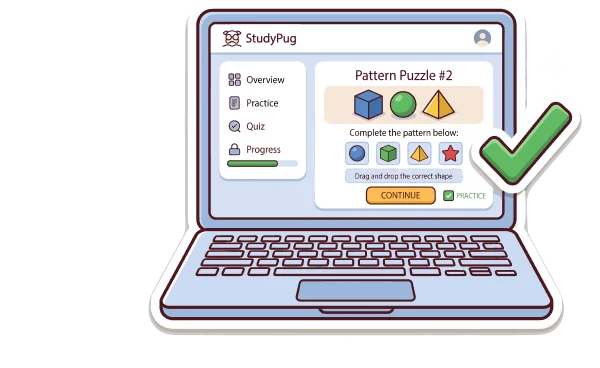
Before you start watching videos, a quick diagnostic assessment identifies exactly which Differential Calculus concepts need attention. Instead of rewatching material you already know, you go straight to the gaps. From there, adaptive practice adjusts the difficulty of problems to your current level — building up incrementally so you are always challenged without being overwhelmed.
For exam preparation, StudyPug's mock tests and practice exams are built around the format of Canadian university midterms and finals — timed, cumulative, and covering the full course from limits through optimization. You can watch a solution as many times as you need. And because one subscription covers Differential Calculus, Integral Calculus, Linear Algebra, Differential Equations, Statistics, and more, you are investing in support for your entire degree, not just this semester.
What You Learn: Differential Calculus Topic Coverage
StudyPug covers the full Differential Calculus curriculum as taught at Canadian universities. Key topics include:
- Limits and continuity — evaluating limits algebraically, graphically, and using limit laws
- The definition of the derivative as a limit
- Differentiation rules — power, product, quotient, and chain rules
- Derivatives of trigonometric, exponential, and logarithmic functions
- Implicit differentiation and related rates
- Higher-order derivatives
- Curve sketching — increasing/decreasing intervals, concavity, inflection points
- The Mean Value Theorem and its applications
- Optimization problems — finding maximum and minimum values
- L'Hôpital's Rule for indeterminate forms
Every topic is covered with worked examples that mirror the style and difficulty of Canadian university assessments. No validated topic-specific URLs are currently available in the internal link map for this course — visit the main Differential Calculus course page to browse all available topics.
How to Use StudyPug for Differential Calculus
The most effective way to use StudyPug alongside your Differential Calculus course is to treat it as an on-demand study partner. Start by taking the diagnostic — it takes a few minutes and gives you a clear picture of where to focus your time. Then, whenever a lecture topic is unclear, find the corresponding concept video and watch the full worked explanation before attempting your homework.
Use the free daily practice problems to stay sharp between assignments. When midterms or finals approach, shift to the mock exams: work through them under timed conditions, review the video solutions for every question you missed, and repeat until the process feels automatic. Watch difficult solution videos more than once — there is no limit, and often the second or third viewing is where real understanding sets in.
StudyPug is available on any device, so you can practise Differential Calculus problems during a commute, review a derivative rule before a lecture, or watch a full optimization walkthrough at midnight before an exam. Free practice is available immediately — and every paid plan is backed by a 30-day money-back guarantee, so there is no risk in getting started.
Differential Calculus FAQ
Unsure how StudyPug works? Need help with setting up? Check our frequently asked questions or contact us for help.
What do you learn in Differential Calculus, and what topics does it cover?
Differential Calculus is the study of rates of change and the behaviour of functions. Core topics include limits and continuity, the definition of the derivative, differentiation rules (power, product, quotient, chain), implicit differentiation, higher-order derivatives, related rates, and optimization. Most Canadian university courses also cover curve sketching and the Mean Value Theorem. By the end, you can model and analyse how quantities change — a foundation for every STEM discipline.
What is the difference between Differential Calculus and Integral Calculus?
Differential Calculus focuses on the derivative — measuring instantaneous rates of change and slopes of curves. Integral Calculus focuses on the antiderivative and the accumulation of quantities (areas, volumes). The two are linked by the Fundamental Theorem of Calculus. Most Canadian universities teach them as separate semester courses: Differential Calculus (Calculus I) first, then Integral Calculus (Calculus II). Mastering differentiation in the first course is essential before integration makes sense.
What are the prerequisites for Differential Calculus, and what course comes after it?
You should be comfortable with precalculus: algebraic manipulation, functions and their graphs, trigonometry (sine, cosine, identities), exponential and logarithmic functions, and basic analytic geometry. Strong Grade 12 Advanced Functions (MHF4U in Ontario, or its provincial equivalent) is the standard Canadian prerequisite. After Differential Calculus, the natural next course is Integral Calculus, followed by Multivariable Calculus, Differential Equations, or Linear Algebra depending on your program.
Is Differential Calculus hard, and where do students struggle most?
Most students find the conceptual jump significant — especially grasping what a limit actually means and why the derivative is defined the way it is. The most common trouble spots are epsilon-delta proofs, correctly applying the chain rule in nested functions, implicit differentiation, and setting up related-rates or optimization problems from a word description. These topics trip students up not because the mechanics are impossible, but because the setup requires careful reading and deliberate practice — exactly what step-by-step worked examples help with.
How is Differential Calculus assessed at Canadian universities — midterms, finals, and assignments?
Typical Canadian university Differential Calculus courses weight the final exam at 40–50%, with one or two midterms covering another 30–40%, and weekly assignments or online homework (WeBWorK is common) making up the remainder. Some courses include quizzes or lab components. Final exams are cumulative and time-pressured, so practising under exam conditions — timed mock tests covering limits through optimization — is the most effective preparation strategy.
What is one of the hardest topics in Differential Calculus, and how do you approach it?
Related rates is consistently the topic students find hardest. The challenge is that you must first build a correct equation relating two or more quantities, then differentiate implicitly with respect to time, and finally substitute known values — all before you do any arithmetic. The method: draw a diagram, label every variable, write the geometric or physical relationship, differentiate both sides with respect to t using the chain rule, and solve. Working through many varied examples (ladder problems, balloon problems, shadow problems) until the setup becomes automatic is the only reliable approach.




Written by the StudyPug Team
Last updated June 5, 2026
3 M+
students
★★★★★
4.8 average
K–12
all grades