Fifth Class Maths Help — Step-by-Step Video Lessons & Practice
Help your child understand every maths topic and build real confidence, one lesson at a time.
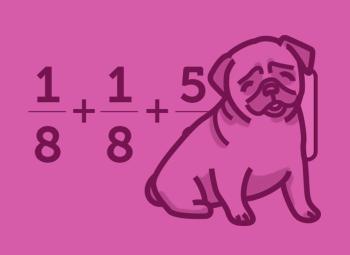
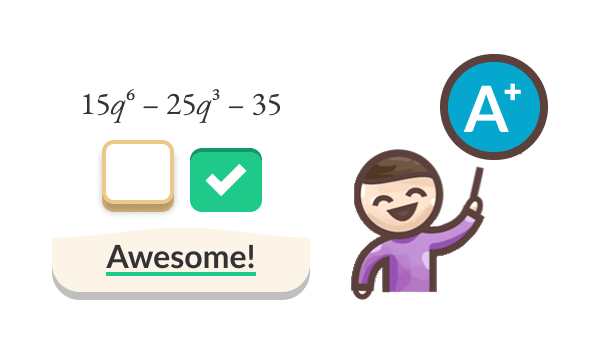
Expert Video Solutions
Watch it solved then solve the next one.
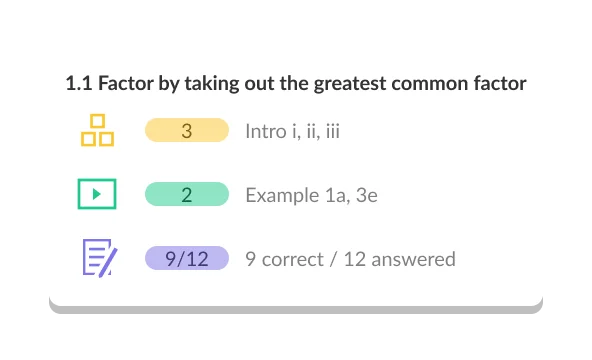
Unlimited Practice
Practice each topic until it clicks.
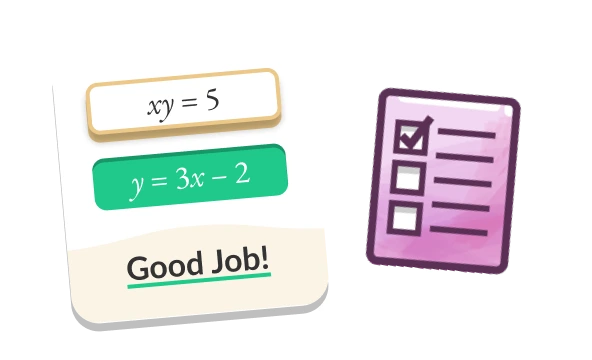
Real Exam Practice
Practice real Irish curriculum exam questions.
Try It Now
Test your knowledge
Our approach aligns with the evidence
Exam Scores
Better Recall
Less Anxiety
Fifth Class Maths Topics
2. Representing Numbers
3. Patterns
4. Adding and Subtracting Integers
5. Multiplying and Dividing Integers
6. Arithmetic Properties
7. Factors and Multiples
8. Introduction to Fractions
9. Adding and Subtracting Fractions
10. Multiplying Fractions
11. Decimals
12. Estimation
14. Time
15. Angles and Lines
16. Polygons
17. Introduction to 3D Shapes
18. Data Management
19. Statistics
19 Chapters · 76 Topics · 1247 Videos

Ready to practice Fifth Class Maths?
Try practice questions on every Fifth Class Maths topic — with instant feedback and step-by-step video solutions when you get stuck.
Discover Our Learning Areas
Explore key subjects and start learning with interactive content.

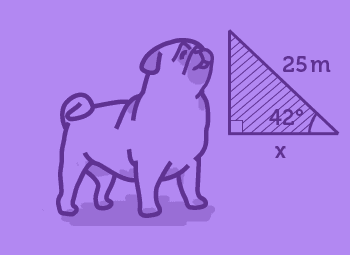

What is Fifth Class Maths?
Fifth Class maths is the second-to-last year of Irish primary school, and it is where the foundations laid in earlier classes are stretched into more demanding territory. Under the Irish Primary Curriculum, maths in Fifth Class is organised across five strands: Number, Algebra, Shape and Space, Measures, and Data. Children are expected to work confidently with large numbers, apply the four operations to decimals and fractions, interpret data in a range of formats, and begin to think algebraically. It is a pivotal year — strong Fifth Class maths skills feed directly into Sixth Class and the Junior Cycle at secondary school.
What topics are covered in Fifth Class maths?
The Number strand dominates Fifth Class and is where most children's attention — and effort — is needed. Key areas include:
- Fractions — equivalent fractions, improper fractions, mixed numbers, and finding fractions of quantities
- Decimals — place value to thousandths, ordering, addition, subtraction, multiplication, and division
- Percentages — converting between fractions, decimals, and percentages; finding percentages of amounts
- Long multiplication and long division — with 2- and 3-digit numbers
Beyond Number, children explore simple equations and number patterns in Algebra; properties of 2-D and 3-D shapes, lines, and angles in Shape and Space; area, perimeter, volume, time, and money in Measures; and reading, constructing, and interpreting bar charts, pie charts, and line graphs in Data. Each strand builds on Fourth Class learning and prepares pupils for Sixth Class.
Why do children struggle with Fifth Class maths — and what helps?
The jump in difficulty between Fourth and Fifth Class is real. The three areas that trip up the most children are:
- Fractions, decimals, and percentages together — understanding that these are three ways of expressing the same value is conceptually hard without visual models and repeated practice.
- Long division — the multi-step process has many opportunities for small errors that cascade into wrong answers, making it feel impossible when learned by rote.
- Word problems — applying maths in unfamiliar contexts requires reading comprehension as well as calculation, and children who are shaky on either struggle.
The research-backed answer to all three is the same: explicit teaching of the method (not just the procedure), immediate corrective feedback, and spaced practice over time. That is exactly how StudyPug's certified-teacher video lessons are structured — each concept is broken into small, logical steps so your child understands why a method works, not just how to copy it.
How is Fifth Class maths assessed in Ireland?
In Ireland, primary school maths is not assessed by a national standardised exam at the end of Fifth Class. Instead, children are assessed through their school's own ongoing assessments, teacher observation, and standardised testing — typically using DRUM, SIGMA-T, or Drumcondra tests — which schools administer at intervals across the primary years. Reports are shared with parents at the end of each year via the school report. StudyPug's practice problems are based on the types of questions that appear in these assessments, so your child is practising with material that reflects how they will actually be tested at school.
What comes after Fifth Class maths?
Sixth Class is the final year of primary school and builds directly on everything learned in Fifth Class. The same five strands continue, with fractions, percentages, and algebra taken to a higher level of complexity. Pupils also begin informal preparation for the transition to Junior Cycle maths at secondary school, where the subject becomes more formally structured and includes Junior Certificate assessment. Any gap left unaddressed in Fifth Class — particularly in fractions and number operations — tends to reappear in Sixth Class and create difficulty in first year of secondary. Catching and closing those gaps now is the single most effective thing a parent can do.
Why StudyPug for Fifth Class Maths?
StudyPug is built around three things that actually move the needle for primary pupils: knowing where to start, understanding the concept, and practising until it sticks.
Start with the diagnostic. Before your child watches a single video, a quick diagnostic assessment identifies precisely which Fifth Class maths topics need attention. There is no guessing involved — you will know immediately what to celebrate and where to focus effort.
Real teachers, real explanations. Every video lesson is made by a certified teacher — not generated by AI. The teacher explains the concept step by step, using the kind of language and visual models that primary pupils respond to. The goal is always the same: your child should be able to solve a similar problem on their own after watching, not just copy an answer.
Adaptive practice that builds confidence. After each video, adaptive practice questions adjust to your child's level in real time. If a question is too easy, the difficulty increases. If your child is struggling, the system steps back and reinforces the foundation. This keeps every practice session productive and avoids the discouragement of being stuck on problems pitched too high.
Family Plan — all your children, one subscription. StudyPug's Family Plan covers up to five children across all grade levels and all four subjects under one price. Each child has their own profile and learns at their own pace. The parent dashboard gives you a clear picture of each child's progress — topic by topic — so you always know how every child is doing without having to ask them.
30-day money-back guarantee. Every subscription is backed by a full 30-day money-back guarantee. There is no free trial, but there is also no financial risk: if StudyPug is not right for your family within the first 30 days, you receive a full refund.
What your child will learn with StudyPug's Fifth Class Maths
StudyPug's Fifth Class maths content is fully aligned to the Irish Primary Curriculum across all five strands. Your child will work through:
- Fractions, decimals, and percentages — including converting between all three
- Long multiplication and long division with multi-digit numbers
- Properties of 2-D and 3-D shapes, lines, and angles
- Area, perimeter, volume, and measures in real-world contexts
- Data collection, representation, and interpretation
- Simple equations and number patterns in Algebra
Because the curriculum sequence matches what your child's teacher is covering in class, StudyPug works as both a reinforcement tool during term time and a revision resource before assessments. Every lesson is accessible on any device — desktop, tablet, or phone — so your child can learn at home, on the go, or whenever they have a spare 20 minutes.
How to use StudyPug for Fifth Class Maths
Getting started takes only a few minutes. Sign up, run the short diagnostic for Fifth Class maths, and StudyPug will immediately highlight which topics need attention. From there, a simple routine works well for most families:
- Watch the lesson video for the topic — typically 5–10 minutes.
- Work through the practice questions that follow, with instant feedback on each answer.
- Check the parent dashboard to see progress and identify any topics that need a second look.
Twenty to thirty minutes of focused practice four or five evenings per week is enough to see meaningful improvement over a few weeks. The adaptive practice ensures that every session moves your child forward — whether they are consolidating something almost mastered or tackling a topic they have found difficult all year. Use StudyPug alongside schoolwork, not instead of it, and you will have a clear picture of your child's maths development at all times.
Fifth Class Maths FAQ
Unsure how StudyPug works? Need help with setting up? Check our frequently asked questions or contact us for help.
What does my child learn in Fifth Class maths, and what topics does it cover?
Fifth Class maths in Ireland covers a broad range of strands under the Primary Curriculum: number (including fractions, decimals, and percentages), algebra, shape and space, measures, and data. Children work with large numbers, begin exploring simple equations, read and interpret graphs, and apply maths to real-world problems. By the end of Fifth Class, pupils are expected to be confident with the four operations across whole numbers and decimals, and have a solid grounding ready for Sixth Class and the move to secondary school.
Is Fifth Class maths hard, and where do children commonly struggle?
Fifth Class maths is a significant step up. The three most common sticking points are fractions (especially finding fractions of amounts and comparing unlike fractions), long multiplication and long division with larger numbers, and the introduction of percentages and their relationship to decimals. Children who find abstract concepts tricky often struggle when these ideas appear together in word problems. Breaking each concept into small, clear steps — exactly what StudyPug's video lessons do — helps children overcome these hurdles before they become gaps.
What should my child know before Fifth Class maths, and what comes next?
A strong Fourth Class foundation helps enormously: secure knowledge of multiplication tables, basic fractions, and place value to thousands. In Fifth Class, these are extended into decimals, larger place values, and more complex operations. After Fifth Class, Sixth Class builds directly on the same strands — pushing fractions, percentages, and algebra further — before the transition to Junior Cycle at secondary school, where algebra and geometry become more formal. Supporting any weak spots now means your child enters Sixth Class with real confidence.
How does StudyPug maths map to what my child learns at school?
StudyPug's Fifth Class maths content is aligned to the Irish Primary Curriculum, covering the same five strands — number, algebra, shape and space, measures, and data — in the same sequence your child's teacher follows. This means every lesson your child watches on StudyPug reinforces what they are doing in class that week, rather than teaching a different method. The parent dashboard lets you see which topics have been covered and where more practice is needed, keeping you informed alongside the school.
What is one of the trickiest maths concepts in Fifth Class, and how is it taught?
Fractions, decimals, and percentages — and the links between them — are the toughest area for most Fifth Class pupils. Understanding that 0.5, ½, and 50% all represent the same value requires concrete examples before abstract rules make sense. StudyPug's certified teachers walk through each conversion step-by-step using visual models, then move to practice problems that adjust in difficulty as your child's confidence grows. The method is taught explicitly so your child can apply it to any similar problem, not just the one in the video.
How much maths practice should my child do at Fifth Class level?
For Fifth Class, a consistent 20–30 minutes of focused maths practice four or five evenings per week is far more effective than long, irregular sessions. Little and often reinforces memory and builds fluency across all strands. StudyPug's adaptive practice keeps sessions productive: after a short diagnostic, your child is given questions pitched at the right level — not too easy, not too frustrating — so every session is time well spent. Short video lessons can be watched as needed when a concept needs re-explaining.




Written by the StudyPug Team
Last updated June 5, 2026
3 M+
students
★★★★★
4.8 average
K–12
all grades