Grade 6 Math Help — Step-by-Step Video Lessons & Practice
Help your child understand every grade 6 math topic and build real confidence, one lesson at a time.
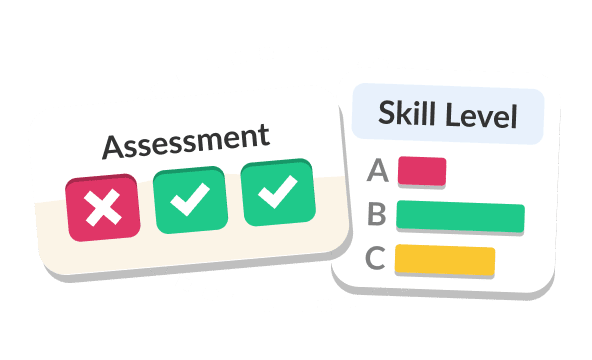
Find Your Weak Spots
Know what your child needs to practice.
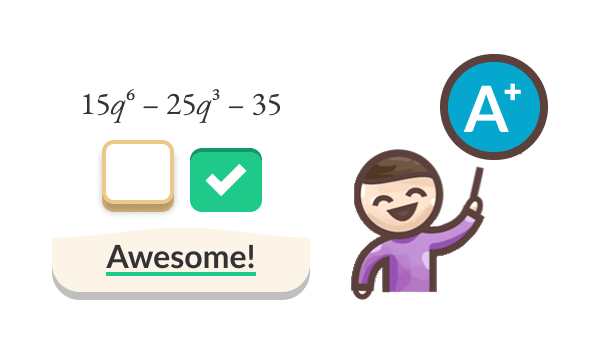
Step-by-Step Video Lessons
Your child learns to solve problems alone.

Curriculum Aligned
Built for your curriculum not a generic course.
Try It Now
Test your knowledge
Our approach aligns with the evidence
Exam Scores
Better Recall
Less Anxiety
Grade 6 Math Topics
1. Understanding Numbers
2. Number Theory
3. Integers
4. Adding and Subtracting Integers
5. Multiplying and Dividing Integers
6. Introduction to Ratios, Rates and Percentages
7. Coordinates, Quadrants, and Transformations
8. Operations with Decimals
9. Adding and Subtracting Fractions
10. Multiplying and Dividing Fractions
11. Fractions, Decimals and Percentage
12. Measuring Systems
13. Tessellations
14. Introduction to Variables and Expressions
15. Introduction to Equations
16. Introduction to Inequalities
17. Surface Area and Volume of 3D Shapes
19. Data Management
20 Chapters · 93 Topics · 866 Videos

Ready to practice Grade 6 Math?
Try practice questions on every Grade 6 Math topic — with instant feedback and step-by-step video solutions when you get stuck.
Discover Our Learning Areas
Explore key subjects and start learning with interactive content.










What Is Grade 6 Math?
Grade 6 math is a pivotal year in your child's education. It bridges the concrete arithmetic of the early grades with the abstract reasoning that defines middle school mathematics. At Grade 6, students move beyond simply computing answers — they begin to think mathematically, looking for patterns, building equations, and reasoning about proportions. If your child is finding Grade 6 math challenging, they are in good company, and targeted support makes a measurable difference.
What Topics Are Covered in Grade 6 Math?
Grade 6 math in Canada covers a broad range of strands that deepen each year. Your child will spend significant time on:
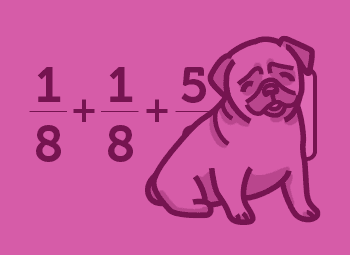
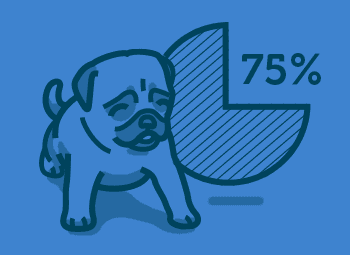
Fractions, decimals, and percentages. Students learn to multiply and divide fractions, convert between forms, and apply these skills to real-world problems like calculating discounts or splitting quantities.
Ratios and proportional reasoning. This is often new territory in Grade 6. Your child learns what a ratio means, how to write equivalent ratios, and how proportional thinking connects to percentages and unit rates.
Integers. Positive and negative whole numbers appear formally at Grade 6. Students learn to compare, order, and perform operations with integers — a foundation for algebra in later grades.
Early algebra. Simple expressions, equations with one variable, and pattern rules introduce your child to algebraic thinking without the full complexity of high school algebra.
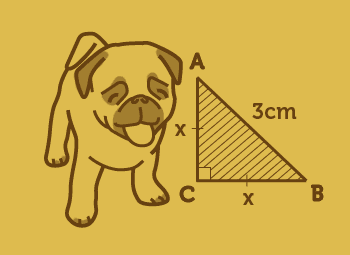
Geometry and measurement. Area of triangles and parallelograms, volume of rectangular prisms, and angle relationships are all standard Grade 6 topics across Canadian provinces.
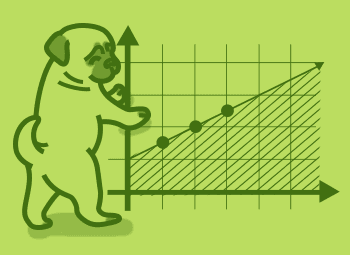
Data and probability. Reading and creating graphs, understanding mean and median, and exploring basic probability round out the Grade 6 curriculum.
Is Grade 6 Math Hard? Common Struggles and How to Help
Grade 6 is widely recognised as the year when math starts to feel hard for children who previously found it easy. There are a few reasons for this. The volume of new concepts increases sharply, and many topics — fractions, integers, ratios — require a type of abstract thinking that develops gradually.
The most common struggle points are dividing fractions (students often apply a procedure without understanding it, leading to errors on unfamiliar problems), interpreting and setting up ratio problems, and transitioning from arithmetic to algebraic expressions. If your child freezes when they see a variable, or loses marks on multi-step problems, these are the areas to target first.
The good news is that these are all teachable gaps. StudyPug's diagnostic assessment identifies exactly which concept is causing difficulty, so your child is not reviewing things they already know. Focused practice on the specific gap — guided by a certified teacher who explains the concept before the procedure — typically moves the needle quickly.
How Is Grade 6 Math Assessed in Canada?
Assessment varies by province, but at Grade 6 your child's math progress is evaluated through a mix of classroom tests, report card marks, and in some provinces, provincial or district assessments. In Ontario, the EQAO assessment has historically included Grade 3 and Grade 6 testing of math and reading. In British Columbia and Alberta, schools use regular teacher-designed assessments aligned to the provincial curriculum, with provincial foundation skills assessments appearing in specific grades.
Regardless of province, success in Grade 6 math assessments comes down to the same skills: conceptual understanding, not just procedural recall. Students who can explain why an answer works — not just produce it — perform better on assessments that include multi-step and open-response questions. StudyPug's approach of teaching the method through video before practice directly supports this.
What Your Child Will Learn: Grade 6 Math Curriculum Coverage
StudyPug's Grade 6 math content is fully aligned to Canadian provincial curricula. The lessons are structured to follow the same strands your child's teacher works through in the classroom, so every session reinforces school learning rather than conflicting with it.
If you want to see the specific expectations covered in your province, you can explore the grade 6 math curriculum BC and the Alberta grade 6 math curriculum pages for a detailed topic-by-topic breakdown. Topics are organised by strand so you can quickly find the area your child is working on and match it to the right lessons.
From fractions and proportional reasoning through to integers and early algebra, every core Grade 6 topic has its own set of video lessons and adaptive practice questions. Your child never has to search for help — they can jump directly to the topic their class is covering.
Why StudyPug for Grade 6 Math Help
There are plenty of math websites, but most offer practice without teaching. StudyPug is built differently, and the difference matters at Grade 6 when concepts get genuinely harder.
A diagnostic that finds the real gap. Before your child spends a single minute on practice, a quick diagnostic assessment identifies exactly where they need to focus. No guessing, no reviewing topics they already know — just targeted support where it counts.
Certified teachers who explain the method. Every video lesson is taught by a qualified, certified teacher — not an algorithm, not a slideshow. The teacher explains the concept step by step, showing why the method works so your child can apply it to problems they haven't seen before. This is the kind of teaching that actually improves test results.
Adaptive practice that builds confidence. After watching a lesson, your child practises with questions that adjust to their level. If they answer correctly, the difficulty increases. If they make an error, the system steps back and reinforces the concept. Progress happens at the right pace for your child, not a class average.
A Family Plan that covers everyone. StudyPug's Family Plan includes up to 5 children on one subscription. Every grade level and all four subjects are covered for each child. If you have a Grade 3 student and a Grade 6 student at home, one plan covers both — with separate progress tracking for each.
Free practice to get started. You can access free practice content before subscribing, so your child can try Grade 6 math practice right now without any commitment. Every paid plan comes with a 30-day money-back guarantee — the only guarantee StudyPug makes.
How to Use StudyPug for Grade 6 Math
Getting started takes about five minutes. When your child creates their profile, the diagnostic runs automatically and maps out their Grade 6 math knowledge. You will see a clear picture of strengths and gaps in the parent dashboard.
From there, your child follows a simple routine: watch the short certified-teacher video for the topic being covered in class, then complete a set of adaptive practice questions. For topics where they struggled, the video is the most important step — understanding the concept first prevents the frustrating cycle of practising the wrong method repeatedly.
Before tests or provincial assessments, your child can work through a practice set covering the full topic. The parent dashboard shows you completion rates, practice streaks, and which areas are improving — so you always know whether Grade 6 math is moving in the right direction.
StudyPug works on any device — desktop, tablet, or mobile — so your child can practise at home, on the way to school, or anywhere that works for your family's schedule.
Grade 6 Math FAQ
Unsure how StudyPug works? Need help with setting up? Check our frequently asked questions or contact us for help.
What does my child learn in Grade 6 math, and what topics does it cover?
Grade 6 math builds on the foundations from Grade 5 and introduces more abstract thinking. Your child will work with fractions, decimals, and percentages; explore ratios and proportional reasoning; extend their understanding of integers (positive and negative numbers); begin algebraic thinking through expressions and simple equations; study geometry including area and volume; and practise data analysis with graphs and probability. The exact topic order follows your province's curriculum, but these core strands appear across all Canadian provincial programs of study.
Is Grade 6 math hard, and where do children commonly struggle?
Grade 6 is often the first year many children find math genuinely challenging — and that's normal. The biggest sticking points are fractions and operations with fractions, understanding negative integers, and moving from arithmetic into early algebra. Ratios and proportional reasoning also trip up many students because the concept is new and abstract. If your child is losing marks, it's usually one of these areas. StudyPug's diagnostic quickly identifies the exact gap so you're not spending time on topics they already know.
What should my child know before Grade 6 math, and what comes next?
Before Grade 6, children should be comfortable with multiplication and division of multi-digit numbers, adding and subtracting fractions with unlike denominators, basic geometry, and reading graphs. If those areas are shaky, it's worth reviewing them early — StudyPug covers Grade 5 content too. After Grade 6, your child moves into Grade 7 math, where ratios, algebraic expressions, and geometry become more complex. Building a strong Grade 6 foundation makes that transition much smoother.
How does StudyPug Grade 6 math map to what my child learns at school?
StudyPug's Grade 6 math content is aligned to Canadian provincial curricula. Whether your child follows the Ontario math curriculum, the BC curriculum, or another province's program of study, the lessons cover the same strands and expectations their teacher is working through in the classroom. You can also explore the grade 6 math curriculum bc and the alberta grade 6 math curriculum for province-specific topic breakdowns. Lessons are sequenced to match school pacing so your child can review exactly what was covered that week.
What is one of the trickiest Grade 6 math concepts, and how is it taught?
Dividing fractions is consistently one of the hardest concepts in Grade 6. Many children learn the "keep, change, flip" shortcut but don't understand why it works, so they make errors when the problem looks slightly different. StudyPug's certified teachers explain the concept visually — showing what division of fractions actually means — before moving to the procedure. That method-first approach means your child can reason through an unfamiliar problem instead of guessing, which pays off on tests and in Grade 7.
How much math practice should my child do at Grade 6?
Most educational guidelines suggest 20–30 minutes of focused math practice most days at the Grade 6 level. Consistency matters more than length — short daily sessions are more effective than one long cramming session the night before a test. On StudyPug, your child can do a quick adaptive practice set after school to reinforce what was taught that day, then use a longer session before tests to review an entire topic. The parent dashboard lets you see how often they're practising and which topics need more time.





Written by the StudyPug Team
Last updated June 5, 2026
3 M+
students
★★★★★
4.8 average
K–12
all grades