Year 10 Maths Help — Video Lessons & Practice
Get clear explanations for any Year 10 Maths problem and build GCSE-ready confidence.
Expert Video Solutions
Watch the solution then solve the next one.
Practice Until Perfect
Practice until every topic clicks.
Real Exam Practice
Practice real exam questions in your plan.
Try It Now
Test your knowledge
Our approach aligns with the evidence
Exam Scores
Better Recall
Less Anxiety
Year 10 Maths Topics
1. Number System
2. Ratios, Rates, and Proportions
3. Percents
4. Measuring Systems
5. Pythagorean Theorem
6. Coordinates, Quadrants, and Transformations
7. Surface area of 3D Objects
8. Volume of 3-dimensional figures
9. Symmetry and Surface Area
10. Scale Factors and Similarity
11. Solving Linear Equations
12. Linear Inequalities
13. Introduction to Relations and Functions
14. Functions
15. Linear Functions
16. Solving Simultaneous Equations
17. Laws of Indices
18. Sequences and Series
19. Exponential Functions
20. Polynomials
21. Multiplication and Division of Polynomials
22. Factorising Polynomial Expressions
23. Surds
24. Algebraic Fractions
25. Reciprocal Functions
26. Direct and Inverse Variation
27. Set Theory
28. Probability
29. Statistics
Discover Our Learning Areas
Explore key subjects and start learning with interactive content.



What is Year 10 Maths?
Year 10 Maths is the first year of the two-year GCSE Maths course in England, Wales, and Northern Ireland. It builds directly on the Key Stage 3 foundation from Years 7–9 and introduces the more demanding algebra, geometry, and statistics content that appears in GCSE examinations at the end of Year 11. Students are placed on either Foundation tier (targeting grades 1–5) or Higher tier (targeting grades 4–9), and the topics covered during Year 10 form the bulk of the final qualification.
What topics are covered in Year 10 Maths?
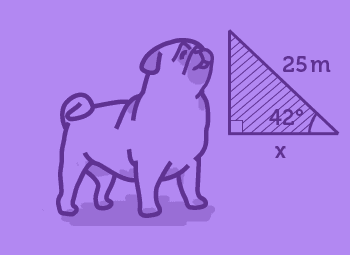
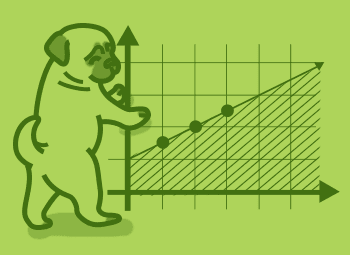
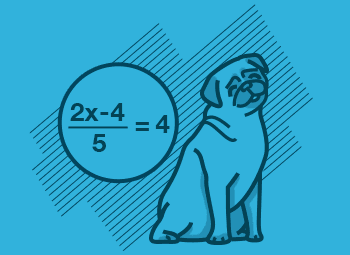
Year 10 Maths spans five broad topic areas across both tiers. In algebra, students work on expanding and factorising expressions, solving quadratic equations, simultaneous equations, and plotting and interpreting a range of graphs. In geometry and measures, the focus shifts to circle theorems, trigonometry (SOHCAHTOA and beyond for Higher), Pythagoras in 2D and 3D, and transformations. Statistics and probability covers cumulative frequency, box plots, histograms, Venn diagrams, and combined events. Number topics include surds, standard form, and reverse percentage calculations. Higher-tier students additionally study vectors, functions, and the beginnings of calculus-style reasoning. Each strand is examined across the three GCSE papers taken in Year 11.
Is Year 10 Maths hard?
For many students, Year 10 is where maths starts to feel genuinely demanding. The jump from Year 9 is significant because topics no longer sit in isolation — a question on a GCSE paper might require algebra, geometry, and ratio skills all at once. The areas where students struggle most consistently are quadratic equations (especially choosing the right method), trigonometry (knowing when to use SOHCAHTOA versus the sine or cosine rule), and any topic that requires multi-step reasoning under timed conditions. The good news is that most difficulties come down to gaps in earlier concepts rather than the new material being impossible. Identifying those gaps early — and filling them with clear method instruction — is the fastest route to improvement.
How does Year 10 Maths connect to GCSEs and A-Level?
Year 10 content is directly assessed in the GCSE Maths examinations taken at the end of Year 11. The qualification is awarded by Edexcel, AQA, or OCR depending on your school, and consists of three written papers: one non-calculator paper and two calculator papers. GCSE Maths is a requirement for most sixth-form, college, and apprenticeship pathways. Students who achieve a grade 6 or above often go on to study A-Level Maths, which introduces calculus, mechanics, and statistics at a much deeper level. A strong Year 10 — particularly in algebra and trigonometry — makes the transition to A-Level significantly smoother.
Why use StudyPug for Year 10 Maths help?
StudyPug is built around the way GCSE students actually learn. Every Year 10 Maths topic has a certified-teacher video lesson that walks through the method step by step — not just the answer, but the reasoning behind each step so you can apply the same approach to any exam question. The platform starts with a diagnostic assessment that identifies exactly which topics need attention, so you are never wasting revision time on things you already know. Adaptive practice then adjusts question difficulty in real time, keeping you in the productive learning zone where improvement happens fastest. All content is aligned to the UK national curriculum and covers both Foundation and Higher tier, so whatever your target grade, there is a clear path forward.
StudyPug also includes exam-style practice questions based on real GCSE paper formats, so practising here directly prepares you for the papers you will sit in Year 11. Unlike a private tutor, it is available at any hour — useful the night before a mock or when homework runs late.
What you learn — Year 10 Maths curriculum coverage
The Year 10 Maths curriculum on StudyPug covers every strand of the GCSE specification. Within algebra, lessons cover linear and quadratic equations, factorisation methods (including difference of two squares and completing the square), the quadratic formula, simultaneous equations (both algebraic and graphical), and graph sketching including quadratics, cubics, and reciprocals. Within geometry, you will find lessons on Pythagoras' theorem in 3D, trigonometric ratios, arc length and sector area, circle theorems, and congruence and similarity. The statistics section covers all GCSE data-handling topics: drawing and interpreting cumulative frequency curves, constructing box plots, reading histograms, calculating probability using Venn diagrams and frequency trees, and conditional probability for Higher students. Number content includes index laws, surds, standard form, and proportional reasoning. The curriculum map tracks the Edexcel, AQA, and OCR specifications so content is relevant whichever exam board your school uses.
Because no validated internal topic-page URLs are currently available in the link map for this course, topic links are omitted here — you can browse the full topic list directly on the Year 10 Maths course page.
How to use StudyPug for Year 10 Maths revision
The most effective way to use StudyPug for Year 10 Maths is to start with the diagnostic. It takes a few minutes and gives you a personalised list of topics to work on, ordered by priority. From there, pick the topic you find hardest and watch the certified-teacher video lesson — pause it, rewind it, and watch it again until the method makes sense. Then move straight into the practice problems on that topic. Adaptive practice will start at a level matched to where you are and increase difficulty as you improve, so you always feel challenged but not overwhelmed.
Before mock exams, use the GCSE exam-style practice tests to simulate real paper conditions. Review any questions you got wrong by watching the corresponding video solution, then re-attempt similar problems. Repeating this cycle — video, practice, test, review — across your weakest Year 10 topics is the most direct route to a higher GCSE grade. StudyPug is available on desktop and mobile, so you can fit revision into whatever time you have, whether that is a full evening session or ten minutes on the way to school.
Year 10 Maths FAQ
Unsure how StudyPug works? Need help with setting up? Check our frequently asked questions or contact us for help.
What do you learn in Year 10 Maths, and what topics does it cover?
Year 10 Maths follows the GCSE curriculum and covers algebra (solving equations, quadratics, simultaneous equations), geometry (circles, trigonometry, Pythagoras), statistics (probability, cumulative frequency, box plots), ratio and proportion, and number work including surds and standard form. Higher-tier students also study advanced trigonometry, functions, and vectors. The year builds directly on Year 9 foundations and prepares you for your GCSE examinations in Year 11.
What is the difference between Year 10 Maths Foundation and Higher tier?
Foundation tier covers grades 1–5 and focuses on core skills in number, algebra, geometry, and statistics. Higher tier covers grades 4–9 and includes more demanding topics such as advanced algebra, trigonometric graphs, surds, proof, and calculus-level reasoning. Both tiers sit the same Edexcel, AQA, or OCR GCSE qualification structure — three papers (one non-calculator, two calculator). Most students are placed in a tier by their school based on ongoing assessments during Year 9 and Year 10.
Is Year 10 Maths hard, and where do students struggle most?
Year 10 Maths is a significant step up. The most common sticking points are quadratic equations and factorisation, trigonometry (especially applying SOHCAHTOA correctly), simultaneous equations, and topics that combine multiple skills such as algebraic proof. Statistics topics like cumulative frequency and Venn diagrams also trip students up. The key is catching gaps early — working through problems with clear method explanations, not just answers, helps most students push through the tricky areas.
What should I have learned before Year 10 Maths, and what comes after it?
Before Year 10 you should be comfortable with the Year 9 GCSE content: solving linear equations, plotting graphs, basic trigonometry, fractions, percentages, and introductory statistics. Year 10 builds on all of that and leads directly into Year 11, where you consolidate remaining GCSE topics and sit your final examinations. After GCSEs, students who continue with maths typically progress to A-Level Maths or Core Maths in Sixth Form.
Is Year 10 Maths on the GCSE, and how is it tested?
Yes — Year 10 content forms the bulk of the GCSE Maths qualification examined at the end of Year 11. The GCSE consists of three papers (Edexcel, AQA, or OCR): Paper 1 is non-calculator; Papers 2 and 3 are calculator. Questions are based on real GCSE exam formats and assess all topic strands. StudyPug's practice questions are based on real exam-style questions so you practise the exact skills and question types that appear in GCSE assessments.
What is one of the hardest concepts in Year 10 Maths, and how do you tackle it?
Quadratic equations and their graphs are consistently one of the toughest areas. Students need to factorise, complete the square, and use the quadratic formula — and know when to apply each method. The best approach is to break the skill into separate steps: practise factorisation independently, then connecting it to solving equations, then to graphing parabolas. Watching the method worked out step-by-step — not just the final answer — before attempting practice problems is the most effective way to build lasting understanding.