Topic
Introduction, Space Exploration, Current technologiesMy Progress
Pug Score
0%
Getting Started
Let's build your foundation!
Best Streak
0 in a row
Study Points
+0
Overview
Practice
Read
Quiz
Next Steps
Back to Menu
Topic Progress
Pug Score
0%
Getting Started
"Let's build your foundation!"
Best Practice
No score
Read
Not viewed
Best Quiz
No attempts
Best Streak
0 in a row
Study Points
+0
Overview
Practice
Read
Quiz
Next Steps
Read
Space Exploration and Current Technologies: Missions, Spacecraft, and the Science of Discovery
This topic explores the history, mission types, and current technologies of space exploration, helping students understand how humanity investigates the universe beyond Earth.
Introduction to Space Exploration
Space exploration is the investigation of outer space using spacecraft, telescopes, and other technologies. Since the mid-twentieth century, humanity has sent probes, rovers, and astronauts beyond Earth to study planets, moons, stars, and the structure of the universe itself.
Learners studying this topic will discover how scientific curiosity, engineering innovation, and international cooperation have made it possible to explore destinations as close as the Moon and as distant as interstellar space.
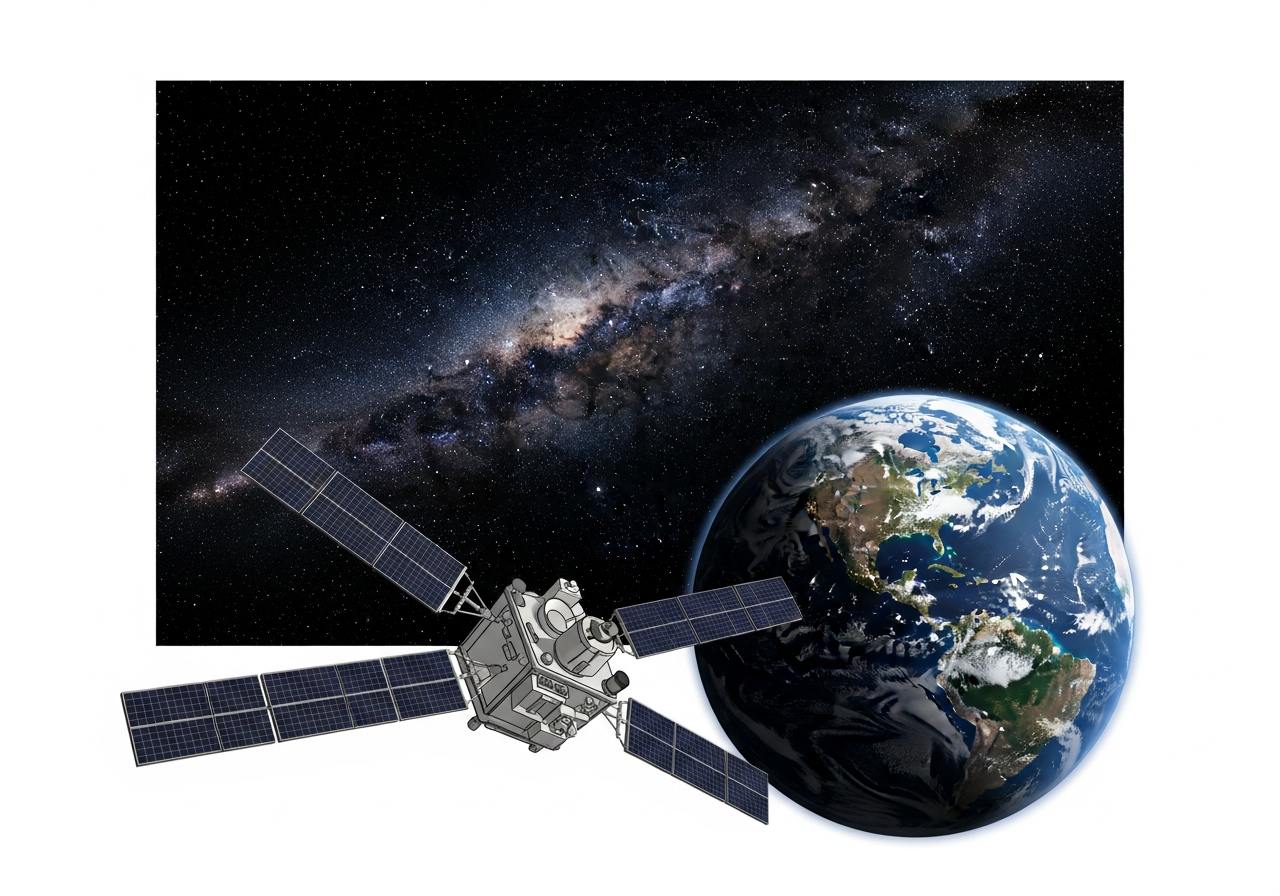
Types of Spacecraft and Mission Designs
Space exploration uses several mission types, each suited to different scientific goals. Understanding these categories helps students recognize why engineers choose specific designs for specific destinations.
- Orbiter: A spacecraft that circles its target body to map large areas over time. Example: Mars Reconnaissance Orbiter.
- Lander: A spacecraft that sets down on a surface for close-up experiments. Example: NASA's InSight lander on Mars.
- Flyby Probe: A spacecraft that makes a single close pass of a target, trading depth of data for the ability to reach very distant destinations. Example: New Horizons at Pluto.
- Space Telescope: An observatory operating above Earth's atmosphere to capture undistorted images across a wide range of wavelengths. Examples: Hubble Space Telescope, James Webb Space Telescope (JWST).
- Crewed Spacecraft: A vehicle carrying astronauts that must include life-support and re-entry systems. Examples: SpaceX Crew Dragon, NASA Orion capsule.

Key Technologies Used in Space Exploration
Modern spacecraft rely on specialized technologies working together to survive the harsh environment of space and accomplish their scientific missions.
- Heat Shield: Protects a spacecraft from extreme temperatures exceeding 2,0002,700°C during atmospheric re-entry. Used on NASA's Orion capsule.
- Solar Panels: Convert sunlight into electricity to power instruments, computers, and communication systems. Used on the ISS and most inner-solar-system probes.
- Spectrometer: Analyses light wavelengths to identify chemical elements and molecules. Curiosity's spectrometer identified methane on Mars.
- Thrusters: Fire brief bursts of propellant to steer or reorient a spacecraft in the vacuum of space.
- Ion Thruster: Accelerates charged particles using electric fields, producing small but continuous thrust very efficiently over long periods. Used on NASA's Dawn spacecraft.
- Radioisotope Thermoelectric Generator (RTG): Generates electricity from heat produced by the natural radioactive decay of plutonium-238. Used on Voyager probes and the Curiosity rover where sunlight is too weak for solar panels.
- Deep Space Network (DSN): NASA's global system of large dish antennas in California, Spain, and Australia that maintains communication with distant probes like Voyager 1, now over 23 billion km from Earth.
- Carbon Fiber Composites: Lightweight, high-strength materials that reduce spacecraft mass and the fuel needed to reach orbit.
Landmark Missions and Current Programs
Several missions have transformed humanity's understanding of the solar system and universe. The Voyager 1 and Voyager 2 probes, launched in 1977, used gravitational assist manoeuvres a technique where a spacecraft flies close to a planet, using the planet's gravity and orbital momentum to accelerate and change direction without burning large amounts of fuel to reach the outer planets. Voyager 1 crossed into interstellar space in 2012, becoming the first human-made object to leave the heliosphere.
The International Space Station (ISS) serves primarily as a microgravity laboratory where scientists conduct research in biology, physics, and medicine that cannot be replicated on Earth. The Hubble Space Telescope, launched in 1990, captured deep-field images revealing thousands of distant galaxies. The James Webb Space Telescope (JWST), launched in 2021, observes in infrared light, allowing it to see older and more distant objects than Hubble, including the earliest galaxies formed after the Big Bang.
NASA's Perseverance rover landed in Jezero Crater on Mars in February 2021, collecting and caching rock samples for a future Mars Sample Return mission. The Ingenuity helicopter demonstrated powered flight on Mars using rapidly spinning rotor blades that spin much faster than Earth helicopter blades to generate lift in Mars's thin atmosphere (about 1% as dense as Earth's).
NASA's Artemis program aims to return humans to the Moon and establish a sustainable lunar presence as a stepping stone toward crewed Mars missions. The Space Launch System (SLS) is NASA's heavy-lift rocket designed specifically for deep-space exploration missions including Artemis lunar landings.
Reusable rockets, such as SpaceX's Falcon 9, are designed to land safely and be refurbished for multiple future flights, dramatically reducing the cost of space access compared to single-use rockets.
Important Concepts in Modern Space Science
Low Earth Orbit (LEO) refers to the orbital region between approximately 160 and 2,000 kilometres above Earth's surface, where the ISS, many Earth observation satellites, and Starlink satellites operate.
CubeSats are small, standardized satellites following a 10×10×10 cm unit design, making them affordable for universities, startups, and research agencies. They have democratized access to space by dramatically lowering launch costs.
The Goldilocks zone (habitable zone) describes the orbital distance from a star where conditions allow liquid water to exist on a planet's surface a key requirement for life as we know it. Scientists searching for life beyond Earth focus on planets within this zone.
An exoplanet is a planet that orbits a star located outside our own solar system. Thousands have been confirmed using techniques such as the transit method, which detects tiny dips in a star's brightness as a planet passes in front of it. Missions like Kepler and TESS have used this method extensively.
Space debris refers to defunct satellites, spent rocket stages, and collision fragments orbiting Earth at high speeds, creating collision hazards for active spacecraft and the ISS.
Communication satellites in geostationary or low Earth orbit relay television, internet, and telephone signals across long global distances. GPS (Global Positioning System) technology uses signals from a network of approximately 30 satellites orbiting Earth to calculate precise positions through trilateration.
The "seven minutes of terror" describes the fully autonomous entry, descent, and landing phase for Mars rovers, during which Earth cannot send real-time commands due to the 10+ minute communication delay.
NASA's DART mission (Double Asteroid Redirection Test), which successfully impacted an asteroid in 2022, tested whether a spacecraft impact could change an asteroid's orbit as a planetary defense strategy.
The Parker Solar Probe, launched in 2018, studies the Sun's outer atmosphere (corona) and investigates how solar wind is accelerated, which affects space weather near Earth.
Key Terms and Definitions
Orbiter: A spacecraft designed to circle a planet or moon continuously, mapping large areas and collecting data over extended periods. Example: Mars Reconnaissance Orbiter.
Lander: A spacecraft engineered to set down on the surface of a planet or moon to conduct close-up scientific experiments. Example: NASA's InSight lander.
Flyby Probe: A spacecraft that makes a single close pass of a target body, collecting data without entering orbit. Example: New Horizons at Pluto.
Space Telescope: An observatory placed above Earth's atmosphere to capture undistorted images and data across multiple wavelengths of light. Examples: Hubble, JWST.
Crewed Spacecraft: A vehicle designed to carry human astronauts, requiring life-support systems, pressurized cabins, and re-entry protection. Examples: Crew Dragon, Orion.
Heat Shield: A protective layer on a spacecraft that absorbs and dissipates extreme heat generated by friction with the atmosphere during re-entry, with temperatures exceeding 2,000°C.
Solar Panels: Photovoltaic devices that convert sunlight into electrical energy to power spacecraft instruments and systems.
Spectrometer: An instrument that analyses the wavelengths of light to identify the chemical elements and molecules present in a sample or distant object.
Thruster: A small rocket engine on a spacecraft that fires brief bursts of propellant to steer, orient, or adjust the spacecraft's position in space.
Deep Space Network (DSN): NASA's global system of large dish antennas used to communicate with spacecraft operating far from Earth, including probes in interstellar space.
Gravitational Assist (Gravity Slingshot): A manoeuvre where a spacecraft uses a planet's gravity and orbital momentum to accelerate and change direction without consuming large amounts of fuel.
Heliosphere: The vast bubble of solar wind and magnetic field surrounding our solar system, extending far beyond the orbit of Neptune. Voyager 1 crossed this boundary in 2012.
Ion Thruster: A propulsion system that accelerates electrically charged particles (ions) to generate continuous, highly efficient thrust over long periods, ideal for deep-space missions.
Radioisotope Thermoelectric Generator (RTG): A power source that converts heat from the radioactive decay of plutonium-238 into electricity, used on spacecraft where solar power is insufficient.
Low Earth Orbit (LEO): The orbital region between approximately 160 and 2,000 km above Earth's surface, where the ISS and many satellites operate.
CubeSat: A small, standardized satellite built in 10×10×10 cm units, making space access affordable for universities, startups, and research institutions.
Reusable Rocket: A rocket designed to return to Earth, land safely, and be refurbished for multiple future launches, significantly reducing the cost of space access. Example: SpaceX Falcon 9.
Exoplanet: A planet that orbits a star other than our Sun, located outside our solar system. Thousands have been confirmed using telescopes like Kepler and JWST.
Transit Method: A technique for detecting exoplanets by measuring tiny dips in a star's brightness as a planet passes in front of it.
Goldilocks Zone (Habitable Zone): The range of distances from a star where conditions allow liquid water to exist on a planet's surface, considered essential for life as we know it.
Space Debris: Non-functional satellites, spent rocket stages, and collision fragments orbiting Earth at high speeds, posing collision risks to active spacecraft.
Extravehicular Activity (EVA) / Spacewalk: An activity in which astronauts exit their spacecraft to perform repairs, install equipment, or conduct experiments in the space environment while wearing pressurized suits.
Artemis Program: NASA's current program to return humans to the Moon and establish a sustainable lunar presence as a stepping stone toward crewed Mars missions.
Space Launch System (SLS): NASA's heavy-lift rocket, the most powerful ever built, designed to carry the Orion spacecraft and heavy payloads for deep-space exploration missions.
Seven Minutes of Terror: The informal name for the fully autonomous entry, descent, and landing sequence for Mars rovers, during which Earth cannot send real-time commands due to communication delays.
Learning Activities and Applications
Students can deepen their understanding of space exploration technologies by comparing mission types and matching each to its scientific purpose. For example, learners can create a chart distinguishing orbiters, landers, flyby probes, and crewed spacecraft based on their goals, advantages, and limitations.
Analyzing real missions such as the Voyager gravitational assist trajectory, the Perseverance rover's "seven minutes of terror" landing, or the DART asteroid impact helps students connect engineering decisions to scientific outcomes. Researching how the James Webb Space Telescope's infrared capability differs from Hubble's optical instruments reinforces understanding of how technology shapes discovery.
Foundational Knowledge
This topic builds on a general understanding of the solar system, including the structure of planets, moons, and the Sun, as well as basic physics concepts such as gravity, force, and energy. Familiarity with the electromagnetic spectrum particularly how different wavelengths of light carry different information supports understanding of how space telescopes and spectrometers function.
Students who understand how satellites orbit Earth and how radio waves travel through space will find it easier to grasp how the Deep Space Network maintains contact with probes billions of kilometres away.
Related Topics and Connections
This topic on space exploration and current technologies serves as a comprehensive introduction to the broader field of space science within the Technology chapter. The concepts covered here from mission design and spacecraft engineering to the search for life beyond Earth connect directly to ongoing developments in science and technology that students will encounter in future studies.
Understanding gravitational assist manoeuvres connects to physics topics involving gravity, momentum, and orbital mechanics. The study of exoplanets and the Goldilocks zone links to Earth science topics on the conditions necessary for life. The engineering of heat shields, ion thrusters, and RTGs connects to chemistry and physics concepts involving materials science, electromagnetism, and nuclear decay.
As students progress in science, the knowledge gained in this topic provides essential context for understanding climate monitoring through Earth observation satellites, the role of GPS in everyday technology, and the future of human spaceflight toward Mars and beyond.