TOPIC

Reversible Changes, Melting, freezing, evaporation

MY PROGRESS

Pug Score

0%

Getting Started

"Let's build your foundation!"

Best Streak

0 in a row

Study Points

+0

Overview

Practice

Watch

Read

Quiz

Next Steps


Get Started

Get unlimited access to all videos, practice problems, and study tools.

Unlimited practice
Full videos

BACK TO MENU

Topic Progress

Pug Score

0%

Getting Started

"Let's build your foundation!"

Videos Watched

0/0

Best Practice

No score

Read

Not viewed

Best Quiz

No attempts


Best Streak

0 in a row

Study Points

+0

Overview

Practice

Watch

Read

Quiz

Next Steps

Read

Melting, Freezing, and Evaporation: Explore Reversible Changes!

You will learn how materials like water can change between solid, liquid, and gas forms through melting, freezing, and evaporation and how these changes can be undone.

What Are Reversible Changes?

A physical change is when a material changes its shape or form, but it is still the same material. When ice melts into water, it is still water just in a different form!

A reversible change is a change that can be undone. You can melt ice into water, and then freeze that water back into ice. The material goes back to what it was before.

Melting: Solid Turns Into Liquid

Melting happens when a solid is warmed up and turns into a liquid. When you leave ice out on a warm day, it melts and becomes liquid water.

Heat is the key! When you add heat to a solid like ice or butter, it gets enough energy to change into a liquid. Melting is a reversible change because you can freeze the liquid back into a solid.

Examples of melting you might see every day: ice cream softening in the sun, butter melting in a hot pan, and a snowman melting on a warm spring day.

Freezing: Liquid Turns Into Solid

Freezing happens when a liquid gets very cold and turns into a solid. When you put water in a freezer, it loses heat and becomes solid ice.

Freezing is the opposite of melting. Melting adds heat to go from solid to liquid. Freezing removes heat to go from liquid to solid. Water freezes at 0°C (32°F).

You can see freezing when juice in a popsicle mold turns solid overnight in the freezer, or when a puddle turns to ice on a cold winter night.

Evaporation: Liquid Turns Into Gas

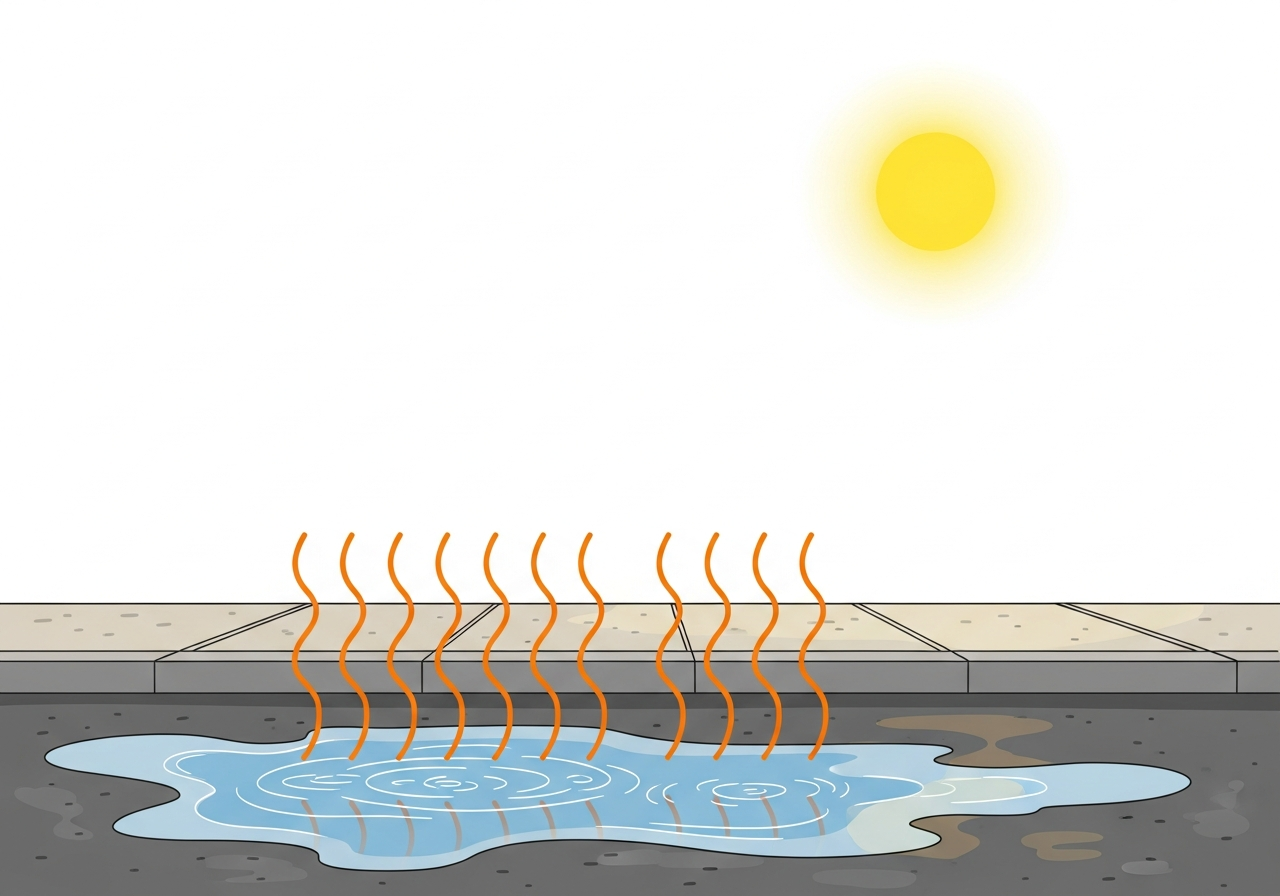
Evaporation happens when a liquid slowly turns into a gas called water vapor. When the sun warms a puddle, the water evaporates and rises into the air as invisible water vapor.

This is why puddles disappear on sunny days and why wet clothes dry when you hang them outside. The liquid water turns into water vapor and floats away into the air.

Evaporation is also a reversible change. Water vapor can cool down and turn back into liquid water this is called condensation. You can see condensation as water drops on the outside of a cold glass on a warm day.
Key Terms and Definitions

Physical Change: A physical change is when a material changes its shape, size, or state, but it is still the same material. For example, water turning into ice is a physical change it is still water, just in a different form.

Reversible Change: A reversible change is a change that can be undone so the material goes back to what it was before. Melting and freezing are reversible because you can melt ice into water and freeze it back into ice again.

Melting: Melting is when a solid warms up and becomes a liquid. Ice melts into water when heat is added. Butter melts in a hot pan. Melting goes from solid liquid.

Freezing: Freezing is when a liquid gets cold enough and becomes a solid. Water freezes into ice in a freezer. Freezing goes from liquid solid. It is the opposite of melting.

Evaporation: Evaporation is when a liquid slowly turns into a gas. Water in a puddle evaporates into water vapor when the sun warms it. Evaporation goes from liquid gas.

Water Vapor: Water vapor is water in the form of an invisible gas floating in the air. When water evaporates, it becomes water vapor. You cannot see it, but it is all around you in the air.

Condensation: Condensation is when water vapor cools down and turns back into liquid water. You can see condensation as tiny water drops on the outside of a cold glass on a warm day. Condensation is the opposite of evaporation.

Solid: A solid is a state of matter that has a fixed shape and feels hard. Ice is a solid. It keeps its shape unless heat melts it into a liquid.

Liquid: A liquid is a state of matter that flows and takes the shape of its container. Water is a liquid. When ice melts, it becomes liquid water.

Gas: A gas is a state of matter that spreads out and fills the space around it. Water vapor is a gas. When water evaporates, it becomes a gas that floats in the air.

States of Matter: States of matter are the three forms a material can take: solid, liquid, and gas. Water can exist in all three states as ice (solid), liquid water, and water vapor (gas).

Change of State: A change of state is when a material moves from one form to another, like solid to liquid or liquid to gas. Melting, freezing, and evaporation are all changes of state.

Practice What You Know

You can try these activities to see reversible changes for yourself! Put an ice cube on a plate and watch it melt into liquid water. Then put the water back in the freezer and watch it freeze into ice again.

On a sunny day, use chalk to draw around a puddle. Check back in an hour the puddle will be smaller or gone because the water evaporated! These everyday examples show you exactly how melting, freezing, and evaporation work as reversible physical changes.

Building Your Science Knowledge

Understanding reversible changes like melting, freezing, and evaporation is an important part of learning about Physical Changes. These ideas help you understand how the world around you works every day.

As you keep learning science, you will discover more about how materials change and why some changes can be reversed while others cannot. Knowing the difference between reversible and irreversible changes is a key science skill you will use again and again.

Related Topics and Connections

The topic of reversible changes connects to the bigger chapter on Physical Changes. Everything you learn about melting, freezing, and evaporation is part of understanding how materials change their form without becoming a completely new material.

As you grow in science, you will explore more about states of matter and how heat affects materials. The ideas you learn here about solids, liquids, and gases will help you understand topics like the water cycle, weather, and how everyday materials behave in different temperatures.