Grade 8 Math Help — Step-by-Step Video Lessons & Practice
Help your child understand every grade 8 math topic and build real confidence, one lesson at a time.
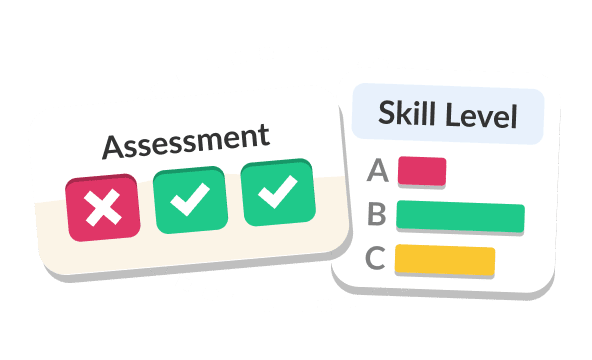
Find Your Weak Spots
See where your child needs focus.
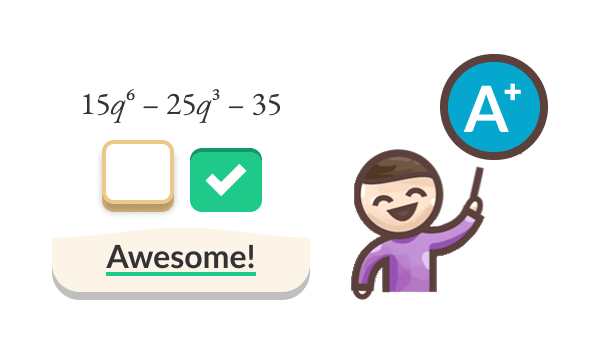
Expert Video Solutions
Teachers explain until your child solves alone.

School-Aligned
Matches your child's provincial curriculum.
Try It Now
Test your knowledge
Our approach aligns with the evidence
Exam Scores
Better Recall
Less Anxiety
Grade 8 Math Topics
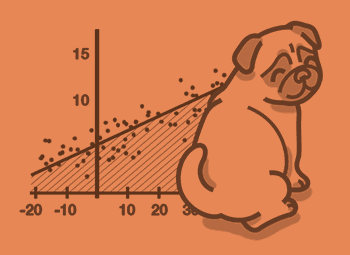
1. Representing Data
2. Ratios, Rates, and Proportions
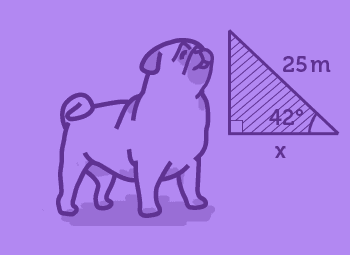
3. Pythagorean Theorem
4. Percents
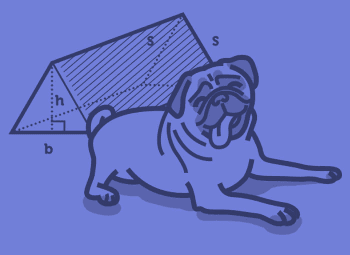
5. Surface Area
6. Fractions
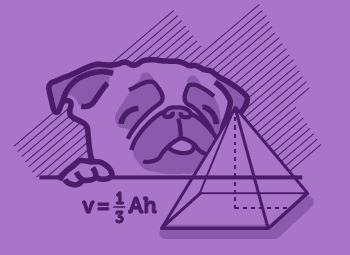
7. Volume
8. Integers
9. Linear Relations
10. Linear Equations
11. Probability
12 Chapters · 49 Topics · 439 Videos

Ready to practice Grade 8 Math?
Try practice questions on every Grade 8 Math topic — with instant feedback and step-by-step video solutions when you get stuck.
Discover Our Learning Areas
Explore key subjects and start learning with interactive content.









What Is Grade 8 Math?
Grade 8 math is the bridge between the numeracy skills children build in elementary school and the abstract reasoning they need in high school. In Canada, Grade 8 is typically the final year of middle school or junior high, and the math curriculum reflects that transition. Students move from working with familiar numbers into the world of algebra, formal geometry proofs, and multi-step problem solving. Understanding what is covered — and why it matters — helps parents support their child through what is often the first year where math genuinely feels hard.
What Topics Are Covered in Grade 8 Math?
Across Canadian provinces, Grade 8 math typically includes the following core areas:
Number and Operations: Integers, rational numbers, squares and square roots, and operations with fractions and decimals. Students are expected to move fluently between these forms.
Algebra and Linear Relations: Solving single-variable linear equations and inequalities, graphing linear relations, and understanding slope and rate of change. This is the area where most Grade 8 students find the course most challenging.
Proportional Reasoning: Ratios, rates, percentages (including percent increase/decrease), and scale factors. These skills connect directly to real-world applications and are assessed in most provincial evaluations.
Geometry: The Pythagorean theorem, surface area and volume of 3D shapes, transformations (translations, rotations, reflections), and angle relationships. Students move from identifying shapes to calculating and proving properties.
Data and Probability: Collecting and interpreting data using graphs and measures of central tendency, and calculating theoretical and experimental probability.
Provincial curriculum documents (Ontario, BC, Alberta) each organise these strands slightly differently, but the conceptual content is closely aligned.
Why Is Grade 8 Math Hard, and Where Do Students Struggle?
Grade 8 math is the year many parents first notice their child hitting a wall. There are a few consistent reasons for this.
The shift to abstract algebra is the biggest hurdle. Working with variables, understanding what "solving for x" actually means, and keeping equations balanced requires a type of thinking that feels unfamiliar after years of concrete arithmetic. Students who have a shaky foundation in integer operations or fraction arithmetic find algebra even harder because those gaps compound.
Geometry becomes more rigorous too. Rather than identifying shapes, students calculate and apply formulas — and the Pythagorean theorem, in particular, requires understanding why it works, not just memorising the formula.
Proportional reasoning trips up students who learned percentages mechanically in earlier grades without understanding the underlying ratios. When percentage problems become multi-step, the gaps show.
The good news is that these struggles are predictable and addressable. A targeted diagnostic that identifies where the child's understanding breaks down is the fastest way to close gaps before they widen heading into Grade 9.
How Is Grade 8 Math Assessed in Canadian Schools?
In most Canadian provinces, Grade 8 math is assessed through a combination of classroom tests and unit assignments throughout the year, with a report card grade issued each term. There is no single national standardised exam at Grade 8, but several provinces have their own assessments.
In Ontario, the Education Quality and Accountability Office (EQAO) has historically administered provincial assessments, though the format has evolved in recent years — parents should check with their school board for current details. In British Columbia, classroom-based assessment is the primary measure at Grade 8, with provincial assessments playing a larger role in Grades 10 and 12. In Alberta, students complete school-based assessments aligned to the provincial program of studies, with Grade 9 being the first year of a provincial achievement test in math.
Understanding how your child is assessed helps you target practice effectively. StudyPug practice problems are built around the concepts that appear most frequently in provincial assessments, so practice time is well spent.
What You Learn: Grade 8 Math Curriculum Coverage
StudyPug's Grade 8 math content covers every major topic in the Canadian provincial curricula. Lessons are organised by topic so your child can go directly to what they need — whether that is linear equations, geometry, or data analysis — rather than working through everything in sequence.
If you want to see exactly how StudyPug maps to your province's expectations, you can explore the grade 8 math curriculum BC or the grade 8 math curriculum Alberta breakdowns. These show the specific strands, learning outcomes, and how StudyPug lessons align to each one.
Coverage includes:
- Integer and rational number operations
- Squares, square roots, and irrational numbers
- Linear equations and inequalities
- Graphing linear relations and slope
- Ratios, rates, and percent problems
- Pythagorean theorem and its applications
- Surface area and volume of 3D solids
- Geometric transformations
- Data analysis and probability
Every topic includes certified-teacher video lessons, adaptive practice problems, and free practice content that your child can access immediately.
Why StudyPug for Grade 8 Math?
Most Grade 8 math resources give students more problems to practise. StudyPug starts from a different place: finding where your child's understanding actually breaks down, then fixing it.
Diagnostic Assessment: The quick diagnostic assessment identifies the specific topics where your child needs to focus. Rather than reviewing everything, your child works on what matters — which saves time and builds confidence faster.
Certified-Teacher Video Lessons: Every lesson is taught by a certified teacher on video. The teacher explains the concept step by step — not just showing the answer, but explaining the reasoning so your child understands how to approach similar problems independently. These are not automated or AI-generated lessons; they are real teaching.
Adaptive Practice: Practice questions adjust to your child's current level. If they are finding questions too easy, the system moves them forward. If they are struggling, it steps back and reinforces the foundation. This keeps practice productive rather than frustrating.
Parent Dashboard: You can see exactly which topics your child has practised, where they are improving, and where they still need support — all from one dashboard. For families with multiple children, the Family Plan covers up to 5 kids under one subscription.
Provincial Curriculum Alignment: Whether your child is in Ontario, BC, or Alberta, StudyPug lessons follow their provincial curriculum. There is no mismatch between what is taught on screen and what is tested at school.
30-Day Money-Back Guarantee: You can try StudyPug for a full 30 days. If you are not satisfied, you get your money back — no questions asked.
How to Use StudyPug for Grade 8 Math
Getting started takes about five minutes. Here is how most families use StudyPug effectively for Grade 8 math:
Step 1 — Run the diagnostic. The diagnostic assessment quickly identifies which Grade 8 topics your child has a strong grasp of and which ones need attention. This gives you a clear starting point rather than working through topics your child already understands.
Step 2 — Watch and learn. For each topic that needs work, your child watches the certified-teacher video lesson. Encourage them to have a notebook handy — writing out the steps as the teacher explains them reinforces understanding.
Step 3 — Practise with feedback. After watching, your child completes the adaptive practice problems. Instant feedback shows whether their answer is correct and, if not, how to approach it differently. Short daily sessions of 20–30 minutes are more effective than longer infrequent ones.
Step 4 — Check the dashboard. Use the parent dashboard to review progress. Look for topics where your child is consistently correct (they can move forward) and topics where errors keep appearing (worth revisiting the video).
Step 5 — Prepare for tests. Before a class test, use StudyPug's practice problems to do a focused review of the specific unit being assessed. The problems are built around the concepts that appear in Canadian provincial assessments, so test preparation is targeted and efficient.
StudyPug is available on desktop, tablet, and mobile — so your child can practise at home, at school, or on the go. There are no downloads required; everything works through the browser.
Grade 8 Math FAQ
Unsure how StudyPug works? Need help with setting up? Check our frequently asked questions or contact us for help.
What does my child learn in Grade 8 math, and what topics does it cover?
Grade 8 math in Canada typically covers integers and rational numbers, solving linear equations and inequalities, ratios and proportional reasoning, percentages, geometry (including the Pythagorean theorem, surface area, and volume), data and probability, and an introduction to algebraic expressions. Students also work with transformations and spatial reasoning. The exact scope follows provincial curriculum expectations — Ontario, BC, and Alberta each have their own learning standards, though the core topics are broadly similar across provinces.
Is Grade 8 math hard, and where do students commonly struggle?
Grade 8 math is a significant step up for many students. The jump to abstract algebra — solving equations with variables on both sides, working with negative numbers, and applying proportional reasoning — is where most children hit a wall. Geometry also trips students up when they move from memorising formulas to understanding why they work. Students who struggled in Grade 7 with fractions or basic algebra tend to find Grade 8 more difficult. Early identification of the gap, through a diagnostic, makes a real difference in getting back on track quickly.
What should my child know before Grade 8 math, and what comes next?
A solid Grade 7 math foundation is key: fractions, decimals, percent, basic algebraic thinking, and geometry basics. If those concepts are shaky, Grade 8 work becomes much harder. After Grade 8, students move into Grade 9 math, which introduces quadratic expressions, more advanced linear relations, and measurement — building directly on the algebra and geometry covered in Grade 8. Closing any Grade 7 gaps before Grade 9 sets students up for success in high school math.
How does StudyPug Grade 8 math map to what my child learns at school?
StudyPug lessons are aligned to Canadian provincial curricula. Whether your child follows Ontario's Grade 8 expectations, the BC curriculum, or Alberta's program of studies, the topics and progression match what they cover in class. You can also explore the grade 8 math curriculum BC and grade 8 math curriculum Alberta breakdowns to see exactly how StudyPug maps to your province. This means no wasted time on topics your child doesn't need — every lesson connects directly to their classroom learning.
What is one of the trickiest Grade 8 math concepts, and how is it taught?
Linear equations with variables on both sides consistently catch Grade 8 students off guard. It is not just about moving numbers — it requires understanding inverse operations, keeping the equation balanced, and checking answers. StudyPug's certified-teacher video lessons break this down step by step: first isolating the variable, then simplifying, then verifying the solution. The teacher explains the reasoning behind each step, not just the procedure. After the video, adaptive practice problems reinforce the concept at the child's level, building genuine understanding rather than surface memorisation.
How much math practice should my child do in Grade 8?
Most educational guidelines suggest 20–30 minutes of focused math practice per day at the Grade 8 level. Consistency matters more than length — short daily sessions beat long weekend cramming. Before a test or unit assessment, two to three focused sessions of practice problems in the specific topic area is more effective than general review. StudyPug's adaptive practice adjusts to your child's level, so practice time is spent on what actually needs work rather than repeating things already mastered.




Written by the StudyPug Team
Last updated June 5, 2026
3 M+
students
★★★★★
4.8 average
K–12
all grades