Calculus 2 Help: Video Lessons & Practice
Step-by-step lessons from certified teachers — so concepts click before your next midterm.
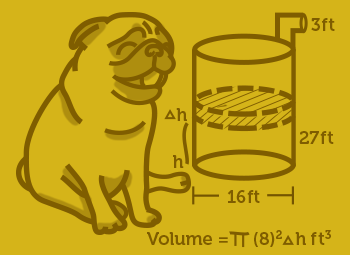
Value vs. Private Tutor
Expert instruction without the price tag.
Multi-Subject
One subscription covers every subject.
Practice Until Perfect
Practice until it truly clicks.
Try It Now
Test your knowledge
Our approach aligns with the evidence
Exam Scores
Better Recall
Less Anxiety
Calculus 2 Topics
1. Integrals
2. Integration Techniques
3. Integration Applications
4. Differential Equations
5. Sequence and Series
6. Parametric Equations and Polar Coordinates
6 Chapters · 49 Topics · 346 Videos
Discover Our Learning Areas
Explore key subjects and start learning with interactive content.






What is Calculus 2?
Calculus 2 is the second course in the standard university calculus sequence, focusing on integral calculus and infinite series. It picks up where Calculus 1 leaves off — you already know how to differentiate and integrate basic functions — and takes integration far deeper. By the end of the course, you will be able to evaluate a wide family of integrals using multiple techniques, determine whether infinite series converge or diverge, and work with parametric and polar representations of curves. Calculus 2 is a prerequisite for Calculus 3 (Multivariable Calculus), Differential Equations, and many upper-year science and engineering courses.
What topics are covered in Calculus 2?
The course is typically structured in three major blocks. The first block covers advanced integration techniques: integration by parts, trigonometric integrals, trigonometric substitution, partial fraction decomposition, and improper integrals. The second block applies integration to geometry and physics — computing areas between curves, volumes of solids of revolution using the disk, washer, and shell methods, arc length, and surface area. The third block introduces infinite sequences and series, including convergence tests (p-series, comparison, limit comparison, integral, ratio, root, and alternating series), power series, and Taylor and Maclaurin series. Most Canadian university courses also include parametric equations and polar coordinates.
Where do Calculus 2 students struggle most?
The two most commonly reported difficulty points are integration techniques and series convergence. Integration by parts and trigonometric substitution each require you to recognise which technique applies — there is no single algorithm that works every time. Students who try to memorise steps without understanding the underlying pattern find these sections very difficult. Series convergence is challenging for a different reason: the concepts are abstract, the vocabulary is dense, and there are many tests to choose between. The key is practising each test type separately before mixing them, and always asking "what does this series look like?" before choosing a test.
How does Calculus 2 fit into the broader university math sequence?
At most Canadian universities, the standard first-year calculus sequence runs Calculus 1 → Calculus 2 → Calculus 3. Engineering and physics students often take Linear Algebra in the same semester as Calculus 2. Differential Equations, which draws heavily on integration techniques from Calculus 2, typically follows in second year. A solid understanding of Calculus 2 — particularly series expansions and integration — is also important for upper-year courses in real analysis, numerical methods, and mathematical physics. The topics are cumulative, so gaps in Calculus 2 tend to surface later in harder courses.
Why StudyPug for Calculus 2?
StudyPug is built for students who need more than a textbook re-read the night before a midterm. The platform starts with a diagnostic assessment that maps exactly which Calculus 2 topics you are strong on and which need work — so your study time goes to the right places from the start, not wherever you happen to open the textbook.
The core of the learning experience is certified-teacher concept videos. These are not AI-generated summaries — they are step-by-step lessons from experienced instructors who teach the method, explaining why each step works so that you understand the logic, not just the procedure. When convergence tests are abstract or integration substitutions feel arbitrary, seeing an expert talk through the reasoning makes a concrete difference. You can rewatch any lesson as many times as you need, right up until exam day.
Adaptive practice adjusts to your performance as you work. If you are getting problems right, difficulty increases. If you are stuck, the system finds the right level to keep you progressing. This is more efficient than working through a static problem set and more targeted than re-reading notes.
One subscription gives you access to Calculus 1, Calculus 2, Calculus 3, Linear Algebra, Differential Equations, and Statistics — the full set of courses most science and engineering students take in the first two years. You never need to buy a separate subscription to review a prerequisite or get a head start on the next course.
What you learn in Calculus 2 on StudyPug
StudyPug's Calculus 2 content covers every major topic area in the standard Canadian university curriculum:
- Integration techniques: integration by parts, trigonometric integrals and substitution, partial fractions, improper integrals
- Applications of integration: area, volume (disk/washer/shell), arc length, surface area
- Sequences and series: convergence and divergence, all major convergence tests
- Power series, Taylor series, Maclaurin series, radius and interval of convergence
- Parametric equations and polar coordinates
- Introduction to differential equations (first-order separable and linear)
Lessons are organised by topic so you can jump directly to the concept causing you trouble, work through the practice problems, check a video solution, and move on. There are no validated internal topic links to place here — use the topic navigation within the platform to find the section you need.
Using StudyPug to prepare for Calculus 2 midterms and finals
Calculus 2 midterms at Canadian universities typically cover the first half of the course — integration techniques and applications — while finals are comprehensive. The most effective preparation strategy combines topic-by-topic practice with full timed mock exams.
Start by taking the StudyPug diagnostic to get a clear picture of where you stand. Work through the flagged weak topics using the concept videos and adaptive practice. In the two weeks before your midterm or final, shift to timed practice tests that simulate the exam format. Reviewing wrong answers with the step-by-step video solutions — understanding why the correct approach works — is what turns practice into lasting understanding.
Free daily practice content is available without a paid subscription. For unlimited access to all video lessons, practice tests, and the full diagnostic and adaptive system, start a paid plan — every plan comes with a 30-day money-back guarantee, so there is no risk in getting started today.
Calculus 2 FAQ
Unsure how StudyPug works? Need help with setting up? Check our frequently asked questions or contact us for help.
What do you learn in Calculus 2, and what topics does it cover?
Calculus 2 builds directly on Calculus 1 by deepening your understanding of integration and introducing new families of functions. Core topics include advanced integration techniques (integration by parts, trigonometric substitution, partial fractions), improper integrals, applications of integration (area, volume, arc length), infinite sequences and series, convergence tests, power series, Taylor and Maclaurin series, and an introduction to parametric equations and polar coordinates. Some courses also include an introduction to differential equations.
What is the difference between Calculus 2 and Calculus 3?
Calculus 2 focuses on single-variable integration and series. You spend most of your time mastering techniques to evaluate integrals and determining whether infinite series converge or diverge. Calculus 3 (Multivariable Calculus) extends those ideas into two and three dimensions — covering vectors, partial derivatives, multiple integrals, and vector calculus topics like Green's and Stokes' theorems. A strong command of Calculus 2 series and integration methods is essential before moving into Calculus 3.
What are the prerequisites for Calculus 2, and what course comes after it?
The standard prerequisite is Calculus 1, which covers limits, derivatives, and an introduction to definite integrals. You should be comfortable with the Fundamental Theorem of Calculus and basic antiderivatives before starting Calculus 2. After Calculus 2, most students move into Calculus 3 (Multivariable Calculus). Depending on your program, you may also take Linear Algebra or Differential Equations concurrently — all of which are included in one StudyPug subscription.
Is Calculus 2 hard, and where do students struggle most?
Calculus 2 has a reputation as one of the most challenging first-year university math courses. The difficulty spike comes from two areas: integration techniques and infinite series. Integration by parts and trigonometric substitution require you to recognise patterns rather than follow a single algorithm, which takes practice. Series convergence is abstract — students often apply tests correctly but struggle to choose the right test quickly. Consistent practice with worked examples, not just reading theory, is the most reliable way through.
How is Calculus 2 assessed at Canadian universities?
Assessment varies by institution but typically includes weekly or biweekly assignments (10–20% of the final grade), one or two midterm exams (30–40%), and a final exam (40–50%). Some courses add quizzes or online homework systems. Final exams in Canadian universities are typically closed-book and timed at two to three hours, covering the full course. Practising with mock exams and timed problem sets is one of the most effective ways to prepare.
What is one of the hardest topics in Calculus 2, and how do you approach it?
Convergence and divergence of infinite series is consistently the topic students find most difficult. There are many tests — Ratio Test, Root Test, Comparison Test, Limit Comparison, Integral Test, Alternating Series Test — and knowing which to apply takes pattern recognition built over many examples. The best approach: first confirm you understand what convergence means conceptually, then work through each test in isolation with several examples before mixing them. Seeing worked solutions that explain the choice of test, not just the calculation, is especially valuable.





Written by the StudyPug Team
Last updated June 5, 2026
3 M+
students
★★★★★
4.8 average
K–12
all grades