Topic
My Progress
Pug Score
0%
Best Streak
0 in a row
Study Points
+0
Overview
Practice
Read
Quiz
Next Steps
Overview
Practice
Read
Quiz
Next Steps
Read
Solar Radiation: Unlocking the Energy That Powers Our Planet
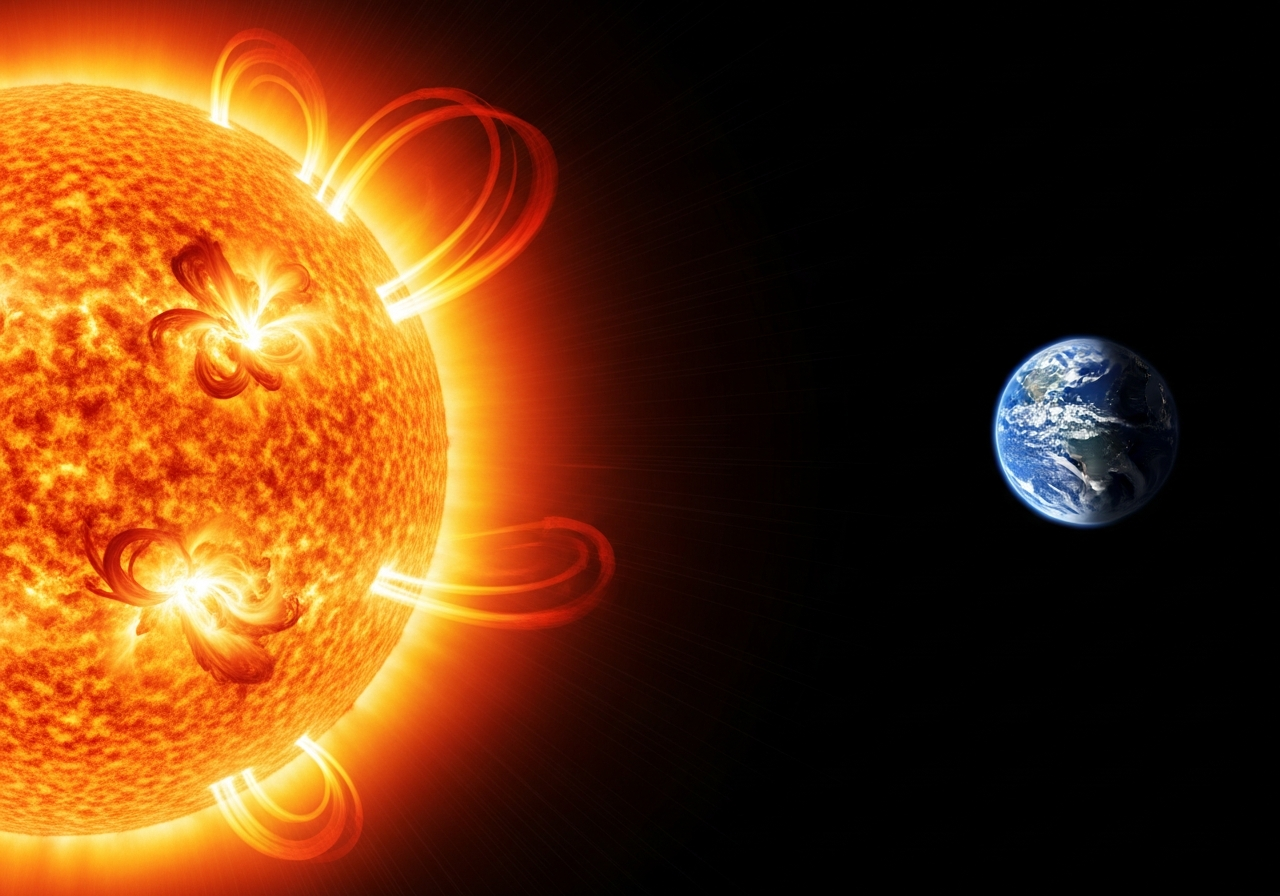
Solar radiation encompasses the electromagnetic energy produced by the Sun through nuclear fusion, traveling across space and interacting with Earth's atmosphere to drive climate systems and support life.
Solar radiation is the electromagnetic energy emitted by the Sun and other stars, traveling through the vacuum of space as waves that require no physical medium for transmission. This energy is the primary driver of Earth's climate system and supports nearly all life on the planet. Learners exploring Climate Effects and Solar Influence will find solar radiation at the heart of those discussions.
The Sun generates this energy through nuclear fusion, a process occurring in its core where hydrogen atoms combine under extreme pressure and temperature to form helium, releasing enormous quantities of electromagnetic radiation in the process.
The Electromagnetic Spectrum and Solar Energy
The electromagnetic spectrum organizes all forms of radiation by wavelength and frequency. It includes, from shortest to longest wavelength: gamma rays, X-rays, ultraviolet radiation, visible light, infrared radiation, microwaves, and radio waves. Shorter wavelengths carry more energy gamma rays contain far more energy per photon than radio waves.
The Sun emits radiation across this entire spectrum, though Earth's atmosphere filters out many harmful wavelengths before they reach the surface. Students studying Light Waves and the Electromagnetic Spectrum will recognize these foundational principles at work in the context of stellar energy.

A fundamental relationship governs all electromagnetic radiation: higher frequency corresponds to greater energy. This principle, known as the frequency-energy relationship, explains why ultraviolet radiation is more biologically damaging than visible light.
Earth's Protective Barriers
Without protection, high-energy radiation from space would damage cellular DNA and make life impossible. Earth is shielded by two key systems: the ozone layer, which absorbs most harmful ultraviolet radiation, and the magnetosphere, which deflects charged particles carried by the solar wind.
The inverse square law also plays a role: radiation intensity decreases as the square of the distance from the source increases. An object twice as far from the Sun receives only one-quarter of the radiation. This principle connects directly to Energy Distribution and Global Patterns.
Key Terms & Definitions
Solar Radiation: The total electromagnetic energy emitted by the Sun, including visible light, ultraviolet rays, and infrared energy, that travels through space to reach Earth.
Electromagnetic Spectrum: The complete range of all electromagnetic radiation types, organized by wavelength and frequency, from high-energy gamma rays to low-energy radio waves.
Ultraviolet Radiation: A form of electromagnetic radiation with wavelengths shorter than visible light and higher energy; primarily absorbed by Earth's ozone layer to protect living organisms from cellular damage.
Solar Constant: The measure of the average intensity of solar energy received per unit area at Earth's distance from the Sun, approximately 1,361 watts per square meter.
Infrared Radiation: Electromagnetic radiation with wavelengths longer than visible light, experienced as heat; plays a crucial role in Earth's temperature regulation and the greenhouse effect.
Photosphere: The visible outer layer of the Sun from which sunlight and most solar radiation originate; the surface that observers see when looking at the Sun.
Solar Wind: A continuous stream of charged particles and electromagnetic radiation flowing outward from the Sun through space, capable of affecting Earth's magnetosphere and causing auroras.
Aurora: A natural light display in Earth's polar skies, known as the Northern or Southern Lights, caused when solar wind particles interact with gases in Earth's upper atmosphere.
Magnetosphere: The region surrounding Earth dominated by its magnetic field, which acts as a protective shield deflecting harmful charged particles from the solar wind.
Solar Flare: A sudden, intense burst of electromagnetic radiation and charged particles from the Sun's surface that can disrupt satellite communications and power systems on Earth.
Nuclear Fusion: The process by which hydrogen nuclei combine to form helium in a star's core, releasing vast amounts of energy as electromagnetic radiation.
Inverse Square Law: A physical principle stating that the intensity of radiation decreases proportionally to the square of the distance from the source; doubling the distance reduces intensity to one-quarter.
Cosmic Rays: High-energy particles and electromagnetic radiation originating from stars, supernovae, and other cosmic sources that travel through space and interact with Earth's atmosphere.
Ozone Layer: A region of Earth's stratosphere containing high concentrations of ozone gas that absorbs most of the Sun's harmful ultraviolet radiation before it reaches the surface.
Applying Solar Radiation Concepts
Students can deepen their understanding by analyzing how different surfaces absorb or reflect solar radiation. Darker surfaces absorb more electromagnetic energy, while lighter or reflective surfaces reflect more a principle relevant to spacecraft design and climate science. This connects to Energy Flow and System Dynamics.
Examining the role of the ozone layer in blocking ultraviolet radiation illustrates why atmospheric protection is essential for life. Students can also explore how the inverse square law explains why planets farther from the Sun receive less solar energy, linking to Carbon Cycle and Carbon Movement through energy-driven climate processes.
Building on Prior Knowledge
This topic builds on several foundational concepts. Understanding Energy Changes: Endothermic and Exothermic processes provides context for how nuclear fusion releases energy. Knowledge of Stellar Evolution and the Life Cycle of Stars explains why stars emit radiation throughout their lifetimes.
Familiarity with Energy Resources: Renewable and Non-Renewable helps students appreciate solar energy as a renewable resource. Prior study of Galaxies: Types and Formation and Space Exploration and Current Technologies provides broader cosmic context for understanding where solar radiation fits within the universe.
Related Topics & Connections
Solar radiation is directly connected to Astronomical Data and Evidence Collection, as scientists use spectrometers to analyze radiation wavelengths from distant stars. The study of Climate Effects and Solar Influence examines how solar energy drives weather patterns and long-term climate change.
This topic prepares students for advanced study in Nuclear Reactions: Fission and Fusion and Radiation: Types and Effects. Understanding solar energy also underpins Types of Energy and Energy Transformations and Conservation Laws.
The broader implications of solar radiation are explored in Climate Change: Evidence and Impacts and Climate Factors and Global Patterns. Future topics including Stellar Evolution and Star Life Cycles, Cosmology and Universe Theories, and Space Exploration and Current Technologies all build upon the principles introduced here.