North Dakota
North Dakota 8th Grade Math
Watch algebra and geometry videos, practice with hundreds of step-by-step problems

The Pythagorean Theorem videos made geometry click for my son. He went from a C to an A in just six weeks.
Jennifer M.

Why Choose StudyPug for 8th Grade Math
Trusted platform that builds strong algebra and geometry foundations
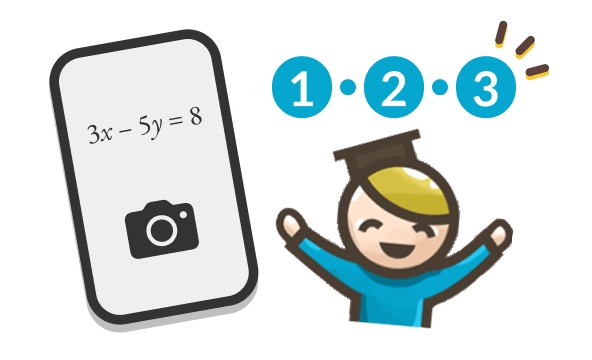
Search with Photo
Search with Photo
Snap a photo of any problem and get the exact lesson you need
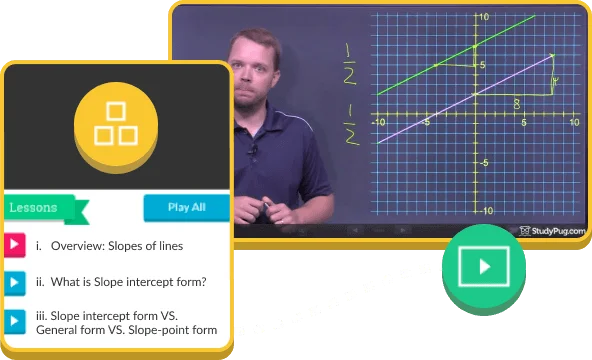
Expert Video Teaching
Expert Video Teaching
Certified teachers explain every concept with clear examples
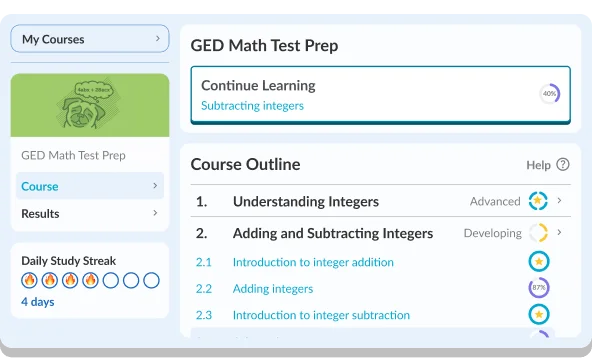
Track Progress
Track Progress
See exactly what they've mastered and what needs more work
How North Dakota Students Use StudyPug
1

Select Grade Level
Choose your North Dakota grade (K-12) and current math topics.
2

Get Unstuck
Upload homework problems or browse curriculum-aligned lessons.
3

Practice & Master
Work through similar problems until concepts stick.
4

See Results
Track progress and watch grades improve week by week.
North Dakota 8th Grade Math Help | Build Strong SkillsHelp
ID | Standard | StudyPug Topic |
|---|---|---|
8.NS.A.1 | Know that numbers that are not rational are called irrational. Understand informally that every number has a decimal expansion; for rational numbers show that the decimal expansion repeats eventually, and convert a decimal expansion which repeats eventually into a rational number. |
8.NS.A.2 | Use rational approximations of irrational numbers to compare the size of irrational numbers, locate them approximately on a number line diagram, and estimate the value of expressions (e.g., π2). |
8.EE.A.1 | Know and apply the properties of integer exponents to generate equivalent numerical expressions. |
8.EE.A.2 | Use square root and cube root symbols to represent solutions to equations of the form x2 = p and x3 = p, where p is a positive rational number. Evaluate square roots of small perfect squares and cube roots of small perfect cubes. Know that √2 is irrational. |
8.EE.A.3 | Use numbers expressed in the form of a single digit times an integer power of 10 to estimate very large or very small quantities, and to express how many times as much one is than the other. |
8.EE.B.5 | Graph proportional relationships, interpreting the unit rate as the slope of the graph. Compare two different proportional relationships represented in different ways. |
8.EE.B.6 | Use similar triangles to explain why the slope m is the same between any two distinct points on a non-vertical line in the coordinate plane; derive the equation y = mx for a line through the origin and the equation y = mx + b for a line intercepting the vertical axis at b. |
8.EE.C.7 | Solve linear equations in one variable. |
8.EE.C.8 | Analyze and solve pairs of simultaneous linear equations. |
8.F.A.1 | Understand that a function is a rule that assigns to each input exactly one output. The graph of a function is the set of ordered pairs consisting of an input and the corresponding output. |
8.F.A.2 | Compare properties of two functions each represented in a different way (algebraically, graphically, numerically in tables, or by verbal descriptions). |
8.F.B.4 | Construct a function to model a linear relationship between two quantities. Determine the rate of change and initial value of the function from a description of a relationship or from two (x, y) values, including reading these from a table or from a graph. Interpret the rate of change and initial value of a linear function in terms of the situation it models, and in terms of its graph or a table of values. |
8.F.B.5 | Describe qualitatively the functional relationship between two quantities by analyzing a graph (e.g., where the function is increasing or decreasing, linear or nonlinear). Sketch a graph that exhibits the qualitative features of a function that has been described verbally. |
8.G.A.1 | Verify experimentally the properties of rotations, reflections, and translations. |
8.G.A.2 | Understand that a two-dimensional figure is congruent to another if the second can be obtained from the first by a sequence of rotations, reflections, and translations; given two congruent figures, describe a sequence that exhibits the congruence between them. |
8.G.A.3 | Describe the effect of dilations, translations, rotations, and reflections on two-dimensional figures using coordinates. |
8.G.A.4 | Understand that a two-dimensional figure is similar to another if the second can be obtained from the first by a sequence of rotations, reflections, translations, and dilations; given two similar two-dimensional figures, describe a sequence that exhibits the similarity between them. |
8.G.A.5 | Use informal arguments to establish facts about the angle sum and exterior angle of triangles, about the angles created when parallel lines are cut by a transversal, and the angle-angle criterion for similarity of triangles. |
8.G.B.6 | Explain a proof of the Pythagorean Theorem and its converse. |
8.G.B.7 | Apply the Pythagorean Theorem to determine unknown side lengths in right triangles in real-world and mathematical problems in two and three dimensions. |
8.G.B.8 | Apply the Pythagorean Theorem to find the distance between two points in a coordinate system. |
8.G.C.9 | Know the formulas for the volumes of cones, cylinders, and spheres and use them to solve real-world and mathematical problems. |
8.SP.A.1 | Construct and interpret scatter plots for bivariate measurement data to investigate patterns of association between two quantities. Describe patterns such as clustering, outliers, positive or negative association, linear association, and nonlinear association. |
8.SP.A.2 | Know that straight lines are widely used to model relationships between two quantitative variables. For scatter plots that suggest a linear association, informally fit a straight line, and informally assess the model fit by judging the closeness of the data points to the line. |
Complete North Dakota 8th Grade Math Coverage
8th Grade Math Lessons
59
Video Explanations
413
Practice Problems
390
North Dakota Standards
100% Aligned



Success Stories
My daughter now completes her algebra homework independently. The linear equations section was a game-changer for us.
Michael T.
His NDSA math scores improved dramatically after using StudyPug for three months. The transformations lessons were perfect.
Anita K.
Read More
Common Questions About 8th Grade Math
Get answers to frequently asked questions about our 8th Grade Math program
Is StudyPug aligned with North Dakota 8th grade math standards?
Yes, our 8th Grade Math course is 100% aligned with North Dakota Academic Standards, covering all required topics including linear equations, the Pythagorean Theorem, transformations, and scientific notation.
How does StudyPug help prepare for the North Dakota State Assessment?
Our practice problems match NDSA format and difficulty levels. Students practice with real-world applications, multi-step equations, and data analysis questions that appear on state assessments.
What 8th grade math topics does StudyPug cover?
We cover all core topics: rational and irrational numbers, exponents, scientific notation, linear equations, systems of equations, functions, transformations, the Pythagorean Theorem, volume, and data analysis.
Can my child use StudyPug if they're struggling with algebra?
Absolutely. Our diagnostic assessment identifies specific gaps in algebra understanding, then creates a personalized learning path. Students can review pre-algebra concepts before advancing to 8th grade algebra topics.
How long does it take to see improvement in 8th grade math?
Most students show measurable improvement within 3-4 weeks of consistent practice. Our adaptive system adjusts difficulty as they progress, building confidence while mastering algebra and geometry concepts.
Practice Smart, See Real Progress

Unlimited Targeted Practice
10,000+ questions adjust to your exact skill level. Never run out of problems that challenge you.
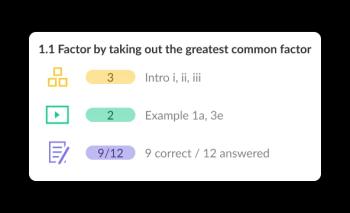
Visual Progress Tracking
See mastery percentage for every topic. Parents get weekly progress emails automatically.

Achievement System
Earn badges for consistency and improvement. Build learning streaks that motivate daily practice
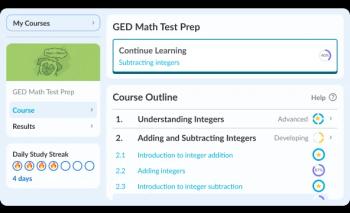
Detailed Analytics
Time spent, problems solved, concepts mastered. Identify exactly where more practice is needed.