flagOntario

Math

Grade 12

Master Grade 12 College Math (MCT4C)

Watch college math videos, practice with real-world problems

students image

Exponential equations were impossible. The step-by-step videos made everything click. Went from failing to 75% in three months.

Jordan Chen

pug

Why MCT4C Students Choose StudyPug

The complete learning system to master Grade 12 College Math

Search with Photo

Search with Photo

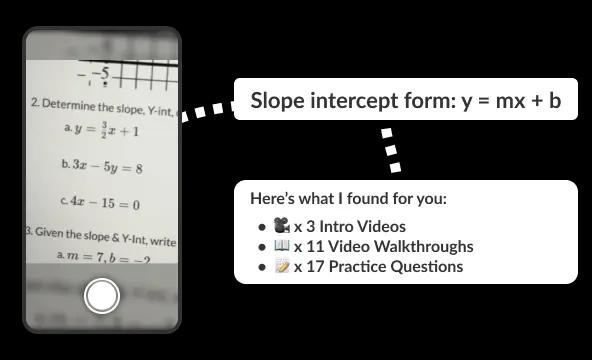
Upload MCT4C problems—AI searches and finds the right lesson teaching the concept

Expert Video Teaching

Expert Video Teaching

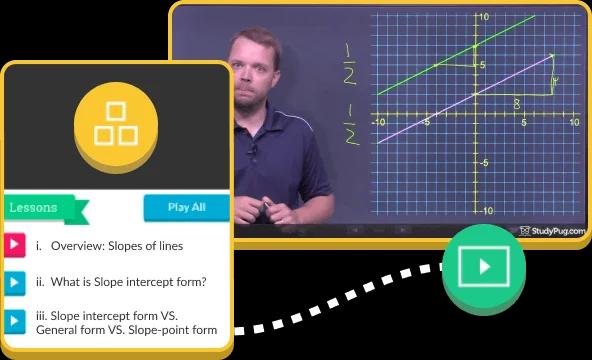
Certified teachers break down exponentials, polynomials, trig, and vectors step-by-step

Unlimited Practice

Unlimited Practice

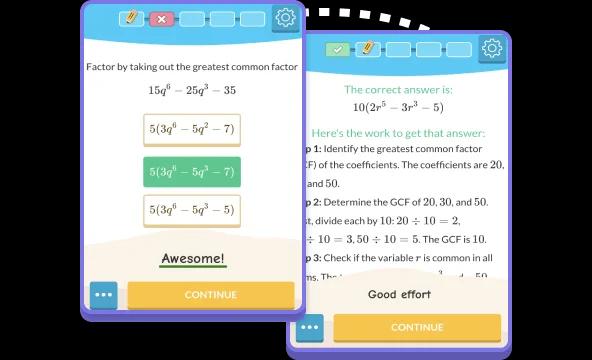
5,000+ teacher-created practice questions prepare you for MCT4C college tests

How Ontario Students Use StudyPug

1

Select Grade Level
Select Grade Level

Choose your Ontario grade (K-12) and current math topics.

2

Get Unstuck
Get Unstuck

Upload homework problems or browse curriculum-aligned lessons.

3

Practice & Master
Practice & Master

Work through similar problems until concepts stick.

4

See Results
See Results

Track progress and watch grades improve week by week.

Ontario MCT4C Help: Master College Math FastHelp

Print

OE_ID

Expectations

StudyPug Topic

ON.OE.12CT.A1.1

12CT.A1.1: Determine, through investigation with technology, and describe the impact of changing the base and changing the sign of the exponent on the graph of an exponential function

ON.OE.12CT.A1.2

12CT.A1.2: Solve simple exponential equations numerically and graphically, with technology, and recognize that the solutions may not be exact

ON.OE.12CT.A1.4

12CT.A1.4: Pose problems based on real-world applications that can be modelled with exponential equations, and solve these and other such problems by using a given graph or a graph generated with technology from a table of values or from its equation

ON.OE.12CT.A2.2

12CT.A2.2: Solve exponential equations in one variable by determining a common base

ON.OE.12CT.A2.3

12CT.A2.3: Recognize the logarithm of a number to a given base as the exponent to which the base must be raised to get the number, recognize the operation of finding the logarithm to be the inverse operation of exponentiation, and evaluate simple logarithmic expressions

ON.OE.12CT.A2.4

12CT.A2.4: Determine, with technology, the approximate logarithm of a number to any base, including base 10

ON.OE.12CT.A2.5

12CT.A2.5: Make connections between related logarithmic and exponential equations, and solve simple exponential equations by rewriting them in logarithmic form

ON.OE.12CT.A2.6

12CT.A2.6: Pose problems based on real-world applications that can be modelled with given exponential equations, and solve these and other such problems algebraically by rewriting them in logarithmic form

ON.OE.12CT.B1.1

12CT.B1.1: Recognize a polynomial expression and the equation of a polynomial function, give reasons why it is a function, and identify linear and quadratic functions as examples of polynomial functions

ON.OE.12CT.B1.2

12CT.B1.2: Compare, through investigation using graphing technology, the graphical and algebraic representations of polynomial functions

ON.OE.12CT.B1.3

12CT.B1.3: Describe key features of the graphs of polynomial functions

ON.OE.12CT.B1.4

12CT.B1.4: Distinguish polynomial functions from sinusoidal and exponential functions, and compare and contrast the graphs of various polynomial functions with the graphs of other types of functions

ON.OE.12CT.B1.5

12CT.B1.5: Substitute into and evaluate polynomial functions expressed in function notation, including functions arising from real-world applications

ON.OE.12CT.B1.6

12CT.B1.6: Pose problems based on real-world applications that can be modelled with polynomial functions, and solve these and other such problems by using a given graph or a graph generated with technology from a table of values or from its equation

ON.OE.12CT.B1.7

12CT.B1.7: Recognize, using graphs, the limitations of modelling a real-world relationship using a polynomial function, and identify and explain any restrictions on the domain and range

ON.OE.12CT.B2.1

12CT.B2.1: Factor polynomial expressions in one variable, of degree no higher than four, by selecting and applying strategies

ON.OE.12CT.B2.2

12CT.B2.2: Make connections, through investigation using graphing technology, between a polynomial function given in factored form and the x-intercepts of its graph, and sketch the graph of a polynomial function given in factored form using its key features

ON.OE.12CT.B2.3

12CT.B2.3: Determine, through investigation using technology, and describe the connection between the real roots of a polynomial equation and the x-intercepts of the graph of the corresponding polynomial function

ON.OE.12CT.B3.1

12CT.B3.1: Solve polynomial equations in one variable, of degree no higher than four, by selecting and applying strategies, and verify solutions using technology

ON.OE.12CT.B3.2

12CT.B3.2: Solve problems algebraically that involve polynomial functions and equations of degree no higher than four, including those arising from real-world applications

ON.OE.12CT.B3.3

12CT.B3.3: Identify and explain the roles of constants and variables in a given formula

ON.OE.12CT.B3.4

12CT.B3.4: Expand and simplify polynomial expressions involving more than one variable, including expressions arising from real-world applications

ON.OE.12CT.B3.5

12CT.B3.5: Solve equations of the form x^n = a using rational exponents

ON.OE.12CT.B3.6

12CT.B3.6: Determine the value of a variable of degree no higher than three, using a formula drawn from an application, by first substituting known values and then solving for the variable, and by first isolating the variable and then substituting known values

ON.OE.12CT.B3.7

12CT.B3.7: Make connections between formulas and linear, quadratic, and exponential functions, using a variety of tools and strategies

ON.OE.12CT.B3.8

12CT.B3.8: Solve multi-step problems requiring formulas arising from real-world applications

ON.OE.12CT.C1.1

12CT.C1.1: Determine the exact values of the sine, cosine, and tangent of the special angles 0°, 30°, 45°, 60°, 90°, and their multiples

ON.OE.12CT.C1.2

12CT.C1.2: Determine the values of the sine, cosine, and tangent of angles from 0° to 360°, through investigation using a variety of tools and strategies

ON.OE.12CT.C1.3

12CT.C1.3: Determine the measures of two angles from 0° to 360° for which the value of a given trigonometric ratio is the same

ON.OE.12CT.C1.4

12CT.C1.4: Solve multi-step problems in two and three dimensions, including those that arise from real-world applications, by determining the measures of the sides and angles of right triangles using the primary trigonometric ratios

ON.OE.12CT.C1.5

12CT.C1.5: Solve problems involving oblique triangles, including those that arise from real-world applications, using the sine law and the cosine law

ON.OE.12CT.C2.1

12CT.C2.1: Make connections between the sine ratio and the sine function and between the cosine ratio and the cosine function by graphing the relationship between angles from 0° to 360° and the corresponding sine ratios or cosine ratios

ON.OE.12CT.C2.3

12CT.C2.3: Determine, through investigation using technology, the roles of the parameters d and c in functions of the form y = sin (x – d) + c and y = cos (x – d) + c, and describe these roles in terms of transformations on the graphs of f(x) = sin x and f(x) = cos x with angles expressed in degrees

ON.OE.12CT.C2.6

12CT.C2.6: Represent a sinusoidal function with an equation, given its graph or its properties

ON.OE.12CT.C3.1

12CT.C3.1: Collect data that can be modelled as a sinusoidal function, through investigation with and without technology, from primary sources, using a variety of tools, or from secondary sources, and graph the data

ON.OE.12CT.D1.1

12CT.D1.1: Recognize a vector as a quantity with both magnitude and direction, and identify, gather, and interpret information about real-world applications of vectors

ON.OE.12CT.D1.2

12CT.D1.2: Represent a vector as a directed line segment, with directions expressed in different ways, and recognize vectors with the same magnitude and direction but different positions as equal vectors

ON.OE.12CT.D1.3

12CT.D1.3: Resolve a vector represented as a directed line segment into its vertical and horizontal components

ON.OE.12CT.D1.4

12CT.D1.4: Represent a vector as a directed line segment, given its vertical and horizontal components

ON.OE.12CT.D1.5

12CT.D1.5: Determine, through investigation using a variety of tools and strategies, the sum or difference of two vectors

ON.OE.12CT.D1.6

12CT.D1.6: Solve problems involving the addition and subtraction of vectors, including problems arising from real-world applications

ON.OE.12CT.D2.2

12CT.D2.2: Perform required conversions between the imperial system and the metric system using a variety of tools, as necessary within applications

ON.OE.12CT.D2.3

12CT.D2.3: Solve problems involving the areas of rectangles, parallelograms, trapezoids, triangles, and circles, and of related composite shapes, in situations arising from real-world applications

ON.OE.12CT.D2.4

12CT.D2.4: Solve problems involving the volumes and surface areas of spheres, right prisms, and cylinders, and of related composite figures, in situations arising from real-world applications

ON.OE.12CT.D3.1

12CT.D3.1: Recognize and describe arcs, tangents, secants, chords, segments, sectors, central angles, and inscribed angles of circles, and some of their real-world applications

ON.OE.12CT.D3.2

12CT.D3.2: Determine the length of an arc and the area of a sector or segment of a circle, and solve related problems

ON.OE.12CT.D3.3

12CT.D3.3: Determine, through investigation using a variety of tools, properties of the circle associated with chords, central angles, inscribed angles, and tangents
Complete Ontario Grade 12 Mathematics for College Technology, College Preparation (MCT4C) Coverage

MCT4C Lessons

102

Video Explanations

534

Practice Problems

941

Ontario Standards

100% Aligned

Why Ontario MCT4C Students Love StudyPug

College Preparation

College Preparation

Master skills for Ontario college technology programs—be ready for next level

Canadian Certified Teachers

Canadian Certified Teachers

Learn from expert Ontario teachers who know exactly what you need for MCT4C

Learn Anywhere

Learn Anywhere

Desktop, tablet, or phone—your MCT4C lessons sync across all devices

Success Stories

Polynomial factoring was my nightmare. The AI found exact lessons I needed. Aced my final and got into Seneca's program.

Alex Patel

Trigonometry made zero sense. The video lessons on sine functions saved me. Got 80% on my exam after struggling all semester.

Taylor Kim

Read More

Frequently Asked Questions

Everything you need to know about MCT4C on StudyPug

What does MCT4C coverage include?

Complete Grade 12 Mathematics for College Technology curriculum with video lessons on exponentials, polynomials, trigonometry, and geometry. Includes practice problems, step-by-step solutions, and progress tracking for every topic.

How does the AI photo search work?

Take a photo of any college math problem, and our AI finds the exact lesson teaching that concept. It's like having a personal tutor who knows exactly what you need for MCT4C success.

Are the teachers certified Ontario educators?

Yes! Our teachers are Canadian certified Ontario educators who understand MCT4C curriculum and create lessons specifically for college preparation standards.

Can I use StudyPug on my phone or tablet?

Absolutely! StudyPug works on desktop, tablet, and mobile. Your progress syncs automatically so you can study for college anywhere, anytime.

How will StudyPug help me prepare for college programs?

We include practice questions for every MCT4C topic and teach the exact concepts needed for Ontario college technology programs. Students report significantly improved grades and confidence.

Practice Smart, See Real Progress

Unlimited Targeted Practice

10,000+ questions adjust to your exact skill level. Never run out of problems that challenge you.
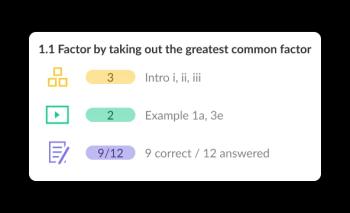
Visual Progress Tracking

See mastery percentage for every topic. Parents get weekly progress emails automatically.

Achievement System
Achievement System

Earn badges for consistency and improvement. Build learning streaks that motivate daily practice
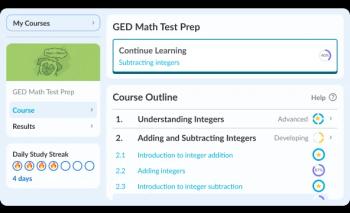
Detailed Analytics
Detailed Analytics

Time spent, problems solved, concepts mastered. Identify exactly where more practice is needed.

student
CallToActionContent

End Math Struggles Today

Ontario curriculum-aligned help that actually works

mathImage