Nova Scotia
Master Calculus 12
Watch calculus videos, practice with step-by-step solutions

Derivatives were killing me until I found StudyPug. The video lessons made everything click. Went from C to A- in one semester.
Alex MacLeod

Why Calculus 12 Students Choose StudyPug
The complete learning system to master Calculus 12
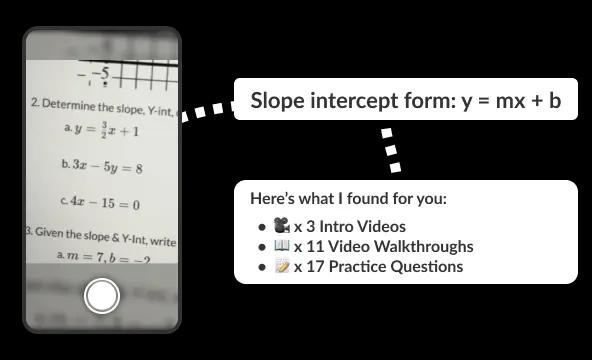
Search with Photo
Snap a photo of any problem and get the exact lesson
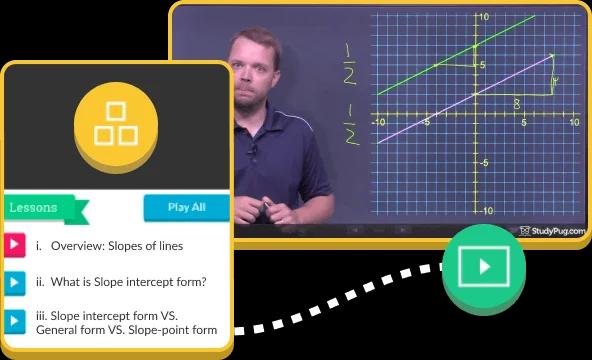
Expert Video Teaching
Certified teachers explain every concept with clear examples
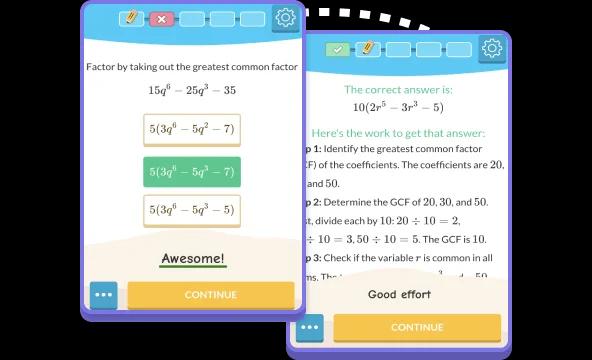
Unlimited Practice
Thousands of practice questions with step-by-step solutions
How Nova Scotia Students Use StudyPug
1

Select Grade Level
Choose your Nova Scotia grade (K-12) and current math topics.
2

Get Unstuck
Upload homework problems or browse curriculum-aligned lessons.
3

Practice & Master
Work through similar problems until concepts stick.
4

See Results
Track progress and watch grades improve week by week.
Find the right Nova Scotia Grade 12 course
Calculus 12 Help: Master Concepts FastHelp
CO_ID | Curriculum Outcome | StudyPug Topic |
|---|---|---|
NS.CO.C12.B1 | Calculate and interpret average and instantaneous rate of change: |
NS.CO.C12.B2 | Calculate limits for function values and apply limit properties with and without technology: |
NS.CO.C12.B3 | Remove removable discontinuities by extending or modifying a function: |
NS.CO.C12.B4 | Apply the properties of algebraic combinations and composites of continuous functions: |
NS.CO.C12.A1 | Apply average and instantaneous rates of change to secant line and tangent line slopes: |
NS.CO.C12.A2 | Demonstrate an understanding of the definition of the derivative: |
NS.CO.C12.A3 | Demonstrate understanding of implicit differentiation and identify situations that require it: |
NS.CO.C12.B5 | Find where a function is not differentiable and distinguish between corners cusps discontinuities and vertical tangents: |
NS.CO.C12.B6 | Derive apply and explain power sum difference product and quotient rules: |
NS.CO.C12.B7 | Apply the chain rule to composite functions: |
NS.CO.C12.B9 | Apply the rules for differentiating the six trigonometric functions: |
NS.CO.C12.B10 | Apply the rules for differentiating the six inverse trigonometric functions: |
NS.CO.C12.B11 | Calculate and apply derivatives of exponential and logarithmic functions: |
NS.CO.C12.B12 | Apply Newton's method to approximate zeros of a function: |
NS.CO.C12.B13 | Estimate the change in a function using differentials and apply them to real world situations: |
NS.CO.C12.C2 | Understand the development of the slope of a tangent line from the slope of a secant line: |
NS.CO.C12.C4 | Demonstrate an understanding of the connection between the graphs of f and f: |
NS.CO.C12.B14 | Solve and interpret related rate problems: |
NS.CO.C12.B15 | Demonstrate an understanding of critical points and absolute extreme values of a function: |
NS.CO.C12.B16 | Find the intervals on which a function is increasing or decreasing: |
NS.CO.C12.B17 | Solve application problems involving maximum or minimum values of a function: |
NS.CO.C12.B18 | Apply rules for definite integrals: |
NS.CO.C12.B19 | Apply the Fundamental Theorem of Calculus: |
NS.CO.C12.B20 | Compute indefinite and definite integrals by the method of substitution: |
NS.CO.C12.B21 | Apply integration by parts to evaluate indefinite and definite integrals: |
NS.CO.C12.B22 | Solve problems in which a rate is integrated to find the net change over time: |
NS.CO.C12.C7 | Solve initial value problems of the form dy/dx = f(x) y0 = f(x0) where f(x) is a recognizable derivative: |
NS.CO.C12.C9 | Construct antiderivatives using the Fundamental Theorem of Calculus: |
NS.CO.C12.C10 | Find antiderivatives of polynomials e^kx and selected trigonometric functions of kx: |
NS.CO.C12.C11 | Construct slope fields using technology and interpret them as visualizations of differential equations: |
NS.CO.C12.D1 | Apply and understand how Riemann sums can be used to determine the area under a polynomial curve: |
NS.CO.C12.D4 | Compute the area under a curve using numerical integration procedures: |
NS.CO.C12.D5 | Apply integration to calculate areas of regions in a plane: |
NS.CO.C12.D6 | Apply integration by slices or shells to calculate volumes of solids: |
NS.CO.C12.B23 | Solve a differential equation of the form dy/dx = g(x)h(y) in which the variables are separable: |
NS.CO.C12.B24 | Solve problems involving exponential growth and decay: |
NS.CO.C12.B25 | Apply Euler's method to find approximate solutions to differential equations with initial values: |
Complete Nova Scotia Calculus 12 Coverage
Calculus 12 Lessons
47
Video Explanations
358
Practice Problems
653
Nova Scotia Standards
100% Aligned
Why Nova Scotia Calculus 12 Students Love StudyPug
Provincial Exam Preparation
Practice with Nova Scotia provincial exam style questions—be ready for exam day

Canadian Certified Teachers
Learn from expert Nova Scotia teachers who know exactly what you need for Calculus 12
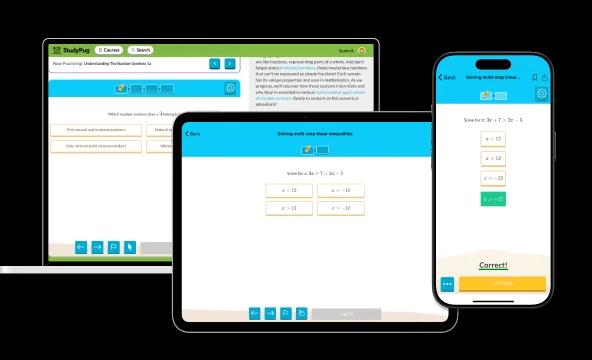
Learn Anywhere
Desktop, tablet, or phone—your Calculus 12 lessons sync across all devices
Success Stories
Integration was impossible. The step-by-step videos made it simple. Aced my provincial exam and got into Dalhousie.
Jordan Chen
Homework took forever. The photo search finds exact lessons instantly. Cut my study time in half for Calculus 12.
Taylor MacDonald
Read More
Frequently Asked Questions
Everything you need to know about Calculus 12 on StudyPug
What does Calculus 12 coverage include?
Complete Calculus 12 curriculum with video lessons, practice problems, step-by-step solutions, and progress tracking for every topic including limits, derivatives, and integrals.
How does photo search work for calculus problems?
Take a photo of any Calculus 12 problem, and StudyPug finds the exact lesson teaching that concept. It's like having a personal tutor who knows exactly what you need.
Are the teachers certified Nova Scotia educators?
Yes! Our teachers are Canadian certified educators who understand Nova Scotia curriculum and create lessons specifically for Calculus 12 provincial standards.
Can I use StudyPug on my phone or tablet?
Absolutely! StudyPug works on desktop, tablet, and mobile. Your progress syncs automatically so you can learn calculus anywhere, anytime.
How will StudyPug help me prepare for Nova Scotia exams?
We include provincial exam-style practice questions and teach the exact calculus concepts you need. Students report significantly improved test scores and confidence.
Practice Smart, See Real Progress

Unlimited Targeted Practice
10,000+ questions adjust to your exact skill level. Never run out of problems that challenge you.
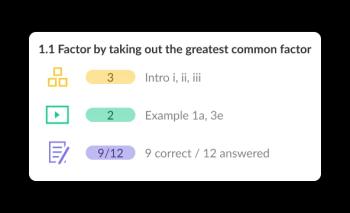
Visual Progress Tracking
See mastery percentage for every topic. Parents get weekly progress emails automatically.

Achievement System
Earn badges for consistency and improvement. Build learning streaks that motivate daily practice
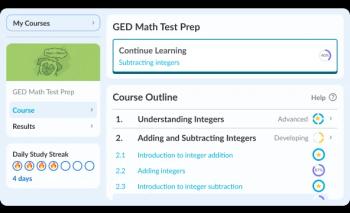
Detailed Analytics
Time spent, problems solved, concepts mastered. Identify exactly where more practice is needed.