flagAlberta

Grade 12

Master Mathematics 30-3

Watch Math 30-3 videos, practice with real-world problems

students image

Statistics was confusing until I found StudyPug. The video lessons on percentiles made everything clear. Went from C to B+ in 6 weeks.

Jordan Patel

pug

Why Mathematics 30-3 Students Choose StudyPug

The complete learning system to master Mathematics 30-3
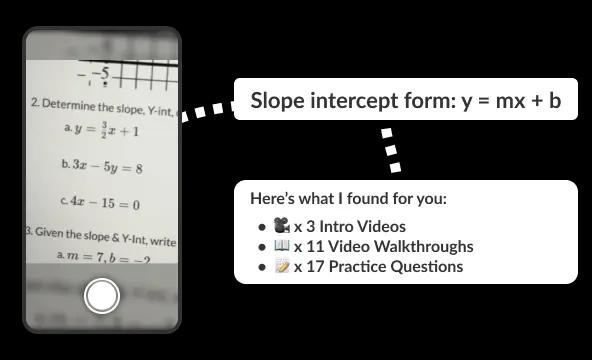
Search with Photo

Search with Photo

Snap a photo of any problem and get the exact lesson
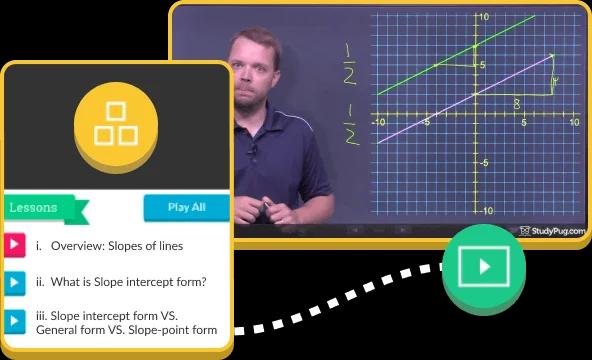
Expert Video Teaching

Expert Video Teaching

Canadian certified teachers explain statistics, probability, and measurement clearly
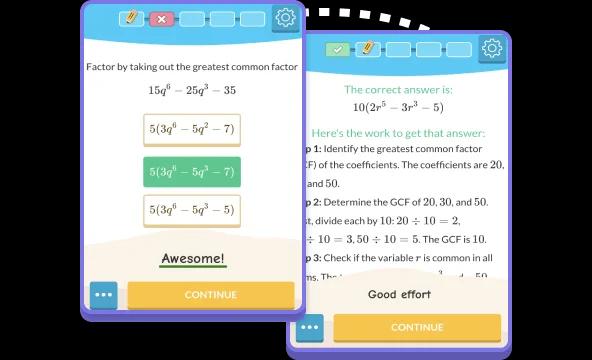
Unlimited Practice

Unlimited Practice

Thousands of practice questions with step-by-step solutions

How Alberta Students Use StudyPug

1

Select Grade Level
Select Grade Level

Choose your Alberta grade (K-12) and current math topics.

2

Get Unstuck
Get Unstuck

Upload homework problems or browse curriculum-aligned lessons.

3

Practice & Master
Practice & Master

Work through similar problems until concepts stick.

4

See Results
See Results

Track progress and watch grades improve week by week.

Find the right Alberta Grade 12 course

Mathematics 30-3 Help: Master Concepts FastHelp

Print

LO_ID

Learning Outcome-Skills & Procedures

StudyPug Topic

AB.SO.30-3.1

Solve problems that involve measures of central tendency, including mean, median, mode, weighted mean, trimmed mean: Explain advantages and disadvantages of each measure of central tendency; Determine mean, median and mode for a data set; Identify and correct errors in calculations of central tendency measures; Identify outliers in a data set; Explain effect of outliers on mean, median and mode; Calculate trimmed mean and justify removal of outliers; Explain why some data may be given greater weighting in determining mean; Calculate weighted mean; Explain how measures of central tendency and outliers are used to interpret data; Solve contextual problems involving measures of central tendency

AB.SO.30-3.3

Analyze and interpret problems that involve probability: Describe and explain applications of probability; Calculate probability of an event based on a data set; Express probability as fraction, decimal, percent and statement; Explain difference between odds and probability; Determine probability given odds for/against; Explain how decisions may combine theoretical probability, experimental results, and subjective judgments; Solve contextual problems involving probability

AB.SO.30-3.4

Demonstrate an understanding of the limitations of measuring instruments, including precision, accuracy, uncertainty, tolerance: Explain why certain precision/accuracy is required in context; Explain difference between precision and accuracy; Compare accuracy of instruments measuring same attribute; Relate accuracy to uncertainty of measure; Analyze precision and accuracy in contextual problems; Calculate max/min values using given tolerance; Describe limitations of measuring instruments in trades/industries; Solve problems involving precision, accuracy or tolerance

AB.SO.30-3.5

Solve problems by using the sine law and cosine law, excluding the ambiguous case: Identify and describe use of sine/cosine laws in applications; Solve problems using sine/cosine law when diagram given

AB.SO.30-3.6

Solve problems that involve triangles, quadrilaterals, regular polygons: Describe/illustrate properties of triangles, quadrilaterals, regular polygons; Explain why properties apply/don't apply to certain polygons; Identify applications of polygon properties in various contexts; Solve contextual problems applying polygon properties

AB.SO.30-3.7

Demonstrate an understanding of transformations on a 2-D shape or a 3-D object, including translations, rotations, reflections, dilations: Identify single transformations given original and image; Draw images resulting from single/combined transformations; Create/analyze/describe designs using transformations; Identify applications of transformations in various contexts; Explain relationship between reflections and symmetry; Determine if image is dilation using similarity concept; Draw dilation images and explain proportionality; Solve contextual problems involving transformations

AB.SO.30-3.8

Analyze puzzles and games that involve logical reasoning, using problem-solving strategies: Determine/explain/verify strategies to solve puzzles or win games; Identify/correct errors in puzzle solutions or game strategies; Create variations of puzzles/games and describe solving strategies

AB.SO.30-3.9

Solve problems that involve the acquisition of a vehicle by buying, leasing, leasing to buy: Describe/explain options for buying, leasing, lease-to-buy vehicles; Solve problems involving vehicle purchase/lease/lease-to-buy; Justify decisions on vehicle acquisition based on factors like finances, use, maintenance, etc.

AB.SO.30-3.10

Critique the viability of small business options by considering expenses, sales, profit or loss: Identify expenses in operating small businesses; Identify feasible small business options for communities; Generate options to improve small business profitability; Determine break-even point for small businesses; Explain factors impacting small business profitability

AB.SO.30-3.11

Demonstrate an understanding of linear relations by recognizing patterns and trends, graphing, creating tables of values, writing equations, interpolating and extrapolating, solving problems: Identify/describe characteristics of linear relations in graphs, tables, patterns, equations; Sort graphs, tables, patterns, equations into linear/nonlinear relations; Write equations for given contexts including variations; Create value tables for linear relation equations; Sketch graphs from value tables; Explain when points should/shouldn't be connected on graphs; Create graphs to represent data sets including scatterplots; Describe trends in graphs including scatterplots; Sort scatterplots by trends (linear, nonlinear, no trend); Solve problems requiring interpolation/extrapolation; Relate slope and rate of change to linear relations; Match contexts to corresponding graphs; Solve contextual problems applying linear relation formulas
Complete Alberta Mathematics 30-3 Coverage

Mathematics 30-3 Lessons

62

Video Explanations

422

Practice Problems

541

Alberta Standards

100% Aligned

Why Alberta Mathematics 30-3 Students Love StudyPug
Diploma Exam Preparation

Diploma Exam Preparation

Practice with Alberta Diploma Exam style questions—be ready for exam day

Canadian Certified Teachers

Canadian Certified Teachers

Learn from expert Alberta teachers who know exactly what you need for Mathematics 30-3
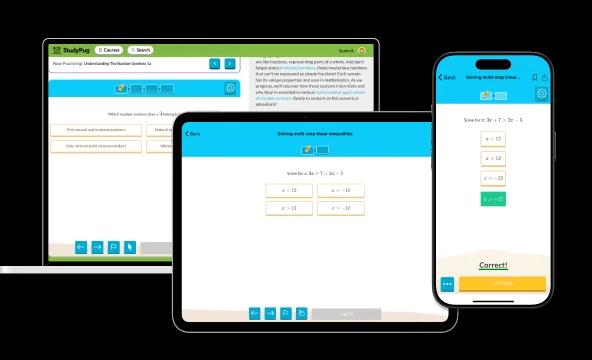
Learn Anywhere

Learn Anywhere

Desktop, tablet, or phone—your Mathematics 30-3 lessons sync across all devices

Success Stories

The transformations unit was impossible. StudyPug's step-by-step solutions saved me. Aced my unit test and boosted my final grade.

Alex Chen

Used StudyPug all semester for Math 30-3. The practice problems matched my diploma prep perfectly. Finished with an 85% overall.

Riley Thompson

Read More

Frequently Asked Questions

Everything you need to know about Mathematics 30-3 on StudyPug

What does Mathematics 30-3 coverage include?

Complete Mathematics 30-3 curriculum with video lessons on statistics, probability, measurement, geometry, and practical applications. Includes practice problems, step-by-step solutions, and progress tracking for every topic.

How does photo search work?

Take a photo of any Math 30-3 problem, and StudyPug finds the exact lesson teaching that concept. It's like having a personal tutor who knows exactly what you need.

Are the teachers certified Alberta educators?

Yes! Our teachers are Canadian certified educators who understand Alberta Mathematics 30-3 curriculum and create lessons specifically aligned to provincial standards and diploma exam requirements.

Can I use StudyPug on my phone or tablet?

Absolutely! StudyPug works on desktop, tablet, and mobile. Your progress syncs automatically so you can study for Mathematics 30-3 anywhere, anytime.

How will StudyPug help me prepare for my diploma exam?

We include Alberta Diploma Exam style practice questions and teach the exact concepts tested. Students report significantly improved scores and confidence on exam day.

Practice Smart, See Real Progress

Unlimited Targeted Practice

10,000+ questions adjust to your exact skill level. Never run out of problems that challenge you.
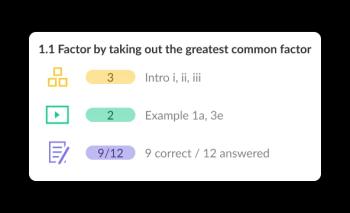
Visual Progress Tracking

See mastery percentage for every topic. Parents get weekly progress emails automatically.
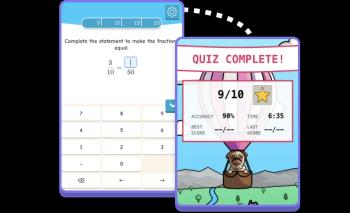
Achievement System
Achievement System

Earn badges for consistency and improvement. Build learning streaks that motivate daily practice
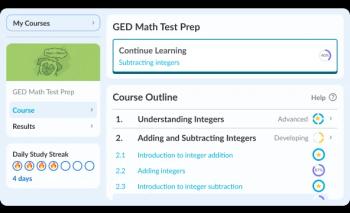
Detailed Analytics
Detailed Analytics

Time spent, problems solved, concepts mastered. Identify exactly where more practice is needed.

student
CallToActionContent

End Math Struggles Today

Alberta curriculum-aligned help that actually works

mathImage