Tennessee
Join 8,500+ Tennessee students getting ahead in high school math
Why Integrated Math II Students Choose StudyPug
Three ways you get help — even when you’re stuck
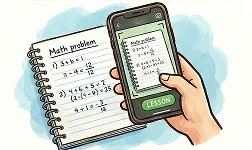
Search with Photo
Snap a photo of any problem and get the exact lesson
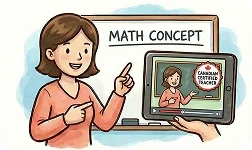
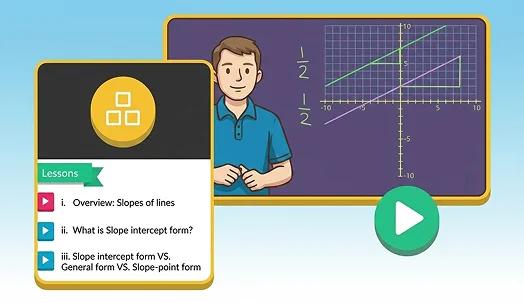
Expert Video Teaching
Certified teachers explain every concept with clear examples

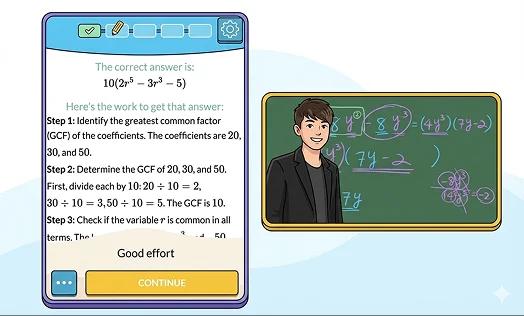
Unlimited Practice
Thousands of practice questions with step-by-step solutions
How StudyPug Works for You
1
Pick Your Course
Choose Integrated Math II and see every topic from your class
2

Get Unstuck
Upload homework problems or browse curriculum-aligned lessons.
3
Practice & Master
Work through similar problems until concepts stick.
4

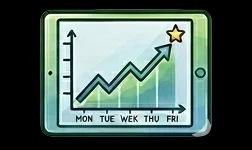
See Results
Track exactly what you've mastered.
Integrated Math II Help | Tennessee High School StudentsHelp
ID | Standard | StudyPug Topic |
|---|---|---|
CC.HSN.Q.A.1 | Use units as a way to understand problems and to guide the solution of multi-step problems; choose and interpret units consistently in formulas; choose and interpret the scale and the origin in graphs and data displays. |
CC.HSN.Q.A.2 | Define appropriate quantities for the purpose of descriptive modeling. |
CC.HSN.Q.A.3 | Choose a level of accuracy appropriate to limitations on measurement when reporting quantities. |
CC.HSA.SSE.A.1 | Interpret expressions that represent a quantity in terms of its context. |
CC.HSA.SSE.A.2 | Use the structure of an expression to identify ways to rewrite it. |
CC.HSA.SSE.B.3 | Choose and produce an equivalent form of an expression to reveal and explain properties of the quantity represented by the expression. |
CC.HSA.APR.A.1 | Understand that polynomials form a system analogous to the integers, namely, they are closed under the operations of addition, subtraction, and multiplication; add, subtract, and multiply polynomials. |
CC.HSA.APR.B.3 | Identify zeros of polynomials when suitable factorizations are available, and use the zeros to construct a rough graph of the function defined by the polynomial. |
CC.HSA.CED.A.1 | Create equations and inequalities in one variable and use them to solve problems. Include equations arising from linear and quadratic functions, and simple rational and exponential functions. |
CC.HSA.CED.A.2 | Create equations in two or more variables to represent relationships between quantities; graph equations on coordinate axes with labels and scales. |
CC.HSA.REI.B.4 | Solve quadratic equations in one variable. |
CC.HSA.REI.C.7 | Solve a simple system consisting of a linear equation and a quadratic equation in two variables algebraically and graphically. |
CC.HSF.IF.C.8 | Write a function defined by an expression in different but equivalent forms to reveal and explain different properties of the function. |
CC.HSF.IF.C.9 | Compare properties of two functions each represented in a different way (algebraically, graphically, numerically in tables, or by verbal descriptions). |
CC.HSF.BF.B.3 | Identify the effect on the graph of replacing f(x) by f(x) + k, k f(x), f(kx), and f(x + k) for specific values of k (both positive and negative); find the value of k given the graphs. Experiment with cases and illustrate an explanation of the effects on the graph using technology. |
CC.HSF.BF.B.4 | Find inverse functions. |
CC.HSF.LE.A.3 | Observe using graphs and tables that a quantity increasing exponentially eventually exceeds a quantity increasing linearly, quadratically, or (more generally) as a polynomial function. |
CC.HSF.LE.A.4 | For exponential models, express as a logarithm the solution to ab^ct = d where a, c, and d are numbers and the base b is 2, 10, or e; evaluate the logarithm using technology. |
CC.HSF.IF.A.3 | Recognize that sequences are functions, sometimes defined recursively, whose domain is a subset of the integers. |
CC.HSF.BF.A.2 | Write arithmetic and geometric sequences both recursively and with an explicit formula, use them to model situations, and translate between the two forms. |
CC.HSN.RN.A.1 | Explain how the definition of the meaning of rational exponents follows from extending the properties of integer exponents to those values, allowing for a notation for radicals in terms of rational exponents. |
CC.HSN.RN.A.2 | Rewrite expressions involving radicals and rational exponents using the properties of exponents. |
CC.HSN.RN.B.3 | Explain why the sum or product of two rational numbers is rational; that the sum of a rational number and an irrational number is irrational; and that the product of a nonzero rational number and an irrational number is irrational. |
CC.HSF.TF.A.1 | Understand radian measure of an angle as the length of the arc on the unit circle subtended by the angle. |
CC.HSF.TF.A.2 | Explain how the unit circle in the coordinate plane enables the extension of trigonometric functions to all real numbers, interpreted as radian measures of angles traversed counterclockwise around the unit circle. |
CC.HSF.TF.A.3 | Use special triangles to determine geometrically the values of sine, cosine, tangent for π/3, π/4 and π/6, and use the unit circle to express the values of sine, cosine, and tangent for π–x, π+x, and 2π–x in terms of their values for x, where x is any real number. |
CC.HSF.TF.B.5 | Choose trigonometric functions to model periodic phenomena with specified amplitude, frequency, and midline. |
CC.HSF.TF.C.8 | Prove the Pythagorean identity sin^2(θ) + cos^2(θ) = 1 and use it to find sin(θ), cos(θ), or tan(θ) given sin(θ), cos(θ), or tan(θ) and the quadrant of the angle. |
CC.HSG.SRT.A.1 | Verify experimentally the properties of dilations given by a center and a scale factor. |
CC.HSG.SRT.A.2 | Given two figures, use the definition of similarity in terms of similarity transformations to decide if they are similar; explain using similarity transformations the meaning of similarity for triangles as the equality of all corresponding pairs of angles and the proportionality of all corresponding pairs of sides. |
CC.HSG.SRT.B.4 | Prove theorems about triangles. |
CC.HSG.SRT.B.5 | Use congruence and similarity criteria for triangles to solve problems and to prove relationships in geometric figures. |
CC.HSG.SRT.C.6 | Understand that by similarity, side ratios in right triangles are properties of the angles in the triangle, leading to definitions of trigonometric ratios for acute angles. |
CC.HSG.SRT.C.7 | Explain and use the relationship between the sine and cosine of complementary angles. |
CC.HSG.SRT.C.8 | Use trigonometric ratios and the Pythagorean Theorem to solve right triangles in applied problems. |
CC.HSG.C.A.1 | Prove that all circles are similar. |
CC.HSG.C.A.2 | Identify and describe relationships among inscribed angles, radii, and chords. |
CC.HSG.C.A.3 | Construct the inscribed and circumscribed circles of a triangle, and prove properties of angles for a quadrilateral inscribed in a circle. |
CC.HSG.C.A.4 | Construct a tangent line from a point outside a given circle to the circle. |
CC.HSG.C.B.5 | Derive using similarity the fact that the length of the arc intercepted by an angle is proportional to the radius, and define the radian measure of the angle as the constant of proportionality; derive the formula for the area of a sector. |
CC.HSG.GPE.A.1 | Derive the equation of a circle of given center and radius using the Pythagorean Theorem; complete the square to find the center and radius of a circle given by an equation. |
CC.HSG.GPE.A.2 | Derive the equation of a parabola given a focus and directrix. |
CC.HSG.GPE.B.4 | Use coordinates to prove simple geometric theorems algebraically. |
CC.HSG.GPE.B.5 | Prove the slope criteria for parallel and perpendicular lines and use them to solve geometric problems. |
CC.HSG.GPE.B.6 | Find the point on a directed line segment between two given points that partitions the segment in a given ratio. |
CC.HSG.GPE.B.7 | Use coordinates to compute perimeters of polygons and areas of triangles and rectangles, e.g., using the distance formula. |
CC.HSG.GMD.A.1 | Give an informal argument for the formulas for the circumference of a circle, area of a circle, volume of a cylinder, pyramid, and cone. |
CC.HSG.GMD.A.3 | Use volume formulas for cylinders, pyramids, cones, and spheres to solve problems. |
CC.HSG.GMD.B.4 | Identify the shapes of two-dimensional cross-sections of three-dimensional objects, and identify three-dimensional objects generated by rotations of two-dimensional objects. |
CC.HSG.MG.A.1 | Use geometric shapes, their measures, and their properties to describe objects. |
CC.HSG.MG.A.2 | Apply concepts of density based on area and volume in modeling situations. |
CC.HSS.ID.B.6 | Represent data on two quantitative variables on a scatter plot, and describe how the variables are related. |
CC.HSS.CP.A.1 | Describe events as subsets of a sample space (the set of outcomes) using characteristics (or categories) of the outcomes, or as unions, intersections, or complements of other events ("or," "and," "not"). |
CC.HSS.CP.A.2 | Understand that two events A and B are independent if the probability of A and B occurring together is the product of their probabilities, and use this characterization to determine if they are independent. |
CC.HSS.CP.A.3 | Understand the conditional probability of A given B as P(A and B)/P(B), and interpret independence of A and B as saying that the conditional probability of A given B is the same as the probability of A, and the conditional probability of B given A is the same as the probability of B. |
CC.HSS.CP.A.5 | Recognize and explain the concepts of conditional probability and independence in everyday language and everyday situations. |
CC.HSS.CP.B.7 | Apply the Addition Rule, P(A or B) = P(A) + P(B) - P(A and B), and interpret the answer in terms of the model. |
CC.HSS.CP.B.9 | Use permutations and combinations to compute probabilities of compound events and solve problems. |
Complete Integrated Math II Coverage
Video Lessons
173
Practice Questions
1260
Topics Covered
1943
Step-by-Step Solutions
Every Problem
Why Tennessee Integrated Math II Students Love StudyPug
Built specifically for Tennessee high school success
Tennessee Curriculum Aligned
Every lesson matches Tennessee Integrated Math II standards—what you learn in class, we teach

Graduation Assessment Prep
Practice with Tennessee graduation numeracy assessment questions—be ready for exam day
Expert Tennessee Teachers
Learn from expert Tennessee teachers who know exactly what you need for Integrated Math II
Learn Anywhere
Desktop, tablet, or phone—your Integrated Math II lessons sync across all devices
Frequently Asked Questions
Everything you need to know about mastering Integrated Math II with StudyPug
What does Integrated Math II coverage include?
StudyPug covers all Integrated Math II topics: quadratic functions and equations, polynomial operations, radicals and exponents, rational expressions, trigonometry and the unit circle, geometric transformations, similarity, conic sections, sequences and series, and probability. Every lesson aligns with Tennessee Common Core standards.
How does photo search work?
Snap a photo of any homework problem with your phone. Our AI instantly identifies the topic and shows you the exact video lesson you need. It's the fastest way to get unstuck when you're working through assignments at home.
How many practice problems are available for Integrated Math II?
You get unlimited access to 2,064+ practice questions covering every Integrated Math II topic. Each question includes step-by-step solutions so you can see exactly how to solve similar problems. Practice as much as you need until concepts stick.
What if I'm falling behind in Integrated Math II?
Start with the topics you're struggling with. Our diagnostic practice identifies your weak spots, then adapts questions to your level. Video lessons explain concepts clearly, and unlimited practice helps you catch up at your own pace without pressure.
Does StudyPug help with Integrated Math II exams?
Yes. StudyPug includes Tennessee graduation assessment prep questions and covers all exam topics: quadratics, polynomials, trigonometry, geometry, and probability. Practice with real exam-style questions and review step-by-step solutions to build confidence before test day.
How much does StudyPug cost?
StudyPug offers flexible monthly and annual plans with unlimited access to all Integrated Math II content. You get 1,260+ video lessons, 2,064+ practice questions, and step-by-step solutions for one affordable price. Start with a free trial to explore the platform risk-free.
Smart Study Tools for Real Results
Personalized features that help you stay motivated and make progress
Adaptive Practice
Questions adapt to your level
Stay Motivated
Badges and streaks keep you practising daily
Quiz Mastery
Retake quizzes until you truly get it
Progress Tracking
See exactly where you need more practice