flagTexas

Mathematical Models with Applications

Master Mathematical Models with Applications

Watch math videos, practice with real-world problems

students image

Personal finance math made no sense until StudyPug. The budgeting videos actually helped me plan for college. Aced my final.

Alex Rodriguez

pug

Why Mathematical Models with Applications Students Choose StudyPug

The complete learning system to master mathematical modeling
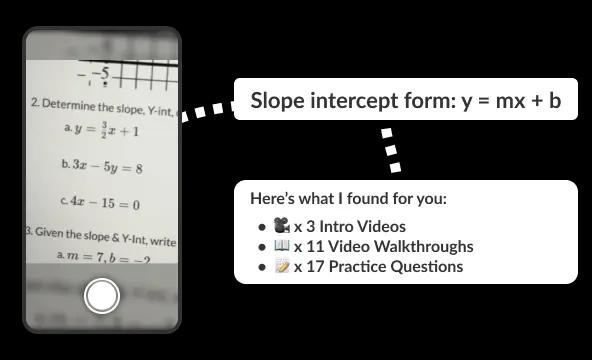
Search with Photo

Search with Photo

Snap a photo of any problem and get the exact lesson
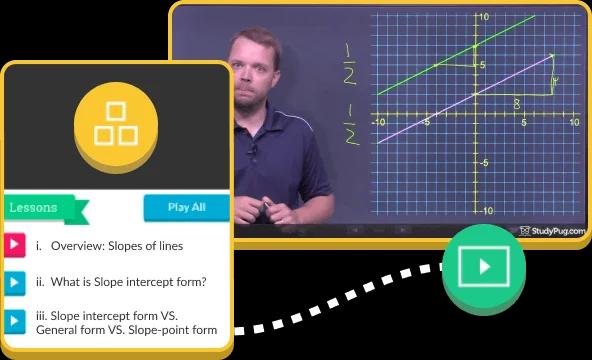
Expert Video Teaching

Expert Video Teaching

Certified teachers explain every concept with clear examples
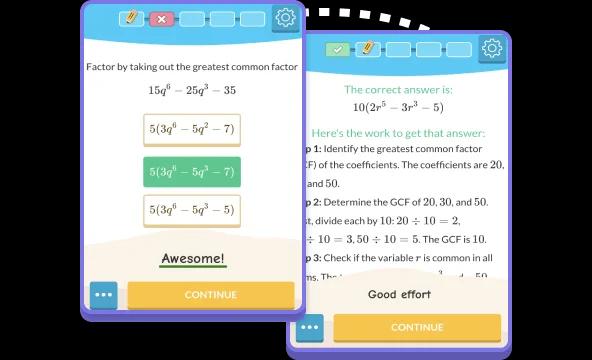
Unlimited Practice

Unlimited Practice

Thousands of practice questions with step-by-step solutions

How Texas Students Use StudyPug

1

Select Grade Level
Select Grade Level

Choose your Texas grade (K-12) and current math topics.

2

Get Unstuck
Get Unstuck

Upload homework problems or browse curriculum-aligned lessons.

3

Practice & Master
Practice & Master

Work through similar problems until concepts stick.

4

See Results
See Results

Track progress and watch grades improve week by week.

Mathematical Models with Applications Help TexasHelp

Print

ID

Standard

StudyPug Topic

TX.MMA.2.A

Use rates and linear functions to solve problems involving personal finance and budgeting, including compensations and deductions

TX.MMA.3.A

Use formulas to generate tables to display series of payments for loan amortizations resulting from financed purchases

TX.MMA.4.B

Investigate and compare investment options, including stocks, bonds, annuities, certificates of deposit, and retirement plans

TX.MMA.4.C

Analyze types of savings options involving simple and compound interest and compare relative advantages of these options

TX.MMA.5.A

Use proportionality and inverse variation to describe physical laws such as Hook's Law, Newton's Second Law of Motion, and Boyle's Law

TX.MMA.5.B

Use exponential models available through technology to model growth and decay in areas, including radioactive decay

TX.MMA.6.A

Use similarity, geometric transformations, symmetry, and perspective drawings to describe mathematical patterns and structure in architecture

TX.MMA.6.B

Use scale factors with two-dimensional and three-dimensional objects to demonstrate proportional and non-proportional changes in surface area and volume as applied to fields

TX.MMA.8.A

Determine the number of ways an event may occur using combinations, permutations, and the Fundamental Counting Principle

TX.MMA.8.C

Use experiments to determine the reasonableness of a theoretical model such as binomial or geometric

TX.MMA.9.A

Interpret information from various graphs, including line graphs, bar graphs, circle graphs, histograms, scatterplots, dot plots, stem-and-leaf plots, and box and whisker plots, to draw conclusions from the data and determine the strengths and weaknesses of conclusions

TX.MMA.9.B

Analyze numerical data using measures of central tendency (mean, median, and mode) and variability (range, interquartile range or IQR, and standard deviation) in order to make inferences with normal distributions

TX.MMA.9.C

Distinguish the purposes and differences among types of research, including surveys, experiments, and observational studies

TX.MMA.9.D

Use data from a sample to estimate population mean or population proportion

TX.MMA.9.E

Analyze marketing claims based on graphs and statistics from electronic and print media and justify the validity of stated or implied conclusions

TX.MMA.9.F

Use regression methods available through technology to model linear and exponential functions, interpret correlations, and make predictions

TX.MMA.10.A

Formulate a meaningful question, determine the data needed to answer the question, gather the appropriate data, analyze the data, and draw reasonable conclusions
Complete Texas Mathematical Models with Applications Coverage

Mathematical Models Lessons

101

Video Explanations

629

Practice Problems

772

Texas Standards

100% Aligned

Why Texas Mathematical Models Students Love StudyPug

Success Stories

Read More

Texas Mathematical Models with Applications Math FAQ

We’ve got answers to some popular questions.

What are the main topics covered in Grade 1 math in Alberta?

Grade 1 math in Alberta covers counting to 100, basic addition and subtraction within 20, introduction to fractions (halves), shape recognition, and simple data representation through concrete graphs.

How can I help my child transition from kindergarten to Grade 1 math?

Encourage counting during daily activities, practice simple addition with objects, and explore shapes in your environment. Maintaining a positive attitude towards math is crucial for a smooth transition.

Are there specific math skills my child should master by the end of Grade 1?

By the end of Grade 1, children should confidently count to 100, add and subtract within 20, recognize basic shapes, understand the concept of half, and create simple concrete graphs.

Practice Smart, See Real Progress

Unlimited Targeted Practice

10,000+ questions adjust to your exact skill level. Never run out of problems that challenge you.
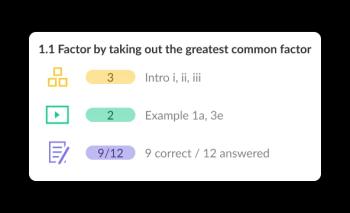
Visual Progress Tracking

See mastery percentage for every topic. Parents get weekly progress emails automatically.

Achievement System
Achievement System

Earn badges for consistency and improvement. Build learning streaks that motivate daily practice
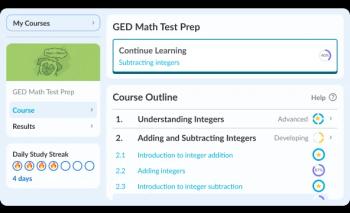
Detailed Analytics
Detailed Analytics

Time spent, problems solved, concepts mastered. Identify exactly where more practice is needed.

student
CallToActionContent

End Math Struggles Today

Texas standard-aligned help that actually works

mathImage