Texas
TexasTexas 1st Grade Math
Practice with interactive activities, build number sense and problem-solving foundations

My daughter went from counting on fingers to solving problems in her head. The worksheets made practice feel like play time.
Maria G.

Why Choose StudyPug for 1st Grade
Trusted platform that builds strong math foundations
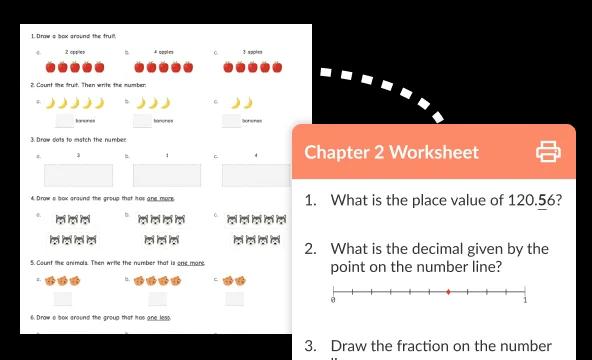
Practice & Worksheets
Printable worksheets and interactive practice for every topic
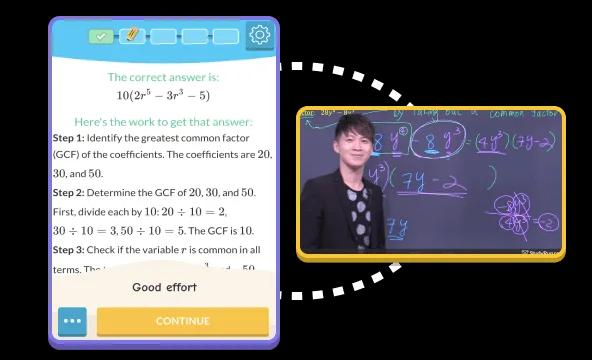
Step-by-Step Solutions
See the complete solution process for every practice problem
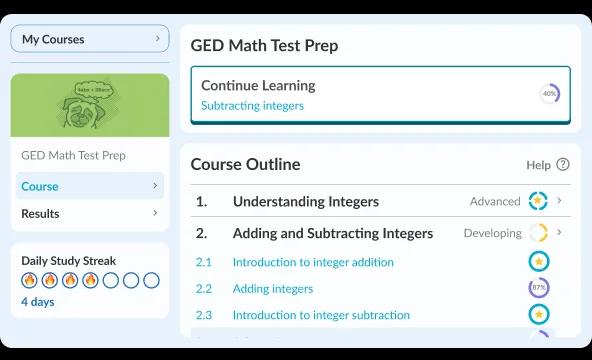
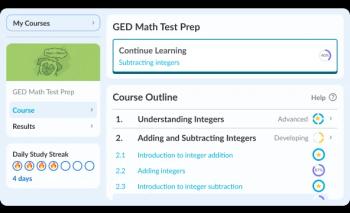
Track Progress
See exactly what they've mastered and what needs more work
How Texas Students Use StudyPug
1

Select Grade Level
Choose your Texas grade (K-12) and current math topics.
2

Get Unstuck
Upload homework problems or browse curriculum-aligned lessons.
3

Practice & Master
Work through similar problems until concepts stick.
4

See Results
Track progress and watch grades improve week by week.
Texas 1st Grade Math Help | Build Strong SkillsHelp
ID | Strand & Expectation | StudyPug Topic |
|---|---|---|
TX.1.2.A | Recognize instantly the quantity of structured arrangements |
TX.1.2.B | Use concrete and pictorial models to compose and decompose numbers up to 120 |
TX.1.2.C | Use objects, pictures, and expanded and standard forms to represent numbers up to 120 |
TX.1.2.D | Generate a number that is greater than or less than a given whole number up to 120 |
TX.1.2.F | Order whole numbers up to 120 using place value and open number lines |
TX.1.2.G | Represent the comparison of two numbers to 100 using the symbols >, <, or = |
TX.1.3.A | Use concrete and pictorial models to determine the sum of a multiple of 10 and a one-digit number in problems up to 99 |
TX.1.3.B | Use objects and pictorial models to solve word problems involving joining, separating, and comparing sets within 20 |
TX.1.3.C | Compose 10 with two or more addends with and without concrete objects |
TX.1.3.D | Apply basic fact strategies to add and subtract within 20 |
TX.1.3.E | Explain strategies used to solve addition and subtraction problems up to 20 |
TX.1.4.A | Identify U.S. coins, including pennies, nickels, dimes, and quarters, by value and describe the relationships among them |
TX.1.4.C | Use relationships to count by twos, fives, and tens to determine the value of a collection of pennies, nickels, and/or dimes |
TX.1.5.D | Represent word problems involving addition and subtraction of whole numbers up to 20 using concrete and pictorial models and number sentences |
TX.1.5.E | Understand that the equal sign represents a relationship where expressions on each side of the equal sign represent the same value(s) |
TX.1.5.F | Determine the unknown whole number in an addition or subtraction equation when the unknown may be any one of the three or four terms in the equation |
TX.1.5.G | Apply properties of operations to add and subtract two or three numbers |
TX.1.6.A | Classify and sort regular and irregular two-dimensional shapes based on attributes using informal geometric language |
TX.1.6.D | Identify two-dimensional shapes, including circles, triangles, rectangles, and squares, as special rectangles, rhombuses, and hexagons and describe their attributes using formal geometric language |
TX.1.6.E | Identify three-dimensional solids, including spheres, cones, cylinders, rectangular prisms (including cubes), and triangular prisms, and describe their attributes using formal geometric language |
TX.1.6.G | Partition two-dimensional figures into two and four fair shares or equal parts and describe the parts using words |
TX.1.6.H | Identify examples and non-examples of halves and fourths |
Complete Texas 1st Grade Math Coverage
1st Grade Math Lessons
49
Practice Problems
181
Texas TEKS Standards
100% Aligned


Success Stories
In just 6 weeks, my son gained so much confidence with addition. He now asks to do extra practice problems for fun!
Jennifer L.
The worksheets perfectly match what her teacher covers. She's gone from hesitant to eager to tackle new math concepts.
David T.
Read More
Common Questions About 1st Grade Math
Everything Texas parents need to know about supporting their 1st grader's math success
Is StudyPug aligned with Texas TEKS standards for 1st grade?
Yes, our 1st Grade Math program is 100% aligned with Texas TEKS standards. Every lesson covers the specific skills and concepts required by Texas curriculum for first grade mathematics.
What math topics will my 1st grader learn?
Your child will master numbers to 120, addition and subtraction within 20, place value, money concepts with coins, 2D and 3D shapes, measurement, telling time, and data organization through interactive practice activities.
How does StudyPug help prepare for future STAAR tests?
We build strong foundational skills in 1st grade that prepare students for STAAR testing in later grades. Our practice activities focus on problem-solving and number sense essential for test success.
Can my child access printable worksheets?
Absolutely! We provide hundreds of printable worksheets for 1st grade math topics. These complement our interactive activities and allow your child to practice offline whenever needed.
How do I track my child's progress?
Our parent portal shows exactly which topics your child has practiced, their performance on activities, and which areas need more work. You'll see real-time updates after each practice session.
Practice Smart, See Real Progress
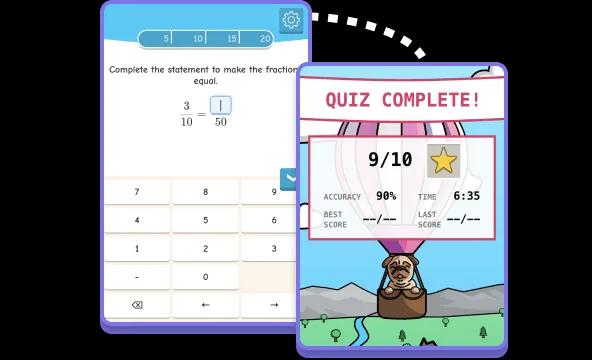
Unlimited Targeted Practice
10,000+ questions adjust to your exact skill level. Never run out of problems that challenge you.
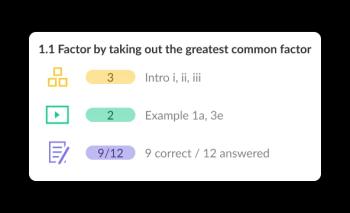
Visual Progress Tracking
See mastery percentage for every topic. Parents get weekly progress emails automatically.
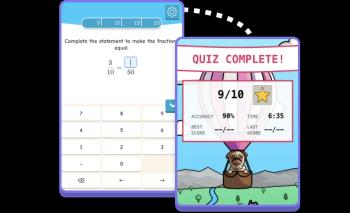
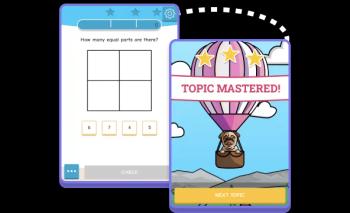
Achievement System
Earn badges for consistency and improvement. Build learning streaks that motivate daily practice
Detailed Analytics
Time spent, problems solved, concepts mastered. Identify exactly where more practice is needed.