North Dakota
Master Consumer Math
Watch real-world math videos, practice with everyday problems

Budgeting and interest rates finally made sense. The real-world examples helped me ace my final and manage my own money better.
Jordan Thompson

Why Consumer Math Students Choose StudyPug
The complete learning system to master Consumer Math
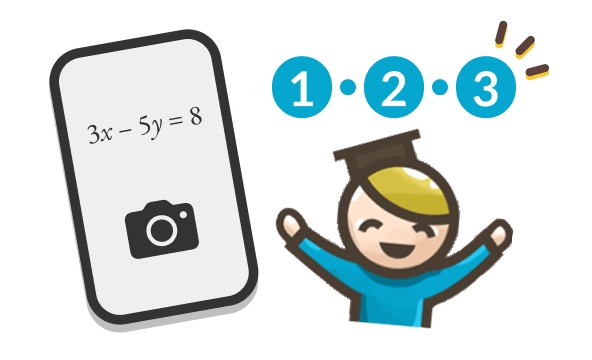
Search with Photo
Search with Photo
Snap a photo of any problem and get the exact lesson instantly
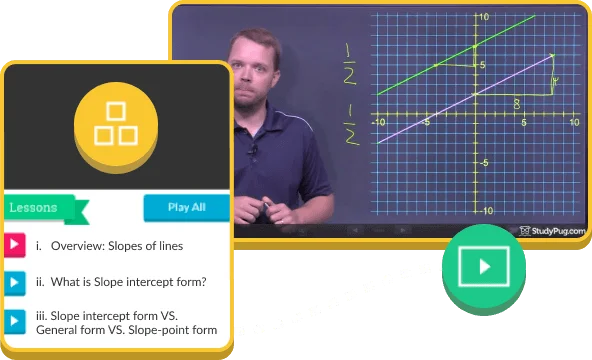
Expert Video Teaching
Expert Video Teaching
Certified teachers explain budgeting, loans, statistics, and probability clearly
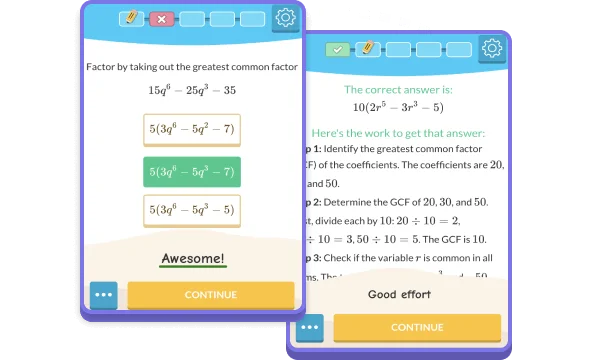
Unlimited Practice
Unlimited Practice
Thousands of practice questions with step-by-step solutions for real mastery
How North Dakota Students Use StudyPug
1
Select Grade Level
Choose your North Dakota grade (K-12) and current math topics.
2

Get Unstuck
Upload homework problems or browse curriculum-aligned lessons.
3

Practice & Master
Work through similar problems until concepts stick.
4

See Results
Track progress and watch grades improve week by week.
Consumer Math Help: Master Real-World Skills FastHelp
ID | Standard | StudyPug Topic |
|---|---|---|
CC.HSN.Q.A.1 | Use units as a way to understand problems and to guide the solution of multi-step problems; choose and interpret units consistently in formulas; choose and interpret the scale and the origin in graphs and data displays. |
CC.HSN.Q.A.2 | Define appropriate quantities for the purpose of descriptive modeling. |
CC.HSN.Q.A.3 | Choose a level of accuracy appropriate to limitations on measurement when reporting quantities. |
CC.HSA.SSE.A.1 | Interpret expressions that represent a quantity in terms of its context. |
CC.HSA.CED.A.1 | Create equations and inequalities in one variable and use them to solve problems. Include equations arising from linear and quadratic functions, and simple rational and exponential functions. |
CC.HSF.IF.B.6 | Calculate and interpret the average rate of change of a function (presented symbolically or as a table) over a specified interval. Estimate the rate of change from a graph. |
CC.HSF.BF.A.1 | Write a function that describes a relationship between two quantities. |
CC.HSF.LE.A.1 | Distinguish between situations that can be modeled with linear functions and with exponential functions. |
CC.HSF.LE.B.5 | Interpret the parameters in a linear or exponential function in terms of a context. |
CC.HSG.GMD.A.3 | Use volume formulas for cylinders, pyramids, cones, and spheres to solve problems. |
CC.HSG.MG.A.2 | Apply concepts of density based on area and volume in modeling situations. |
CC.HSS.ID.A.1 | Represent data with plots on the real number line (dot plots, histograms, and box plots). |
CC.HSS.ID.A.2 | Use statistics appropriate to the shape of the data distribution to compare center (median, mean) and spread (interquartile range, standard deviation) of two or more different data sets. |
CC.HSS.ID.A.3 | Interpret differences in shape, center, and spread in the context of the data sets, accounting for possible effects of extreme data points (outliers). |
CC.HSS.ID.B.6 | Represent data on two quantitative variables on a scatter plot, and describe how the variables are related. |
CC.HSS.ID.C.7 | Interpret the slope (rate of change) and the intercept (constant term) of a linear model in the context of the data. |
CC.HSS.IC.A.1 | Understand statistics as a process for making inferences about population parameters based on a random sample from that population. |
CC.HSS.IC.B.4 | Use data from a sample survey to estimate a population mean or proportion; develop a margin of error through the use of simulation models for random sampling. |
CC.HSS.IC.B.6 | Evaluate reports based on data. |
CC.HSS.CP.A.1 | Describe events as subsets of a sample space (the set of outcomes) using characteristics (or categories) of the outcomes, or as unions, intersections, or complements of other events ("or," "and," "not"). |
CC.HSS.CP.A.2 | Understand that two events A and B are independent if the probability of A and B occurring together is the product of their probabilities, and use this characterization to determine if they are independent. |
CC.HSS.MD.A.2 | Calculate the expected value of a random variable; interpret it as the mean of the probability distribution. |
Complete North Dakota Consumer Math Coverage
Consumer Math Lessons
70
Video Explanations
529
Practice Problems
687
North Dakota Standards
100% Aligned
Why North Dakota Consumer Math Students Love StudyPug
ACT Math Preparation
ACT Math Preparation
Practice with real ACT-style questions—be ready for test day
Certified Teachers
Certified Teachers
Learn from expert North Dakota teachers who know exactly what you need for Consumer Math
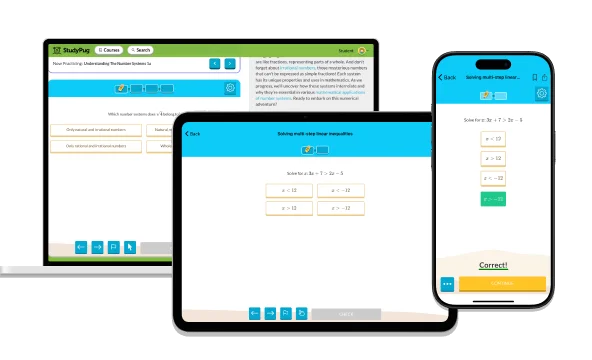
Learn Anywhere
Learn Anywhere
Desktop, tablet, or phone—your Consumer Math lessons sync across all devices
Success Stories
Interest rate problems used to confuse me. The step-by-step videos made everything clear. Went from C to B+ in just six weeks.
Alex Johnson
The photo search saved me so much time on homework. Found the exact lesson for every problem. My grades improved instantly.
Casey Peterson
Read More
Frequently Asked Questions
Everything you need to know about Consumer Math on StudyPug
What does Consumer Math coverage include?
Complete Consumer Math curriculum with video lessons on budgeting, loans, interest rates, statistics, and probability. Includes practice problems, step-by-step solutions, and progress tracking.
How does photo search work for Consumer Math?
Take a photo of any Consumer Math problem, and StudyPug finds the exact lesson teaching that concept. It's like having a personal tutor available 24/7.
Are the teachers certified North Dakota educators?
Yes! Our teachers are certified educators who understand North Dakota curriculum and create lessons specifically for Consumer Math standards.
Can I use StudyPug on my phone or tablet?
Absolutely! StudyPug works on desktop, tablet, and mobile. Your progress syncs automatically so you can learn anywhere, anytime.
How will StudyPug help me with real-world math skills?
We focus on practical applications like budgeting, loans, and financial planning. Students gain skills they'll use throughout their lives, not just in class.
Practice Smart, See Real Progress
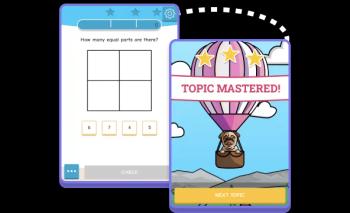
Unlimited Targeted Practice
10,000+ questions adjust to your exact skill level. Never run out of problems that challenge you.
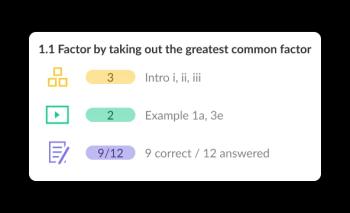
Visual Progress Tracking
See mastery percentage for every topic. Parents get weekly progress emails automatically.
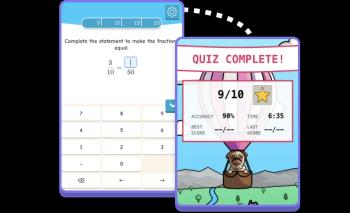
Achievement System
Earn badges for consistency and improvement. Build learning streaks that motivate daily practice
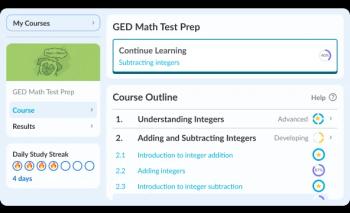
Detailed Analytics
Time spent, problems solved, concepts mastered. Identify exactly where more practice is needed.