Florida
Florida 7th Grade Math
Watch proportions and equations videos, practice with hundreds of step-by-step problems

My daughter went from a C to an A- in just 6 weeks. The proportions lessons finally clicked for her.
Maria T.

Why Choose StudyPug for 7th Grade
Trusted platform that builds strong math foundations
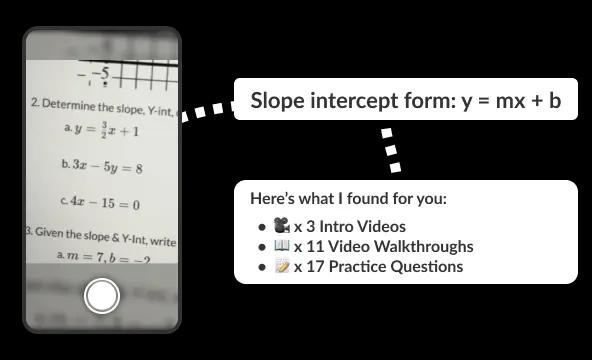
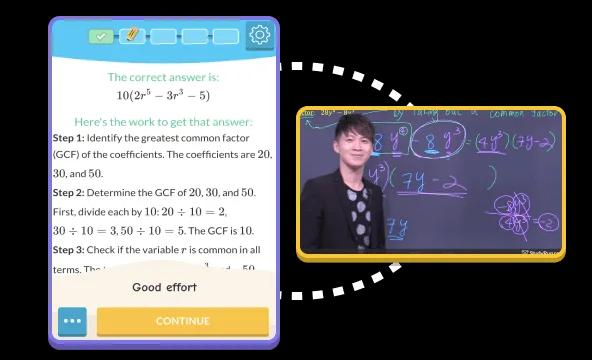
Search with Photo
Snap a photo of any problem and get the exact lesson you need
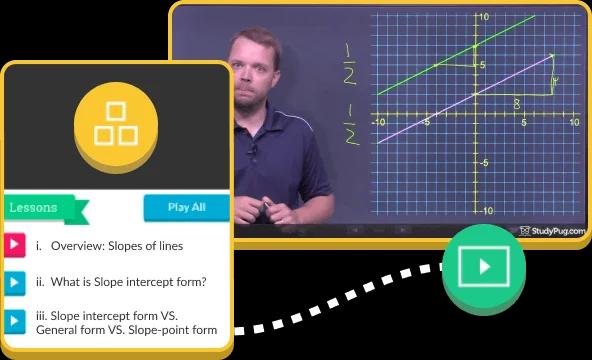
Expert Video Teaching
Certified teachers explain every concept with clear examples
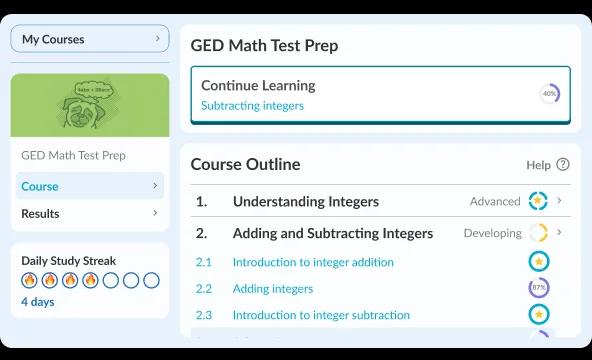
Track Progress
See exactly what they've mastered and what needs more work
How Florida Students Use StudyPug
1

Select Grade Level
Choose your Florida grade (K-12) and current math topics.
2

Get Unstuck
Upload homework problems or browse curriculum-aligned lessons.
3

Practice & Master
Work through similar problems until concepts stick.
4

See Results
Track progress and watch grades improve week by week.
Florida 7th Grade Math Help | Build Strong SkillsHelp
FL Standard | Shortened Benchmark | StudyPug Topic |
|---|---|---|
MA.7.NSO.1.1 | Know and apply the Laws of Exponents to evaluate numerical expressions and generate equivalent numerical expressions |
MA.7.NSO.1.2 | Rewrite rational numbers in different forms including fractions, mixed numbers, repeating decimals and percentages |
MA.7.NSO.2.1 | Solve multi-step problems involving operations with rational numbers |
MA.7.NSO.2.2 | Add, subtract, multiply and divide rational numbers with procedural fluency |
MA.7.NSO.2.3 | Solve real-world problems involving any of the four operations with rational numbers |
MA.7.AR.1.1 | Apply properties of operations to add and subtract linear expressions with rational coefficients |
MA.7.AR.1.2 | Determine whether two linear expressions are equivalent |
MA.7.AR.2.1 | Write and solve one-step inequalities in one variable |
MA.7.AR.2.2 | Write and solve two-step equations in one variable |
MA.7.AR.3.1 | Apply previous understanding of percentages and ratios to solve multi-step real-world percent problems |
MA.7.AR.3.2 | Apply previous understanding of ratios to solve real-world problems involving proportions |
MA.7.AR.3.3 | Solve mathematical and real-world problems involving the conversion of units across different measurement systems |
MA.7.AR.4.2 | Determine the constant of proportionality within a mathematical or real-world context given a table, graph or equation |
MA.7.AR.4.3 | Given a mathematical or real-world context, graph proportional relationships from a table, equation or a written description |
MA.7.AR.4.4 | Given any representation of a proportional relationship, translate the representation to a written description, table, equation or graph |
MA.7.AR.4.5 | Solve real-world problems involving proportional relationships |
MA.7.GR.1.2 | Solve mathematical and real-world problems involving the area of polygons or composite figures by decomposing them into triangles or quadrilaterals |
MA.7.GR.1.3 | Explore the proportional relationship between circumferences and diameters of circles |
MA.7.GR.1.4 | Explore and apply a formula to find the area of a circle to solve mathematical and real-world problems |
MA.7.GR.1.5 | Solve mathematical and real-world problems involving dimensions and areas of geometric figures, including scale drawings and scale factors |
MA.7.GR.2.1 | Given a mathematical or real-world context, find the surface area of a right circular cylinder using the figure's net |
MA.7.GR.2.3 | Solve mathematical and real-world problems involving volume of right circular cylinders |
MA.7.DP.1.1 | Determine an appropriate measure of center or measure of variation to summarize numerical data |
MA.7.DP.1.2 | Given two numerical or graphical representations of data, use the measure(s) of center and measure(s) of variability to make comparisons, interpret results and draw conclusions |
MA.7.DP.1.3 | Given categorical data from a random sample, use proportional relationships to make predictions about a population |
MA.7.DP.1.4 | Use proportional reasoning to construct, display and interpret data in circle graphs |
MA.7.DP.1.5 | Given a real-world numerical or categorical data set, choose and create an appropriate graphical representation |
MA.7.DP.2.1 | Determine the sample space for a simple experiment |
MA.7.DP.2.2 | Given the probability of a chance event, interpret the likelihood of it occurring. Compare the probabilities of chance events |
MA.7.DP.2.3 | Find the theoretical probability of an event related to a simple experiment |
MA.7.DP.2.4 | Use a simulation of a simple experiment to find experimental probabilities and compare them to theoretical probabilities |
Complete Florida 7th Grade Math Coverage
7th Grade Math Lessons
61
Video Explanations
533
Practice Problems
276
Florida Standards
100% Aligned


Success Stories
His test scores improved 15 points in two months. The equation videos made everything so much clearer.
Jennifer K.
She finally understands proportions and can work independently now. No more homework stress.
David R.
Read More
Common Questions About 7th Grade Math
Everything you need to know about StudyPug for 7th Grade Math
Is StudyPug aligned with Florida 7th Grade Math standards?
Yes, StudyPug covers 100% of Florida B.E.S.T. standards for 7th Grade Math, including ratios, proportions, expressions, equations, geometry, and probability.
How does StudyPug help with FAST preparation?
Our practice problems match the FAST format and question types. Students get familiar with the test structure while mastering Florida standards.
What topics does 7th Grade Math cover?
Topics include rational numbers, exponents, expressions, equations, inequalities, proportions, percentages, geometry, circles, surface area, volume, data analysis, and probability.
Can my child use StudyPug for homework help?
Absolutely. They can search by topic or snap a photo of any problem to find the exact lesson they need with step-by-step explanations.
How do I track my child's progress in 7th Grade Math?
The parent dashboard shows lessons completed, quiz scores, practice time, and mastery levels for each topic so you see exactly where they stand.
Practice Smart, See Real Progress
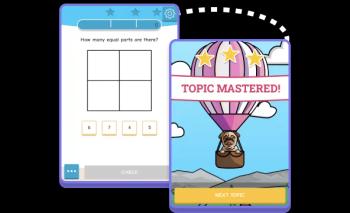
Unlimited Targeted Practice
10,000+ questions adjust to your exact skill level. Never run out of problems that challenge you.
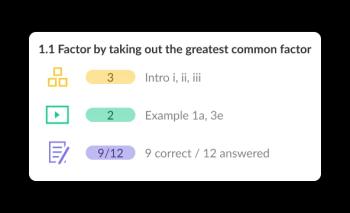
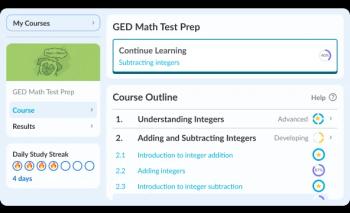
Visual Progress Tracking
See mastery percentage for every topic. Parents get weekly progress emails automatically.
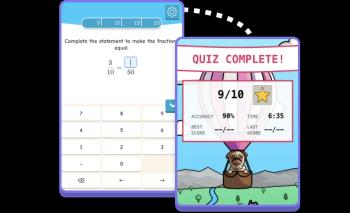
Achievement System
Earn badges for consistency and improvement. Build learning streaks that motivate daily practice
Detailed Analytics
Time spent, problems solved, concepts mastered. Identify exactly where more practice is needed.