Ontario
Ontario Kindergarten Math
Practice with interactive activities, build number foundations and counting skills

My son went from counting to 5 to confidently counting to 20 in just 6 weeks. He asks to do math practice every day now!
Sarah M.

Why Choose StudyPug for Kindergarten
Trusted platform that builds strong math foundations
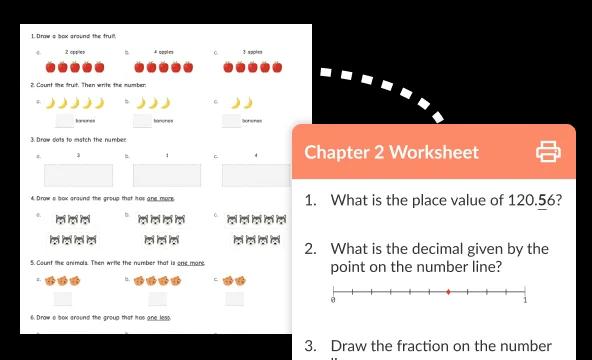
Practice & Worksheets
Printable worksheets and interactive practice for every topic
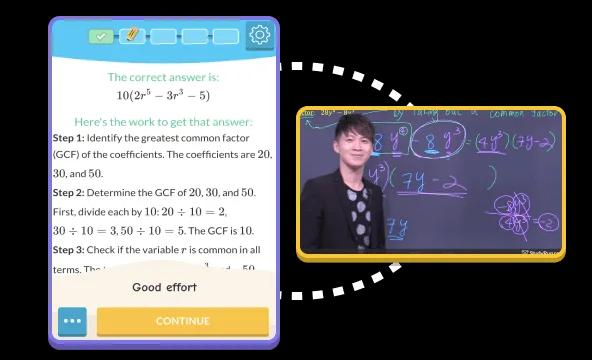
Step-by-Step Solutions
See the complete solution process for every practice problem
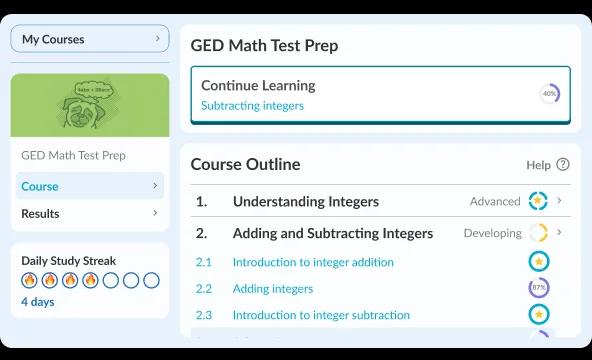
Track Progress
See exactly what they've mastered and what needs more work
How Ontario Students Use StudyPug
1

Select Grade Level
Choose your Ontario grade (K-12) and current math topics.
2

Get Unstuck
Upload homework problems or browse curriculum-aligned lessons.
3

Practice & Master
Work through similar problems until concepts stick.
4

See Results
Track progress and watch grades improve week by week.
Ontario Kindergarten Math Help | Build Strong SkillsHelp
OE_ID | Expectations | StudyPug Topic |
|---|---|---|
ON.OE.K.15.1 | 15.1: investigate (e.g., using a number line, a hundreds carpet, a board game with numbered squares) the idea that a number's position in the counting sequence determines its magnitude (e.g., the quantity is greater when counting forward and less when counting backward) |
ON.OE.K.15.2 | 15.2: investigate some concepts of quantity and equality through identifying and comparing sets with more, fewer, or the same number of objects |
ON.OE.K.15.3 | 15.3: make use of one-to-one correspondence in counting objects and matching groups of objects |
ON.OE.K.15.4 | 15.4: demonstrate an understanding of the counting concepts of stable order and of order irrelevance |
ON.OE.K.15.5 | 15.5: subitize quantities to 5 without having to count, using a variety of materials and strategies |
ON.OE.K.15.7 | 15.7: explore and communicate the function/purpose of numbers in a variety of contexts |
ON.OE.K.15.9 | 15.9: compose and decompose quantities to 10 |
ON.OE.K.15.10 | 15.10: investigate addition and subtraction in everyday experiences and routines through the use of modelling strategies and manipulatives and counting strategies |
ON.OE.K.17.1 | 17.1: explore, sort, and compare the attributes and the properties of traditional and non-traditional two-dimensional shapes and three-dimensional figures |
ON.OE.K.18.1 | 18.1: identify and describe informally the repeating nature of patterns in everyday contexts, using appropriate terminology and gestures |
ON.OE.K.20.1 | 20.1: demonstrate an understanding of number relationships for numbers from 0 to 10, through investigation |
ON.OE.K.20.2 | 20.2: use, read, and represent whole numbers to 10 in a variety of meaningful contexts |
ON.OE.K.20.5 | 20.5: investigate and describe how objects can be collected, grouped, and organized according to similarities and differences |
Complete Ontario Kindergarten Coverage
Kindergarten Lessons
49
Practice Problems
205
Ontario Standards
100% Aligned


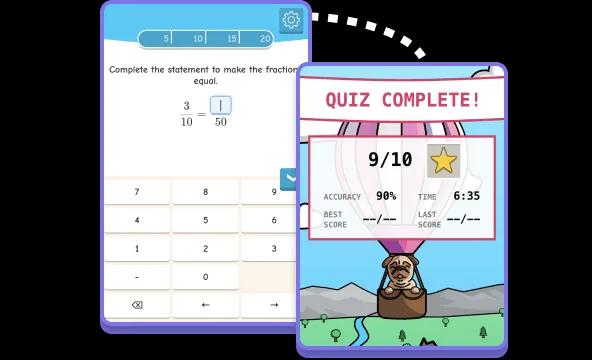
Success Stories
The worksheets made learning numbers so fun. My daughter can now recognize numbers to 10 and is starting simple addition!
Priya K.
He was hesitant about math before, but now eagerly completes his practice activities. His teacher noticed the improvement too.
Michael T.
Read More
Frequently Asked Questions
Everything you need to know about Ontario Kindergarten Math help
Is StudyPug aligned with the Ontario Kindergarten curriculum?
Yes, all our Kindergarten content is 100% aligned with Ontario curriculum standards, covering number sense, patterns, shapes, and measurement concepts.
What makes StudyPug appropriate for Kindergarten learners?
We use interactive activities, visual learning, and hands-on practice designed specifically for young learners, with colorful worksheets and engaging formats.
How does StudyPug help prepare for future EQAO assessments?
We build strong foundational skills in number sense, problem-solving, and mathematical thinking that set students up for success in later grades.
Can my child use StudyPug independently?
While Kindergarten activities are designed to be intuitive, parental guidance is recommended to help young learners navigate the platform and reinforce concepts.
What topics are covered in Ontario Kindergarten Math?
We cover counting to 10, number recognition, basic addition and subtraction, patterns, 2D and 3D shapes, measurement, and data collection.
Practice Smart, See Real Progress

Unlimited Targeted Practice
10,000+ questions adjust to your exact skill level. Never run out of problems that challenge you.
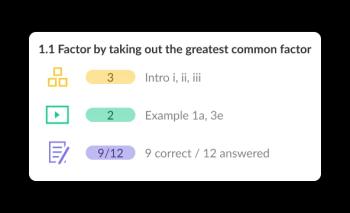
Visual Progress Tracking
See mastery percentage for every topic. Parents get weekly progress emails automatically.
Achievement System
Earn badges for consistency and improvement. Build learning streaks that motivate daily practice
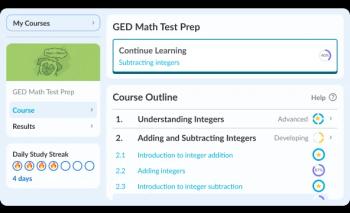
Detailed Analytics
Time spent, problems solved, concepts mastered. Identify exactly where more practice is needed.