flagOntario

Math

Grade 11

Master Grade 11 Foundations for College Mathematics

Watch quadratics videos, practice with real-world problems

students image

Quadratics were impossible until StudyPug. The step-by-step videos made transformations click. Went from D+ to B in one semester.

Jordan Chen

pug

Why Grade 11 Foundations for College Mathematics Students Choose StudyPug

The complete learning system to master MBF3C
Search with Photo

Search with Photo

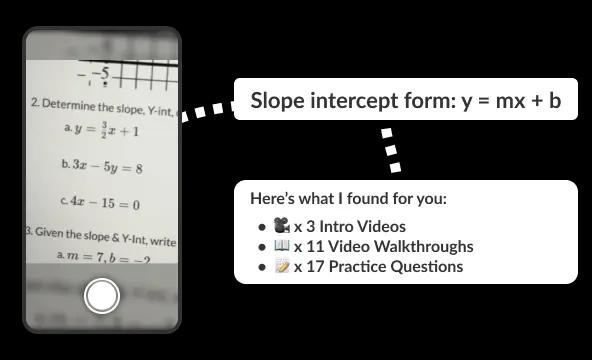
Upload MBF3C problems—AI searches and finds the right lesson teaching the concept

Expert Video Teaching

Expert Video Teaching

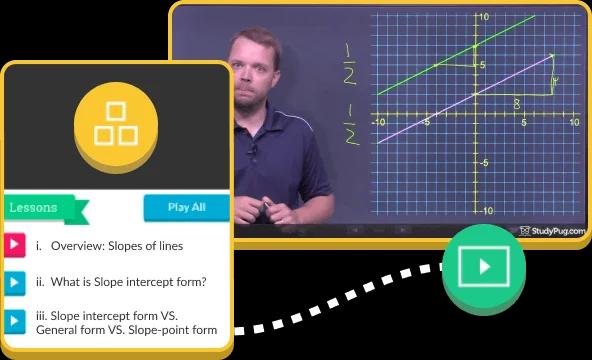
Certified teachers break down quadratics, exponentials, and financial math step-by-step

Unlimited Practice

Unlimited Practice

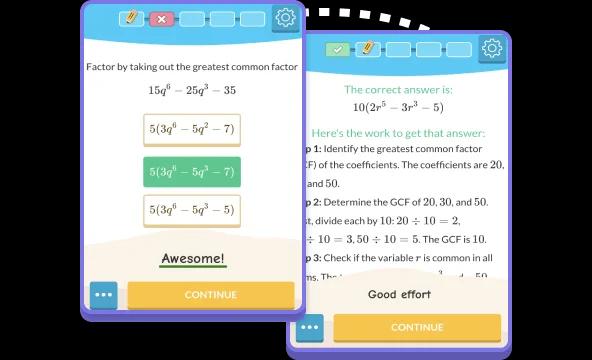
3,500+ teacher-created practice questions prepare you for MBF3C exams and tests

How Ontario Students Use StudyPug

1

Select Grade Level
Select Grade Level

Choose your Ontario grade (K-12) and current math topics.

2

Get Unstuck
Get Unstuck

Upload homework problems or browse curriculum-aligned lessons.

3

Practice & Master
Practice & Master

Work through similar problems until concepts stick.

4

See Results
See Results

Track progress and watch grades improve week by week.

Ontario Grade 11 MBF3C Help: Master Concepts FastHelp

Print

OE_ID

Expectations

StudyPug Topic

ON.OE.11FC.A1.1

11FC.A1.1: Construct tables of values and graph quadratic relations arising from real-world applications

ON.OE.11FC.A1.2

11FC.A1.2: Determine and interpret meaningful values of the variables, given a graph of a quadratic relation arising from a real-world application

ON.OE.11FC.A1.3

11FC.A1.3: Determine, through investigation using technology, the roles of a, h, and k in quadratic relations of the form y = a(x ? h)? + k, and describe these roles in terms of transformations on the graph of y = x?

ON.OE.11FC.A1.5

11FC.A1.5: Expand and simplify quadratic expressions in one variable involving multiplying binomials or squaring a binomial, using a variety of tools

ON.OE.11FC.A1.6

11FC.A1.6: Express the equation of a quadratic relation in the standard form y = ax? + bx + c, given the vertex form y = a(x ? h)? + k, and verify, using graphing technology, that these forms are equivalent representations

ON.OE.11FC.A1.7

11FC.A1.7: Factor trinomials of the form ax? + bx + c, where a = 1 or where a is the common factor, by various methods

ON.OE.11FC.A1.8

11FC.A1.8: Determine, through investigation, and describe the connection between the factors of a quadratic expression and the x-intercepts of the graph of the corresponding quadratic relation

ON.OE.11FC.A1.9

11FC.A1.9: Solve problems, using an appropriate strategy, given equations of quadratic relations, including those that arise from real-world applications

ON.OE.11FC.A2.1

11FC.A2.1: Determine, through investigation using a variety of tools and strategies, and describe the meaning of negative exponents and of zero as an exponent

ON.OE.11FC.A2.2

11FC.A2.2: Evaluate, with and without technology, numeric expressions containing integer exponents and rational bases

ON.OE.11FC.A2.3

11FC.A2.3: Determine, through investigation, the exponent rules for multiplying and dividing numerical expressions involving exponents, and the exponent rule for simplifying numerical expressions involving a power of a power

ON.OE.11FC.A2.4

11FC.A2.4: Graph simple exponential relations, using paper and pencil, given their equations

ON.OE.11FC.A2.5

11FC.A2.5: Make and describe connections between representations of an exponential relation

ON.OE.11FC.A3.1

11FC.A3.1: Collect data that can be modelled as an exponential relation, through investigation with and without technology, from primary sources, using a variety of tools, or from secondary sources, and graph the data

ON.OE.11FC.A3.2

11FC.A3.2: Describe some characteristics of exponential relations arising from real-world applications by using tables of values and graphs

ON.OE.11FC.A3.3

11FC.A3.3: Pose problems involving exponential relations arising from a variety of real-world applications, and solve these and other such problems by using a given graph or a graph generated with technology from a given table of values or a given equation

ON.OE.11FC.A3.4

11FC.A3.4: Solve problems using given equations of exponential relations arising from a variety of real-world applications by substituting values for the exponent into the equations

ON.OE.11FC.B1.3

11FC.B1.3: Solve problems, using a scientific calculator, that involve the calculation of the amount, A (also referred to as future value, FV), and the principal, P (also referred to as present value, PV), using the compound interest formula in the form A = P(1 + i)? [or FV = PV(1 + i)?

ON.OE.11FC.B1.4

11FC.B1.4: Calculate the total interest earned on an investment or paid on a loan by determining the difference between the amount and the principal

ON.OE.11FC.C1.1

11FC.C1.1: Recognize and describe real-world applications of geometric shapes and figures, through investigation in a variety of contexts, and explain these applications

ON.OE.11FC.C1.3

11FC.C1.3: Create nets, plans, and patterns from physical models arising from a variety of real-world applications, by applying the metric and imperial systems and using design or drawing software

ON.OE.11FC.C2.1

11FC.C2.1: Solve problems, including those that arise from real-world applications, by determining the measures of the sides and angles of right triangles using the primary trigonometric ratios

ON.OE.11FC.C2.2

11FC.C2.2: Verify, through investigation using technology, the sine law and the cosine law

ON.OE.11FC.C2.3

11FC.C2.3: Describe conditions that guide when it is appropriate to use the sine law or the cosine law, and use these laws to calculate sides and angles in acute triangles

ON.OE.11FC.C2.4

11FC.C2.4: Solve problems that arise from real-world applications involving metric and imperial measurements and that require the use of the sine law or the cosine law in acute triangles

ON.OE.11FC.D1.1

11FC.D1.1: Identify situations involving one-variable data, and design questionnaires or experiments for gathering one-variable data, giving consideration to ethics, privacy, the need for honest responses, and possible sources of bias

ON.OE.11FC.D1.2

11FC.D1.2: Collect one-variable data from secondary sources, and organize and store the data using a variety of tools

ON.OE.11FC.D1.3

11FC.D1.3: Explain the distinction between the terms population and sample, describe the characteristics of a good sample, and explain why sampling is necessary

ON.OE.11FC.D1.5

11FC.D1.5: Identify different types of one-variable data, and represent the data, with and without technology, in appropriate graphical forms

ON.OE.11FC.D1.6

11FC.D1.6: Identify and describe properties associated with common distributions of data

ON.OE.11FC.D1.7

11FC.D1.7: Calculate, using formulas and/or technology, and interpret measures of central tendency and measures of spread

ON.OE.11FC.D2.2

11FC.D2.2: Determine the theoretical probability of an event, and represent the probability in a variety of ways

ON.OE.11FC.D2.3

11FC.D2.3: Perform a probability experiment, represent the results using a frequency distribution, and use the distribution to determine the experimental probability of an event

ON.OE.11FC.D2.4

11FC.D2.4: Compare, through investigation, the theoretical probability of an event with the experimental probability, and explain why they might differ

ON.OE.11FC.D2.5

11FC.D2.5: Determine, through investigation using class-generated data and technology-based simulation models, the tendency of experimental probability to approach theoretical probability as the number of trials in an experiment increases

ON.OE.11FC.D2.6

11FC.D2.6: Interpret information involving the use of probability and statistics in the media, and make connections between probability and statistics
Complete Ontario Grade 11 Foundations for College Mathematics (MBF3C) Coverage

MBF3C Lessons

83

Video Explanations

461

Practice Problems

901

Ontario Standards

100% Aligned

Why Ontario Grade 11 Foundations for College Mathematics Students Love StudyPug

College Preparation

College Preparation

Master concepts needed for Ontario college programs—be ready for next level

Canadian Certified Teachers

Canadian Certified Teachers

Learn from expert Ontario teachers who know exactly what you need for MBF3C success

Learn Anywhere

Learn Anywhere

Desktop, tablet, or phone—your MBF3C lessons sync across all devices

Success Stories

Financial math made no sense. The compound interest videos saved my grade. Aced the unit test and finally understood investing.

Taylor Rodriguez

I spent hours on homework before StudyPug. The AI finds lessons instantly. Cut my study time in half and my marks went up.

Riley Patel

Read More

Frequently Asked Questions

Everything you need to know about mastering Grade 11 Foundations for College Mathematics with StudyPug

What does MBF3C coverage include?

Complete MBF3C curriculum with video lessons on quadratics, exponentials, financial math, geometry, and statistics. Includes practice problems, step-by-step solutions, and progress tracking for every topic.

How does the AI photo search work?

Take a photo of any MBF3C problem, and our AI finds the exact lesson teaching that concept. It's like having a personal tutor who knows exactly what you need for college preparation.

Are the teachers certified Ontario educators?

Yes! Our teachers are Canadian certified Ontario educators who understand MBF3C curriculum and create lessons specifically for college preparation standards.

Can I use StudyPug on my phone or tablet?

Absolutely! StudyPug works on desktop, tablet, and mobile. Your progress syncs automatically so you can study for MBF3C anywhere, anytime.

How will StudyPug help me prepare for college?

We teach the exact concepts tested in MBF3C and needed for college success. Students report significantly improved grades, confidence, and readiness for post-secondary programs.

Practice Smart, See Real Progress

Unlimited Targeted Practice

10,000+ questions adjust to your exact skill level. Never run out of problems that challenge you.
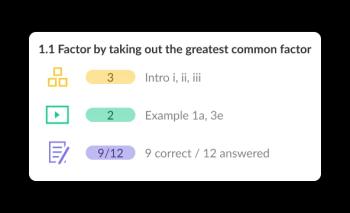
Visual Progress Tracking

See mastery percentage for every topic. Parents get weekly progress emails automatically.
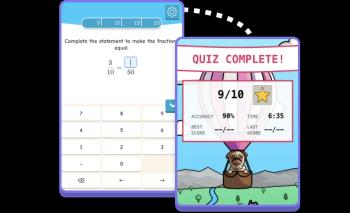
Achievement System
Achievement System

Earn badges for consistency and improvement. Build learning streaks that motivate daily practice
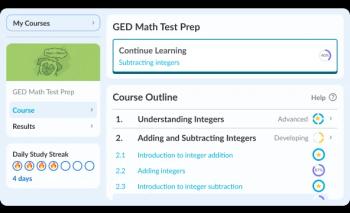
Detailed Analytics
Detailed Analytics

Time spent, problems solved, concepts mastered. Identify exactly where more practice is needed.

student
CallToActionContent

End Math Struggles Today

Ontario curriculum-aligned help that actually works

mathImage