New Brunswick
New Brunswick Grade 3 Math
Practice with interactive activities, build multiplication and addition foundations

The printable worksheets helped my daughter master her multiplication facts in just three weeks. So much more focused now.
Sarah M.

Why Choose StudyPug for Grade 3
Trusted platform that builds strong math foundations
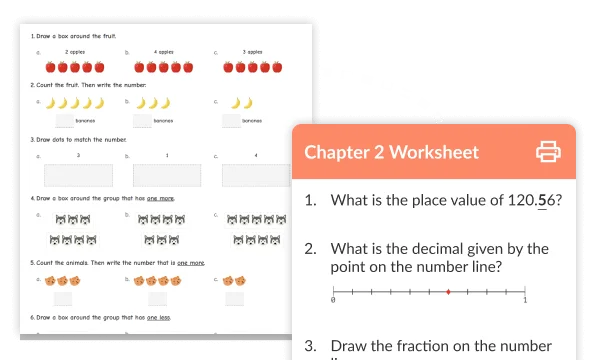
Practice & Worksheets
Practice & Worksheets
Printable worksheets and interactive practice for every topic
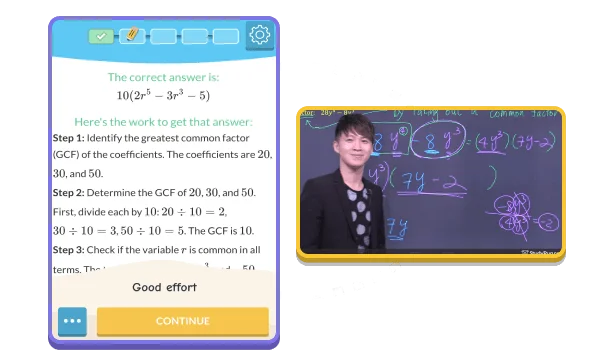
Step-by-Step Solutions
Step-by-Step Solutions
See the complete solution process for every practice problem
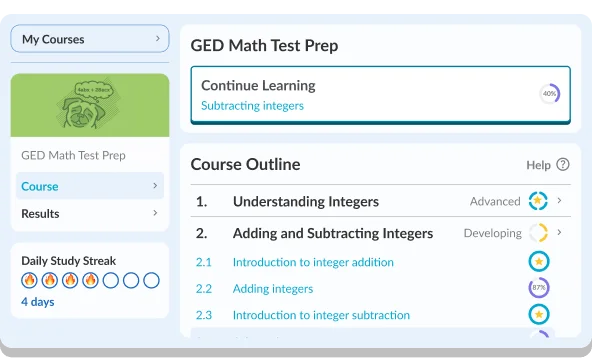
Track Progress
Track Progress
See exactly what they've mastered and what needs more work
How New Brunswick Students Use StudyPug
1

Select Grade Level
Choose your New Brunswick grade (K-12) and current math topics.
2

Get Unstuck
Upload homework problems or browse curriculum-aligned lessons.
3

Practice & Master
Work through similar problems until concepts stick.
4

See Results
Track progress and watch grades improve week by week.
New Brunswick Grade 3 Math Help | Build Strong SkillsHelp
SCO_ID | Curriculum Outcome - Elaborations | StudyPug Topic |
|---|---|---|
NB.SCO.3.N1 | Say the number sequence forward and backward from 0 to 1000: By 5s, 10s, or 100s using any starting point; 3s using multiples of 3; 4s using multiples of 4; 25s using multiples of 25 |
NB.SCO.3.N2 | Represent and describe numbers to 1000: Concretely, pictorially and symbolically |
NB.SCO.3.N3 | Compare and order numbers to 1000: Compare and order numbers up to 1000 |
NB.SCO.3.N4 | Estimate quantities less than 1000 using referents: Estimate quantities less than 1000 using referents |
NB.SCO.3.N5 | Illustrate the meaning of place value for numerals to 1000: Concretely and pictorially illustrate place value for numerals to 1000 |
NB.SCO.3.N6 | Describe and apply mental mathematics strategies for adding two 2-digit numerals: Apply mental math strategies for adding two 2-digit numerals |
NB.SCO.3.N9 | Demonstrate understanding of addition and subtraction of numbers with answers to 1000: Limited to 1, 2 and 3-digit numerals |
NB.SCO.3.N10 | Apply mental mathematics strategies and number properties: Use doubles, making 10, commutative property, property of zero, thinking addition for subtraction |
NB.SCO.3.N11 | Demonstrate an understanding of multiplication to 5 x 5: Understand multiplication up to 5 × 5 |
NB.SCO.3.N12 | Demonstrate an understanding of division: Limited to division related to multiplication facts up to 5 × 5 |
NB.SCO.3.PR3 | Solve one-step addition and subtraction equations involving symbols: Solve equations with unknown numbers represented by symbols |
NB.SCO.3.SS3 | Demonstrate understanding of measuring length cm, m: Select and justify referents; model cm and m relationship; estimate length; measure and record length, width, height |
NB.SCO.3.SP2 | Construct, label and interpret bar graphs to solve problems: Create and use bar graphs to solve problems |
Complete New Brunswick Grade 3 Math Coverage
Grade 3 Lessons
37
Practice Activities
43
Practice Problems
101
New Brunswick Standards
100% Aligned
Why New Brunswick Families Choose StudyPug
Provincial Assessment
Provincial Assessment
Practice questions aligned with NB provincial standards
Canadian Certified Teachers
Canadian Certified Teachers
Canadian certified teachers who know your standards
Step-by-Step Solutions
Step-by-Step Solutions
See the full solution for every problem
Success Stories
My son went from confused about place value to confident with numbers up to 1000. The progress tracker showed every improvement.
Michael R.
She now practices math independently every evening. Her multiplication speed has improved dramatically in just two months.
Jennifer L.
Read More
Common Questions About Grade 3 Math
Get answers to frequently asked questions about our New Brunswick Grade 3 Math program
Is StudyPug aligned with New Brunswick Grade 3 curriculum?
Yes, our Grade 3 Math content is 100% aligned with New Brunswick curriculum standards, covering multiplication, addition, subtraction, fractions, patterns, and measurement concepts.
What topics does Grade 3 Math cover?
Our program covers skip counting, multiplication to 5×5, division basics, 2-digit addition and subtraction, fractions, place value to 1000, patterns, time, measurement, 3-D shapes, and data collection.
How does StudyPug help with multiplication facts?
We use interactive practice activities, printable worksheets, and adaptive questions that adjust to your child's level, helping them master multiplication tables up to 5×5 with confidence.
Are printable worksheets available for Grade 3?
Yes, we provide printable worksheets for all Grade 3 topics including multiplication, addition, subtraction, fractions, patterns, and measurement to support practice at home.
How can I track my child's progress in Grade 3 Math?
Our progress tracking system shows exactly which topics your child has mastered and where they need more practice, with detailed reports on multiplication, fractions, and other key concepts.
Practice Smart, See Real Progress
Unlimited Targeted Practice
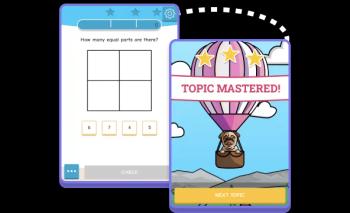
10,000+ questions adjust to your exact skill level. Never run out of problems that challenge you.
Visual Progress Tracking
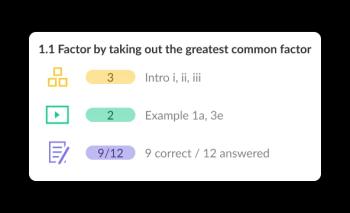
See mastery percentage for every topic. Parents get weekly progress emails automatically.
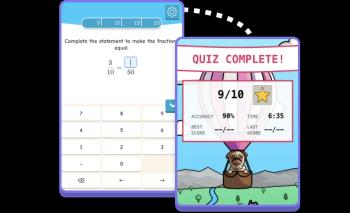
Achievement System
Earn badges for consistency and improvement. Build learning streaks that motivate daily practice
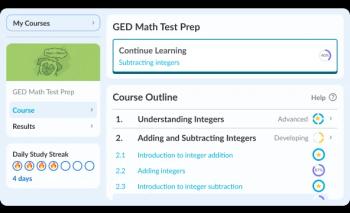
Detailed Analytics
Time spent, problems solved, concepts mastered. Identify exactly where more practice is needed.