British Columbia
British Columbia Grade 4 Math
Watch fraction videos, practice with step-by-step problems and worksheets

My daughter went from confused about fractions to solving problems independently in just 6 weeks with StudyPug.
Sarah K.

Why Choose StudyPug for Grade 4
Trusted platform that builds strong math foundations
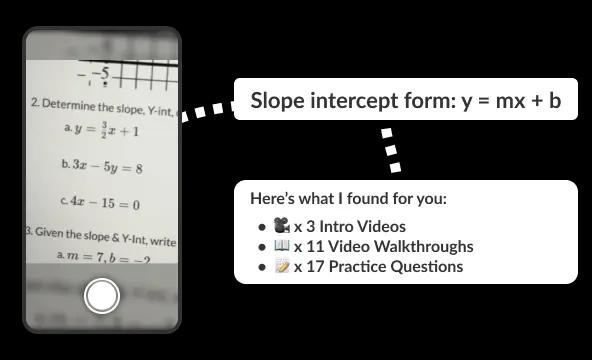
Search with Photo
Snap a photo of any problem and get the exact lesson
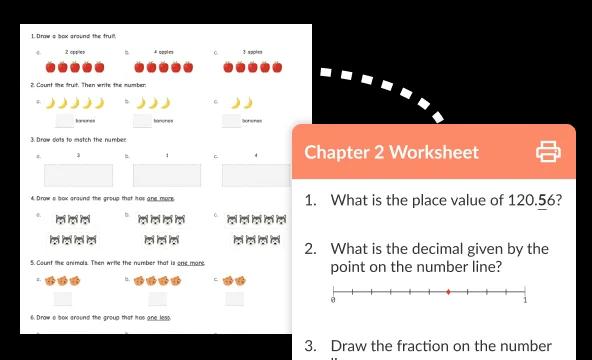
Video & Worksheets
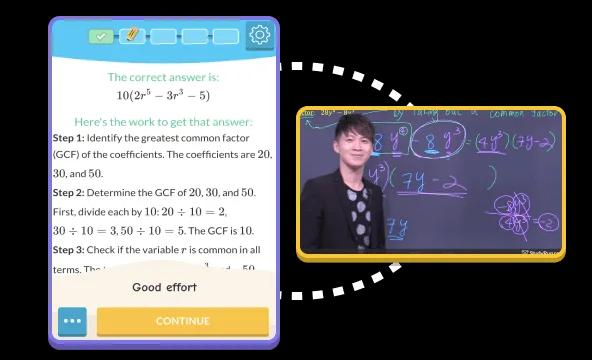
Expert video lessons plus printable practice worksheets
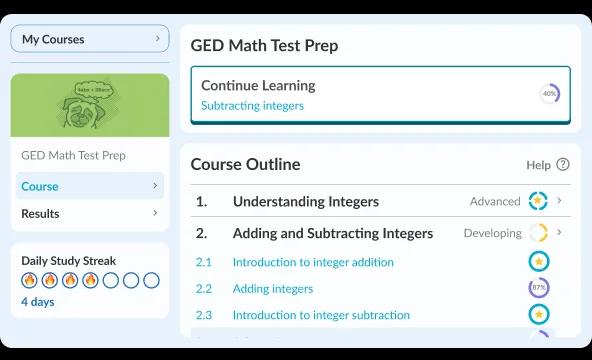
Track Progress
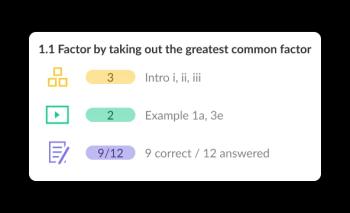
See exactly what they've mastered and what needs more work
How British Columbia Students Use StudyPug
1

Select Grade Level
Choose your British Columbia grade (K-12) and current math topics.
2

Get Unstuck
Upload homework problems or browse curriculum-aligned lessons.
3

Practice & Master
Work through similar problems until concepts stick.
4

See Results
Track progress and watch grades improve week by week.
BC Grade 4 Math Help | Build Strong SkillsHelp
CC_ID | Content-Elaborations | StudyPug Topic |
|---|---|---|
BC.CE.4.1 | Number concepts to 10,000: Counting, comparing, ordering, estimating, place value understanding |
BC.CE.4.2 | Decimals to hundredths: Fractions and decimals as parts of a whole, region, set, or linear model |
BC.CE.4.3 | Ordering and comparing fractions: Common denominators, estimating with benchmarks, using models, equal partitioning |
BC.CE.4.4 | Addition and subtraction to 10,000: Flexible computation strategies, estimating, real-life contexts, number talks |
BC.CE.4.5 | Multiplication and division of two- or three-digit numbers by one-digit numbers: Understanding operation relationships, flexible strategies, real-life contexts |
BC.CE.4.6 | Addition and subtraction of decimals to hundredths: Estimating decimal sums and differences, using visual models |
BC.CE.4.9 | Increasing and decreasing patterns, using tables and charts: Describing patterns using words and numbers, representing change |
BC.CE.4.10 | Algebraic relationships among quantities: One-step equations with unknown number, describing pattern rules |
BC.CE.4.12 | Telling time with analog and digital clocks, using 12- and 24-hour clocks: Understanding a.m./p.m., minutes in hour, fractions in telling time |
BC.CE.4.13 | Regular and irregular polygons: Describing and sorting based on attributes, investigating closed shapes |
BC.CE.4.14 | Perimeter of regular and irregular shapes: Using geoboards and grids to create, represent, measure, calculate perimeter |
BC.CE.4.15 | Line symmetry: Using concrete materials to create mirror image designs |
BC.CE.4.16 | One-to-one and many-to-one correspondence, using bar graphs and pictographs: Many-to-one: one symbol represents a group/value |
BC.CE.4.17 | Probability experiments: Predicting single outcomes, using various tools, recording results |
Complete British Columbia Grade 4 Math Coverage
Grade 4 Math Lessons
80
Video Explanations
1341
Practice Problems
667
BC Curriculum
100% Aligned

Success Stories
The video lessons made multiplication finally click. He's now helping his younger sister with her homework!
Michael T.
After 8 weeks with StudyPug, her FSA practice scores jumped 30%. The adaptive practice really works.
Priya S.
Read More
Frequently Asked Questions
Everything you need to know about Grade 4 Math at StudyPug
Is StudyPug aligned with the BC Grade 4 curriculum?
Yes, StudyPug is 100% aligned with the British Columbia Grade 4 math curriculum. Every lesson covers the BC learning outcomes including place value, fractions, decimals, patterns, and geometry.
How does StudyPug help with FSA preparation?
StudyPug includes practice questions that match FSA formats. Students build skills in number sense, computation, and problem-solving using the same question types they'll see on the actual Grade 4 FSA assessment.
What makes Grade 4 math different from Grade 3?
Grade 4 introduces decimals, multi-digit multiplication, more complex fractions, and algebraic thinking. StudyPug's video lessons break down these new concepts with step-by-step explanations and plenty of practice.
Can my child work independently with StudyPug?
Yes, Grade 4 students can navigate StudyPug independently. Video lessons are clear and age-appropriate, practice problems include hints, and step-by-step solutions help them learn from mistakes on their own.
How do I track my child's Grade 4 math progress?
The parent dashboard shows exactly which topics your child has completed, their quiz scores, time spent learning, and which areas need more practice. You'll see real-time progress on all BC curriculum standards.
Practice Smart, See Real Progress

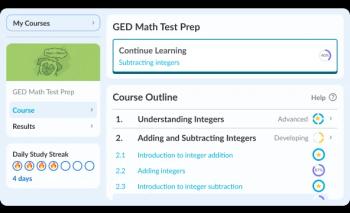
Unlimited Targeted Practice
10,000+ questions adjust to your exact skill level. Never run out of problems that challenge you.
Visual Progress Tracking
See mastery percentage for every topic. Parents get weekly progress emails automatically.
Achievement System
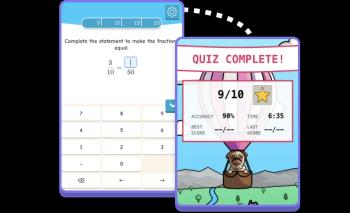
Earn badges for consistency and improvement. Build learning streaks that motivate daily practice
Detailed Analytics
Time spent, problems solved, concepts mastered. Identify exactly where more practice is needed.