Texas
Texas
Trusted by 12,000+ TX families
Why Choose StudyPug for Grade 4
Three ways your child gets help — even when you can't
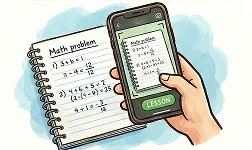
Search with Photo
Snap a photo of any problem and get the exact lesson
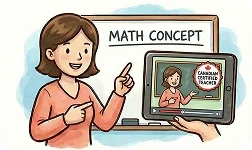
Expert Video Teaching
Certified teachers explain every concept with clear examples

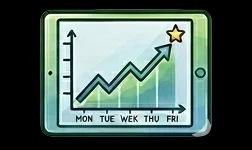
Track Progress
See exactly what they've mastered and what needs more work
How StudyPug Works
1
Pick Their Grade
Choose Grade 4 and see every topic from your child's class
2

Get Unstuck
Upload homework problems or browse curriculum-aligned lessons.
3

Practice & Master
Work through similar problems until concepts stick.
4

See Results
Track progress and watch grades improve week by week.
Texas Grade 4 Math Help | StudyPugHelp
ID | Strand & Expectation | StudyPug Topic |
|---|---|---|
TX.4.2.A | Interpret the value of each place-value position as 10 times the position to the right and as one-tenth of the value of the place to its left |
TX.4.2.B | Represent the value of the digit in whole numbers through 1,000,000,000 and decimals to the hundredths using expanded notation and numerals |
TX.4.2.C | Compare and order whole numbers to 1,000,000,000 and represent comparisons using the symbols >, <, or = |
TX.4.2.D | Round whole numbers to a given place value through the hundred thousands place |
TX.4.2.E | Represent decimals, including tenths and hundredths, using concrete and visual models and money |
TX.4.2.F | Compare and order decimals using concrete and visual models to the hundredths |
TX.4.2.H | Determine the corresponding decimal to the tenths or hundredths place of a specified point on a number line |
TX.4.3.A | Represent a fraction a/b as a sum of fractions 1/b, where a and b are whole numbers and b > 0, including when a > b |
TX.4.3.C | Determine if two given fractions are equivalent using a variety of methods |
TX.4.3.D | Compare two fractions with different numerators and different denominators and represent the comparison using the symbols >, =, or < |
TX.4.3.E | Represent and solve addition and subtraction of fractions with equal denominators using objects and pictorial models |
TX.4.4.A | Add and subtract whole numbers and decimals to the hundredths place using the standard algorithm |
TX.4.4.C | Represent the product of 2 two-digit numbers using arrays, area models, or equations |
TX.4.4.D | Use strategies and algorithms, including the standard algorithm, to multiply up to a four-digit number by a one-digit number and to multiply a two-digit number by a two-digit number |
TX.4.4.E | Represent the quotient of up to a four-digit whole number divided by a one-digit whole number using arrays, area models, or equations |
TX.4.4.F | Use strategies and algorithms, including the standard algorithm, to divide up to a four-digit dividend by a one-digit divisor |
TX.4.4.G | Round to the nearest 10, 100, or 1,000 or use compatible numbers to estimate solutions involving whole numbers |
TX.4.4.H | Solve with fluency one- and two-step problems involving multiplication and division, including interpreting remainders |
TX.4.5.A | Represent multi-step problems involving the four operations with whole numbers using strip diagrams and equations |
TX.4.5.B | Represent problems using an input-output table and numerical expressions to generate a number pattern |
TX.4.5.C | Use models to determine the formulas for the perimeter of a rectangle and of a square |
TX.4.5.D | Solve problems related to perimeter and area of rectangles where dimensions are whole numbers |
TX.4.6.A | Identify points, lines, line segments, rays, angles, and perpendicular and parallel lines |
TX.4.6.B | Identify and draw one or more lines of symmetry, if they exist, for a two-dimensional figure |
TX.4.6.C | Apply knowledge of right angles to identify acute, right, and obtuse triangles |
TX.4.6.D | Classify two-dimensional figures based on the presence or absence of parallel or perpendicular lines or the presence or absence of angles of a specified size |
TX.4.8.A | Identify relative sizes of measurement units within the customary and metric systems |
TX.4.8.B | Convert measurements within the same measurement system, customary or metric, from a smaller unit into a larger unit or a larger unit into a smaller unit |
TX.4.8.C | Solve problems that deal with measurements of length, intervals of time, liquid volumes, mass, and money |
TX.4.9.A | Represent data on a frequency table, dot plot, or stem-and-leaf plot marked with whole numbers and fractions |
TX.4.9.B | Solve one- and two-step problems using data in whole number, decimal, and fraction form in a frequency table, dot plot, or stem-and-leaf plot |
TX.4.10.A | Distinguish between fixed and variable expenses |
Complete Texas Grade 4 Math Coverage
LESSONS
56
VIDEOS
933
PRACTICE
457
TX ALIGNED
100%
Why Texas Families Choose StudyPug for Grade 4
Aligned to Texas TEKS standards with support for STAAR Math preparation
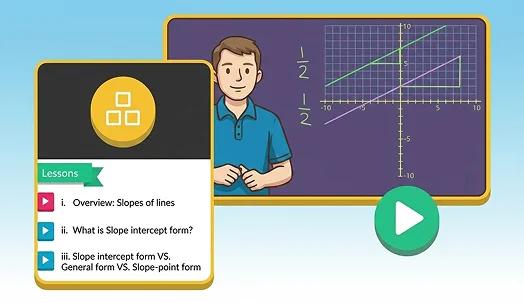
Texas TEKS Aligned
Every lesson matches the Texas Grade 4 math standards exactly

STAAR Math Prep
Practice problems designed to build confidence for state testing
Certified Teachers
Learn from experienced educators who know how to explain concepts clearly
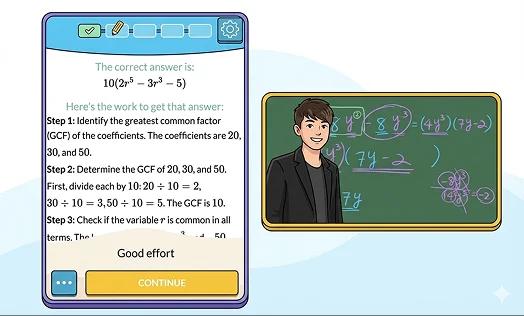
Step-by-Step Solutions
Every practice problem shows the complete solution process
Frequently Asked Questions
Everything your child needs to know about Grade 4 Math with StudyPug
Is StudyPug aligned with the Texas Grade 4 curriculum?
Yes, StudyPug is fully aligned to the Texas TEKS standards for Grade 4 math. Every lesson covers the concepts your child learns in class, from place value and decimals to fractions, geometry, and measurement.
What topics are covered in Grade 4 Math?
Grade 4 math covers place value to millions, decimals, fractions and operations, multi-digit multiplication and division, patterns and algebra basics, geometry and symmetry, measurement with customary and metric units, data analysis, and money skills.
How does StudyPug help my Grade 4 child learn math?
StudyPug offers video lessons taught by certified teachers, photo search to find help with specific problems, adaptive practice that adjusts to your child's level, and progress tracking so you can see improvement. Your child learns at their own pace with unlimited practice.
Can my child use StudyPug independently?
Yes! Most Grade 4 students can navigate StudyPug on their own. The video lessons are clear and engaging, practice problems include step-by-step solutions, and the interface is designed for young learners. You can check their progress anytime through the parent dashboard.
Does StudyPug prepare students for STAAR Math?
Absolutely. Our Texas Grade 4 content is aligned to TEKS standards tested on STAAR. Students practice the types of problems they'll see on the test, build problem-solving skills, and gain the confidence they need to perform well on test day.
How much does StudyPug cost?
StudyPug offers flexible subscription plans starting at just a few dollars per week. Your subscription gives your child unlimited access to all Grade 4 math lessons, practice problems, and progress tracking. No extra fees or hidden costs.
Smart Study Tools for Real Results
Personalized features that help your child stay motivated and make progress
Adaptive Practice
Questions adapt to your child's level
Stay Motivated
Badges and streaks keep your child practising daily
Quiz Mastery
Retake quizzes until your child truly gets it
Progress Reports
See exactly where your child needs help