Ontario

Trusted by 45,000+ ON families
Why Choose StudyPug for Grade 9
Three ways your child gets help — even when you can't
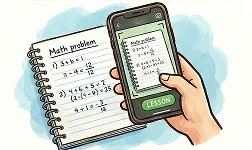
Search with Photo
Snap a photo of any problem and get the exact lesson
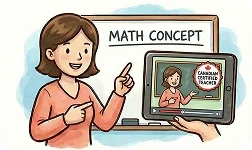
Expert Video Teaching
Certified teachers explain every concept with clear examples

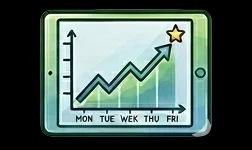
Track Progress
See exactly what they've mastered and what needs more work
How StudyPug Works
1
Pick Their Grade
Choose Grade 9 and see every topic from your child's class
2
Get Unstuck
Upload homework problems or browse curriculum-aligned lessons.
3
Practice & Master
Work through similar problems until concepts stick.
4
See Results
Track progress and watch grades improve week by week.
Ontario Grade 9 Math Help | StudyPugHelp
OE_ID | Expectations | StudyPug Topic |
|---|---|---|
ON.OE.9.B.1.1 | B1.1 research a number concept to tell a story about its development and use in a specific culture, and describe its relevance in a current context: Research a number concept to tell a story about its development and use in a specific culture, and describe its relevance in a current context |
ON.OE.9.B.1.2 | B1.2 describe how various subsets of a number system are defined, and describe similarities and differences between these subsets: Describe how various subsets of a number system are defined, and describe similarities and differences between these subsets |
ON.OE.9.B.1.3 | B1.3 use patterns and number relationships to explain density, infinity, and limit as they relate to number sets: Use patterns and number relationships to explain density, infinity, and limit as they relate to number sets |
ON.OE.9.B.2.1 | B2.1 analyse, through the use of patterning, the relationship between the sign and size of an exponent and the value of a power, and use this relationship to express numbers in scientific notation and evaluate powers: Analyse the relationship between the sign and size of an exponent and the value of a power, and use this relationship to express numbers in scientific notation and evaluate powers |
ON.OE.9.B.2.2 | B2.2 analyse, through the use of patterning, the relationships between the exponents of powers and the operations with powers, and use these relationships to simplify numeric and algebraic expressions: Analyse the relationships between the exponents of powers and the operations with powers, and use these relationships to simplify numeric and algebraic expressions |
ON.OE.9.B.3.1 | B3.1 apply an understanding of integers to describe location, direction, amount, and changes in any of these, in various contexts: Apply an understanding of integers to describe location, direction, amount, and changes in any of these, in various contexts |
ON.OE.9.B.3.2 | B3.2 apply an understanding of unit fractions and their relationship to other fractional amounts, in various contexts, including the use of measuring tools: Apply an understanding of unit fractions and their relationship to other fractional amounts, in various contexts, including the use of measuring tools |
ON.OE.9.B.3.3 | B3.3 apply an understanding of integers to explain the effects that positive and negative signs have on the values of ratios, rates, fractions, and decimals, in various contexts: Apply an understanding of integers to explain the effects that positive and negative signs have on the values of ratios, rates, fractions, and decimals, in various contexts |
ON.OE.9.B.3.4 | B3.4 solve problems involving operations with positive and negative fractions and mixed numbers, including problems involving formulas, measurements, and linear relations, using technology when appropriate: Solve problems involving operations with positive and negative fractions and mixed numbers, including problems involving formulas, measurements, and linear relations, using technology when appropriate |
ON.OE.9.B.3.5 | B3.5 solve problems involving ratios, rates, and percent in various contexts, including contexts connected to real-life applications of data, measurement, geometry, linear relations, and financial literacy: Solve problems involving ratios, rates, and percent in various contexts, including contexts connected to real-life applications of data, measurement, geometry, linear relations, and financial literacy |
ON.OE.9.C.1.1 | C1.1 research an algebraic concept to tell a story about its development and use in a specific culture, and describe its relevance in a current context: Research an algebraic concept to tell a story about its development and use in a specific culture, and describe its relevance in a current context |
ON.OE.9.C.1.2 | C1.2 create algebraic expressions to generalize relationships expressed in words, numbers, and visual representations, in various contexts: Create algebraic expressions to generalize relationships expressed in words, numbers, and visual representations, in various contexts |
ON.OE.9.C.1.3 | C1.3 compare algebraic expressions using concrete, numerical, graphical, and algebraic methods to identify those that are equivalent, and justify their choices: Compare algebraic expressions using concrete, numerical, graphical, and algebraic methods to identify those that are equivalent, and justify their choices |
ON.OE.9.C.1.4 | C1.4 simplify algebraic expressions by applying properties of operations of numbers, using various representations and tools, in different contexts: Simplify algebraic expressions by applying properties of operations of numbers, using various representations and tools, in different contexts |
ON.OE.9.C.1.5 | C1.5 create and solve equations for various contexts, and verify their solutions: Create and solve equations for various contexts, and verify their solutions |
ON.OE.9.C.2.1 | C2.1 use coding to demonstrate an understanding of algebraic concepts including variables, parameters, equations, and inequalities: Use coding to demonstrate an understanding of algebraic concepts including variables, parameters, equations, and inequalities |
ON.OE.9.C.2.2 | C2.2 create code by decomposing situations into computational steps in order to represent mathematical concepts and relationships, and to solve problems: Create code by decomposing situations into computational steps in order to represent mathematical concepts and relationships, and to solve problems |
ON.OE.9.C.2.3 | C2.3 read code to predict its outcome, and alter code to adjust constraints, parameters, and outcomes to represent a similar or new mathematical situation: Read code to predict its outcome, and alter code to adjust constraints, parameters, and outcomes to represent a similar or new mathematical situation |
ON.OE.9.C.3.1 | C3.1 compare the shapes of graphs of linear and non-linear relations to describe their rates of change, to make connections to growing and shrinking patterns, and to make predictions: Compare the shapes of graphs of linear and non-linear relations to describe their rates of change, to make connections to growing and shrinking patterns, and to make predictions |
ON.OE.9.C.3.2 | C3.2 represent linear relations using concrete materials, tables of values, graphs, and equations, and make connections between the various representations to demonstrate an understanding of rates of change and initial values: Represent linear relations using concrete materials, tables of values, graphs, and equations, and make connections between the various representations to demonstrate an understanding of rates of change and initial values |
ON.OE.9.C.3.3 | C3.3 compare two linear relations of the form y = ax + b graphically and algebraically, and interpret the meaning of their point of intersection in terms of a given context: Compare two linear relations of the form y = ax + b graphically and algebraically, and interpret the meaning of their point of intersection in terms of a given context |
ON.OE.9.C.4.1 | C4.1 compare characteristics of graphs, tables of values, and equations of linear and non-linear relations: Compare characteristics of graphs, tables of values, and equations of linear and non-linear relations |
ON.OE.9.C.4.2 | C4.2 graph relations represented as algebraic equations of the forms x = k, y = k, x + y = k, x ? y = k, ax + by = k, and xy = k, and their associated inequalities, where a, b, and k are constants, to identify various characteristics and the points and/or regions defined by these equations and inequalities: Graph relations represented as algebraic equations of various forms and their associated inequalities to identify characteristics and defined points/regions |
ON.OE.9.C.4.3 | C4.3 translate, reflect, and rotate lines defined by y = ax, where a is a constant, and describe how each transformation affects the graphs and equations of the defined lines: Translate, reflect, and rotate lines defined by y = ax, where a is a constant, and describe how each transformation affects the graphs and equations of the defined lines |
ON.OE.9.C.4.4 | C4.4 determine the equations of lines from graphs, tables of values, and concrete representations of linear relations by making connections between rates of change and slopes, and between initial values and y-intercepts, and use these equations to solve problems: Determine line equations from graphs, tables, and concrete representations by connecting rates of change to slopes and initial values to y-intercepts, and use these equations to solve problems |
ON.OE.9.D.1.1 | D1.1 identify a current context involving a large amount of data, and describe potential implications and consequences of its collection, storage, representation, and use: Identify a current context involving a large amount of data, and describe potential implications and consequences of its collection, storage, representation, and use |
ON.OE.9.D.1.2 | D1.2 represent and statistically analyse data from a real-life situation involving a single variable in various ways, including the use of quartile values and box plots: Represent and statistically analyse data from a real-life situation involving a single variable in various ways, including the use of quartile values and box plots |
ON.OE.9.D.1.3 | D1.3 create a scatter plot to represent the relationship between two variables, determine the correlation between these variables by testing different regression models using technology, and use a model to make predictions when appropriate: Create a scatter plot to represent the relationship between two variables, determine correlation by testing regression models using technology, and use a model to make predictions when appropriate |
ON.OE.9.D.2.1 | D2.1 describe the value of mathematical modelling and how it is used in real life to inform decisions: Describe the value of mathematical modelling and how it is used in real life to inform decisions |
ON.OE.9.D.2.2 | D2.2 identify a question of interest requiring the collection and analysis of data, and identify the information needed to answer the question: Identify a question of interest requiring data collection and analysis, and identify the information needed to answer the question |
ON.OE.9.D.2.3 | D2.3 create a plan to collect the necessary data on the question of interest from an appropriate source, identify assumptions, identify what may vary and what may remain the same in the situation, and then carry out the plan: Create and execute a plan to collect necessary data, identifying assumptions and variables |
ON.OE.9.D.2.4 | D2.4 determine ways to display and analyse the data in order to create a mathematical model to answer the original question of interest, taking into account the nature of the data, the context, and the assumptions made: Determine ways to display and analyse data to create a mathematical model answering the original question, considering data nature, context, and assumptions |
ON.OE.9.E.1.2 | E1.2 create and analyse designs involving geometric relationships and circle and triangle properties, using various tools: Create and analyse designs involving geometric relationships and circle and triangle properties, using various tools |
ON.OE.9.E.1.3 | E1.3 solve problems involving different units within a measurement system and between measurement systems, including those from various cultures or communities, using various representations and technology, when appropriate: Solve problems involving different units within and between measurement systems, including those from various cultures, using representations and technology when appropriate |
ON.OE.9.E.1.4 | E1.4 show how changing one or more dimensions of a two-dimensional shape and a three-dimensional object affects perimeter/circumference, area, surface area, and volume, using technology when appropriate: Show how changing dimensions of 2D shapes and 3D objects affects perimeter/circumference, area, surface area, and volume, using technology when appropriate |
ON.OE.9.E.1.5 | E1.5 solve problems involving the side-length relationship for right triangles in real-life situations, including problems that involve composite shapes: Solve problems involving the side-length relationship for right triangles in real-life situations, including problems with composite shapes |
ON.OE.9.E.1.6 | E1.6 solve problems using the relationships between the volume of prisms and pyramids and between the volume of cylinders and cones, involving various units of measure: Solve problems using relationships between volumes of prisms and pyramids, and between cylinders and cones, involving various units of measure |
Complete Ontario Grade 9 Math Coverage
LESSONS
110
VIDEOS
827
PRACTICE
855
ON ALIGNED
100%
Why Ontario Families Choose StudyPug for Grade 9
Fully aligned to the Ontario MTH1W curriculum and designed to prepare students for EQAO assessments and high school success
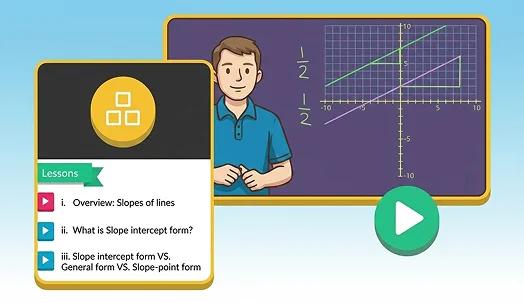
Ontario MTH1W Curriculum Aligned
Every lesson matches the Ontario Grade 9 expectations across all strands: Number, Algebra, Data, Geometry, and Financial Literacy
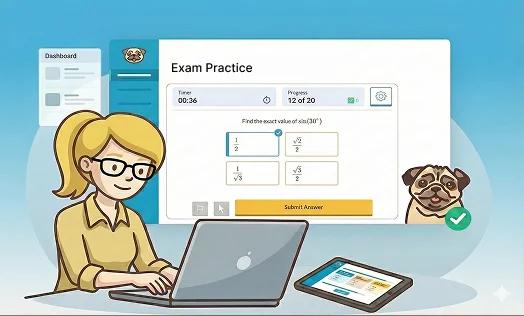
EQAO Math Assessment Preparation
Build the skills and confidence your child needs for EQAO Grade 9 math assessments with targeted practice and review
Ontario-Certified Teacher Instruction
Learn from teachers who know the Ontario curriculum inside out and teach the way your child learns best
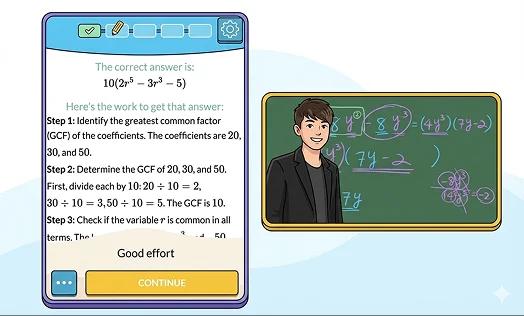
Complete Step-by-Step Solutions
See the full solution process for every practice problem so your child understands not just the answer, but how to get there
Frequently Asked Questions
Everything your child needs to know about Grade 9 Math with StudyPug
Is StudyPug aligned with the Ontario Grade 9 curriculum?
Yes, StudyPug is fully aligned to the Ontario MTH1W curriculum. Every lesson covers the specific expectations across all five strands: Number, Algebra, Data, Geometry, and Financial Literacy, exactly as outlined in the Ontario math curriculum.
What topics are covered in Grade 9 Math?
Grade 9 Math covers exponents and scientific notation, polynomials and algebraic expressions, linear relations and equations, data analysis and probability, circle and triangle properties, the Pythagorean theorem, 3D measurement, and financial literacy including budgeting and interest calculations.
How does StudyPug help my Grade 9 child learn math?
Your child gets on-demand video lessons taught by certified teachers, step-by-step practice problems with full solutions, and instant help when they're stuck. They can learn at their own pace, pause and rewatch lessons, and build confidence through adaptive practice.
Can my child use StudyPug independently?
Absolutely. StudyPug is designed for independent learning. Your child can search for topics, watch video lessons, complete practice problems, and check solutions on their own. You'll get progress reports so you can see how they're doing without having to sit beside them.
Does StudyPug prepare students for EQAO assessments?
Yes, StudyPug builds the skills and confidence needed for EQAO Grade 9 math assessments. The lessons and practice cover all curriculum expectations that are assessed, and students can review and reinforce concepts through targeted practice and quizzes.
How much does StudyPug cost?
StudyPug offers flexible subscription plans starting at just a few dollars per month. You get unlimited access to all Grade 9 lessons, practice questions, and progress tracking for one low price. Visit our pricing page to see current plans and choose what works best for your family.
Smart Study Tools for Real Results
Personalized features that help your child stay motivated and make progress
Adaptive Practice
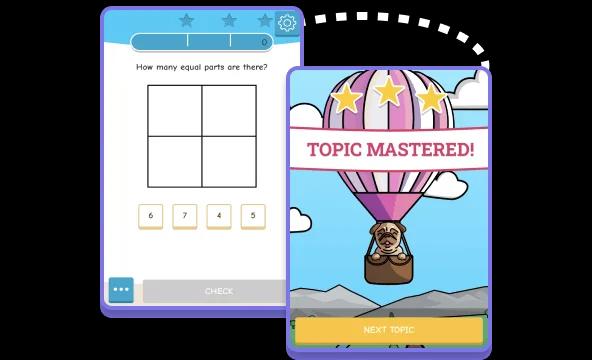
Questions adapt to your child's level
Stay Motivated
Badges and streaks keep your child practising daily
Quiz Mastery
Retake quizzes until your child truly gets it
Progress Reports
See exactly where your child needs help