Secondary 3 Maths Help — Step-by-Step Video Lessons & Practice
Help your child understand every Sec 3 Maths topic and build real confidence, one lesson at a time.
Step-by-Step Videos
Learn each step to solve it alone next time.
Unlimited Practice
Keep practicing until it truly clicks.
Test Prep Included
Exam-style questions included in your plan.
Try It Now
Test your knowledge
Our approach aligns with the evidence
Exam Scores
Better Recall
Less Anxiety
Secondary 3 Maths Topics
1. Number System and Radicals
2. Rational Numbers
3. Ratios, Rates, and Proportions
4. Percents
5. Coordinates, Quadrants, and Transformations
6. Angles, Lines and Transversals
7. Properties of Triangles
8. Congruent Triangles
9. Symmetry and Surface Area
10. Pythagorean Theorem
11. Surface Area of 3D Shapes
12. Circle Geometry
13. Volume of 3D Shapes
14. Scale Factors and Similarity
15. Trigonometry
16. Solving Linear Equations
17. Linear Inequalities
18. Introduction to Relations and Functions
19. Linear Functions
20. Linear equations (Advanced)
21. Solving Simultaneous Equations
22. Exponents
23. Operations of Polynomials
24. Exponential Functions
25. Factorising Polynomial Functions
26. Quadratic Functions
27. Algebraic Fractions
28. Reciprocal Functions
29. Direct and Inverse Variation
30. Probability
31. Statistics
32. Introduction to Matrices
32 Chapters · 193 Topics · 1342 Videos

Ready to practice Secondary 3 Maths?
Try practice questions on every Secondary 3 Maths topic — with instant feedback and step-by-step video solutions when you get stuck.
Discover Our Learning Areas
Explore key subjects and start learning with interactive content.

What Is Secondary 3 Maths?
Secondary 3 Maths is the third year of Singapore's secondary school mathematics programme, following the MOE O-Level Mathematics syllabus. It is the year where algebra deepens substantially, geometry becomes more analytical, and trigonometry extends beyond right-angled triangles. Students begin preparing — often without realising it — for the O-Level examinations that will shape their post-secondary options. Getting a strong handle on Sec 3 content is one of the most effective things a student can do to perform well in Sec 4 and at O-Level.
What Topics Are Covered in Secondary 3 Maths?
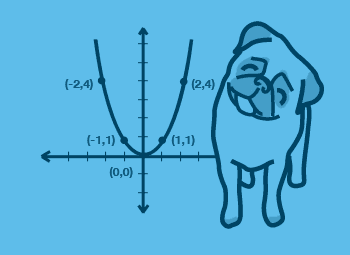
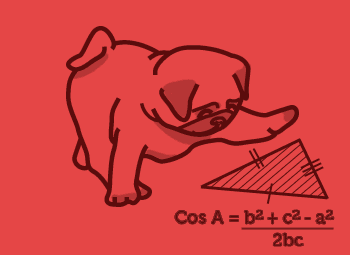
The Secondary 3 MOE syllabus covers a wide range of interconnected topics. Quadratic equations and functions form the backbone of the year — students learn to solve them by factorisation, completing the square, and using the quadratic formula, and to sketch and interpret parabolas. Surds and indices extend the number work from earlier years, requiring precise algebraic manipulation. Coordinate geometry introduces gradient, midpoint, and distance formulas in a more formal way. Trigonometry expands to cover the sine rule, cosine rule, and bearings, moving well beyond SOHCAHTOA. Statistics covers cumulative frequency, mean, median, mode, and box-and-whisker plots, while probability introduces the foundations of combined events. Each of these topics builds on Secondary 1 and 2 content, so gaps from earlier years tend to show up quickly.
Is Secondary 3 Maths Hard? Common Struggle Points
Secondary 3 Maths is widely regarded as a significant jump in difficulty compared to the earlier years. The most common struggle point is quadratic functions: students must simultaneously understand the algebra, the graph shape, the turning point, the roots, and how to move between different equation forms. Many students can solve a quadratic equation mechanically but cannot explain what the discriminant tells them or sketch the graph accurately under timed conditions.
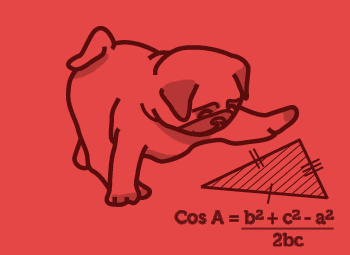
Trigonometry — particularly the sine and cosine rules applied in non-right-angled triangle problems — is another frequent sticking point. The step count in these problems is higher than anything students have faced before, and a single arithmetic slip can invalidate the whole answer. Coordinate geometry also catches students off guard: the concepts are not difficult individually, but combining gradient, midpoint, perpendicular bisector, and area calculations in a single question requires careful organisation. The good news is that all of these topics respond well to method-based teaching and structured practice.
What Should My Child Know Before Secondary 3 Maths — and What Comes Next?
Solid Secondary 1 and 2 foundations make a real difference. Your child should be comfortable with algebraic manipulation (expanding brackets, factorising simple expressions, solving simultaneous equations), basic trigonometry (SOHCAHTOA in right-angled triangles), working with graphs and coordinates, and the arithmetic of fractions, indices, and standard form. If any of these feel shaky, addressing them early in Secondary 3 — rather than waiting — prevents compounding difficulty.
After Secondary 3, the focus shifts to Secondary 4 Maths, which revisits and deepens every Sec 3 topic while adding O-Level-specific content including set notation, vectors, matrices, and further statistics. The O-Level examination itself tests the full Secondary 3 and 4 syllabus, so understanding built in Sec 3 directly determines how well a student can perform under examination conditions in Sec 4.
Why StudyPug for Secondary 3 Maths?
StudyPug is built around the idea that understanding the method is more valuable than memorising answers. Every Secondary 3 Maths lesson is taught by a friendly certified teacher — not generated by AI — who walks through each concept step by step, explains the reasoning behind each move, and shows students how to handle similar problems independently. This approach is especially important for Sec 3 topics like quadratic functions and trigonometry, where the method itself is what examiners reward.
The platform begins with a short diagnostic assessment that identifies precisely where your child has gaps in their Sec 3 Maths knowledge. Rather than working through every topic from scratch, your child focuses where it counts. Adaptive practice questions then adjust to their level in real time, providing the right level of challenge to build confidence without causing frustration. Free practice content is available from day one, so your child can start strengthening their maths before any subscription commitment. Every paid plan is backed by StudyPug's 30-day money-back guarantee.
For parents with more than one child, the Family Plan covers up to 5 children at all grade levels and subjects for one price. The Parent Dashboard gives you a clear view of each child's progress — which Sec 3 Maths topics they have covered, where they are improving, and where they still need focus — without you needing to sit beside them while they study.
What Your Child Will Learn in Secondary 3 Maths on StudyPug
StudyPug's Secondary 3 Maths coverage is aligned to Singapore's MOE O-Level Mathematics syllabus. Your child will find lessons and practice on every major topic: quadratic equations (factorisation, completing the square, quadratic formula), quadratic functions and graph sketching, surds and indices, linear inequalities, coordinate geometry (gradient, distance, midpoint, equation of a line), trigonometry for non-right-angled triangles (sine rule, cosine rule, area formula, bearings), statistics (cumulative frequency curves, quartiles, box-and-whisker plots), and probability (single and combined events).
Each topic is broken into short, focused video lessons so your child can target the exact concept they need rather than watching through hours of content. Practice sets follow each lesson, and the adaptive engine adjusts difficulty based on how your child is responding — building on strengths and reinforcing weak areas systematically.
Note: No validated internal curriculum topic URLs are available for this page in the current MAP. Links will be placed once the MAP is updated with validated Singapore Secondary 3 topic entries.
How to Use StudyPug for Secondary 3 Maths
Getting started takes only a few minutes. After signing up, your child takes the diagnostic assessment — a short set of questions that maps their current knowledge against the Sec 3 Maths syllabus and surfaces the topics most in need of attention. They then watch the relevant certified-teacher video lesson, pause to take notes, and attempt the practice questions. The system tracks their answers and adjusts what comes next.
For best results, encourage short daily sessions of 30–45 minutes rather than long irregular study blocks. This mirrors how the O-Level examination rewards consistent exposure to problem types over cramming. Parents can log into the Parent Dashboard at any time to review progress reports per child and see which Secondary 3 Maths topics have been strengthened. StudyPug is fully accessible on desktop, tablet, and mobile — your child can practise at home, during a commute, or anywhere else that works for your family's schedule.
Secondary 3 Maths FAQ
Unsure how StudyPug works? Need help with setting up? Check our frequently asked questions or contact us for help.
What does my child learn in Secondary 3 Maths, and what topics does it cover?
Secondary 3 Maths in Singapore follows the MOE O-Level syllabus and builds substantially on lower-secondary foundations. Core topics include quadratic equations and functions, surds and indices, coordinate geometry, linear inequalities, trigonometry (sine and cosine rules, bearings), basic statistics (mean, median, mode, cumulative frequency), and an introduction to probability. Algebraic manipulation becomes more demanding, and students are expected to apply multiple concepts within a single problem. This is also the year where good study habits make a measurable difference heading into the O-Level examinations.
Is Secondary 3 Maths hard, and where do students commonly struggle?
Secondary 3 Maths marks a significant step up in difficulty. Most students find quadratic equations and functions challenging because solving, sketching, and interpreting graphs all need to work together. Trigonometry is another common sticking point — especially applying the sine and cosine rules in non-right-angled triangles. Surds and coordinate geometry also trip up students who have gaps from Secondary 1 and 2. The good news is that these topics follow clear methods, and once those methods are understood through step-by-step teaching, progress comes quickly.
What should my child know before Secondary 3 Maths, and what comes next?
Strong Secondary 1 and 2 foundations are essential — particularly algebra (expanding, factorising, solving linear and simultaneous equations), basic trigonometry (SOHCAHTOA), and graphs. Gaps in these areas will surface quickly in Sec 3. After Secondary 3, students move into Secondary 4 Maths, which deepens every Sec 3 topic and adds further O-Level content such as set notation, matrices, and more advanced statistics — all of which feed directly into the O-Level examinations. Building solid understanding now makes Secondary 4 significantly more manageable.
How does StudyPug Maths map to what my child learns at school in Singapore?
StudyPug's Secondary 3 Maths content is aligned to Singapore's MOE O-Level Mathematics syllabus. Every topic your child covers in school — quadratic equations, trigonometry, coordinate geometry, statistics — has a matching set of certified-teacher video lessons and adaptive practice questions on StudyPug. This means your child isn't learning from a generic resource; they're reinforcing exactly what their school teaches, in the same sequence and using the same methods their teacher expects.
What is one of the trickiest Maths concepts in Secondary 3, and how is it taught?
Quadratic functions and their graphs are widely considered the most conceptually challenging topic in Secondary 3 Maths. Students must connect the equation form (factorised, completed square, or general) to the shape, turning point, and roots of the parabola — and then use that understanding to solve applied problems. On StudyPug, a certified teacher walks through every form step by step, showing the method behind each transformation rather than just providing answers. Students can pause, rewatch, and then practise with adaptive questions that adjust to their level until the concept is secure.
How much Maths practice should my child do at Secondary 3 level?
For Secondary 3 Maths, most educators recommend at least 30–45 minutes of focused practice on most school days, particularly in the lead-up to class tests and end-of-year examinations. The key is targeted practice, not random paper-drilling. StudyPug's diagnostic assessment identifies weak topics so your child spends time where it counts. Short daily sessions beat long weekend cramming — consistent exposure to problem types builds the pattern recognition that O-Level questions demand.




Written by the StudyPug Team
Last updated June 5, 2026
3 M+
students
★★★★★
4.8 average
K–12
all grades