Year 6 Maths Help — Step-by-Step Video Lessons & Practice
Help your child understand every topic and build confidence, one lesson at a time.

Step-by-Step Videos
Real teaching so you solve alone.
Unlimited Practice
Keep going until you get it right.
Test Prep Included
Practice real exam questions to be ready.
Try It Now
Test your knowledge
Our approach aligns with the evidence
Exam Scores
Better Recall
Less Anxiety
Year 6 Maths Topics
1. Numbers and Relations
2. Number Theory
3. Adding and Subtracting Integers
4. Multiplying and Dividing Integers
5. Operations with decimals
6. Fractions, Decimals, and Percents
7. Number System and Radicals
8. Powers and Exponents
9. Adding and Subtracting Fractions
10. Multiplying and Dividing Fractions
11. Introduction to Variables and Expressions
12. Introduction to Equations
13. Data and Graphs
14. Introduction to Probability
15. Measuring Systems
16. Angles, Lines, and Transversals
17. Geometry of Polygons
18. Symmetry and Surface Area
19. Scale Factors and Similarity
Discover Our Learning Areas
Explore key subjects and start learning with interactive content.





What Is Year 6 Maths?
Year 6 maths is the final year of primary school mathematics in New Zealand, sitting at Level 3–4 of the New Zealand Mathematics and Statistics curriculum. At this stage, children move beyond basic arithmetic into more abstract and multi-step problem solving. They are expected to reason about numbers, explain their thinking, and apply maths to real-world contexts — skills that form the foundation for Intermediate school and beyond.
StudyPug's Year 6 maths programme covers every strand of the NZ curriculum with certified-teacher video lessons and adaptive practice, so your child is always working on what their school expects.
What Topics Does Year 6 Maths Cover?
Year 6 maths in New Zealand spans five main strands. Here is what your child will be working through across the year:
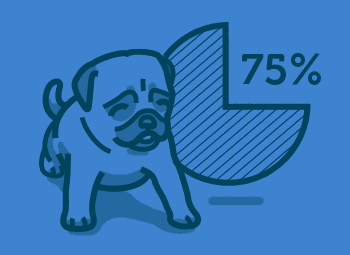
Number and Algebra: Whole numbers to millions, multiplication and division of multi-digit numbers, fractions (including unlike denominators), decimals to three places, percentages, ratios, and an introduction to simple algebraic expressions and patterns.
Measurement: Area and perimeter of compound shapes, volume of rectangular prisms, converting between units of length, mass, and capacity, and reading and interpreting timetables.
Geometry: Classifying 2D and 3D shapes, measuring and calculating angles, transformations (reflection, rotation, translation), and coordinate graphing in the first quadrant.
Statistics: Planning and conducting data investigations, constructing and interpreting graphs (bar, pie, line), calculating mean, median, and mode.
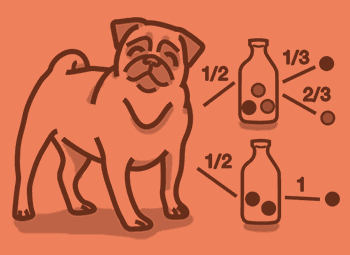
Probability: Describing and comparing the likelihood of events, conducting simple experiments, and connecting fractions to probability.
Is Year 6 Maths Hard? Common Struggles and How to Help
Year 6 is often the point where maths starts to feel genuinely challenging for children who were comfortable in earlier years. The jump from concrete to abstract thinking catches many students off guard. The most common struggle points are:
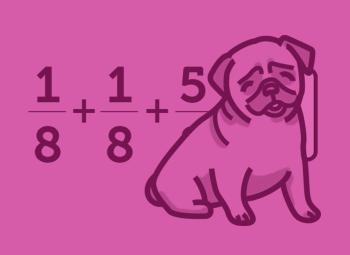
Fractions with unlike denominators — children often memorise a process without understanding why it works, which falls apart when the numbers get harder.
Decimal place value — confusing tenths, hundredths, and thousandths, especially when multiplying or dividing decimals.
Multi-step word problems — knowing which operation to use, and in what order, is a thinking skill that needs explicit practice.
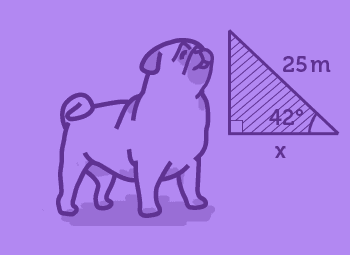
Geometry and angles — calculating missing angles and working with transformations requires spatial reasoning that develops at different rates.
The good news is that these are all teachable. When a certified teacher explains the reasoning behind the method — not just the steps — children build the kind of understanding that transfers to new problems. That is exactly how StudyPug's video lessons are designed.
How Is Year 6 Maths Assessed in New Zealand?
In New Zealand primary schools, Year 6 maths is assessed through classroom-based observation, teacher judgements against the NZ curriculum levels, and formative assessment throughout the year. Schools report to parents on curriculum levels (typically Level 3 moving toward Level 4) rather than traditional percentage scores. Some schools also use standardised tools such as e-asTTle or PAT (Progressive Achievement Tests) to gauge where each student sits relative to national norms. Understanding your child's curriculum level and any gaps identified by their teacher is the best starting point for targeted support at home.
Why StudyPug for Year 6 Maths?
StudyPug is built around one idea: real teaching, not just practice. Here is what makes it different for Year 6 maths families in New Zealand.
Diagnostic assessment from day one. Instead of starting at the beginning and hoping your child gets to the right topic, StudyPug's diagnostic assessment quickly identifies exactly where your child needs to focus. No guessing, no wasted time — just targeted support from the first session.
Certified-teacher video lessons. Every lesson is recorded by a friendly certified teacher who explains the concept step by step, showing the method and the reasoning behind it. These are not AI-generated videos — they are real teaching. Your child learns how to think through a problem, so they can solve similar ones independently.
Adaptive practice that builds confidence. After each video, your child gets practice questions that adjust to their level. If they find something easy, the questions progress. If they are struggling, the practice slows down and reinforces the concept. Confidence builds gradually, in the right order.
Family Plan for up to 5 children. One subscription covers all your children, across all year levels and all subjects. If your Year 6 student has a younger sibling, both are included at no extra cost.
Parent Dashboard. You can log in at any time and see exactly which topics your child has worked on, how their scores are trending, and where they might need a nudge. Progress is visible per child, per topic.
30-day money-back guarantee. Try StudyPug with complete confidence. If it is not the right fit within 30 days, you receive a full refund — no questions asked. That is the only guarantee StudyPug makes, and it stands behind it.
What Your Child Will Learn: Year 6 Maths Curriculum Coverage
StudyPug's Year 6 maths content is aligned to the New Zealand Mathematics and Statistics curriculum and covers all five strands taught in New Zealand primary schools during Year 6. Key topic areas your child will work through include:
- Fractions, decimals, and percentages — building genuine understanding, not just procedures
- Multiplication and division of large numbers, including long division
- Ratios and introduction to rates
- Area, perimeter, and volume with real-world measurement problems
- Angles, 2D and 3D geometry, and coordinate graphing
- Data investigations, graphs, and an introduction to mean, median, and mode
- Probability — connecting likelihood to fractions
- Introductory algebraic patterns and expressions
Because no validated internal topic page links are available for the NZ Year 6 course in the current sitemap, we recommend browsing the full topic list directly on the StudyPug Year 6 Maths course page to explore all available lessons.
Using StudyPug: How It Works for Year 6 Families
Getting started with StudyPug takes less than five minutes. Here is how most Year 6 families use it:
Step 1 — Run the diagnostic. Your child completes a short diagnostic assessment. StudyPug maps the results to the NZ Year 6 maths curriculum and shows you exactly which topics need attention. You know straight away where to celebrate progress and where to focus support.
Step 2 — Watch the video lesson. Your child selects the topic and watches a short certified-teacher video. Most lessons are 5–10 minutes. The teacher explains the concept clearly, works through examples, and shows how to tackle similar problems. Your child can pause, rewind, and re-watch as many times as they need — something a classroom does not allow.
Step 3 — Practise with adaptive questions. After the video, your child works through practice problems. The questions adjust to their level, so they are always challenged at the right point. Instant feedback means they know immediately if they are on track.
Step 4 — Check in on the parent dashboard. You log into the parent dashboard (on any device — StudyPug works on tablets, phones, and computers) and review your child's progress. You can see which topics they have covered, how their scores are improving, and where they might benefit from another session.
Step 5 — Repeat little and often. Fifteen to twenty minutes of focused practice per day — a short video plus a quick practice set — is far more effective than one long study session per week. StudyPug is designed to fit into a busy family routine.
StudyPug also offers free practice content, so your child can try lessons and exercises before you decide on a plan. There is no free trial of the full subscription, but the 30-day money-back guarantee gives you the same peace of mind. Photo Search lets your child take a photo of a maths problem and find the matching lesson instantly — available for all Year 6 topics across all devices.
Year 6 Maths FAQ
Unsure how StudyPug works? Need help with setting up? Check our frequently asked questions or contact us for help.
What does my child learn in Year 6 maths, and what topics does it cover?
In Year 6 maths under the New Zealand curriculum, children develop strong number sense across whole numbers, fractions, decimals, and percentages. They explore ratios, basic algebra, measurement (area, perimeter, volume), geometry (angles, 2D and 3D shapes), and statistics including data collection and probability. By the end of Year 6 students are expected to solve multi-step problems and explain their reasoning clearly. StudyPug covers every one of these topic areas with video lessons and adaptive practice aligned to the NZ maths syllabus.
Is Year 6 maths hard, and where do children commonly struggle?
Year 6 maths is a step up in difficulty because abstract thinking becomes more important. The topics children most commonly find tricky are fractions (especially adding and subtracting unlike denominators), place value with decimals, long multiplication and division, and introductory algebra concepts. Geometry — particularly calculating angles and understanding symmetry — can also trip up students. Recognising where your child is stuck early is the key, which is why StudyPug's diagnostic assessment is so useful: it pinpoints the exact gap so your child works on what matters most.
What should my child know before Year 6 maths, and what comes next?
Coming into Year 6, children should be confident with place value to thousands, basic fraction concepts, multiplication tables, and simple measurement. Year 6 consolidates and extends all of these. After Year 6, children move into Year 7 maths (Intermediate school in New Zealand), where they build on algebraic thinking, work with integers, and tackle more complex statistics and geometry. Keeping strong foundations in fractions, decimals, and number operations in Year 6 makes the Year 7 transition significantly smoother.
How does StudyPug maths map to what my child learns at school in New Zealand?
StudyPug's Year 6 maths content is structured to align with the New Zealand Mathematics and Statistics curriculum strand and the updated NZ curriculum expectations. Lessons cover the Number, Algebra, Measurement, Geometry, and Statistics strands. When your child watches a lesson or completes practice on StudyPug, the topic directly corresponds to what their teacher is covering in class. You can also track their progress by topic through the parent dashboard, so you can see exactly where they are improving across the NZ syllabus.
What is one of the trickiest maths concepts in Year 6, and how is it taught on StudyPug?
Fractions — particularly adding and subtracting fractions with unlike denominators — is consistently one of the hardest Year 6 maths concepts. Many children learn the procedure without understanding why it works, which causes problems later. On StudyPug, a certified teacher walks through the concept step by step in a short video: first building understanding of equivalent fractions, then showing why finding a common denominator works, and finally practising with similar problems. After watching, your child gets adaptive practice questions that adjust to their level so they build genuine understanding, not just memorised steps.
How much maths practice should my child do at Year 6?
Education research and the NZ curriculum guidelines suggest 15–20 minutes of focused maths practice per day is highly effective for Year 6 students — far better than one long session per week. Short, consistent sessions help consolidate concepts and build fluency. With StudyPug, your child can watch a focused video lesson (usually 5–10 minutes) and follow it with a short adaptive practice set. The practice adjusts to their level, so every session is productive. The parent dashboard lets you see how regularly your child is practising and which topics they are mastering.