Everyday French, one skill at a time.
Follow the path from A1 to C2 (B2 is the level NCLC 7 asks for), or practise one skill at a time.
- 7 skills ready to practise
- 19,390 words, incl. vocabulary for exam-relevant topics
- 80 grammar structures, A1–C2
How it works
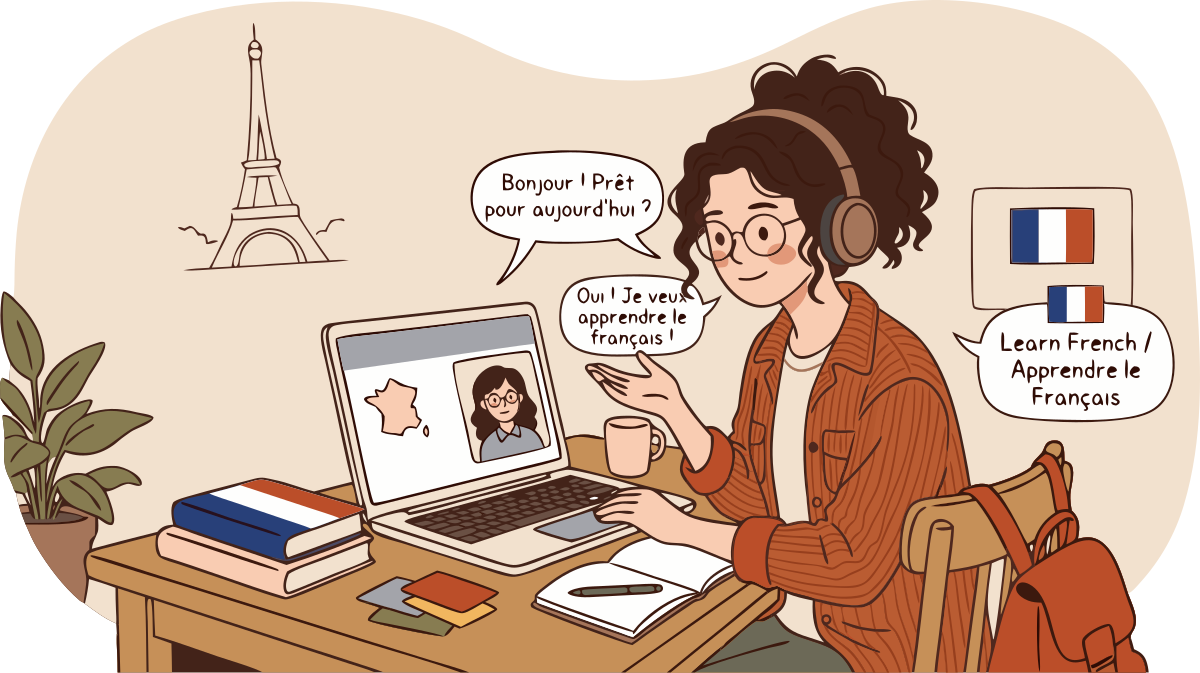
How to use French Practice
Build one skill at a time. Each module takes you from a short lesson to focused practice.
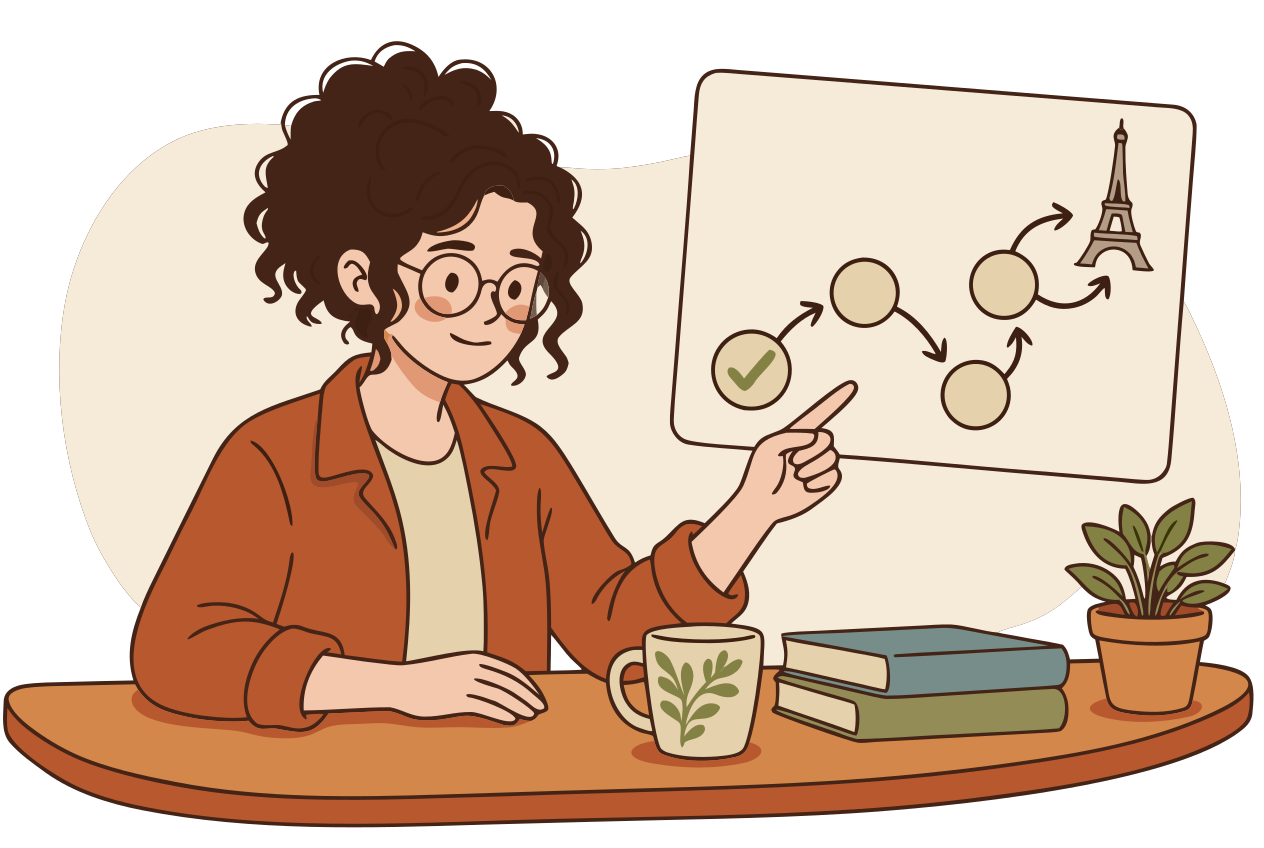
Follow the path
Work through the units in order: each one takes you through words, grammar, listening, shadowing, reading and speaking on one topic. Or pick one skill below.

Complete the lesson
Read the example or instructions, then answer the questions. Replay the audio as often as you need.
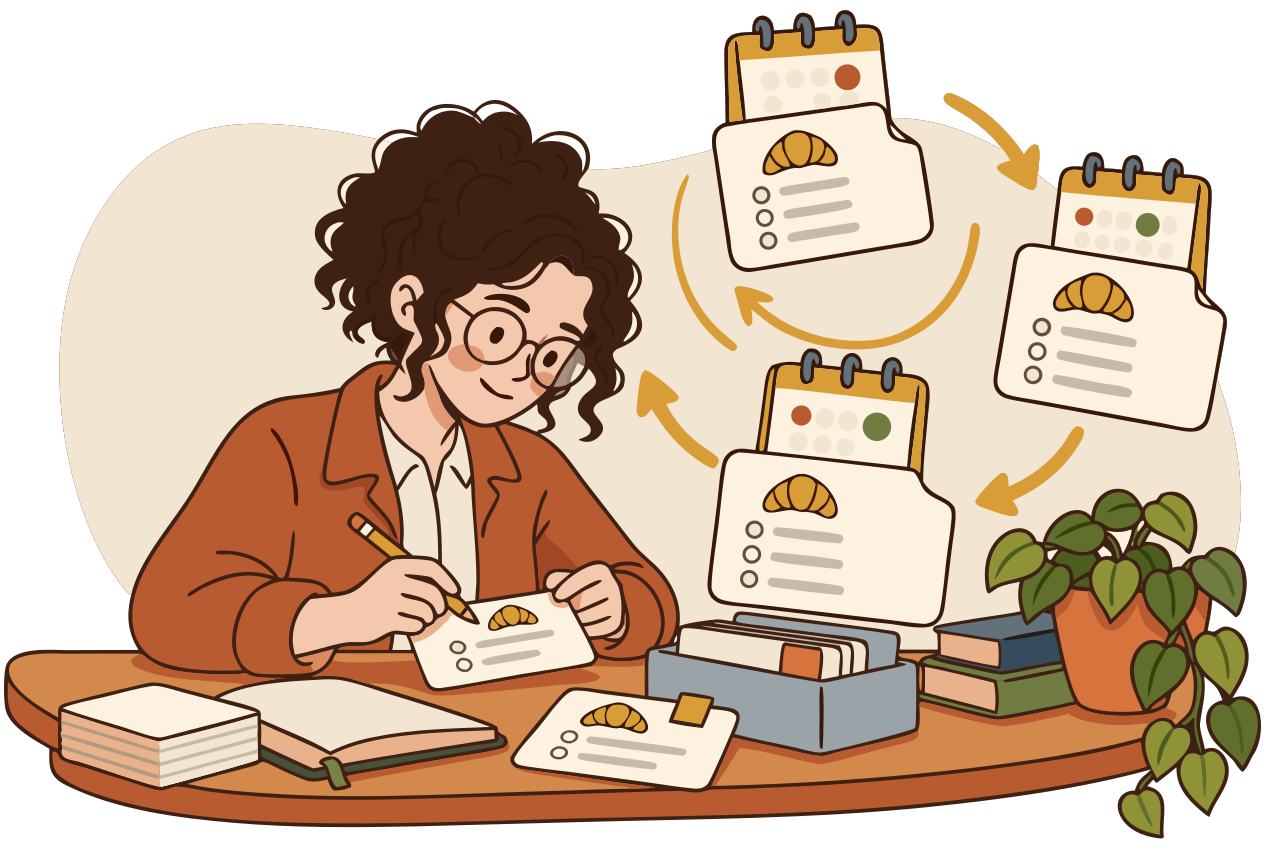
Review and repeat
Check your answers, note what needs work, and let spaced review bring it back until it feels easy.
Find my level
Where does your French stand today?
How far up the ladder can you go?
Six listening and six reading questions climb from A1 to C2, then a short writing and speaking sample. You get a rough NCLC estimate for listening and reading at the end.
- 6 listening questions, A1 to C2
- 6 reading questions, A1 to C2
- A short writing and speaking sample you check yourself
- A1NCLC < 4
- A2NCLC 4
- B1NCLC 5–6
- B2NCLC 7–8
- C1NCLC 9
- C2NCLC 10
Your starting point
How do you want to learn?
Follow the full path, or go straight to the skill that costs you points.
The path · A1 to C2
Your French path, A1 to C2
94 units, one topic each. B2 is the level NCLC 7 asks for. Every unit has the same steps: words, grammar, listening, shadowing, reading, speaking and writing, then a unit check.
- Unit 1Start hereFamily and friends0/8 doneStart
- Unit 2Daily life0/7 doneStart
- Unit 3Food and drink0/7 doneStart
- Unit 4Home and housing0/7 doneStart
- Unit 5Shopping and money0/8 doneStart
- Unit 6Town and services0/8 doneStart
- Unit 7Travel and transport0/8 doneStart
- Unit 8Health and body0/7 doneStart
- Unit 9Leisure and culture0/7 doneStart
- Unit 10Paperwork and immigration0/8 doneStart
- Unit 11Study0/6 doneStart
- Unit 12Work0/6 doneStart
- Unit 13Nature and weather0/6 doneStart
Your starting pointFind the fastest route to your required score
Tell us where you are now. We'll put the skills costing you the most points first — and skip the ones you have already passed.
Your NCLC level in each skill
Have TCF scores? Convert them to NCLC levelsNCLC = Canadian Language Benchmarks, French
Set your goal
Pick the level you need
Choose the level your immigration program asks for — we'll use it as your target. Then try a TCF practice set to see where you are now.
Goal set: NCLC 7 in all four skills
Also used as your target in “I know my score”.
Targets are general guidance — check IRCC for the NCLC level your immigration program requires.
Understanding
Take language in
Read and listen for meaning and detail — the skills you use most in daily life, study and work.
Producing
Put language out
Speaking and writing practice for the three TCF tasks in each skill.
Foundations
The building blocks
Sounds, words and structures you reuse in every other skill. Start here if you are unsure where to begin.
139 graphemes · 4 modes · alphabet, game, minimal pairs
PhonicsLetter sounds, spellings, and the alphabet
Open2,118 frequency words + 17,272 words on TCF/TEF themes · spaced review · listen & type
VocabularyFrequency words and vocabulary for exam-relevant topics, with spaced review and listening practice
Open80 structures (A1–C2) · 509 drills · 72 conjugation tables
GrammarTyped drills that name each mistake, plus verb conjugation tables, most with audio
Open
Practice tips
What doesn’t raise your score
These habits are common. Here is what works better.
Instead of
Memorising long vocabulary lists
Try this
Learn the most frequent words first, a band at a time, and use each one in your own sentence.
Open VocabularyInstead of
Translating word for word from your own language
Try this
Learn French structures as a whole: word order, articles and agreement come with them.
Open GrammarInstead of
Guessing how a word sounds from its spelling
Try this
Learn the sound-spelling patterns first. French spelling is regular once you know them.
Open Phonics
Everyday French practice comes first.
Build your general French foundation here first, then use the TCF Canada and TCF Québec practice for timing and task format.
TCF practice