Year 11 Maths Methods Help — Video Lessons & Practice
Get clear explanations for any Maths Methods problem and build exam-ready confidence for your ATAR.
Certified-Teacher Concept Videos
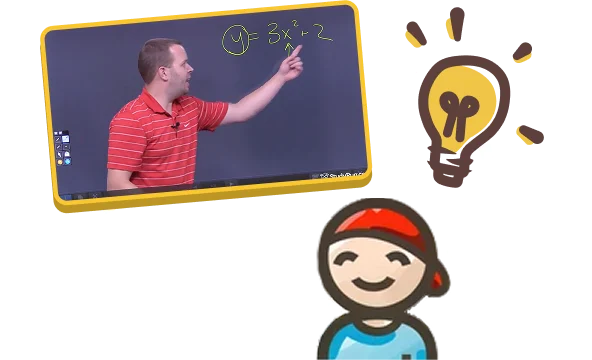
Watch step-by-step Maths Methods lessons made by certified teachers — not AI — that teach the method so you can solve any similar problem on your own.
Diagnostic Assessment
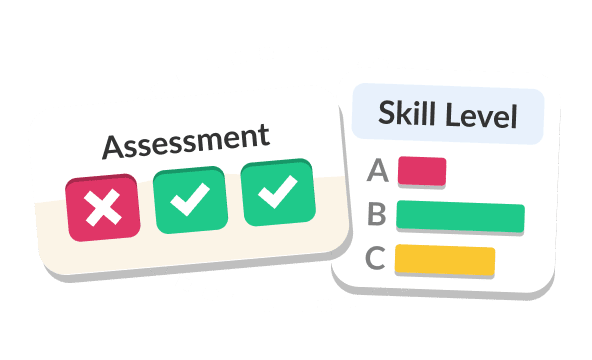
Start with a quick diagnostic that pinpoints exactly where to focus in Maths Methods — study smarter, not harder, with zero wasted time.

Adaptive Practice for Maths Methods
Practice problems that adjust to your level — get harder as you improve, so you're always building real Maths Methods skills at the right pace.
Try It Now
Test your knowledge
Our approach aligns with the evidence
Exam Scores
Better Recall
Less Anxiety
Maths Methods Topics
1. Solving Linear Equations
2. Introduction to Relations and Functions
3. Linear Functions
4. Linear Equations
5. Quadratic Functions
6. Solving Quadratic Equations
7. Functions
8. Transformations of Functions
9. Factorisation
11. Trigonometric Ratios and Angle Measure
12. Sine Rule and Cosine Rule
13. Bearings
14. Graphing Trigonometric Functions
15. Applications of Trigonometric Functions
16. Trigonometric Identities
17. Solving Trigonometric Equations
18. Permutations and Combinations
19. Probability
20. Indices
21. Exponential Functions
22. Applications of Exponential Functions
23. Logarithmic Functions
24. Applications of Logarithmic Functions
25. Sequences and Series
26. Limits and Derivatives
27. Derivative Applications
28. Integrals
29. Integration Applications
30. Normal Distribution and Z-score
31. Discrete Probabilities
Discover Our Learning Areas
Explore key subjects and start learning with interactive content.



What is Maths Methods?
Maths Methods is a senior mathematics course designed for Year 11 and 12 students in Australia who need advanced mathematical skills for university or competitive career pathways. It is an ATAR-contributing subject that formally introduces differential calculus alongside a deep study of functions, algebra, trigonometry, probability, and statistics. Unlike General Mathematics, Maths Methods develops the abstract reasoning and problem-solving tools required for science, engineering, economics, and technology degrees — making it one of the most important subjects a Year 11 student can take if those pathways are on the horizon.
The course is built around understanding how mathematical ideas connect. You learn not just how to compute answers, but why the methods work — a foundation that pays dividends on SACs, end-of-year exams, and every quantitative subject you study at university.
What topics are covered in Year 11 Maths Methods?
Year 11 Maths Methods typically covers six major topic areas across the school year. Functions and relations form the backbone of the course — you study linear, quadratic, polynomial, rational, exponential, and logarithmic functions, learning to graph, transform, and interpret each type. Algebra skills are refined throughout, with emphasis on solving equations and working with function notation fluently.
Calculus is introduced in the second half of Year 11. Students learn the concept of the derivative, develop rules for differentiation (power rule, product rule, quotient rule, chain rule), and apply derivatives to sketching curves, finding rates of change, and solving optimisation problems. This is the topic that students find most transformative — and most challenging.
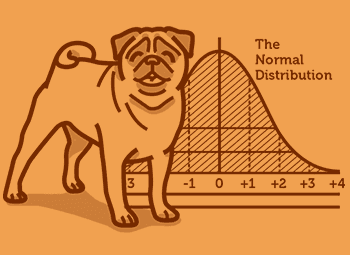
Trigonometric functions extend beyond basic right-triangle trigonometry into circular functions, radian measure, and the graphs of sine, cosine, and tangent. Probability and statistics round out the course, covering discrete random variables, probability distributions, and the introduction of continuous distributions including the normal distribution.
Is Maths Methods difficult, and how do students improve?
Maths Methods has a well-earned reputation for difficulty, but the challenge is specific: it demands both procedural fluency and conceptual understanding at the same time. Students who struggle are usually those who can perform the steps mechanically but cannot explain why a method works — which means they cannot adapt when an exam question is phrased differently.
The most effective approach is to watch a worked example that explains the reasoning behind each step before attempting practice problems. That is exactly what certified-teacher concept videos provide — not just the solution, but the thinking process that produced it. Combine that with progressive practice that increases in difficulty as you improve, and the vast majority of students find their confidence and their results climb together.
Common sticking points include: transformations of functions (especially compound transformations applied in the wrong order), the chain rule in calculus, trigonometric identities, and conditional probability. Targeted practice on these topics, rather than general revision, is what produces the fastest improvement.
How does Maths Methods connect to the ATAR and Year 12?
Maths Methods contributes directly to a student's ATAR score in every Australian state and territory, and its scaling tends to reward students who perform well. In Victoria, in-school SACs count alongside the end-of-year written exam. Other states weight school-based assessment and a final examination in proportions that vary by state curriculum authority.
Year 12 Maths Methods extends everything covered in Year 11 — integration (the reverse of differentiation), the fundamental theorem of calculus, further probability including the binomial distribution and normal distribution, and more sophisticated function analysis. Students who arrive in Year 12 with a strong Year 11 foundation find the step up manageable; those who arrive with gaps in their calculus or functions knowledge find Year 12 significantly harder. Getting Year 11 right is the investment that pays off.
Why StudyPug for Year 11 Maths Methods?
StudyPug is built specifically for students who need more than a textbook and a set of worked answers. Three features make a real difference for Maths Methods students in particular.
First, a diagnostic assessment at the start identifies exactly which topics need attention and which you have already covered. Instead of working through every chapter in order, you focus on the areas where you will gain the most — a study-smarter approach that saves significant time in a busy Year 11 schedule.
Second, every lesson is taught by a certified teacher who explains the method, not just the answer. This matters in Maths Methods because exams always include questions that are slightly different from practice problems — students who understand the method can adapt; students who have only memorised steps cannot. The videos are step-by-step, pauseable, and rewindable, so you can watch a critical explanation as many times as you need.
Third, adaptive practice adjusts to your performance in real time. As you get better, the problems get harder. You are always working at the productive edge of your ability rather than repeating questions you have already mastered or attempting ones that are too far ahead.
All content is aligned to the Australian Maths Methods curriculum and covers exam-style questions based on real ATAR exam formats — so the practice you do on StudyPug is directly relevant to the assessments that count. A 30-day money-back guarantee means there is no financial risk in trying it.
What you learn — Maths Methods curriculum coverage
StudyPug covers the full Year 11 Maths Methods curriculum as taught across Australian states, including: linear and non-linear functions; quadratic and polynomial algebra; exponential and logarithmic functions; circular (trigonometric) functions and transformations; introduction to differential calculus including the derivative rules; applications of differentiation to curve sketching and optimisation; discrete probability and random variables; and introductory statistics.
Because Maths Methods content varies slightly between states — Victoria's VCE, Queensland's QCE, NSW's HSC, and the other state curricula each have their own specification — StudyPug lessons are organised so students can find the topics that match their own course. Photo Search makes this even easier: take a photo of a question from your textbook or SAC preparation sheet, and StudyPug finds the matching lesson instantly — available for all Year 11 Maths Methods topics.
No validated internal topic URLs are available for this page in the current sitemap — topic links will be surfaced via the on-page topic browser module.
Using StudyPug for Maths Methods practice and exam preparation
The most effective way to use StudyPug for Maths Methods is to follow a three-phase routine. Start each new topic with the diagnostic — it takes only a few minutes and tells you whether you are ready to move forward or whether there is a foundational concept to address first. Then watch the certified-teacher video for the concept, pausing to take notes on the method, not just the answer. Finally, complete the adaptive practice set, which will push you from straightforward examples to exam-difficulty questions as your confidence grows.
Before SACs and end-of-year exams, use StudyPug's practice tests to work through exam-style questions under timed conditions. These are based on real ATAR exam formats, so you will be familiar with the style of questioning, the level of difficulty, and the way marks are allocated before you sit the actual assessment.
StudyPug is available on any device — desktop, tablet, or phone — so you can watch a video explanation the night before a SAC, run through practice problems on the bus, or revisit a tricky calculus concept at any time. Free practice content is available without a subscription, and the full platform — every video, every practice set, every exam-prep resource — is covered by a 30-day money-back guarantee. Start today and build the Maths Methods skills that your ATAR score will reflect.
Maths Methods FAQ
Unsure how StudyPug works? Need help with setting up? Check our frequently asked questions or contact us for help.
What do you learn in Maths Methods, and what topics does it cover?
Year 11 Maths Methods covers functions and relations, algebra, calculus (differentiation and introduction to integration), trigonometric and exponential functions, logarithms, probability, and statistics. It is designed to develop mathematical reasoning and equip students with the analytical tools needed for science, economics, and engineering pathways. The course builds systematically from algebraic fundamentals through to differential calculus, giving students a strong foundation for Year 12 Maths Methods and beyond.
What is the difference between Maths Methods and General Maths?
Maths Methods is a higher-level course with a strong focus on algebra, functions, and calculus — it is ATAR-contributing and required for university courses in science, engineering, and commerce. General Mathematics covers a broader range of practical topics such as financial mathematics, networks, and statistics, and is designed for students who do not need the calculus pathway. If you are aiming for a science or engineering degree, Maths Methods is the pathway to choose.
Is Maths Methods hard, and where do students struggle most?
Maths Methods is considered one of the more demanding Year 11 subjects because it requires strong algebraic fluency and abstract thinking. Students most commonly struggle with differential calculus — particularly applying the chain, product, and quotient rules — and with transformations of functions. Trigonometric identities and probability distributions also cause difficulty. The key is building each concept step by step rather than jumping straight to exam questions; that methodical approach is where most students see the biggest improvement.
What should I take before Maths Methods, and what comes after it?
Students entering Year 11 Maths Methods should be comfortable with Year 10 Advanced Mathematics, including algebra, quadratics, trigonometry, and basic functions. A solid understanding of index laws and coordinate geometry is essential. After Year 11 Maths Methods, students progress to Year 12 Maths Methods, which deepens calculus (integration, the fundamental theorem), further develops probability and statistics, and prepares students for ATAR examinations that influence university entry scores.
Is Maths Methods on the ATAR, and how is it tested?
Yes — Maths Methods is a fully ATAR-contributing subject in every Australian state and territory. Assessment combines school-based assessment tasks (SACs in Victoria, assignments and tests in other states) and an end-of-year written examination. The exam typically includes multiple-choice questions and extended-response problems requiring students to demonstrate mathematical reasoning, use of technology (CAS calculator), and problem-solving skills across all course topics including calculus, functions, and probability.
What is one of the hardest concepts in Maths Methods, and how do you tackle it?
Differential calculus — specifically the chain rule and related rates — is consistently the most challenging concept in Year 11 Maths Methods. Students often make errors when composing functions or lose track of which variable to differentiate with respect to. The most effective approach is to first be completely confident with basic differentiation rules, then practise the chain rule in isolation with progressive difficulty before combining it with the product or quotient rule. Working through fully explained, step-by-step examples before attempting problems on your own accelerates understanding significantly.